Nehmen Sie Kontakt mit Wanhui Company auf

B2 B Großhandelsprogramm
Umweltfreundliche Lebensmittelboxen Hersteller Großhandel mit Containern
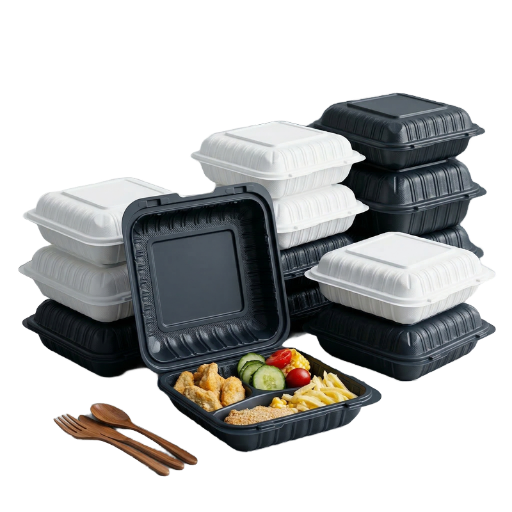
Foodservice-Unternehmen von Kalifornien bis New York entfernen sich unter schnell wachsenden Einweg-Kunststoffbeschränkungen vom Schaumstoff Unser Großhandelsprogramm liefert BPI-zugelassene umweltfreundliche Lebensmittelboxen an Lebensmittellieferunternehmen, Catering-Händler und Restaurantketten, die auf echten Lieferwegen auflaufen unsere Maisstärke-Bagasse-, PLA- und mikrowellenkompatiblen Polypropylenlinien.
Holen Sie sich ein Großhandelsangebot
BPI / FDA / PFAS-frei verifiziert
Ref. / Eco-Box · 04 Materialfamilien
01
BPI-zertifiziert (ASTM D6400 / D6868)
02
FDA 21 CFR-konform
03
PFAS-frei + BPA-frei
04
20 Jahre Spezialisierte Fertigung
05
Export in 5 Regionen
Fähigkeits-schnappschuss
Die Wanhui-Lösung auf einen Blick
// 05 Säulen
01 / Maßstab
Fertigungsgröße
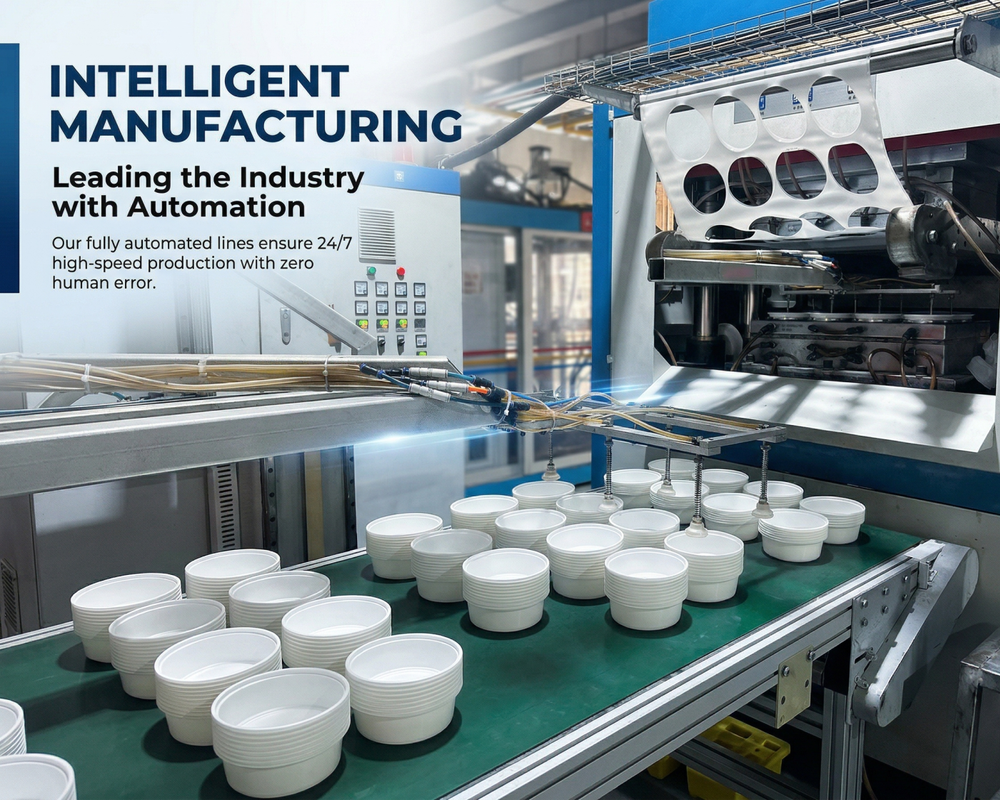
20 Thermoformlinien, 6 Blechextrusionslinien, 60 Spritzgusslinien, über 30 Tonnen/Tag Blechmaterial, Millionen/Tag Kapazität.
02 / Material
Vier materielle Familien
Maisstärkekisten für kalte und ambiente Lebensmittel, Bagasse für heiße Ladungen und Mikrowellen, klare PLA-Behälter für kalte Gerichte und Salate, 1001TP3 T mikrowellenkompetentes Polypropylen (MFPP) für Lieferung und Nachheizung.
03 / Compliance
Drittanbieter-Zertifizierungen Käufer überprüfen
BPI-gelistet, seit Tests auf PFAS im Januar 2024 verbindlich wurden, nationale Hygienestandards und internationale Lebensmittelsicherheitskontrollen.
04 / OEM
Gleiche Zeilenanpassung
Logodruck, Farbanpassung, individuelle Formenentwicklung für Markenkombinationslayout.
05 / Kanäle
Servierte Märkte
Kettenrestaurants, Lebensmittelliefer-Apps, Speisesäle für Krankenhäuser und Hochschulen, Catering-Händler.
Ziel: Alle Käufer
Von Schaum zu umweltfreundlichen Lebensmittelboxen. Warum Foodservice umsteigt
Markt- und Vorschriften
Die Verschiebung weg vom Schaum
Eco-Contain und kalte To-Go-Boxen und Gerichte, die Sie für Gastronomieunternehmen in den USA und der EU in Betracht ziehen, dürfen keinen expandierten Polystyrolschaum mehr kaufen.
Wichtige Gesetzgebungszeitpläne
Das landesweite Verbot von Schaumlebensmitteln in Kalifornien sicherte die öffentliche Markteinführung im Jahr 2025, und die New Yorker Polystyrolbeschränkungen traten zusammen mit einer Beschränkung auf Kühllagerbehälter am 1. Januar 2026 in Kraft. Mittlerweile haben über hundert Städte und über zwanzig Bundesstaaten Schaumbeschränkungen eingeführt, die zusammen etwa einen Anteil ausmachen ein Drittel des gesamten US-amerikanischen Foodservice-Marktes.
Nachhaltige Zutaten
Was sind Öko-Container?
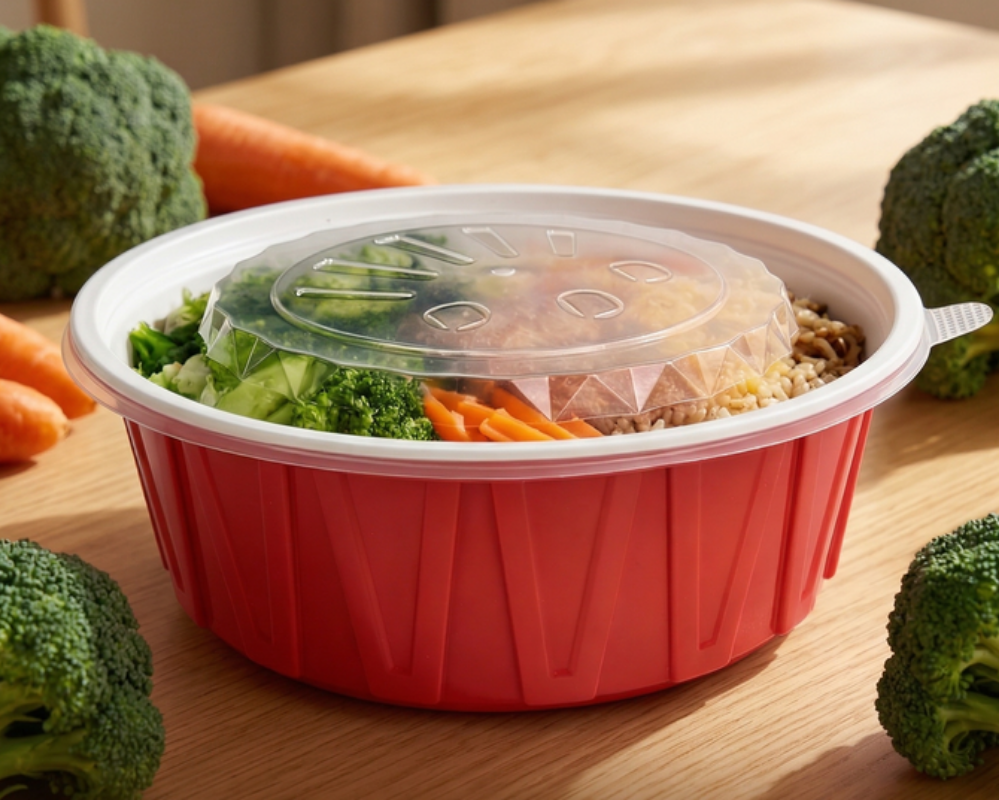
Öko-Containern oder manchmal auch biologisch abbaubare Behälter, kompostierbare Lebensmittelbehälter, Einwegbehälter, hergestellt aus natürlich erneuerbaren Zutaten wie Zuckerrohr-Faserbagasse, Maisstärke, Polymilchsäure (PLA), geformten Pflanzenfasern oder mikrowellengeeignetem Polypropylen in Lebensmittelqualität.
Aktuelle Anwendungen
Sie werden aktiv für Warm- und Kalt-Takeout-, Liefer- und Grab-and-Go-Anwendungen eingesetzt und ersetzen Schaumstoff und Standardkunststoff.
Leistung & Preis
Das Transition Pace
Das geschieht, aber langsam.
Ein Reddit/Kalifornien-Dilemma, das englischsprachige Beschaffungsteams bei der Vorbereitung von Futtermitteln in biologisch abbaubaren Verpackungen und der Rückkehr zu billigem Kunststoff aufdecken müssen, ergab ein Dilemma.”
Drei Säulen des Erfolgs
Eco-Contain ist nur dann dauerhaft, wenn drei Hindernisse performance durch Lieferung über mehrjährige Releases, Preis-in-Designed-Dokument-Validierung gleichzeitig verwaltet Diese Seite beschreibt jeden dieser Datenpunkte, unsere Back-End-Anwendungstechnik-Lektionen.
Modul // Produktlinien
Wanhui Umweltfreundliche Lebensmittelbox Produktlinien EN + PROC
Unsere vier Fertigungslinien sind in der Lage, die Kombinationen aus Temperatur, Lebensmittelart und Entsorgungsroute zu liefern, die unsere Großhandelskontakte anfordern Jede Linie verwendet von der FDA zugelassene Roheinträge und besteht sowohl die geltenden britischen Standards als auch die globalen Lebensmittelsicherheitsprotokolle. Jede Kombination einer Produktfamilie kann im selben Paket/Vorschub gelagert werden, um mehrere SKUs vollständig zu unterstützen.
LINIE 01
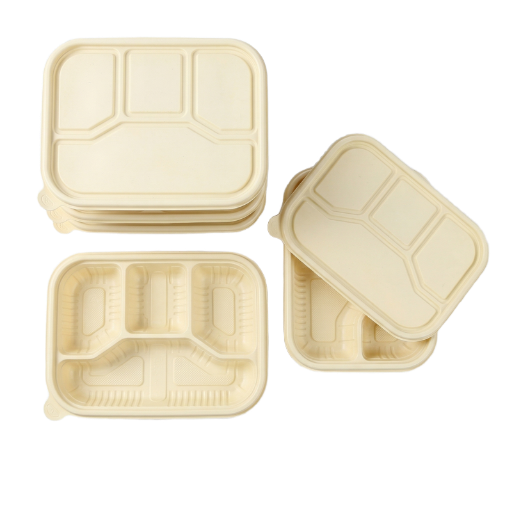
Maisstärke (erneuerbares TPS)
Cornstarch-Scharnierbehälter und -Schalen
Maisstärke, biologisch abbaubar in der industriellen Kompostierung unter Verwendung pflanzlicher Inputs Am besten für Kalt- und Umgebungs-Susmehl- und Käseverpackungsträger, Sushi-Karten, Kaltvolumen, Dessertbecher.
SPEC // 01
- Erzeugung von 8-Unzen-Portionsbechern bis hin zu 64-Ozen-Schalen.
- 1-, 2-, 3- und 5-Fächer-Scharnieroptionen
- Kompatibel mit kalter Flüssigkeit bis Umgebungstemperatur
LINIE 02
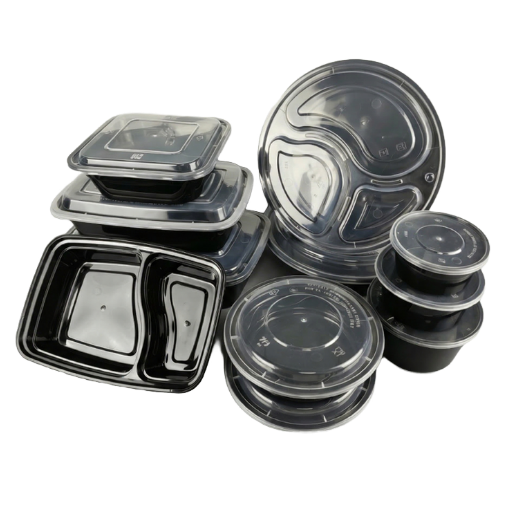
Bagasse (Zuckerrohrfaser)
Bagasse-Pritschen, Tabletts, Platten
Hergestellt aus Zuckerrohrfasern, einem Nebenprodukt der Zuckerherstellung. Branchenreferenzen für Gastronomie zeigen einen Servicetermeperaturbereich von 13 F bis 428 F – Warmlebensmittel-Arbeitspferd.
SPEC // 02
- Mikrowellensicher, gefriergeeignet, öl - und fettbeständig
- Natürliches cremefarbenes Finish, keine PFAS-Behandlung
- Burgerbox, Taco-Tablett, Hot-Entree-Clamshell-Formate
LINIE 03
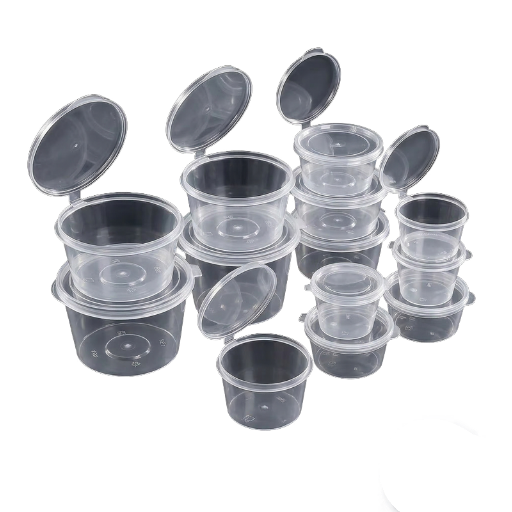
PLA / CPLA (Polymilchsäure)
Klare PLA Deli + Salatbehälter
Transparenter Biokunststoff auf Maisbasis Bietet Merchandising-Schreibtisch-Regel-Appeal für visuelles Merchandising, gekühlte Fertiggerichte, Smoothie-Schalen und Mikrogrünbeutel.
SPEC // 03
- Klarer PLA-Kaltbehälter am besten unterhalb des PLA-Erweichungsbandes
- Die CPLA-Version (kristallisiertes PLA) erhöht die Toleranz für warme, aber nicht heiße Lebensmittel auf etwa 85 C
- BPI gelistet, ASTM D6400 kompostierbar
LINIE 04
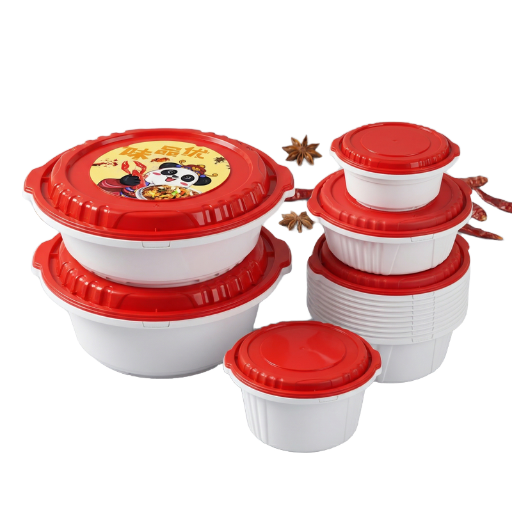
MFPP (Mikrowellen-PP)
Mikrowellengeeignete PP-Boxen mit Klappdeckeln
Polypropylen in Lebensmittelqualität für heiße Lieferwege, bei denen die Kompostierbarkeit gegenüber Funktions- und Eintopfsuppe, Reisplatten und wieder erhitzten Steaks zweitrangig ist.
SPEC // 04
- Mikrowellensicher auf etwa 130 C, Gefrierschranksicher auf minus 20 C
- Wiederverwertbarer Code 5
- Presssitz - und Schnappdeckel mit auslaufsicheren Felgen
BESCHAFFUNGSRESSOURCE
Entscheidungsmatrix Wählen Sie das richtige Material für EN + PROC + MGR
Die meisten Beschaffungsklagen über kompostierbare Behälter lassen sich auf die gleiche Grundursache zurückführen. „Ein Material, das für einen Anwendungsfall angegeben wurde, für den es nie entwickelt wurde. PLA, das über eine heiße Suppenleitung gegossen wird, verformt sich innerhalb von Minuten. Bagasse, das für einen gekühlten Eiskaffeetassen verwendet wird, verschwendet seine Hitzetoleranz. Dieses Blatt ist genau das gleiche interne Blatt, das unser technisches Team verwendet, wenn uns ein neuer Beschaffungsmanager ein Menü vorlegt und nach einem Ausgangspunkt fragt.
| Leistungsdimension | Maisstärke | Bagasse | PLA (Klar) | CPLA | MFPP |
|---|---|---|---|---|---|
| Betriebstemperaturdecke | ~85 bis 95 C für Short Hold | Bis 220 C dokumentiert | Softens 45 to 55 C | ~85 C | ~130 C, microwave safe |
| Freezer compatibility | Yes, to minus 18 C | Yes, to minus 25 C | Yes, brittleness rises below minus 10 C | Yes, to minus 18 C | Yes, to minus 20 C |
| Mikrowellen-wiedererwärmung | Limited, short duration only | Ja | Nein | Light reheat only | Ja |
| Oil and grease resistance | Good (lined options available) | Strong without PFAS treatment | Good for low-fat cold foods | Gut | Stark |
| Visual clarity | Opaque off-white | Natural off-white to brown | Kristallklar | Opaque white | Translucent or printed |
| End-of-life route | Industriekompost | Industrial compost, some home | Nur Industriekompost | Industriekompost | Recyclable code 5, not compostable |
| Relative unit cost band | Mitte | Mitte | Mid to upper | Upper | Lower |
| Typical certifications carried | BPI, ASTM D6400 | BPI, ASTM D6868, EN 13432 | BPI, ASTM D6400, EN 13432 | BPI, ASTM D6400 | FDA 21 CFR, food contact |
Engineering Note // Why PLA fails in hot applications
PLA deforms around 45 to 55 C due to its polymer chains reaching chain mobility at that point. Three independent foodservice references – Bioleader Pack, InNature Pack, and Dashan Packing – converge at this rate, with optional validation from Mountain Bio’s microwave ratio guide. If your menu includes hot soup or stew, or microwaved parts, direct those SKUs towards bagasse or MFPP rather than fighting PLA’s thermodynamics.
We tested cornstarch, bagasse, and PLA samples against five real customer menus before we recommended a split sourcing plan. Cornstarch carried the cold deli line, bagasse carried the hot mains, MFPP took the delivery soup, and clear PLA kept the salad case looking premium. One material is rarely the right answer for an entire menu.”
— Wanhui Application Engineering Team, sample-stage advisory
Target: All buyers (PROC focus on delivery)
Eco-Friendly Food Boxes With Lids — Hinged, Snap, and Press-Fit
Delivery service providers’ initial complaint to us is usually similar to an actual Reddit r/BuyItForLife post stating – “two containers had leaking issues when just thrown into a bag with a rather brothy soup inside, some others are developing small cracks.” If the lid does not survive its delivery rider carrying bag, it is not truly a closure.
We offer three styles of lid on our compostable food containers with lids system, and each responds to a slightly different use case:
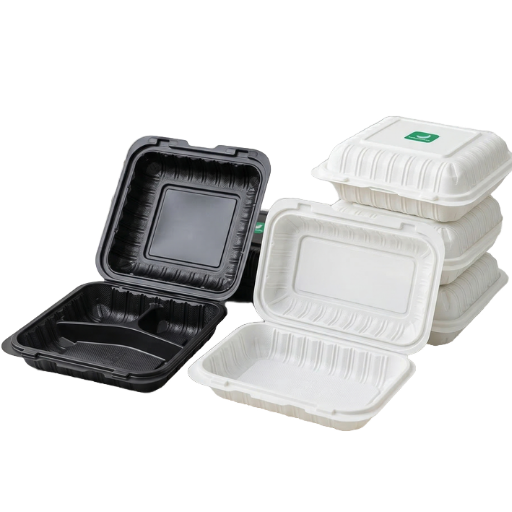
Hinged Lids (Same-Body)
Hinged lid-molded-from-sheet design. Both halves nestls into each other – no lid mis-pairs on the line.
- Best for clamshells, burger boxes, taco trays
- Niedrigste Kosten pro Einheit
- Available in cornstarch, bagasse, and PLA
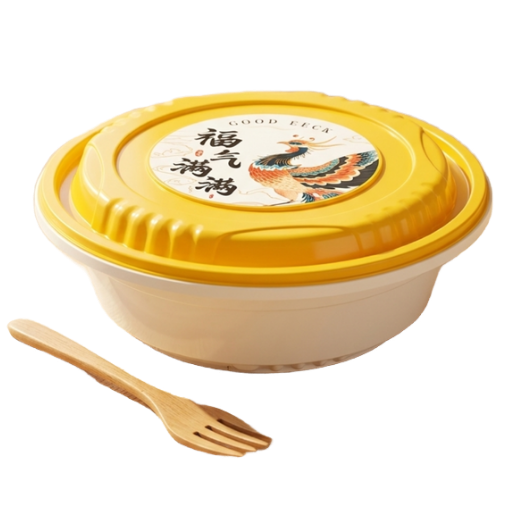
Snap-On Lids (Separate)
Independent snap-lock lid shell. Permits stacking of various lid models over a common base, ideal for menu-engineering projects.
- Tighter seal under shaking
- Compatible with PET window inserts for display
- Available on PLA deli rounds and bagasse bowls
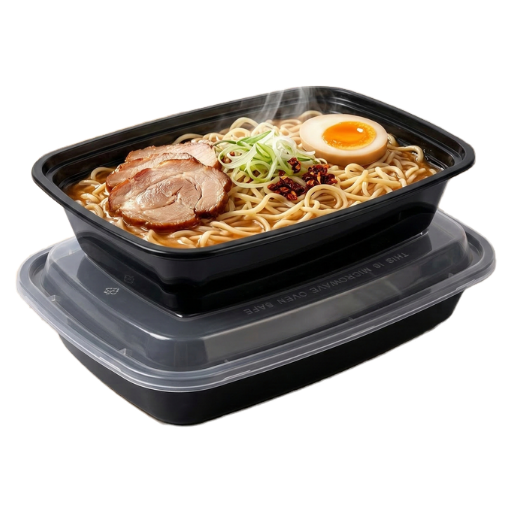
Press-Fit Lids (Tamper-Evident Optional)
Press-fit lid with optional tamper-evident indicators for food safety audits on ghost kitchens and home meal delivery.
- Strongest seal across our lid range
- Suitable for broth based soups and curries – withstands ride bag motion
- Available on MFPP and bagasse bowl bases
Compostable Certifications by Region — BPI, ASTM, EN 13432, TUV OK PROC + EN
Now I can’t recycle or compost this here, it all has to go in the landfill”—that sentiment expressed by a Vancouver Reddit r/vancouver thread summarizes the trust problem behind every certification logo. Shoppers and procurement teams have learned how to sniff past schemer-backed logos. They want to know what regions each certification program oversees, what they each explicitly test, and whether the certifier sponsored that SKU.
| Zertifizierung | Test Standards | Primary Region | What It Tests | Wanhui SKU Coverage |
|---|---|---|---|---|
| BPI Listed (Biodegradable Products Institute) | ASTM D6400 (plastics), ASTM D6868 (lined fiber) | United States, Canada | Biodegradation, disintegration, ecotoxicity, total fluorine (PFAS), chemical composition | Cornstarch hinged line, bagasse clamshell line, PLA deli line |
| TUV OK Compost Industrial | EN 13432 | Europäische Union | Industrial composting at 55 to 60 C, 12-week breakdown | PLA cold line, bagasse hot line |
| TÜV OK Kompost Startseite | EN 13432 stricter sub-set | EU, Australia | Home composting at 20 to 30 C, 12-month breakdown | Bagasse plate line, select cornstarch SKUs |
| FDA 21 CFR Food Contact | FDA 21 CFR Part 177, 178 | Vereinigten Staaten | Direct food contact safety — migration limits, additive approvals | All product lines |
| EU 10/2011 Food Contact | EU Regulation 10/2011 | Europäische Union | Direct food contact for plastic materials and articles | PLA, CPLA, MFPP lines |
| National Hygiene Standard | GB 4806.1, GB 4806.7 | China and Asia-Pacific | Food-contact material safety baseline | All product lines |
POLICY UPDATE // 2024 PFAS TESTING
A relatively quiet but nearly decisive 2024 update. Starting at the beginning of the year in 2024, the Biodegradable Products Institute imposed a new requirement that all underwriters test for total fluorine—that is confirmed over and over by World Centric’s guidance. This one policy rollout incorporated PFAS-free testing into the BPI logo itself. A current BPI listing can now be presented as a stand-in answer to a U.S. buyer’s inquiry about PFAS compounds in a product, which elsewise would come as a separate disclosure.
INFRASTRUCTURE // DISPOSAL REALITIES
In the disposal infrastructure category is where a BPI logo isn’t good enough. The BPI mark validates that the item can be sustainably composted at a facility that has the appropriate digester in place. Whether said facility is convenient in your customer’s markets is a different matter entirely—the Biodegradable Products Institute itself provides a list of verified facilities, and various states (California, Washington, New York) legislatively require compostability by restaurants in foam-restricted categories even if we lack local real-world access. Procurement teams that want both a compostable and recyclable option are why MFPP and PLA seem to live side-by-side in our portfolio.
Real Outcomes — Chain Restaurants, Delivery, Hospital Canteens MGR + EN
Our documentation supports three market segments—casual-dining and quickservice chains piloting new packaging, delivery-platform housebrands carrying heavy weekly volume, and institutional canteens at hospitals and schools where a necessary amount of compliance paperwork is brought along. Across each one, the same trend emerges.
[ROI Framework — Silver Tier]
EVAL_MATRIX_V1
The Cost Conversation, Honestly Framed
According to Restaurant Dive industry reporting, the cost premium of a small plastic salad clamshell compared to a comparably-sized compostable corn clamshell is about $0.09 and about $0.33 respectively, a 3.7x premium. That nutrition-of-Africa-in-your-hand premium is the one foodservice operators steer around until a state ban makes the choice for them. Our team runs the numbers in four different ways during proposal giving and the customer chooses the view that becomes their decision file:
- 01 On a compliance-cost perspective, avoided violations and reorders triggered by future foam bans – seen in California, New York, and Virginia today.
- 02 On a brand-equity perspective, consumer preference surveys discussed by Restaurant Dive indicate most consumers are willing to pay more for eco-sound packaging, a margin-conscious operator can include on the takeout invoice.
- 03 On a loss-avoidance perspective, fewer complaints related to over-zealous hot-food spillage when huggies match the menu, as defined by the Decision Matrix above.
- 04 On a volume-tier perspective, at our higher MOQ tiers, the per-unit premium shrinks – we will list every tier on the quote sheet instead of the page.
Wanhui will not give you one definitive ROI percentage because the right one depends upon your menu mix and customer geographic zone. Once you give us your SKUs we will give you an exact ROI.
Chain Restaurant Rollout
[SEC-01]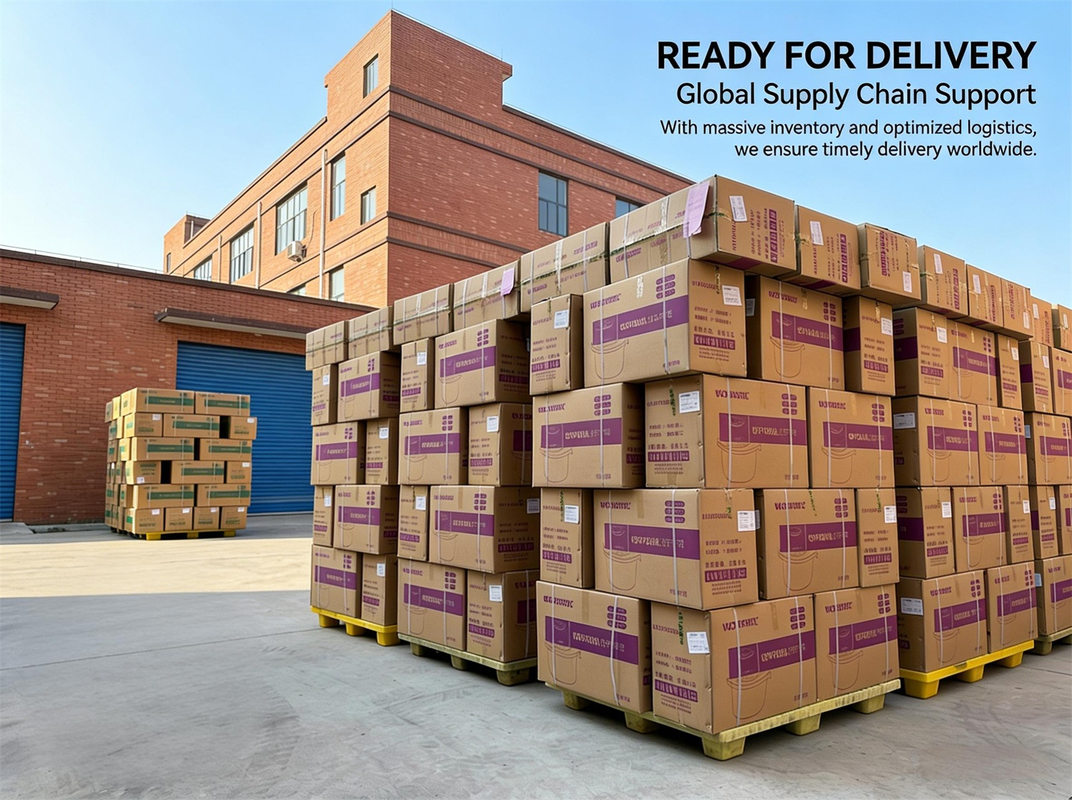
[+] REVEAL DATA
Most chains begin with twenty sites in a localized area—a single off-menu SKU and one on-menu SKU (between clamshell hand-pack and side bowl). We maintain their required spec roll-out, and then ship in frequency aligned to their distribution center. Once the initial test phase—the first per-SKU complaint reduction—is achieved, the organization begins to freeze distribution.
Mixed-material orders inside one container
Logo print held to brand color codes
Lead time consistent across reorders
Lebensmittellieferplattform
[SEC-02]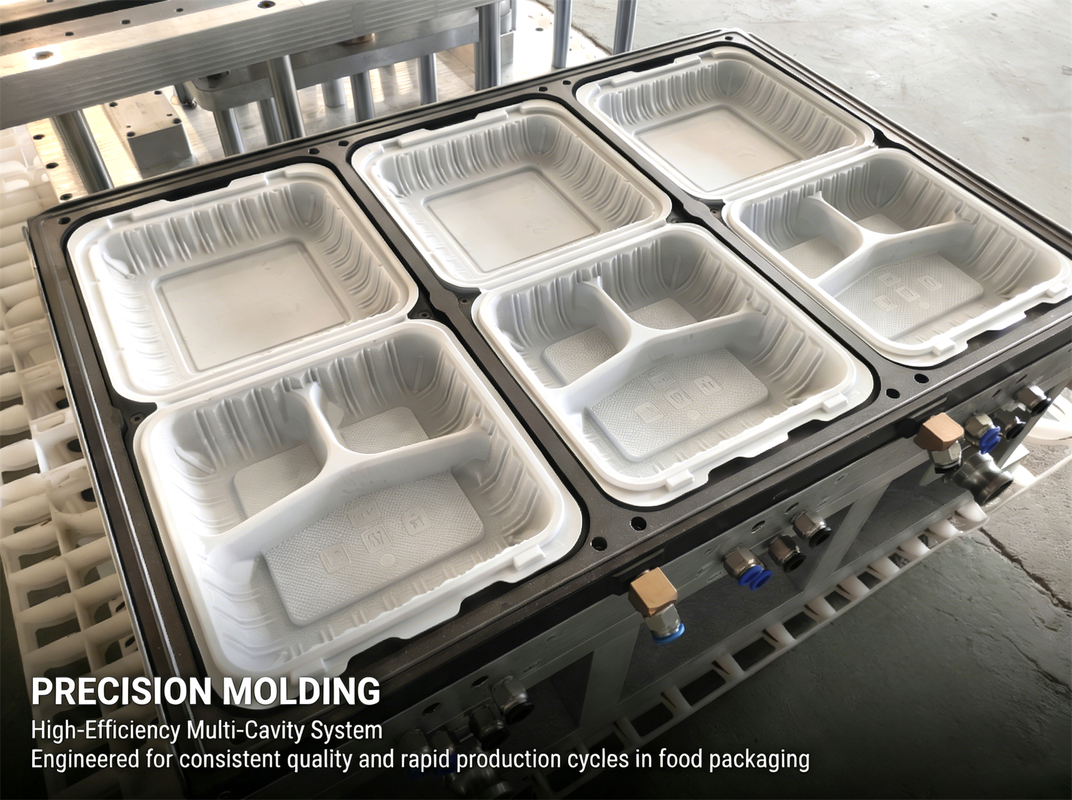
[+] REVEAL DATA
Delivery partners care about two numbers—the integrity of the seal at the delivery handoff, and the per-SKU total freight cost. We supply them MFPP press-fit lids on both soup SKUs, bagasse hinged clamshells on hot main dishes, and cornstarch flat table-placed lids on the cold side. Customs paperwork is embedded in the shipping container. Never after.
Press-fit seal on broth menus
Bagasse clamshells for hot mains
Custom mold for branded compartment layouts
Hospital and School Canteen
[SEC-03]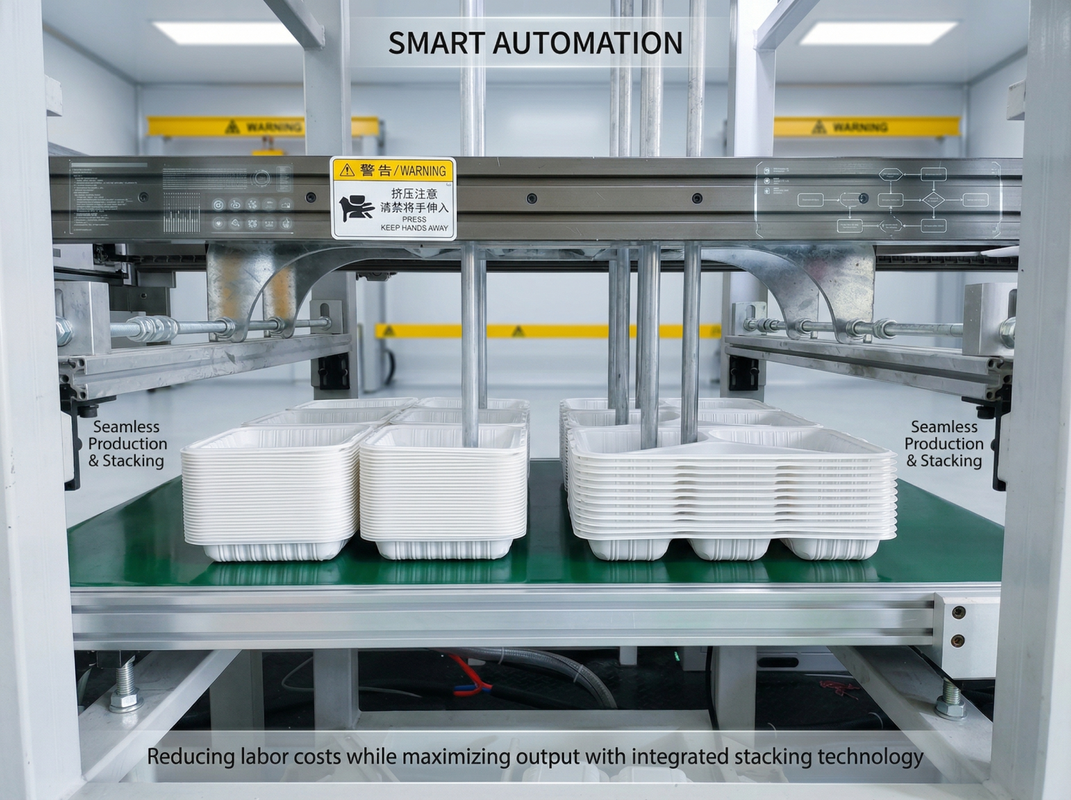
[+] REVEAL DATA
Institutional buyers request the certifying paperwork before the sample. Our certification pack—the BPI certification, ASTM test reports, FDA letter, and national hygiene certificate prior to vessel departure. The buying manager passes their internal compliance review, and the dietary program can set an ongoing order.
Paperwork-first onboarding
Stackable, dishwasher-resistant outer surface
Single-compartment and bento layouts
MARKET ANALYSIS //
Eco-Friendly Food Boxes vs Plastic vs Foam — Cost and Compliance Analysis MGR + PROC
Foam ban geography is the most potent tailwind a compostable company has experienced in twenty years, but the consumer side question has not changed – what does this look like on the four criteria that matter for operations and finance considerations? The table below does not hold back on the unflattering rows.
| Dimension | Expanded Polystyrene Foam | Conventional Plastic (PET, PP) | Eco-Friendly Food Boxes (Our Range) |
|---|---|---|---|
| Unit cost band (small salad container reference) | Lowest historically | Around 0.09 dollar per unit | Around 0.33 dollar per unit for compostable corn variant |
| Regulatory exposure (United States, 2025) | Banned in 9 states plus over 100 cities | Increasingly restricted on cutlery and bags | No use restriction in foodservice |
| PFAS-free claim defensibility | N/A but linked products often grease-proofed with PFAS | N/A | BPI 2024 fluorine testing folds PFAS-free verification into the cert |
| End-of-life cost to municipality | Highest — landfill plus litter recovery | Mid — recyclable in theory, low recovery rate in practice | Lowest — diverts food waste from landfill where composting facilities exist |
| Consumer preference signal | Net negative | Neutral to net negative on takeout | Net positive — willingness-to-pay-more documented |
| Operator’s five-year forward risk | Stranded inventory at ban activation | Tightening city-by-city restrictions | Aligned with the direction of regulation |
FERTIGUNGSFÄHIGKEITEN
Custom Logo Printing and Custom Mold Development — OEM and ODM MGR + PROC
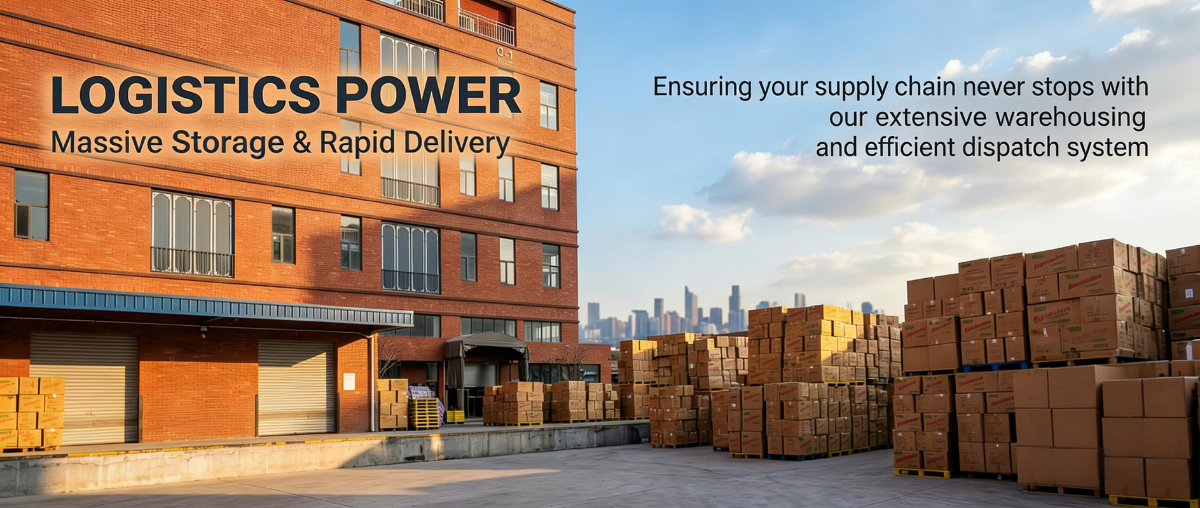
Most eco tableware brands sell only the inventory their factory is built to manufacture. Wanhui steps closer to the production line – we design new molds and produce on-product printing on-site. Every month we offer two services for wholesale customers:
On-mold branding on stock items.
Print Specifications
One- and two-color print, on CMYK at model run size or full CMYK on your brand colors. We moderate scale and offer pre-print samples of your new tableware.
Custom mold development.
Design & Lead Time
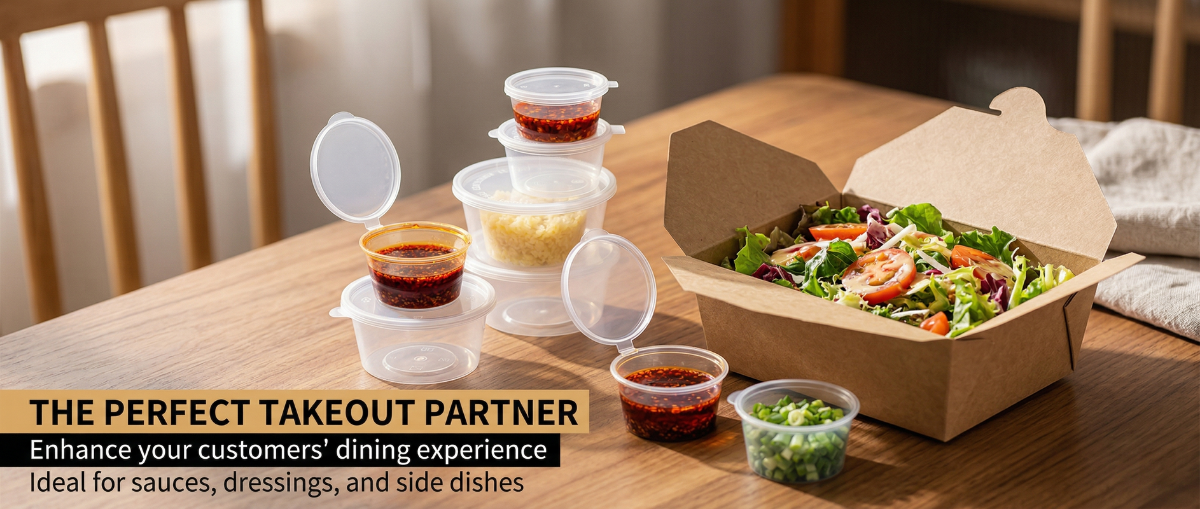
If your menu requires a compartment scheme we don’t currently stock–say a three-compartment bento with a deep entre well and two shallow side wells tailored to your portion-control targets–our tooling team conceptualizes and produces the mold to your CAD spec. Mold lead time is usually weeks, not months, and the SKU becomes your property for the contract term.
SUPPLY CHAIN OPERATIONS
Procurement Guide — MOQ Tiers, Lead Time, FOB Qingdao, Container Loading PROC + MGR
Procurement decisions are one part “how cheap” to three parts “how predictable.” Foodservice buyers battle three risks with worldwide sourcing: MOQ that demands too much capital, lead time that recedes after the deposit, and container loading math that defies supply chain planning. We publish the example below to expedite the initial discussion.
| Procurement Dimension | Practice at Wanhui | Why It Matters |
|---|---|---|
| Standard MOQ for stock SKUs | Tier-based — entry tier accessible for branded pilots, mid and full tiers earn unit-cost steps down | Working-capital-friendly start, with a defined path to volume pricing |
| Lead time for stock SKUs | Typically a few weeks from production confirmation | Predictable cycle into your warehouse pull schedule |
| Lead time for custom-print orders | Longer than stock, set on the print proof sign-off | Brand assets get checked before the press runs |
| Lead time for custom mold | Weeks for tooling plus a production cycle | Predictable runway for chain pilots and exclusivity programs |
| FOB port | Qingdao, with optional EXW pickup for buyers managing their own freight | Mature port with regular sailings to North America, Europe, MENA, APAC, and South America |
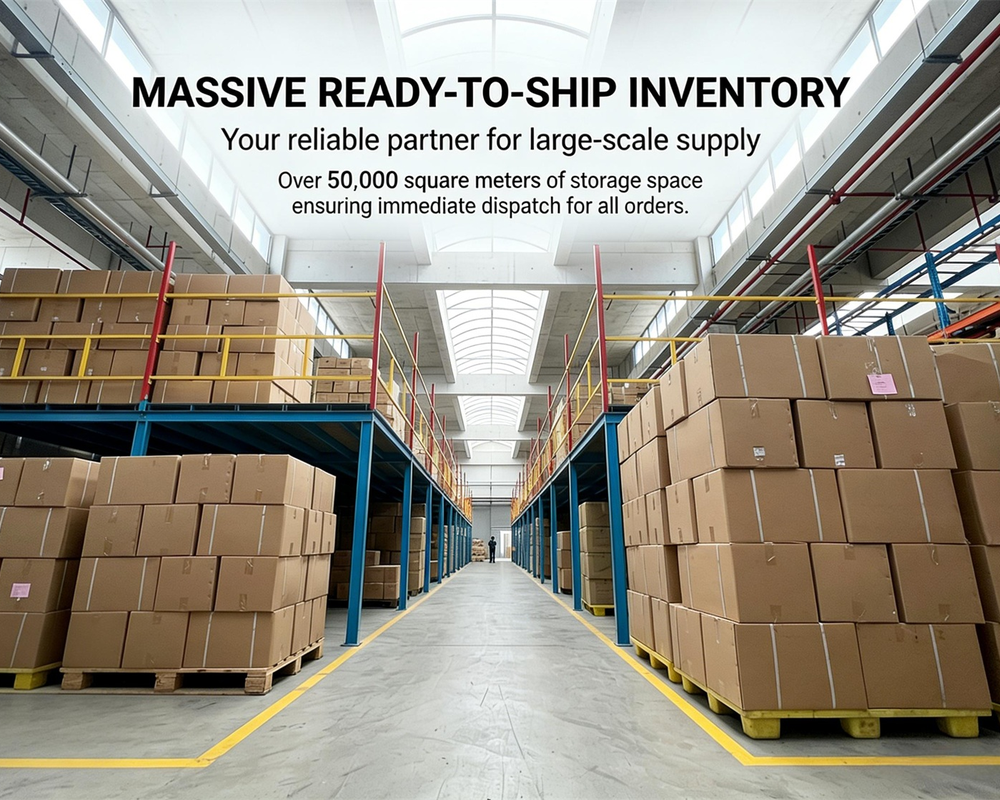
| Container loading | Detailed loading plan attached to every quote — cases per 20-foot and 40-foot container, palletized or floor-loaded | Your freight forwarder gets the carton math up front, not after the booking |
| Payment and documentation | Commercial invoice, packing list, BPI listing reference, ASTM test report, FDA letter, certificate of origin | One package to your customs broker, no follow-up email chain |
FACTORY INFRASTRUCTURE
Manufacturing Capacity — 20 Thermoforming, 6 Extrusion, 60 Injection Lines PROC + EN
Being transparent with our factory values remains the lone factor a distributor cannot imitate. International buyers inquire within our second conversation–just how many line counts, how many personnel, and what occurs if one meager line encounters maintenance. Below are our observations:
“Customers frequently ask if I can clarify what happens in our process when a thermoforming line is periodically shut down. My straightforward reply is that we frequently use redundant tooling for commonly-ordered SKUs across two lines, and the overall SKU selections within the same shift are rebalanced. This function is reported internally, not to your order date.”
Wanhui Production Management Team, on real-world redundancy
Our manufacturing facility remains designed specifically for food packaging–not altered from a multi-purpose injection mold/assembly line. This approach is immediately detectable in our tooling library, the food-grade input verification procedures, and the operative skill set of personnel.
-
01 //
20 thermoforming lines converting cornstarch, bagasse, and cellulose-plastic (CPLA) materials into foodservice packaging
-
02 //
6 sheet extrusion lines forming upstream materials that are converted on the thermoforming lines–over 30 tons of sheet daily
-
03 //
60 injection molding lines shaping MFPP cartons, covers, and rigid forms
-
04 //
More than 1 million units daily handled by all three manufacturing communities
-
05 //
Work force of 200–including 30 in sales, 30 in warehousing and distribution, over 120 in operations, and more than 20 in logistics and overseeing
-
06 //
20 years of innovation in food packaging–meal boxes, plates, and single-use foodservice items
-
07 //
Five geographic export areas–Europe, the Americas, the Middle East, Asia Pacific, and South America
Eco-Friendly Food Box Assessment Tools
TARGET: ALL BUYERS
Häufig gestellte Fragen
Funktionieren Ihre umweltfreundlichen Maisstärke-Lebensmittelboxen für warme Lebensmittel und ölige Lebensmittel?
Maisstärke hält Warmhalteleistung bis etwa 85° -95°C Band-perfekt für heiße Reisplatten und die meisten gebratenen Netz, die schnell laufen Für Wärme, die länger heiß benötigen, die höhere Warteschlangentemperatur einer Mikrowelle oder die direkte Hitze einer Fritteuse ohne Öl, sollten die SKUs stattdessen zu Bagasse oder mikrowellengeeignetem Polypropylen geleitet werden Die obige Entscheidungsmatrix zeigt die Temperaturdecken nebeneinander.
Wie hoch ist das Mindestbestellmenge für biologisch abbaubare Lebensmittelbehälter im Großhandel in Ihrer Fabrik?
MOQ läuft auf einem gestuften System - einer niedrigsten Einstiegsstufe für Kettenpiloten und Markentestläufe, dann mittleren und vollen Stufen, die die Einheit verschieben - Kostenabwärtsschritte Die MGO-Auswahl hängt von Ihrer SKU-Anzahl, Druckspezifikation und davon ab, ob Sie einen Standard- oder Fast-Track-Custom-Run wünschen. Senden Sie uns Ihre SKU-Liste und wir geben den Stufenplan zurück.
Wie lange dauert die Vorlaufzeit für individuell bedruckte umweltfreundliche Lebensmittelboxen?
Stock-SKU läuft Schiff in ein paar Wochen ab den Daten, die wir die Produktion bestätigen Custom-Print-Läufe fügen den drucksicheren Abmeldeschritt hinzu Kundenspezifische Formenentwicklung fügt den Zeitraum vor Produktionsbeginn hinzu Vorlaufzeiten werden auf jedem Angebot dokumentiert, die die angegebenen Daten und nicht eine Reichweite zeigen - die Käufer schätzen, dass die Änderung eine einfachere Frachtplanung ermöglicht.
Sind Ihre Behälter PFAS-frei und BPI oder ASTM D6400 zertifiziert?
Unsere kompostierbaren Linien sind BPI Listed under ASTM D6400 (Plastiaics) oder ASTM D6868 (Lineed Fiber) Mit Wirkung zum Januar 2024 hat das Biodegradable Products Institute für diese Zertifizierung Totalfluortests vorgeschrieben, eine aktuelle BPI-Liste an sich ist eine vertretbare PFAS-freie Forderung in den USA EU-Käufer erhalten die passenden EN 13432-Papiere unter TUV OK Compost, wo die SKU nachgewiesen wird.
Können Sie unser Restaurant - oder Markenlogo auf die Behälter drucken?
Einfarb-, Zweifarben- und Voll-CMYK-Druck sind alles Prozesse, die unser Druckteam in unsere Standardformen verkabeln kann. Unser Team hält Markenfarbparameter an Ihre Designrichtlinien, anstatt nach einem Pantone-Match zu suchen. Kleine Markenauflagen werden auf Lager-SKUs akzeptiert; Produktionsauflagen ab zehntausend Einheiten sind der sicherste Auftritt für Ketten-Rollouts. Unser Druckteam fordert normalerweise ein Markenfarbblatt, die kamerataugliche Vektorkunst und eine Zielgehäusemenge an, bevor es das Drucksetup angibt. Für saisonale Menüänderungen halten wir Ihr Formarchiv auf Lager, sodass der zweite Lauf direkt in der Pressephase beginnt und nicht umgerüstet wird. Markentestaufträge unterhalb des Produktionsminimums sind für Piloten verhandelbar, die ein Warenmuster benötigen.
Was ist der Unterschied zwischen PLA, Bagasse, Maisstärke und MFPP, die ich bestellen sollte?
Every family was designed for a unique temperature, food class, and disposal routing uses case. Cornstarch excels with cold and ambient food orders. Bagasse is rated up to 220 C and has the best carbon-to-hot-food load ratio, especially without PFAS treatment. PLA remains transparent and serviceable for aesthetically-sorted Cold field merchandising, though it melts at about 50 C. CPLA gives you a higher hot-food ceiling. MFPP is the only family in our collection that performs predictably in the microwave. The above matrix walks through that; each application’s engineering team helps you allocate a menu across families during the quote process.
Können wir eine individuelle Form für unsere Marke entwickeln?
Natürlich. Unser Werkzeug-Team entwirft die Form nach Ihrer Cad-Zeichnungsspezifikation oder Ihrem gezeichneten Konzept, und die unvollendete SKU wird für die Dauer zu Ihrem. Die Formvorlaufzeit erfolgt über Wochen statt Monate. Kundenspezifische Formen sind die Investition wert, wenn Sie eine Fachkonfiguration, einen Fußabdruck oder eine Form benötigen, die in unserer Lagerbibliothek nicht vorhanden sind.
Wie werden diese Container entsorgt, was gibt es in Städten ohne Kompostierung?
Industrial composting sites receive BPI listed containers in cities that run municipal or contracted sites – the Biodegradable Products Institute makes a free public list available. In those no infrastructure areas the same containers still divert from foam still meet the regulatory profile required by single-use plastic foam bans still steer clear of PFAS in the food-contact layer. Honest answers serve the buying public better with regarding to the disposal question because the credibility of every certification logo depends on it.
Im Trend