Get in touch with Wanhui Company

B2B Wholesale Program
Eco-Friendly Food Boxes Manufacturer — Compostable Containers Wholesale
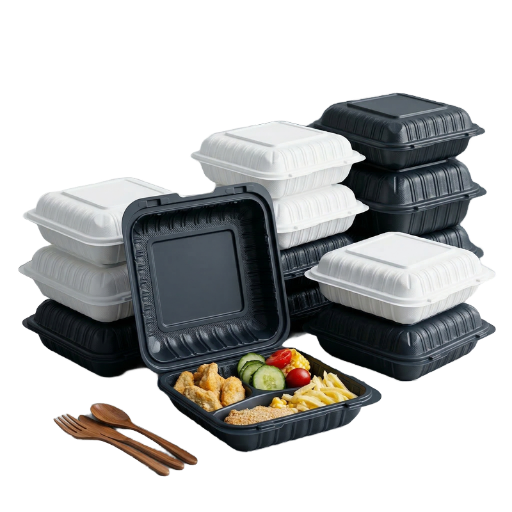
Foodservice companies from California to New York are moving away from foam under fast-growing single-use plastic restrictions. Our wholesale program delivers BPI-approved environmentally friendly food boxes to food delivery companies, catering distributors and restaurant chains that perform on real delivery routes—running across our cornstarch, bagasse, PLA and microwave-compatible polypropylene lines.
Get A Wholesale Quote
BPI / FDA / PFAS-Free Verified
Ref / Eco-Box · 04 Material Families
01
BPI Certified (ASTM D6400 / D6868)
02
FDA 21 CFR Compliant
03
PFAS-Free + BPA-Free
04
20 Years Specialized Manufacturing
05
Export To 5 Regions
Capability Snapshot
The Wanhui Solution At A Glance
// 05 Pillars
01 / Scale
Manufacturing Size
20 thermoforming lines, 6 sheet extrusion lines, 60 injection molding lines, over 30 tons/day of sheet material, million/day capacity.
02 / Material
Four Material Families
Cornstarch boxes for cold and ambient foods, bagasse for hot loads and microwaving, clear PLA containers for cold dishes and salads, 100% microwave-competent polypropylene (MFPP) for delivery and re-heat.
03 / Compliance
Third-Party Certifications Buyers Verify
BPI-listed since testing for PFAS in January 2024 became Mandatory, national sanitation standards, international food safety checks.
04 / OEM
Same Line Customization
Logo printing, color matching, custom mold development for branded combination layout.
05 / Channels
Markets Served
Chain restaurants, food delivery apps, hospital and college lunchrooms, catering distributors.
Target: All buyers
From Foam to Eco-Friendly Food Boxes — Why Foodservice Is Switching
Market & Regulations
The Shift Away From Foam
Eco-Containers—hot and cold to-go boxes and dishes you’re considering before foodservice companies in the U.S. and E.U. are no longer allowed to purchase expanded polystyrene foam.
Key Legislation Timelines
California’s statewide ban on foam foodware secured its public launch in 2025, and New York’s polystyrene restrictions went into effect alongside a Cold Storage Container limitation on January 1, 2026. Over one hundred cities and over twenty states have now adopted foam restrictions that together account for roughly a third of the entire U.S. foodservice market.
Sustainable Ingredients
What Are Eco-Containers?
Eco-Containers—sometimes called biodegradable containers, compostable containers or sustainable foodservice packaging—are disposables manufactured from naturally renewable ingredients like sugarcane fibrous bagasse, cornstarch, polylactic acid (PLA), molded plant fiber or microwaveable food-grade polypropylene.
Current Applications
They are in active use for hot and cold takeout, delivery and grab-and-go applications, in replacement for foam and standard plastic.
Performance & Price
The Transition Pace
This is happening but slowly.
A Reddit feed in r/California revealed a dilemma English-speaking procurement teams need to prepare for—”Putting in biodegradable packaging then reverting to cheap plastic.”
Three Pillars of Success
Eco-Containers are only durable when three obstacles—performance through delivery, price over multi-year releases and designed-in document validation—are managed simultaneously. This page outlines each of those data points, our back-end application engineering lessons.
Module // Product Lines
Wanhui Eco-Friendly Food Box Product Lines EN + PROC
Our four manufacturing lines are able to supply the temperature, food type and disposal-route combinations that our wholesale contacts request. Every line uses FDA-approved raw inputs and passes both applicable British standards and global food safety protocols. Any combination of product family can be stored inside the same bundle/advance to fully support multiple SKUs.
LINE 01
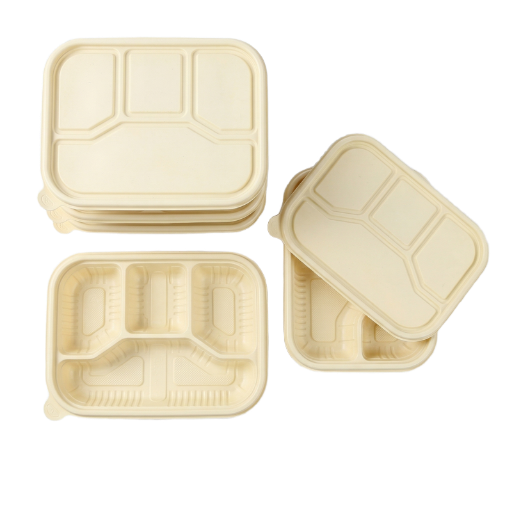
Cornstarch (Renewable TPS)
Cornstarch Hinged Containers And Bowls
Cornstarch, biodegradable in industrial composting using plant-based inputs. Best for cold and ambient foods—meat and cheese package carriers, sushi maps, cold volume, dessert cups.
SPEC // 01
- Generation from 8-ounce portion cups through 64oz bowls.
- 1, 2, 3 and 5-compartment hinged options
- Compatible with cold liquid up to ambient temperature
LINE 02
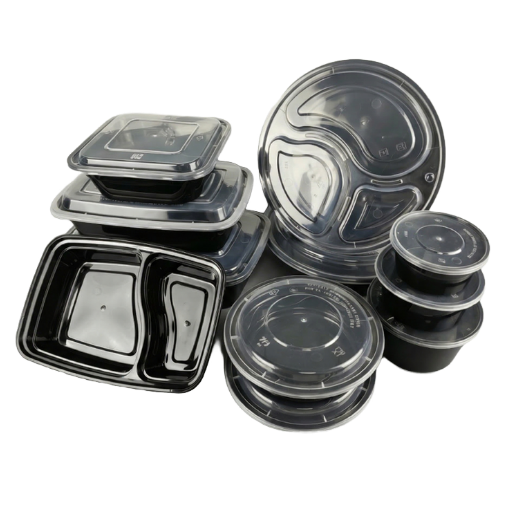
Bagasse (Sugarcane Fiber)
Bagasse Clamshells, Trays, Plates
Made from sugarcane fiber, a by product of sugar making. Industry foodservice references show service temperature range from – 13 F to 428 F – hot food workhorse.
SPEC // 02
- Microwave-safe, freezer-safe, oil and grease resistant
- Natural off-white finish, no PFAS treatment
- Burger box, taco tray, hot entrée clamshell formats
LINE 03
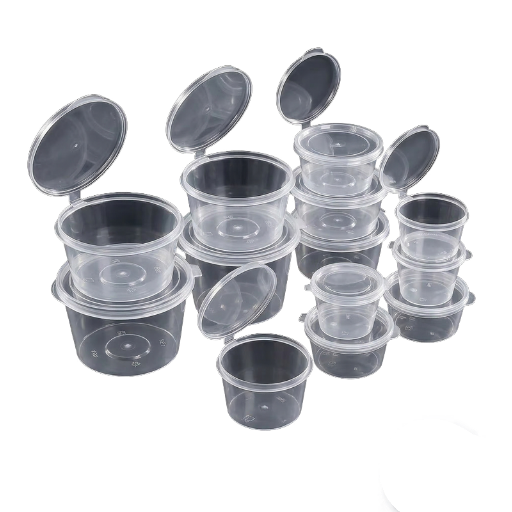
PLA / CPLA (Polylactic Acid)
Clear PLA Deli + Salad Containers
Corn based transparent bioplastic. Provides merchandising desk shelf appeal for visual merchandising chilled ready meals, smoothie bowls, microgreens bags.
SPEC // 03
- Clear PLA cold container best below the PLA softening band
- CPLA (crystallized PLA) version extends tolerance to about 85 C for warm but not hot foods
- BPI Listed, ASTM D6400 compostable
LINE 04
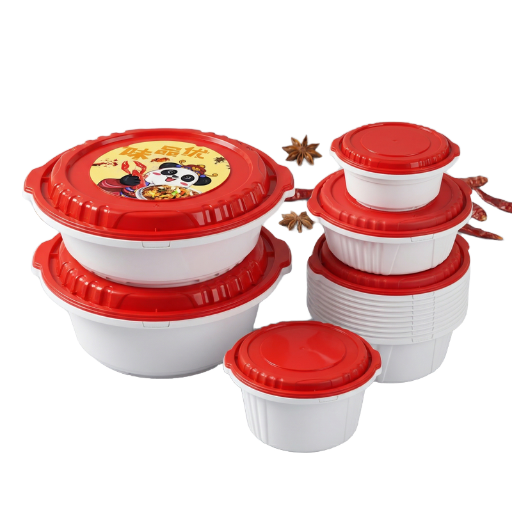
MFPP (Microwave PP)
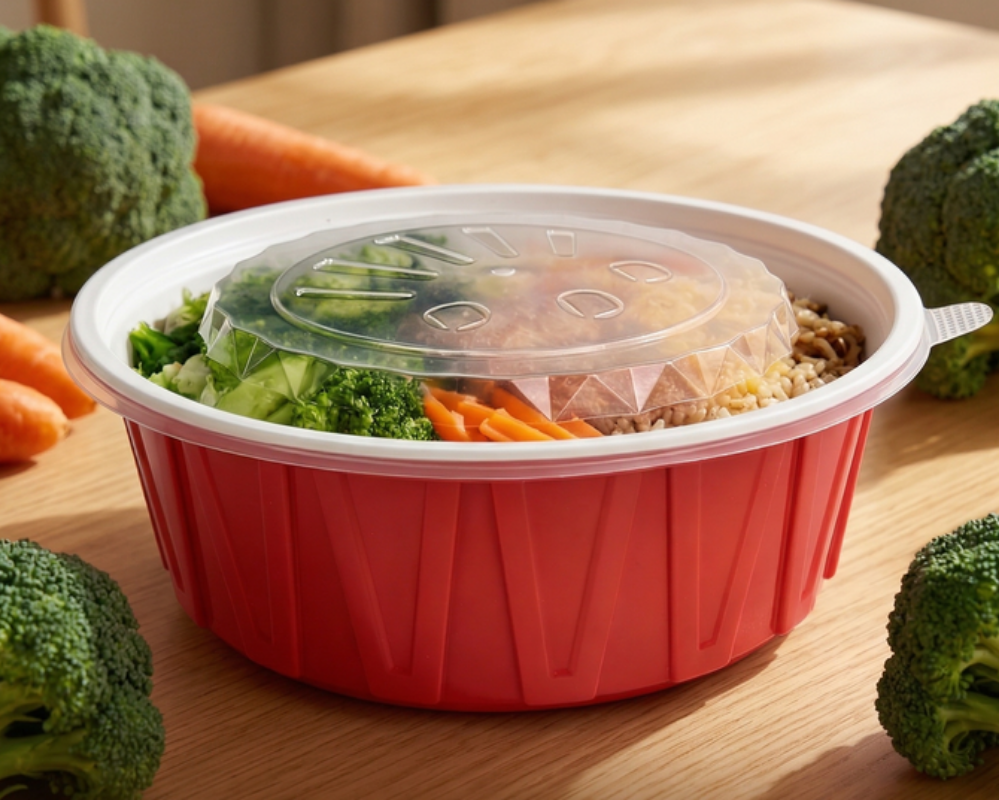
Microwaveable PP Boxes With Hinged Lids
Food grade polypropylene for hot delivery routes where compostability is secondary to function – soup, stew, rice plates and reheated steaks.
SPEC // 04
- Microwave safe to about 130 C, freezer safe to minus 20 C
- Recyclable code 5
- Press-fit and snap lids with leak-resistant rims
PROCUREMENT RESOURCE
Decision Matrix — Choosing the Right Material for Your Menu EN + PROC + MGR
Most procurement complaints about compostable containers can be traced to the same root cause – a material got specified for a use case it was never engineered for. PLA poured over a hot soup line will deform within minutes. Bagasse used for a chilled iced-coffee cup wastes its heat tolerance. This sheet is exactly the same internal sheet our technical team uses when a new procurement manager presents us with a menu and asks for a starting point.
| Performance Dimension | Cornstarch | Bagasse | PLA (Clear) | CPLA | MFPP |
|---|---|---|---|---|---|
| Service temperature ceiling | ~85 to 95 C for short hold | Up to 220 C documented | Softens 45 to 55 C | ~85 C | ~130 C, microwave safe |
| Freezer compatibility | Yes, to minus 18 C | Yes, to minus 25 C | Yes, brittleness rises below minus 10 C | Yes, to minus 18 C | Yes, to minus 20 C |
| Microwave reheating | Limited, short duration only | Yes | No | Light reheat only | Yes |
| Oil and grease resistance | Good (lined options available) | Strong without PFAS treatment | Good for low-fat cold foods | Good | Strong |
| Visual clarity | Opaque off-white | Natural off-white to brown | Crystal clear | Opaque white | Translucent or printed |
| End-of-life route | Industrial compost | Industrial compost, some home | Industrial compost only | Industrial compost | Recyclable code 5, not compostable |
| Relative unit cost band | Mid | Mid | Mid to upper | Upper | Lower |
| Typical certifications carried | BPI, ASTM D6400 | BPI, ASTM D6868, EN 13432 | BPI, ASTM D6400, EN 13432 | BPI, ASTM D6400 | FDA 21 CFR, food contact |
Engineering Note // Why PLA fails in hot applications
PLA deforms around 45 to 55 C due to its polymer chains reaching chain mobility at that point. Three independent foodservice references – Bioleader Pack, InNature Pack, and Dashan Packing – converge at this rate, with optional validation from Mountain Bio’s microwave ratio guide. If your menu includes hot soup or stew, or microwaved parts, direct those SKUs towards bagasse or MFPP rather than fighting PLA’s thermodynamics.
We tested cornstarch, bagasse, and PLA samples against five real customer menus before we recommended a split sourcing plan. Cornstarch carried the cold deli line, bagasse carried the hot mains, MFPP took the delivery soup, and clear PLA kept the salad case looking premium. One material is rarely the right answer for an entire menu.”
— Wanhui Application Engineering Team, sample-stage advisory
Target: All buyers (PROC focus on delivery)
Eco-Friendly Food Boxes With Lids — Hinged, Snap, and Press-Fit
Delivery service providers’ initial complaint to us is usually similar to an actual Reddit r/BuyItForLife post stating – “two containers had leaking issues when just thrown into a bag with a rather brothy soup inside, some others are developing small cracks.” If the lid does not survive its delivery rider carrying bag, it is not truly a closure.
We offer three styles of lid on our compostable food containers with lids system, and each responds to a slightly different use case:
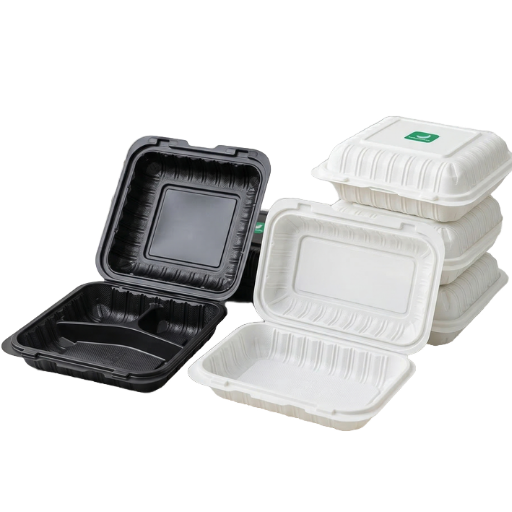
Hinged Lids (Same-Body)
Hinged lid-molded-from-sheet design. Both halves nestls into each other – no lid mis-pairs on the line.
- Best for clamshells, burger boxes, taco trays
- Lowest per-unit cost
- Available in cornstarch, bagasse, and PLA
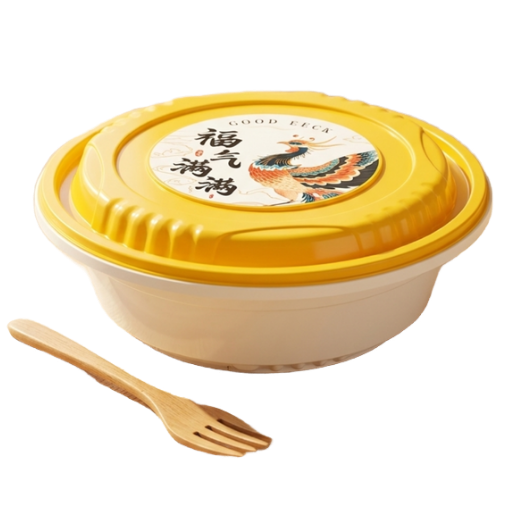
Snap-On Lids (Separate)
Independent snap-lock lid shell. Permits stacking of various lid models over a common base, ideal for menu-engineering projects.
- Tighter seal under shaking
- Compatible with PET window inserts for display
- Available on PLA deli rounds and bagasse bowls
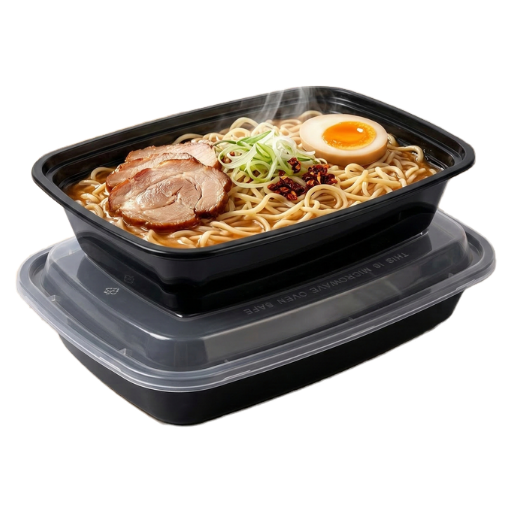
Press-Fit Lids (Tamper-Evident Optional)
Press-fit lid with optional tamper-evident indicators for food safety audits on ghost kitchens and home meal delivery.
- Strongest seal across our lid range
- Suitable for broth based soups and curries – withstands ride bag motion
- Available on MFPP and bagasse bowl bases
Compostable Certifications by Region — BPI, ASTM, EN 13432, TUV OK PROC + EN
Now I can’t recycle or compost this here, it all has to go in the landfill”—that sentiment expressed by a Vancouver Reddit r/vancouver thread summarizes the trust problem behind every certification logo. Shoppers and procurement teams have learned how to sniff past schemer-backed logos. They want to know what regions each certification program oversees, what they each explicitly test, and whether the certifier sponsored that SKU.
| Certification | Test Standards | Primary Region | What It Tests | Wanhui SKU Coverage |
|---|---|---|---|---|
| BPI Listed (Biodegradable Products Institute) | ASTM D6400 (plastics), ASTM D6868 (lined fiber) | United States, Canada | Biodegradation, disintegration, ecotoxicity, total fluorine (PFAS), chemical composition | Cornstarch hinged line, bagasse clamshell line, PLA deli line |
| TUV OK Compost Industrial | EN 13432 | European Union | Industrial composting at 55 to 60 C, 12-week breakdown | PLA cold line, bagasse hot line |
| TUV OK Compost HOME | EN 13432 stricter sub-set | EU, Australia | Home composting at 20 to 30 C, 12-month breakdown | Bagasse plate line, select cornstarch SKUs |
| FDA 21 CFR Food Contact | FDA 21 CFR Part 177, 178 | United States | Direct food contact safety — migration limits, additive approvals | All product lines |
| EU 10/2011 Food Contact | EU Regulation 10/2011 | European Union | Direct food contact for plastic materials and articles | PLA, CPLA, MFPP lines |
| National Hygiene Standard | GB 4806.1, GB 4806.7 | China and Asia-Pacific | Food-contact material safety baseline | All product lines |
POLICY UPDATE // 2024 PFAS TESTING
A relatively quiet but nearly decisive 2024 update. Starting at the beginning of the year in 2024, the Biodegradable Products Institute imposed a new requirement that all underwriters test for total fluorine—that is confirmed over and over by World Centric’s guidance. This one policy rollout incorporated PFAS-free testing into the BPI logo itself. A current BPI listing can now be presented as a stand-in answer to a U.S. buyer’s inquiry about PFAS compounds in a product, which elsewise would come as a separate disclosure.
INFRASTRUCTURE // DISPOSAL REALITIES
In the disposal infrastructure category is where a BPI logo isn’t good enough. The BPI mark validates that the item can be sustainably composted at a facility that has the appropriate digester in place. Whether said facility is convenient in your customer’s markets is a different matter entirely—the Biodegradable Products Institute itself provides a list of verified facilities, and various states (California, Washington, New York) legislatively require compostability by restaurants in foam-restricted categories even if we lack local real-world access. Procurement teams that want both a compostable and recyclable option are why MFPP and PLA seem to live side-by-side in our portfolio.
Real Outcomes — Chain Restaurants, Delivery, Hospital Canteens MGR + EN
Our documentation supports three market segments—casual-dining and quickservice chains piloting new packaging, delivery-platform housebrands carrying heavy weekly volume, and institutional canteens at hospitals and schools where a necessary amount of compliance paperwork is brought along. Across each one, the same trend emerges.
[ROI Framework — Silver Tier]
EVAL_MATRIX_V1
The Cost Conversation, Honestly Framed
According to Restaurant Dive industry reporting, the cost premium of a small plastic salad clamshell compared to a comparably-sized compostable corn clamshell is about $0.09 and about $0.33 respectively, a 3.7x premium. That nutrition-of-Africa-in-your-hand premium is the one foodservice operators steer around until a state ban makes the choice for them. Our team runs the numbers in four different ways during proposal giving and the customer chooses the view that becomes their decision file:
- 01 On a compliance-cost perspective, avoided violations and reorders triggered by future foam bans – seen in California, New York, and Virginia today.
- 02 On a brand-equity perspective, consumer preference surveys discussed by Restaurant Dive indicate most consumers are willing to pay more for eco-sound packaging, a margin-conscious operator can include on the takeout invoice.
- 03 On a loss-avoidance perspective, fewer complaints related to over-zealous hot-food spillage when huggies match the menu, as defined by the Decision Matrix above.
- 04 On a volume-tier perspective, at our higher MOQ tiers, the per-unit premium shrinks – we will list every tier on the quote sheet instead of the page.
Wanhui will not give you one definitive ROI percentage because the right one depends upon your menu mix and customer geographic zone. Once you give us your SKUs we will give you an exact ROI.
Chain Restaurant Rollout
[SEC-01]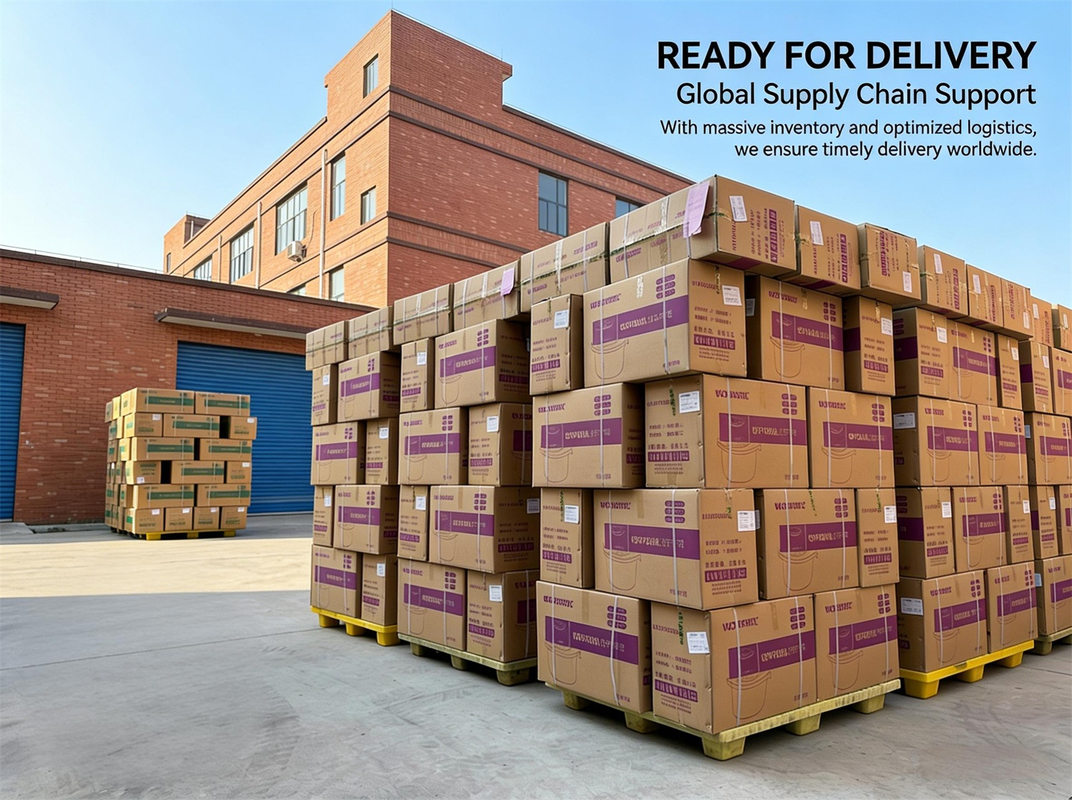
[+] REVEAL DATA
Most chains begin with twenty sites in a localized area—a single off-menu SKU and one on-menu SKU (between clamshell hand-pack and side bowl). We maintain their required spec roll-out, and then ship in frequency aligned to their distribution center. Once the initial test phase—the first per-SKU complaint reduction—is achieved, the organization begins to freeze distribution.
Mixed-material orders inside one container
Logo print held to brand color codes
Lead time consistent across reorders
Food Delivery Platform
[SEC-02]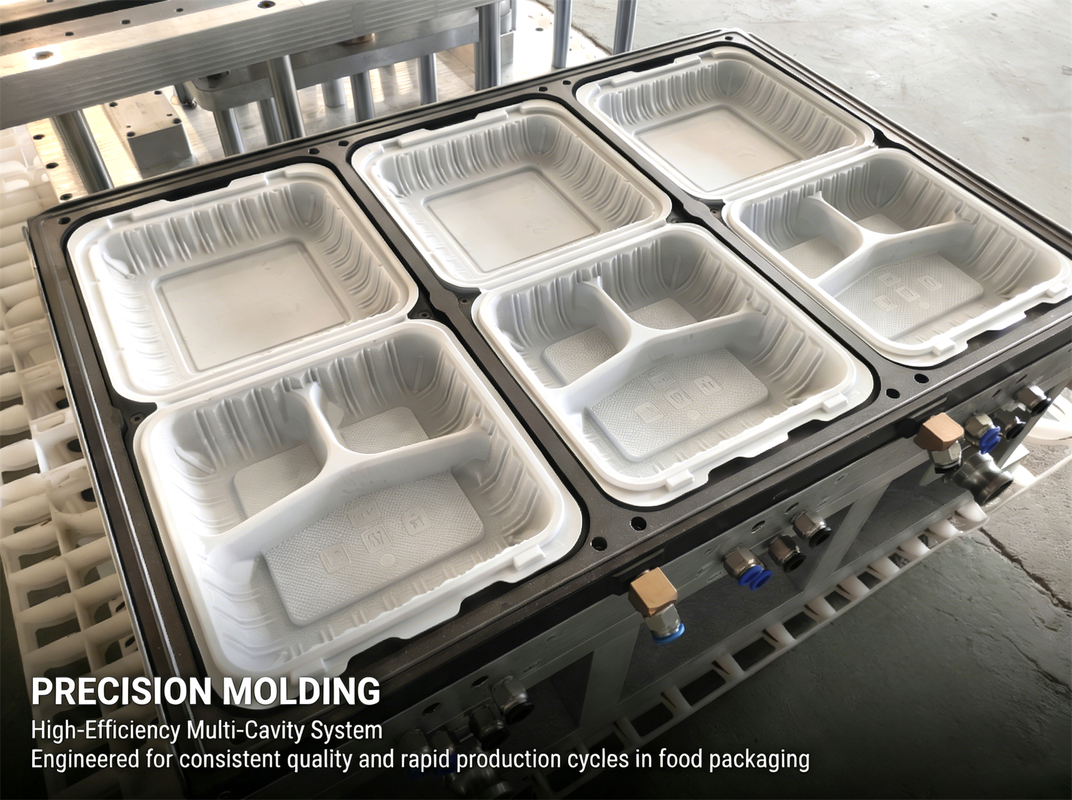
[+] REVEAL DATA
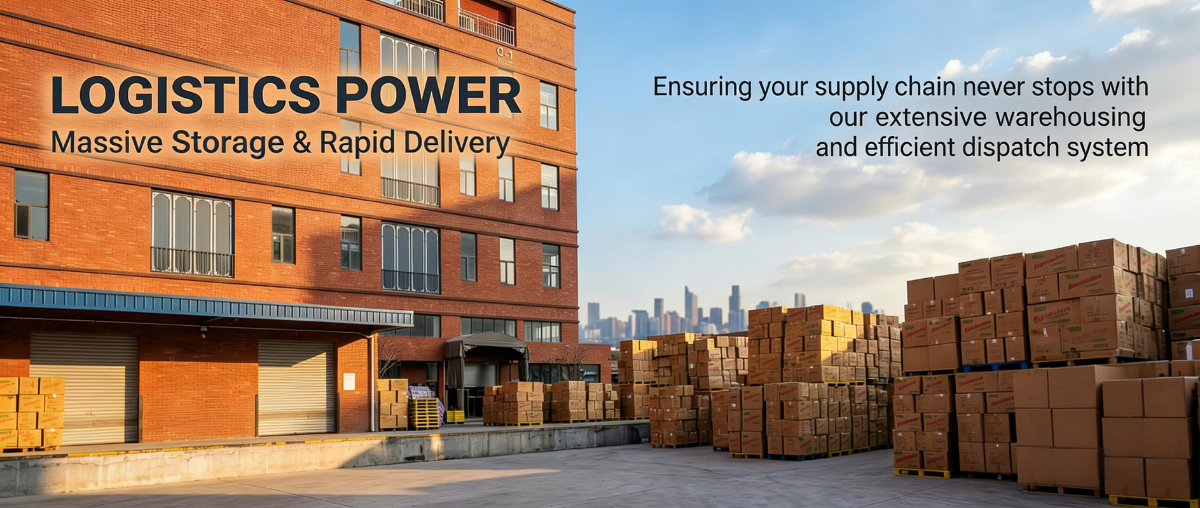
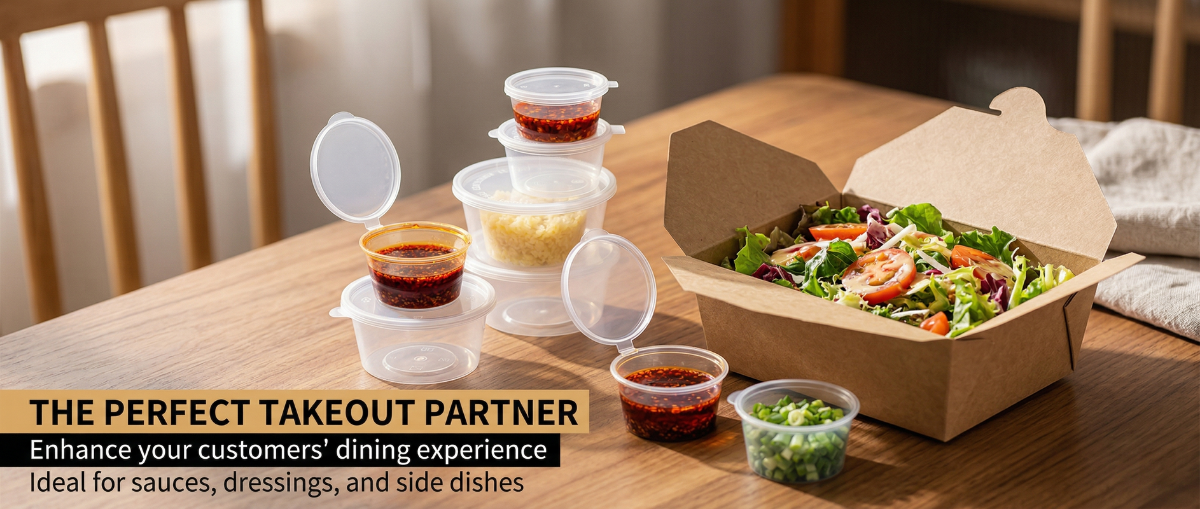
Delivery partners care about two numbers—the integrity of the seal at the delivery handoff, and the per-SKU total freight cost. We supply them MFPP press-fit lids on both soup SKUs, bagasse hinged clamshells on hot main dishes, and cornstarch flat table-placed lids on the cold side. Customs paperwork is embedded in the shipping container. Never after.
Press-fit seal on broth menus
Bagasse clamshells for hot mains
Custom mold for branded compartment layouts
Hospital and School Canteen
[SEC-03]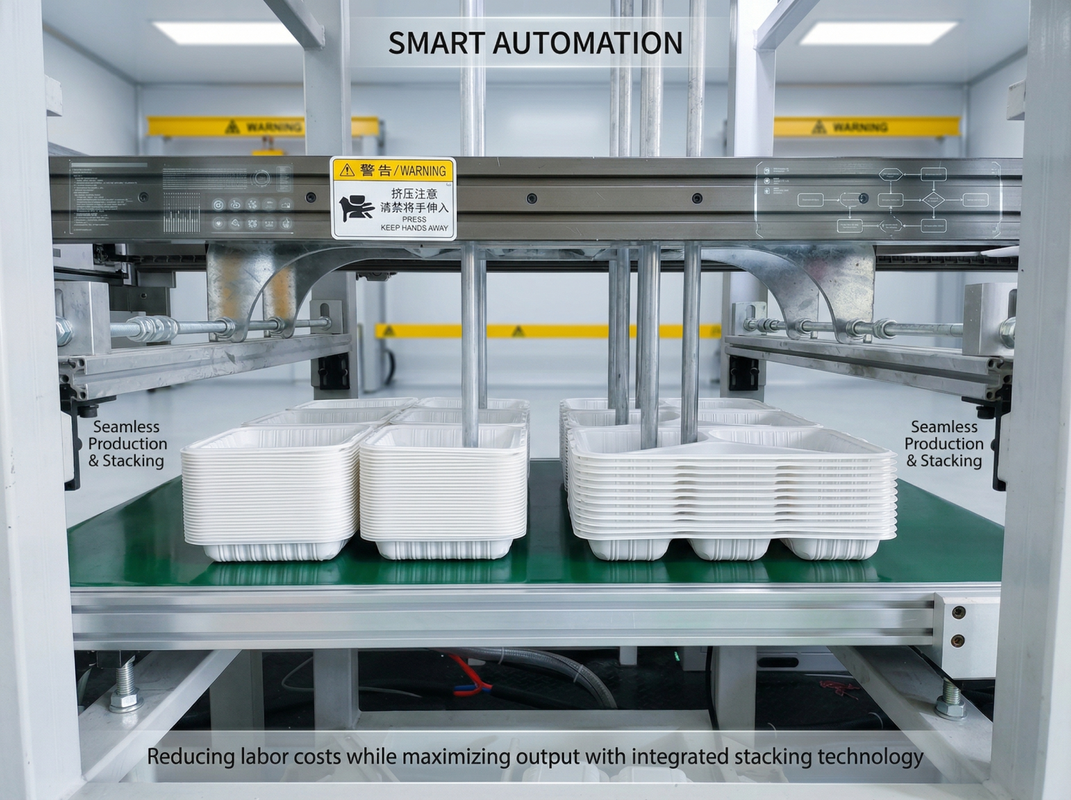
[+] REVEAL DATA
Institutional buyers request the certifying paperwork before the sample. Our certification pack—the BPI certification, ASTM test reports, FDA letter, and national hygiene certificate prior to vessel departure. The buying manager passes their internal compliance review, and the dietary program can set an ongoing order.
Paperwork-first onboarding
Stackable, dishwasher-resistant outer surface
Single-compartment and bento layouts
MARKET ANALYSIS //
Eco-Friendly Food Boxes vs Plastic vs Foam — Cost and Compliance Analysis MGR + PROC
Foam ban geography is the most potent tailwind a compostable company has experienced in twenty years, but the consumer side question has not changed – what does this look like on the four criteria that matter for operations and finance considerations? The table below does not hold back on the unflattering rows.
| Dimension | Expanded Polystyrene Foam | Conventional Plastic (PET, PP) | Eco-Friendly Food Boxes (Our Range) |
|---|---|---|---|
| Unit cost band (small salad container reference) | Lowest historically | Around 0.09 dollar per unit | Around 0.33 dollar per unit for compostable corn variant |
| Regulatory exposure (United States, 2025) | Banned in 9 states plus over 100 cities | Increasingly restricted on cutlery and bags | No use restriction in foodservice |
| PFAS-free claim defensibility | N/A but linked products often grease-proofed with PFAS | N/A | BPI 2024 fluorine testing folds PFAS-free verification into the cert |
| End-of-life cost to municipality | Highest — landfill plus litter recovery | Mid — recyclable in theory, low recovery rate in practice | Lowest — diverts food waste from landfill where composting facilities exist |
| Consumer preference signal | Net negative | Neutral to net negative on takeout | Net positive — willingness-to-pay-more documented |
| Operator’s five-year forward risk | Stranded inventory at ban activation | Tightening city-by-city restrictions | Aligned with the direction of regulation |
MANUFACTURING CAPABILITIES
Custom Logo Printing and Custom Mold Development — OEM and ODM MGR + PROC
Most eco tableware brands sell only the inventory their factory is built to manufacture. Wanhui steps closer to the production line – we design new molds and produce on-product printing on-site. Every month we offer two services for wholesale customers:
On-mold branding on stock items.
Print Specifications
One- and two-color print, on CMYK at model run size or full CMYK on your brand colors. We moderate scale and offer pre-print samples of your new tableware.
Custom mold development.
Design & Lead Time
If your menu requires a compartment scheme we don’t currently stock–say a three-compartment bento with a deep entre well and two shallow side wells tailored to your portion-control targets–our tooling team conceptualizes and produces the mold to your CAD spec. Mold lead time is usually weeks, not months, and the SKU becomes your property for the contract term.
SUPPLY CHAIN OPERATIONS
Procurement Guide — MOQ Tiers, Lead Time, FOB Qingdao, Container Loading PROC + MGR
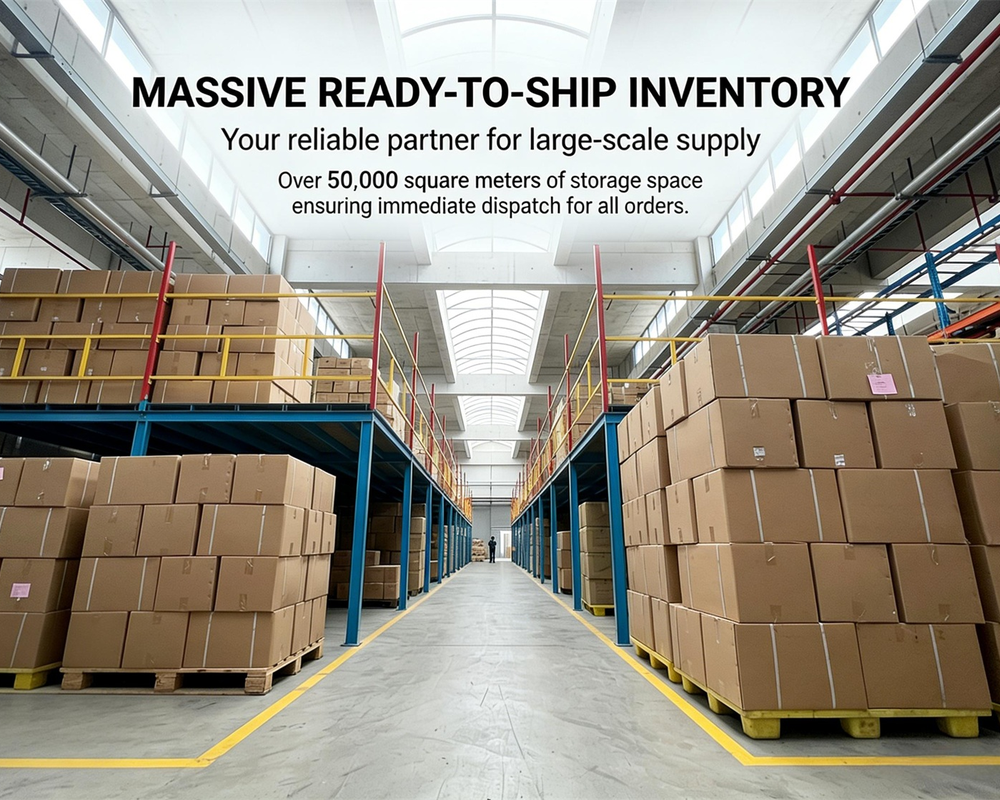
Procurement decisions are one part “how cheap” to three parts “how predictable.” Foodservice buyers battle three risks with worldwide sourcing: MOQ that demands too much capital, lead time that recedes after the deposit, and container loading math that defies supply chain planning. We publish the example below to expedite the initial discussion.
| Procurement Dimension | Practice at Wanhui | Why It Matters |
|---|---|---|
| Standard MOQ for stock SKUs | Tier-based — entry tier accessible for branded pilots, mid and full tiers earn unit-cost steps down | Working-capital-friendly start, with a defined path to volume pricing |
| Lead time for stock SKUs | Typically a few weeks from production confirmation | Predictable cycle into your warehouse pull schedule |
| Lead time for custom-print orders | Longer than stock, set on the print proof sign-off | Brand assets get checked before the press runs |
| Lead time for custom mold | Weeks for tooling plus a production cycle | Predictable runway for chain pilots and exclusivity programs |
| FOB port | Qingdao, with optional EXW pickup for buyers managing their own freight | Mature port with regular sailings to North America, Europe, MENA, APAC, and South America |
| Container loading | Detailed loading plan attached to every quote — cases per 20-foot and 40-foot container, palletized or floor-loaded | Your freight forwarder gets the carton math up front, not after the booking |
| Payment and documentation | Commercial invoice, packing list, BPI listing reference, ASTM test report, FDA letter, certificate of origin | One package to your customs broker, no follow-up email chain |
FACTORY INFRASTRUCTURE
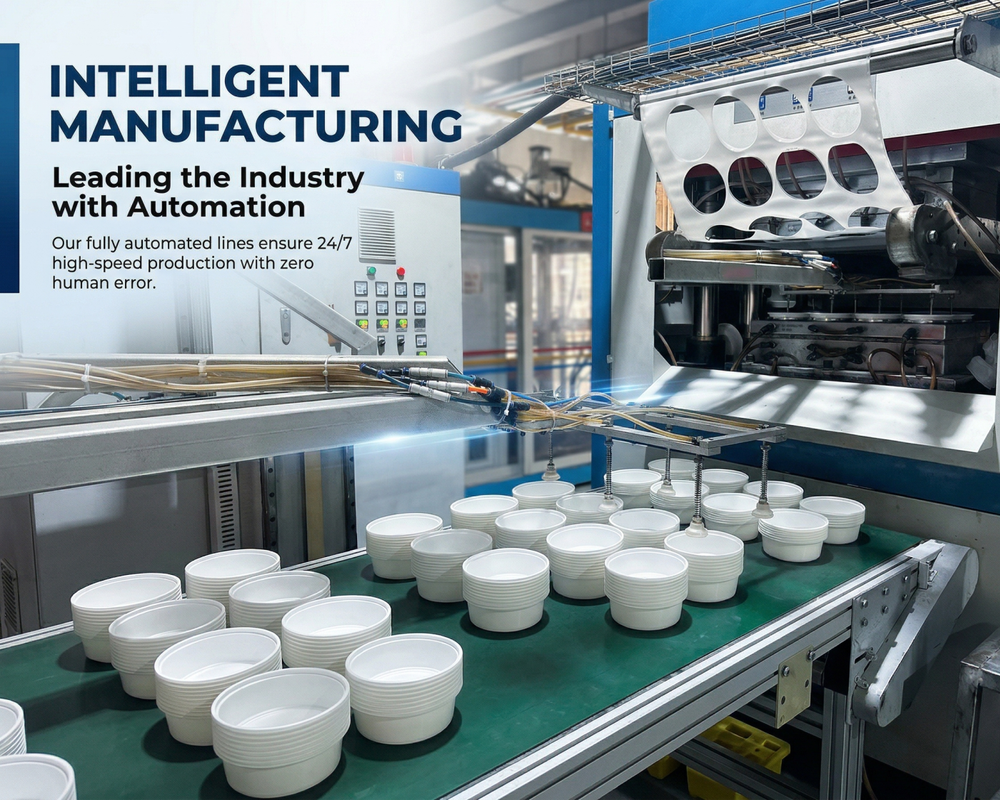
Manufacturing Capacity — 20 Thermoforming, 6 Extrusion, 60 Injection Lines PROC + EN
Being transparent with our factory values remains the lone factor a distributor cannot imitate. International buyers inquire within our second conversation–just how many line counts, how many personnel, and what occurs if one meager line encounters maintenance. Below are our observations:
“Customers frequently ask if I can clarify what happens in our process when a thermoforming line is periodically shut down. My straightforward reply is that we frequently use redundant tooling for commonly-ordered SKUs across two lines, and the overall SKU selections within the same shift are rebalanced. This function is reported internally, not to your order date.”
Wanhui Production Management Team, on real-world redundancy
Our manufacturing facility remains designed specifically for food packaging–not altered from a multi-purpose injection mold/assembly line. This approach is immediately detectable in our tooling library, the food-grade input verification procedures, and the operative skill set of personnel.
-
01 //
20 thermoforming lines converting cornstarch, bagasse, and cellulose-plastic (CPLA) materials into foodservice packaging
-
02 //
6 sheet extrusion lines forming upstream materials that are converted on the thermoforming lines–over 30 tons of sheet daily
-
03 //
60 injection molding lines shaping MFPP cartons, covers, and rigid forms
-
04 //
More than 1 million units daily handled by all three manufacturing communities
-
05 //
Work force of 200–including 30 in sales, 30 in warehousing and distribution, over 120 in operations, and more than 20 in logistics and overseeing
-
06 //
20 years of innovation in food packaging–meal boxes, plates, and single-use foodservice items
-
07 //
Five geographic export areas–Europe, the Americas, the Middle East, Asia Pacific, and South America
Eco-Friendly Food Box Assessment Tools
TARGET: ALL BUYERS
Frequently Asked Questions
Do your cornstarch eco-friendly food boxes work for hot food and oily food?
Cornstarch holds short-hold hot duty up to about 85°-95°C band- perfect for hot rice plates and most stir-fried mains that run fast. For heats that require prolonged hot, the higher queuing temp of a microwave or the direct heat of a fryer without oil, the SKUs should be routed to bagasse or microwaveable polypropylene instead. The above Decision Matrix shows the temperature ceilings side by side.
What is the MOQ for wholesale biodegradable food containers from your factory?
MOQ runs on a tiered system- a lowest entry tier for chain pilots and branded test runs, then mid and full tiers that move the unit-Cost down steps. MGO selection depends on your SKU count, print spec, and whether you want a stock or fast-track custom run. Send us your SKU list and we will return the tier plan.
How long is the lead time for custom-printed eco-friendly food boxes?
Stock-SKU runs ship in a few weeks from the dates we confirm production. Custom-print runs add the print-proof sign-off step. Custom mold development adds the period before production begins. Lead times are documented on every quote showing the specified dates rather than a range- the buyers appreciate that the change allows for easier freight planning.
Are your containers PFAS-free and BPI or ASTM D6400 certified?
Our compostable lines are BPI Listed under ASTM D6400 (plastiaics) or ASTM D6868 (lined fiber). Effective January 2024, the Biodegradable Products Institute has mandated total fluorine testing for that certification a current BPI listing in itself is a defensible PFAS-free claim in the US. EU buyers get the matching EN 13432 paperwork under TUV OK Compost where the SKU is evidenced.
Can you print our restaurant or brand logo on the containers?
One-color, two-color, and full-CMYK printing are all processes our print team can wire into our stock molds. Our team holds brand color parameters to your design guidelin rather than seeking a Pantone match. Small branded runs are accepted on stock SKUs; production print runs of ten thousand units and over are the safest gig for chain rollouts. Our print team typically requests a brand color sheet, the camera-ready vector art, and a target case quantity before quoting the print setup. For seasonal menu changes, we keep your mold archive on file so the second run starts directly at the press stage rather than re-tooling. Branded test orders below the production minimum are negotiable for chain pilots that need shelf-ready samples for an internal merchandising meeting.
What is the difference between PLA, bagasse, cornstarch, and MFPP — which should I order?
Every family was designed for a unique temperature, food class, and disposal routing uses case. Cornstarch excels with cold and ambient food orders. Bagasse is rated up to 220 C and has the best carbon-to-hot-food load ratio, especially without PFAS treatment. PLA remains transparent and serviceable for aesthetically-sorted Cold field merchandising, though it melts at about 50 C. CPLA gives you a higher hot-food ceiling. MFPP is the only family in our collection that performs predictably in the microwave. The above matrix walks through that; each application’s engineering team helps you allocate a menu across families during the quote process.
Can we develop a custom mold for our brand?
Of course. Our tooling team designs the mold to your cad drafting specification or drawn concept, and the unfinished SKU becomes yours for the duration. Mold lead time occurs over weeks instead of months. Custom molds are well worth the investment if you require a compartment configuration, footprint or shape absent from our stock library.
How are these containers disposed of — what about cities without composting facilities?
Industrial composting sites receive BPI listed containers in cities that run municipal or contracted sites – the Biodegradable Products Institute makes a free public list available. In those no infrastructure areas the same containers still divert from foam still meet the regulatory profile required by single-use plastic foam bans still steer clear of PFAS in the food-contact layer. Honest answers serve the buying public better with regarding to the disposal question because the credibility of every certification logo depends on it.