Get in touch with Wanhui Company

Food Container Manufacturing
Food Container Manufacturing: OEM Food Packaging Manufacturer & Wholesale Supplier
Food container manufacturing at production scale takes more than a catalog — it takes a factory that controls every step from food-grade resin to a finished, leak-proof container. Wonhi runs 86 in-house production lines and ships more than 1,000,000 units per day to restaurants, caterers, food-delivery brands, and institutional canteens across 60+ countries — packaging that keeps food fresh and protects every serving.
SYS.VIEW_01
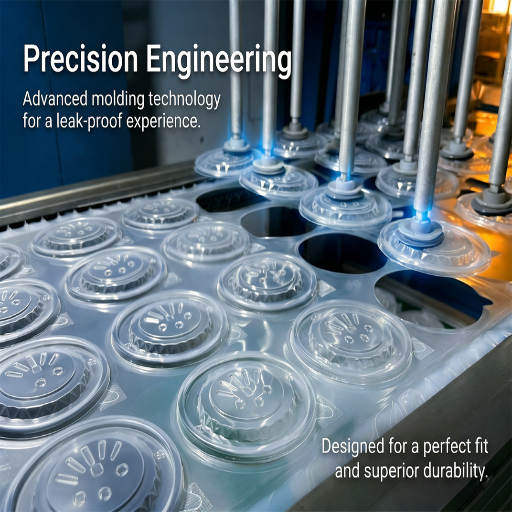
86
Production lines (thermoforming + extrusion + injection)
1M+
Units / day processing capacity
30t
Sheet material produced daily
20yr
Dedicated to food packaging
60+
Export countries
OEM
Custom molds + brand-logo printing
Industry Insights
Why Foodservice Brands Switch Their Food Container Supplier
Most buyers do not switch suppliers over a single off-spec shipment. They leave when hidden risk in the relationship surfaces at the worst possible time — a lid that pops open in transit, a “food-grade” claim with nothing but marketing behind it, or a quoted price that doubles once duties and freight land. A food container — a rigid or hinged package made to hold, protect, and present prepared food — looks simple. But packaging that has to survive stacking, sealing and shipping in an increasingly challenging and globally sourced marketplace has complex realities. And, the sourcing reality is not simple.
Three things make or break your suppliers:
The types of failure that actually force your hand usually aren’t sophisticated, such as leaky lids and faulty seals causing beverage spill-ages, but the ones the spec sheet conveniently omits. Every food-contact resin we run is governed by U.S. rules such as FDA 21 CFR 177.1520.
Wonhi was founded to neutralize these three threats at the origin.
We’re not a trading firm relabeling another factory’s output—we are that factory. Our infrastructure guarantees the “Can you prove it?”, “Can you make it?” and “What will it really cost me?” answers live and breathe where the metal is pressed.
What to explore below
- Production Capabilities & Packaging Solutions
- Raw Materials & Processes
- Comparison Statistics & OEM Details
- Certifications, Standards & Contract Terms
20
Years Manufacturing
86
Production Lines
100%
Virgin Food-Grade Materials
In-House
Precision Mold-Making
Core System
Container Types, Materials & the Thermoform-vs-Injection Decision
Misjudging the appropriate technology for a job may be more costly than you think. While difficult to detect at the quotation or manufacturing phase, toolsets may cost up to five times as much as they ought to be, or thinner containers are forced out of an injection process at considerably slower cycle rates than thermoforming would have offered. Since we handle both molding methods we provide process flexibility for the product rather than forcing product onto limited machinery.
Wonhi’s Two Food Container Lines
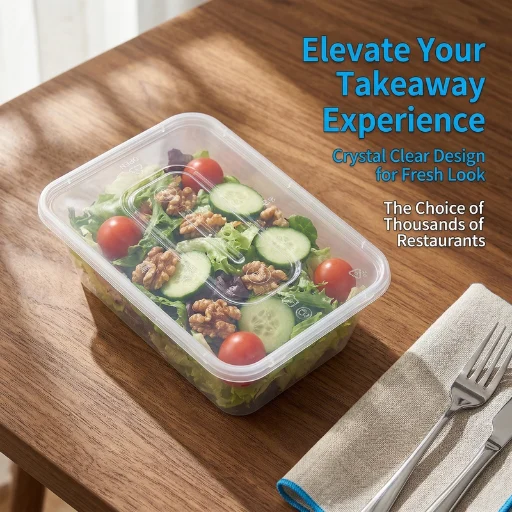
Plastic Container Manufacturer
Food-grade PP and PET meal boxes, bowls, deli and compartment trays, and clamshells — thermoformed and injection-molded for hot, cold, and microwave-safe service.
Explore Plastic Range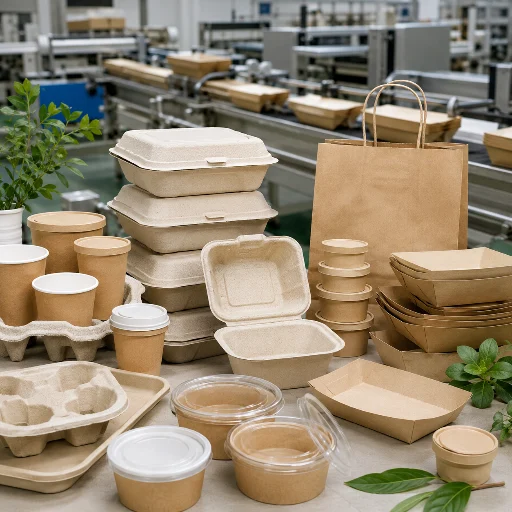
Eco Packaging Manufacturer
Bagasse and plant-based compostable containers for markets that mandate certified compostable service ware — matched to the right end-of-life path, not greenwashed claims.
Explore Eco RangeThermoforming Process
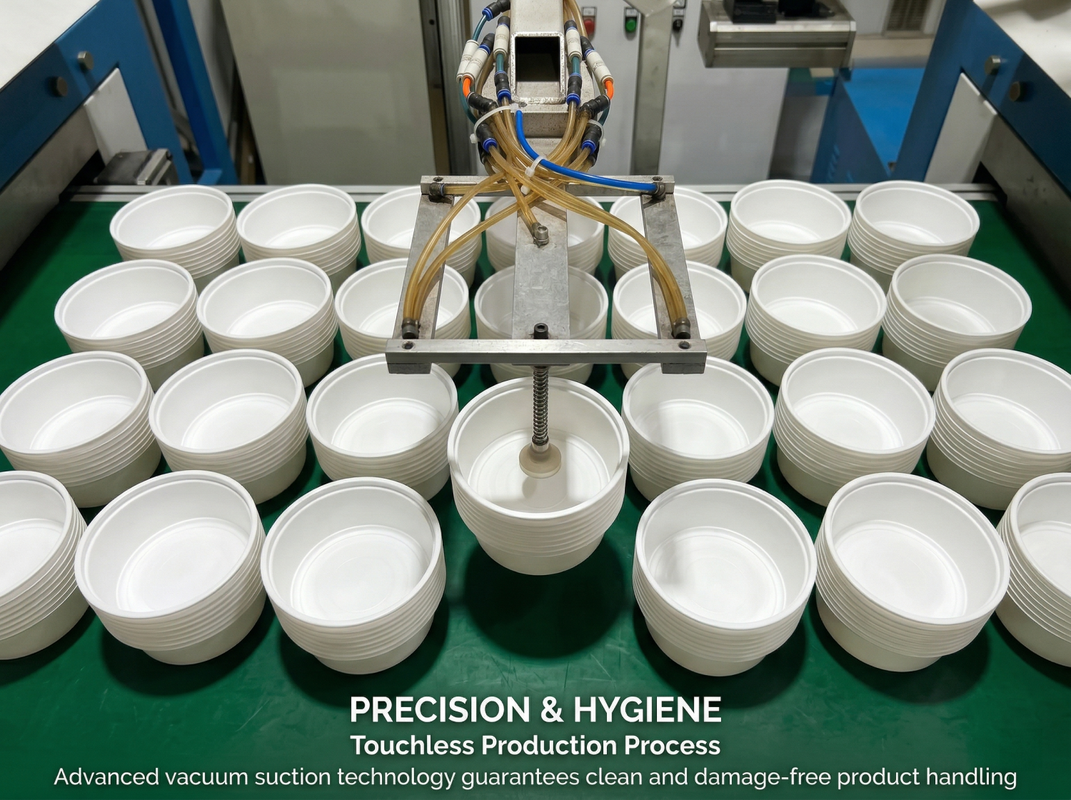
Thermoforming involves heating a plastic sheet of PET or PP and shaping it over the desired die under a vacuum. This process is favored when high speeds and the low initial cost of tooling are important, for packaging such as food containers, shallow meal prep trays, bowls, compartmented dishes, clamshells. High-volume runs benefit clearly here, since production cycle times are extremely fast.
Injection Molding Process
Injection molding involves a high-speed, high-pressure cycle where liquid or semi-liquid plastic is introduced into a mold. Injection molded packaging suits the needs of when the container necessitates features such as snap-fit lids or stacking capability, very high rigidity and deep draw shapes. The trade-off is tooling: although more expensive than thermoforming in tooling cost, Injection molding’s efficiency in higher volume production makes it economically viable for more rigid items.
Material selection: PP, PET, and the honest case on “eco”
Polypropylene (PP) can take the heat. You’ll see it specified in hot food service containers, microwave-reheat meal boxes, and soup tubs because PP holds its shape and preserves freshness when filled. PET has glass-like transparency for cold items-think salad bowls, grab-and-go items, where product visibility and brand appeal sell the product. Both are U.S. food-contact registered and accepted for use. PP is FDA registered as 21 CFR 177.1520 (olefin polymers) and PET is registered as FDA 21 CFR 177.1630.
Sustainability and The Eco Reality
And now, for the honest version that few eco-packaging suppliers will offer: Compostable bioplastics are not universally “greener.” Compostable alternatives like PLA are often contaminants in a PP/PET stream. Additionally, bioplastics degrade only under controlled, commercial composting conditions; they won’t biodegrade properly in a backyard compost bin or at a landfill. Eco-materials aren’t inherently bad; they’re right for the application channel. If your market demands certified compostable service ware, our eco packaging manufacturer line offers bagasse and plant-based alternatives. If the majority of your volumes can use recyclable plastic containers, consider the performance and real recycling path delivered by our food-grade, recyclable PP and PET from our plastic container manufacturer line. We recommend for the channel, not just marketing materials.
Sustainability doesn’t begin with a material; it’s found in aligning packaging materials with their intended end-of-life, or real path to recovery. Recyclable materials like PP and PET maintain closed-loop system sustainability, whereas certified eco-friendly materials reduce carbon footprint in channels where commercial composting is available. We make an informed calculation between those paths for every project, ensuring sustainable packaging claims stand to the truth, not fall victim to greenwashing.
Thermoform-vs-Injection Container Selection Map
| Your product | Process | Material | Why |
|---|---|---|---|
| Hot meal box / bento | Thermoforming | PP | Heat tolerance + economy |
| Clear salad / cold bowl | Thermoforming | PET / RPET | Clarity + shelf appeal |
| Rigid snap-lid container | Injection | PP | Sealing + stackability |
| Deli / compartment tray | Thermoforming | PP / PET | Fast multi-cavity forming |
| Compostable service ware | Molded / thermoform | Bagasse / PLA | Market mandates |
// Capacity Profile
Inside Wonhi’s Food Container Manufacturing: 86 Lines & Daily Capacity
01 / OVERVIEW
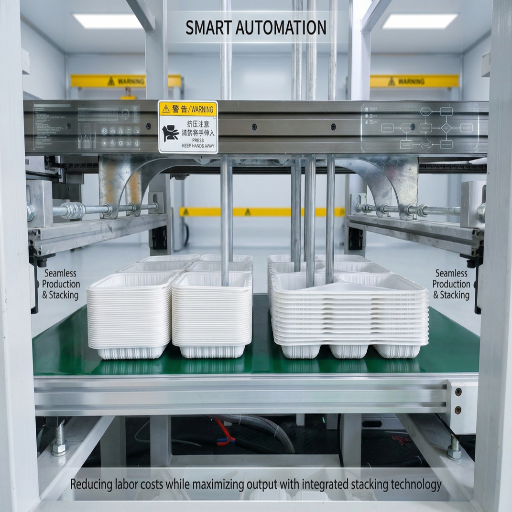
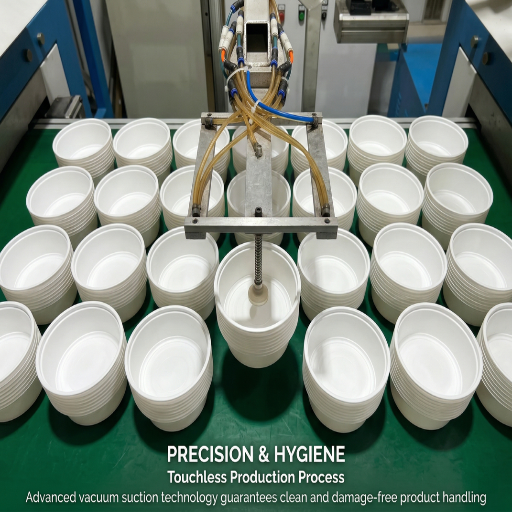
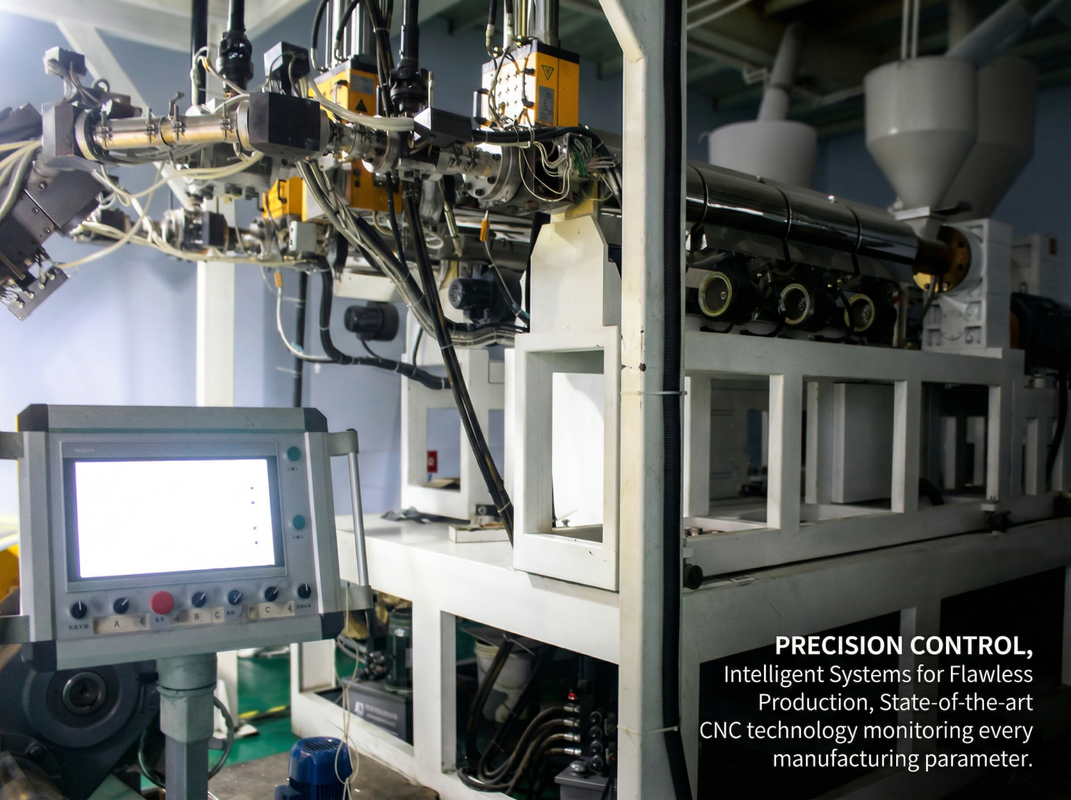
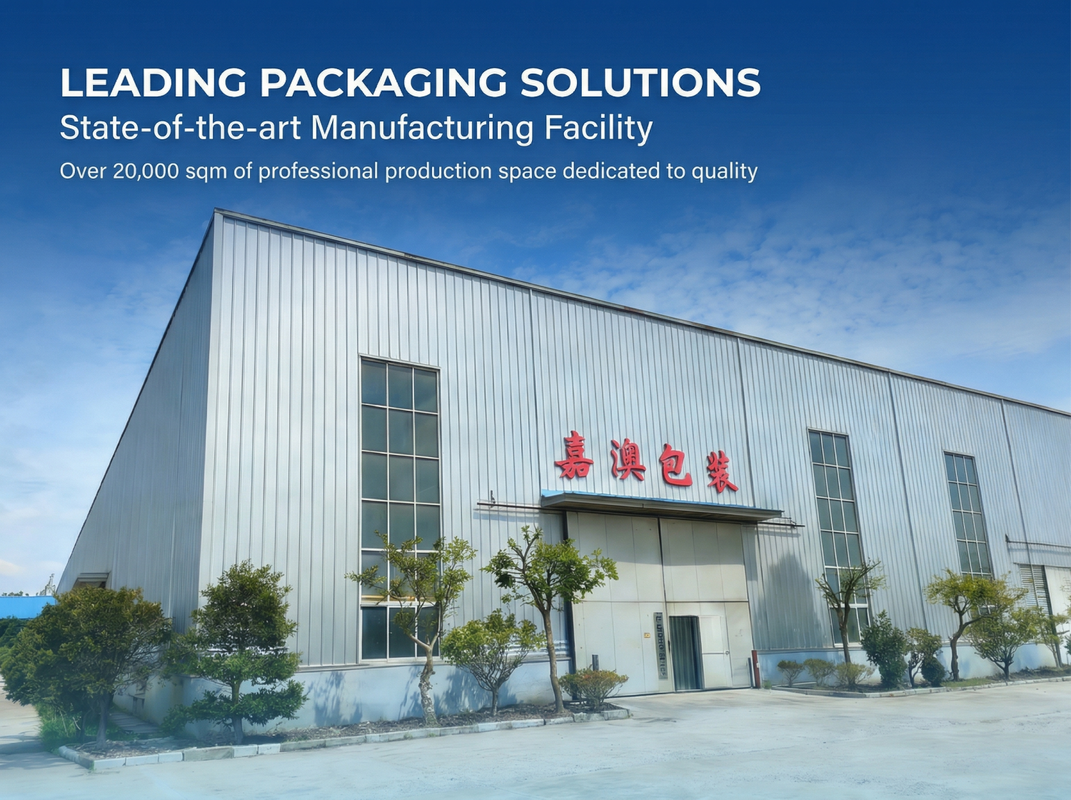
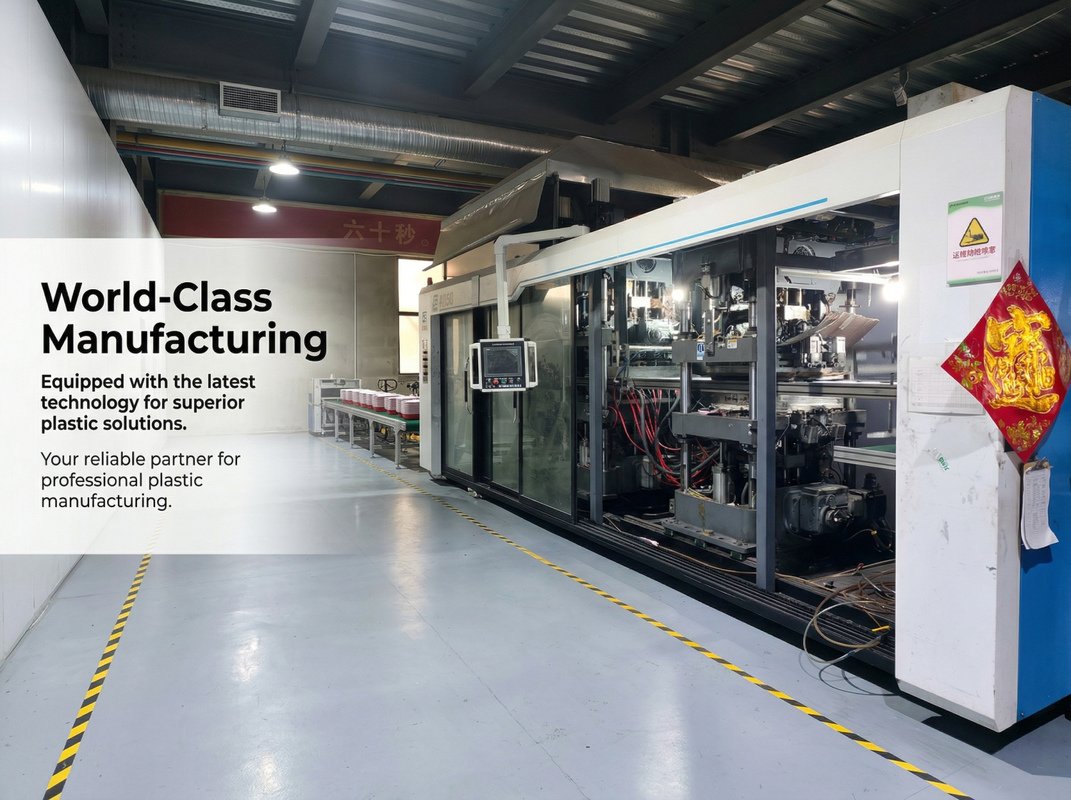
‘Industry-leading capacity’ is just an empty phrase; here is reality. With 20 thermoforming lines, six sheet-extrusion lines and 60 injection molding lines, As a food container manufacturer, Wonhi utilizes 86 production lines to convert food-grade resin into finished, durable containers all at one location. The 86 production lines will turn out over 30-tons of sheeting product daily, process a throughput rate of over 1-million-pieces of finished goods, and are supported by a team of over-200 professionals including over-120 production line workers plus a 30-member sales staff and a 30-person warehouse and distribution team.
What is the relevance of line count to a buyer? A lean manufacturer passes your job over for other, longer runs to get ahead. Here, in terms of vertical capability, our factories will extrude, form/mold, and then pack and ship your containers to overseas markets to an export schedule. That’s the difference between a lead-time you can build into your planning and one you have to call for daily updates. It also means you have two major molding capabilities under one roof; therefore, the optimum process for your packaging is applied, rather than being fitted onto only what’s available.
02 / LOGISTICS & LEAD TIME
Take the example of a regional meal prep or an FMCG buyer with EU and US clients: a narrow process for an order means many SKUs have to pass through the single set-up and lead times expand. Alternatively, with 86 lines operating with an output of 30 tons of sheet per day, we can shorten those lead times by up to 40 percent even with an order for a higher volume SKU. That scale isn’t something a trading firm can mimic on other equipment types.
03 / TECHNICAL SPECIFICATIONS
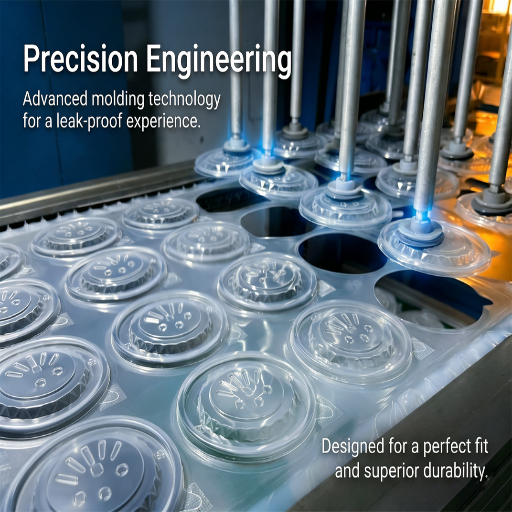
This capacity for operating with two types of molding equipment forms the bedrock of all that we say herein. When a container is guaranteed leakproof, it is because the features to prevent it from leaking were manufactured with tooling we operate. When we specify a lead-time, it is backed by capacity we control. The leak-resistant sealing we form follows press-fit principles documented in USPTO US11878834B2. But before returning to the broader economic implication this vertical capacity gives you, we’ll first break down what process is appropriate for your food containers.
Named Hook — Wonhi 86-Line Production Capacity Atlas
| Process | Lines | Daily output | Best-fit container types | Wall thickness |
|---|---|---|---|---|
| Sheet extrusion | 6 | 30+ tons sheet/day | Feeds PP/PET sheet to thermoforming | 0.2–1.5 mm sheet |
| Thermoforming | 20 | High-volume thin-wall | Bowls, trays, deli, clamshells, hinged lids | 0.25–1.2 mm |
| Injection molding | 60 | Multi-cavity rigid | Snap-fit lids, stackable rigid boxes, cups | 0.6–2.5 mm |
*Exact molding press capabilities and film gauges are dependent on product dimensions and project-specific requirements.
*The processes/thickness ranges reflect those commonly utilized for food container production; each project will be assessed individually to identify ideal specifications.
Get Instant Quote
Supplier Evaluation
Wonhi vs. a Typical Food Container Supplier: Capability Comparison
Finding other food packaging suppliers should never be the hard part of buyer evaluation. Identifying how to differentiate among them can be: most website landing pages in the packaging space make broad claims that carry little weight with procurement professionals. The table below breaks the mold by quantifying, rather than merely adjectives the details a buyer will investigate. It is backed by the evidence from our facility, not by competitor collateral.

| What buyers verify | Wonhi | Typical trader / thin supplier |
|---|---|---|
| In-house processes | Extrusion + thermoforming + injection (86 lines) | 1 process or outsourced |
| Daily capacity | 1,000,000+ units | Undisclosed / batched |
| Food-contact basis | FDA 21 CFR 177.1520 (PP) / 177.1630 (PET) | “Food-grade” — no standard cited |
| Test reports on request | Yes — migration / material grade | Certificate only, no test report |
| OEM molds + logo print | In-house mold shop | Stock SKUs only |
| Pricing model | Transparent landed-cost guidance | FOB only |
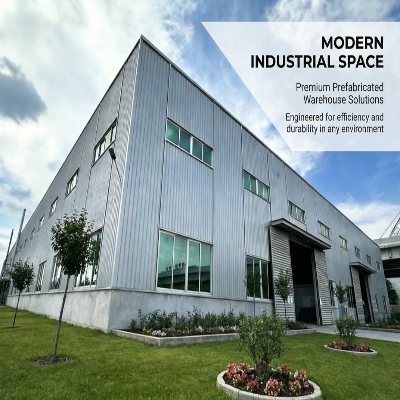
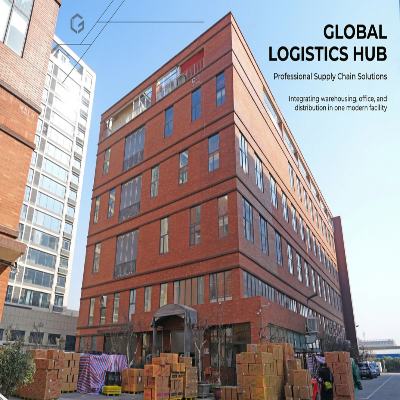
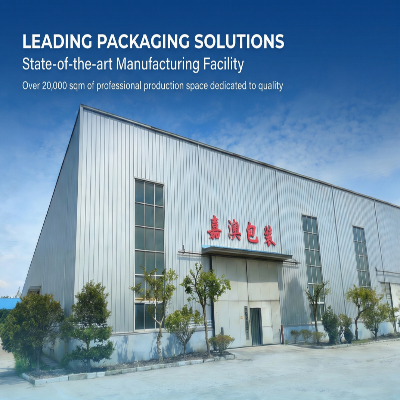
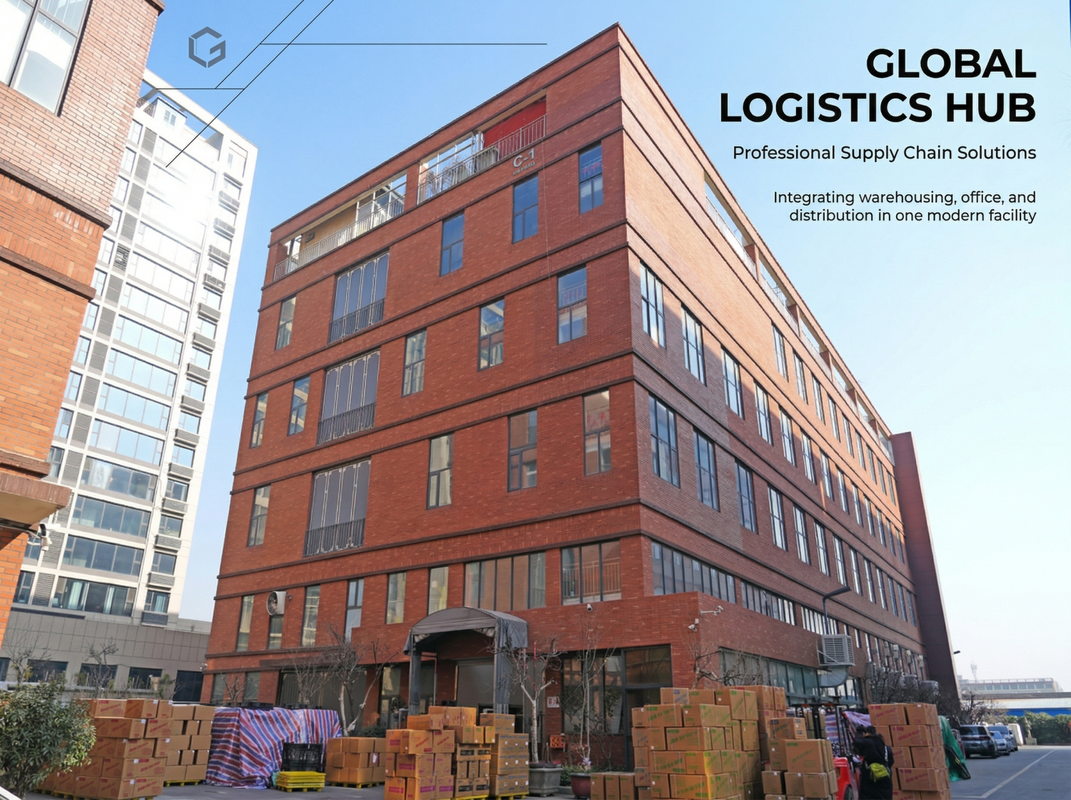
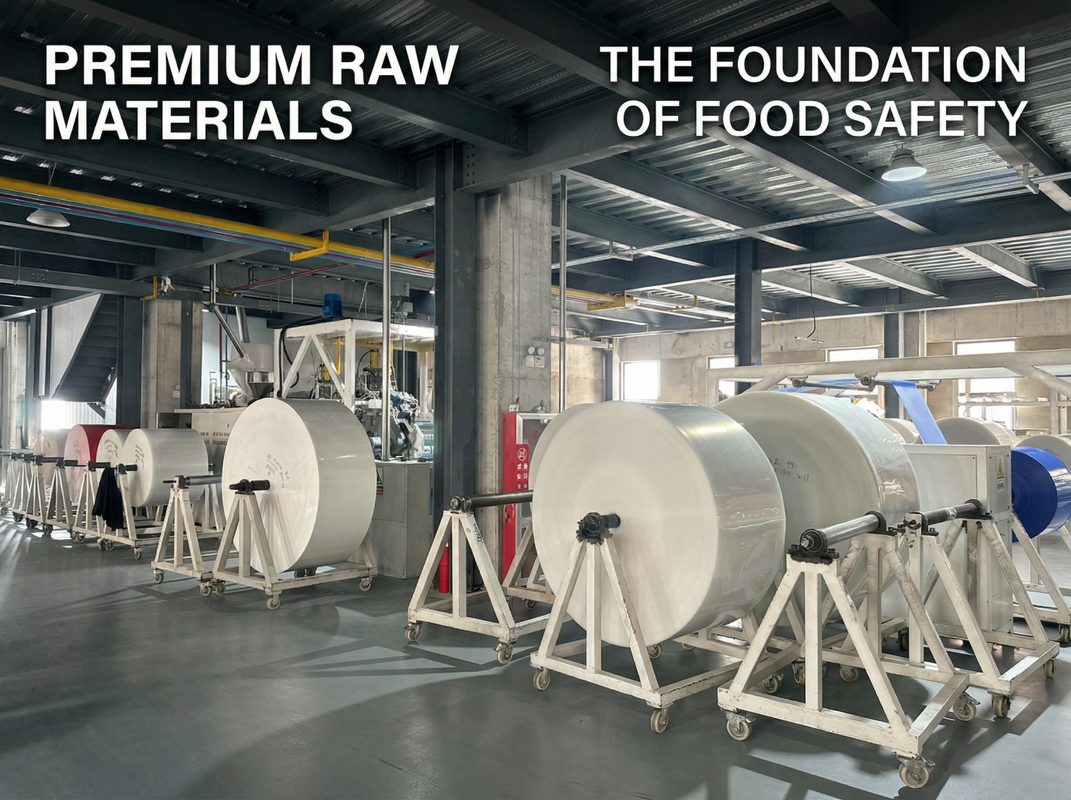
Advanced Manufacturing Facilities & Infrastructure
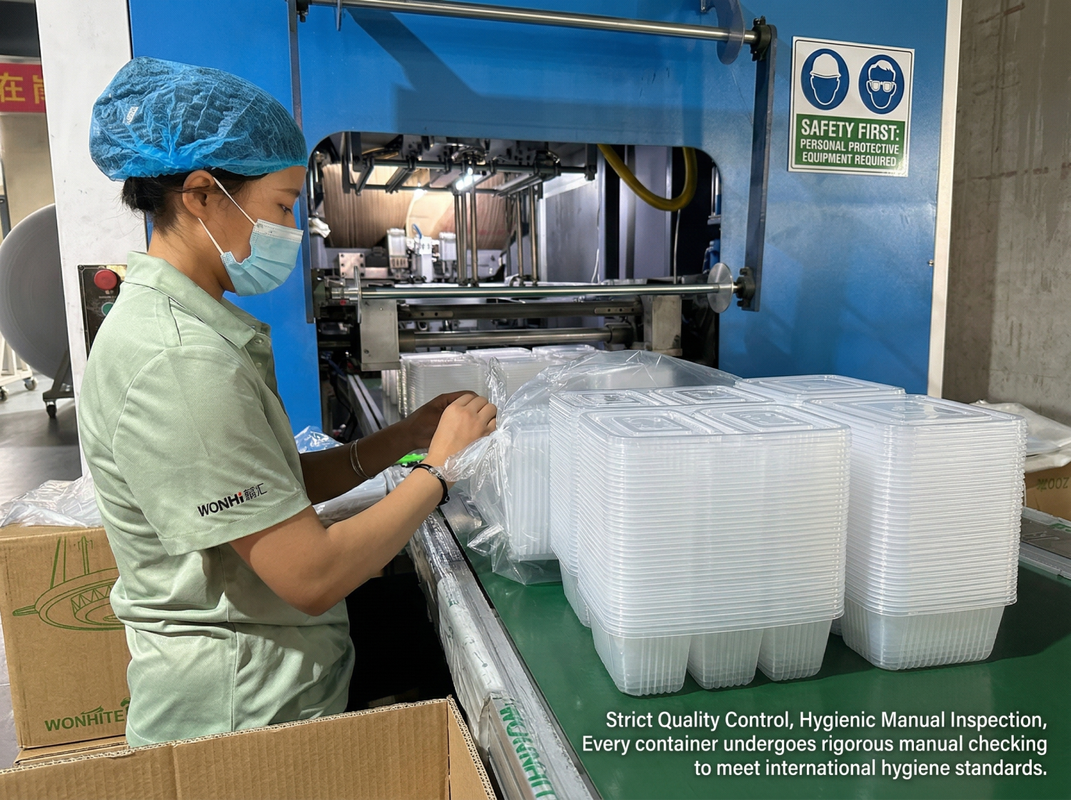
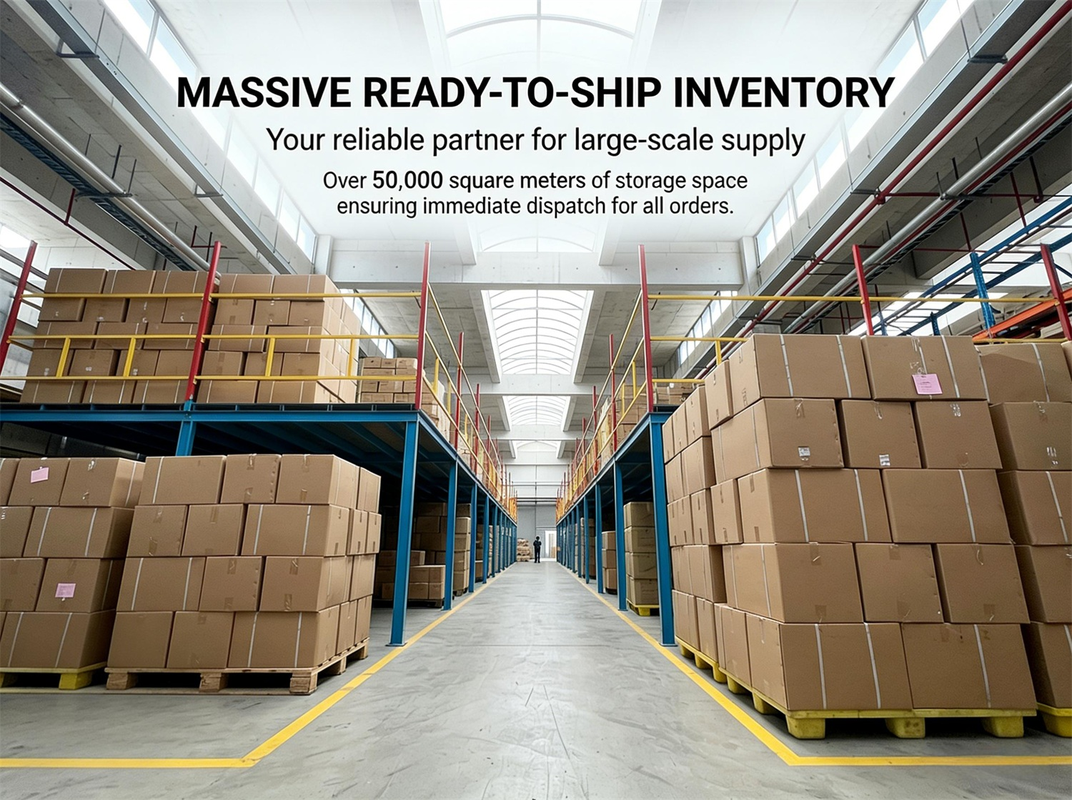
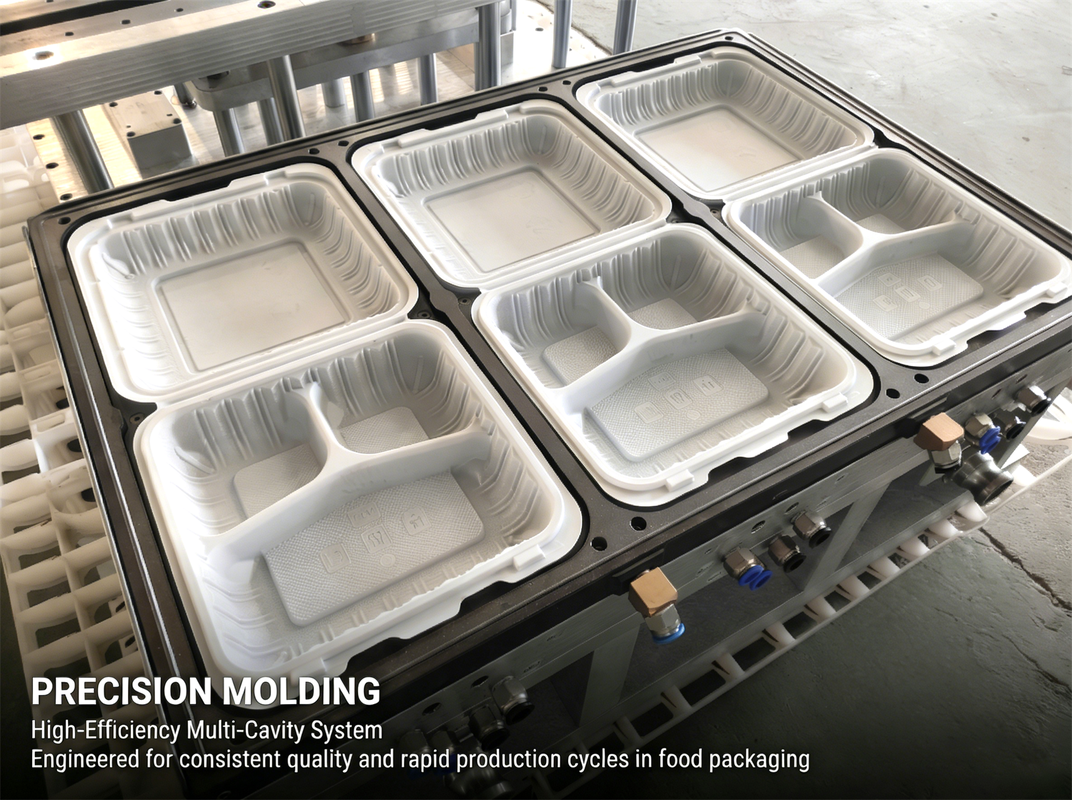
Quality & Compliance System
Certified Food-Grade Materials & Global Compliance
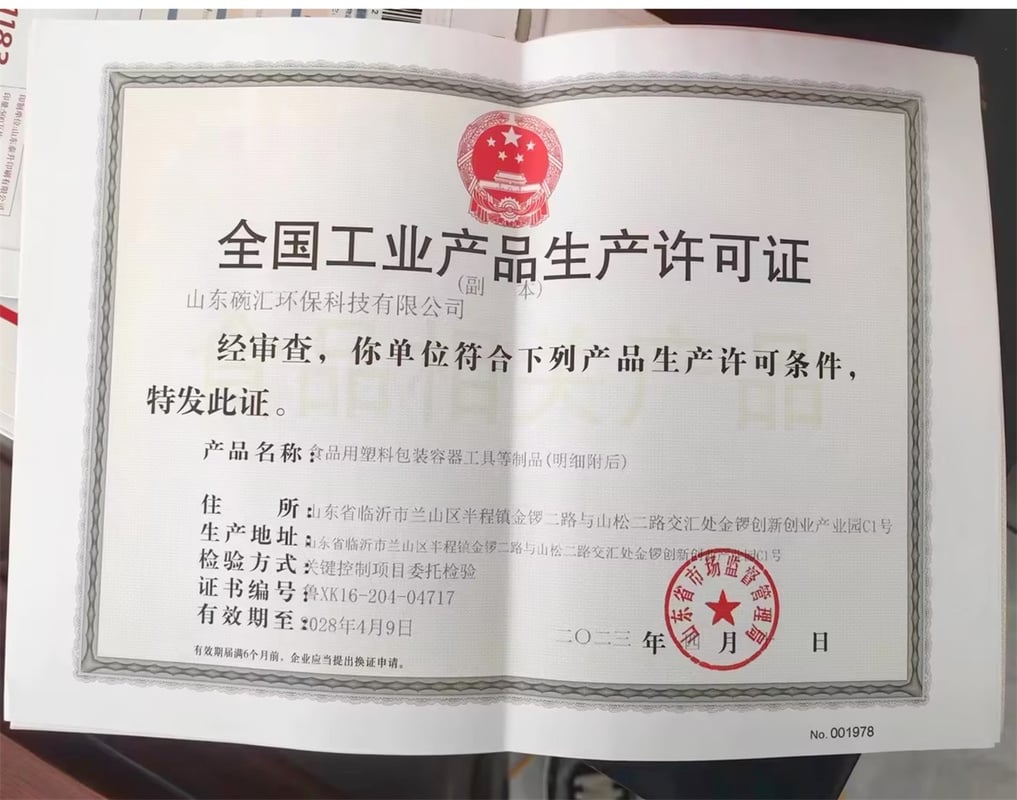
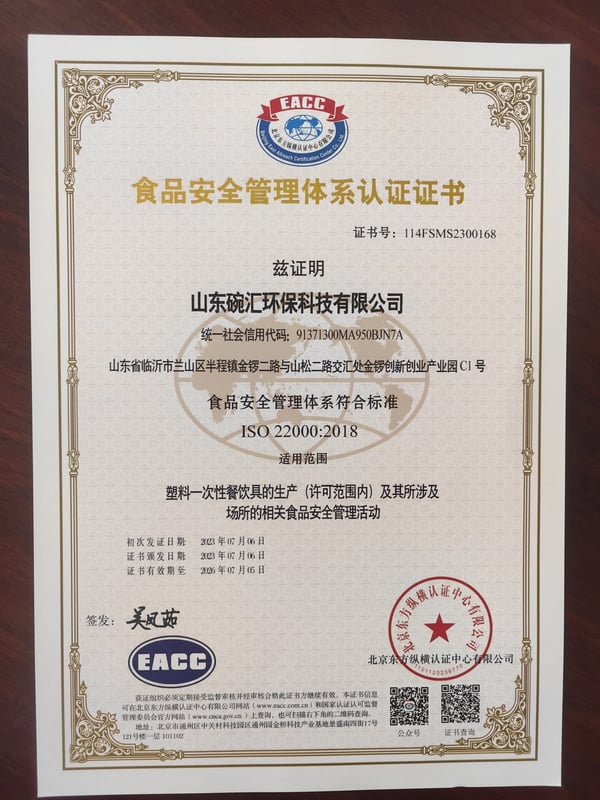
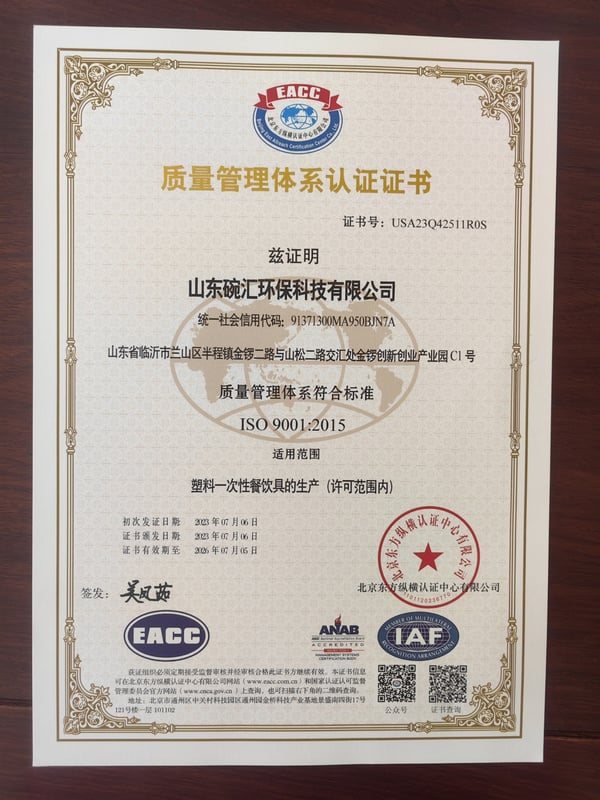
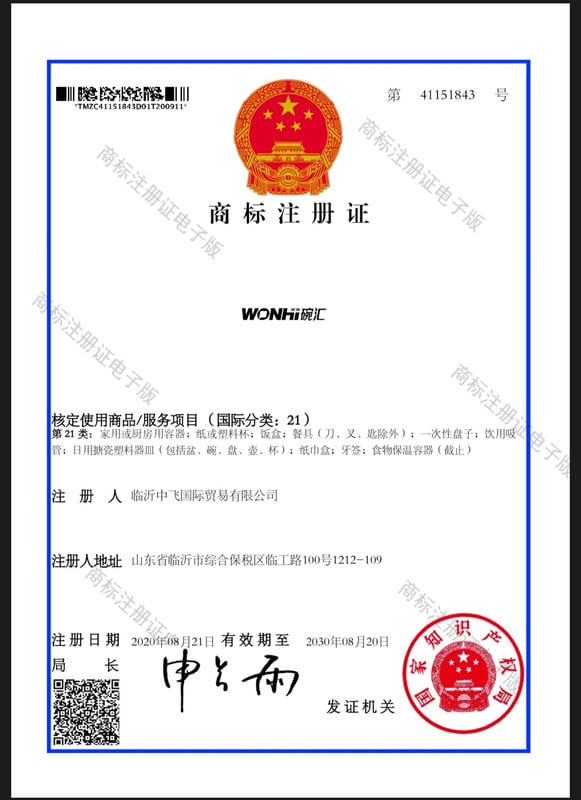
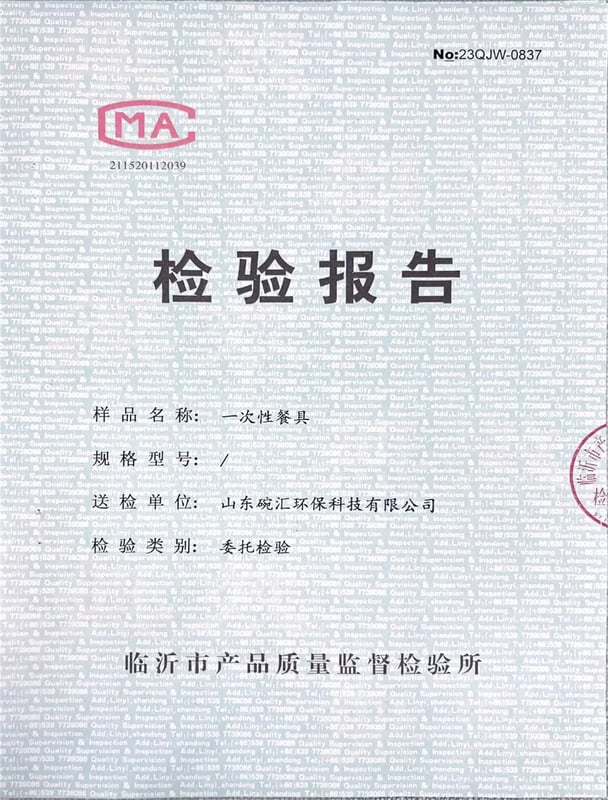
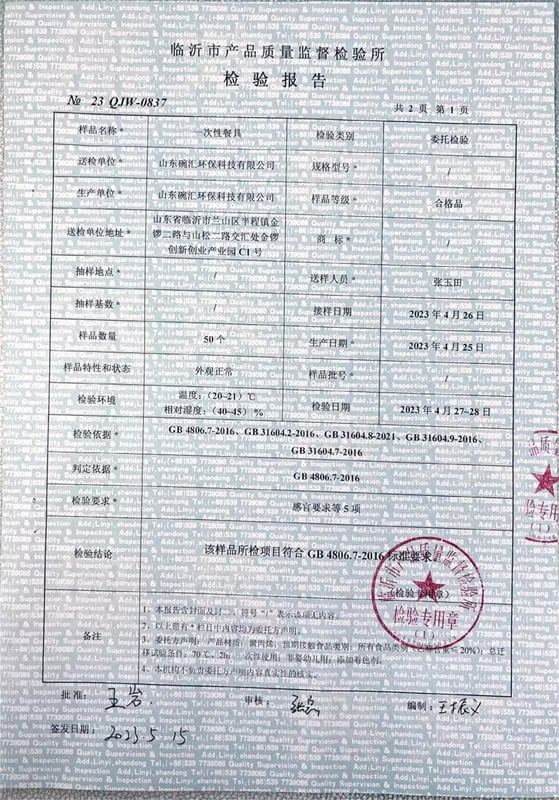
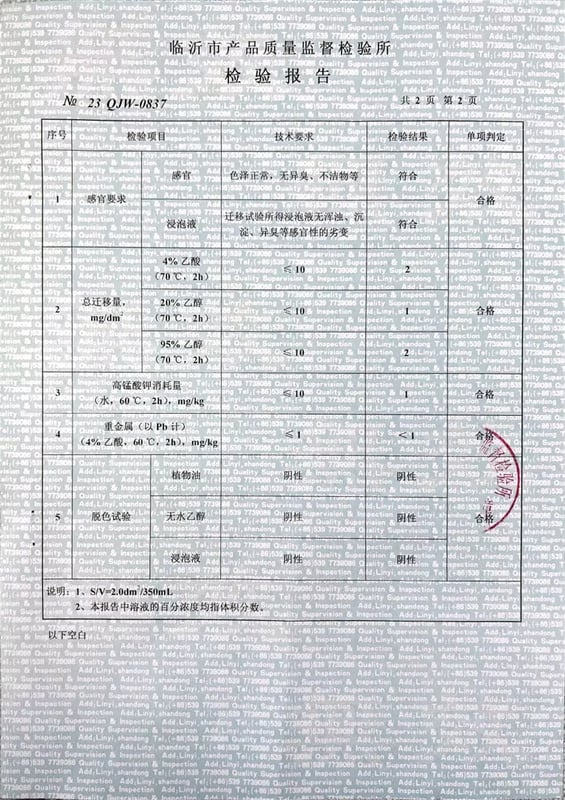
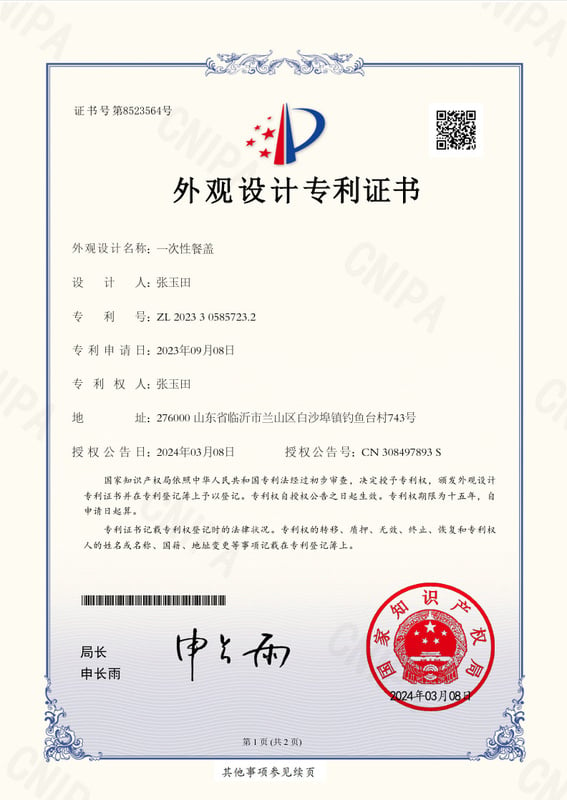
Is your organization worried about unknown origins, product compliance, or export documents from overseas suppliers? Let’s be upfront: Every Wonhi container comes made from responsibly sourced raw materials and carries both national hygiene certifications and leading global food-safety certifications to meet the exacting demands of the food and beverage industry, a compliance standard often overlooked. It’s just as important to understand not just the certification, but what documents govern that the materials actually are compliant. All of our food-contact resins, food-contact PET and PP, follow FDA 21 CFR 177.1630, and FDA 21 CFR 177.1520, respectively and there is strict regulation on extractables for PET and PP in food contact applications, not exceeding 0.5 mg per square inch of surface area.
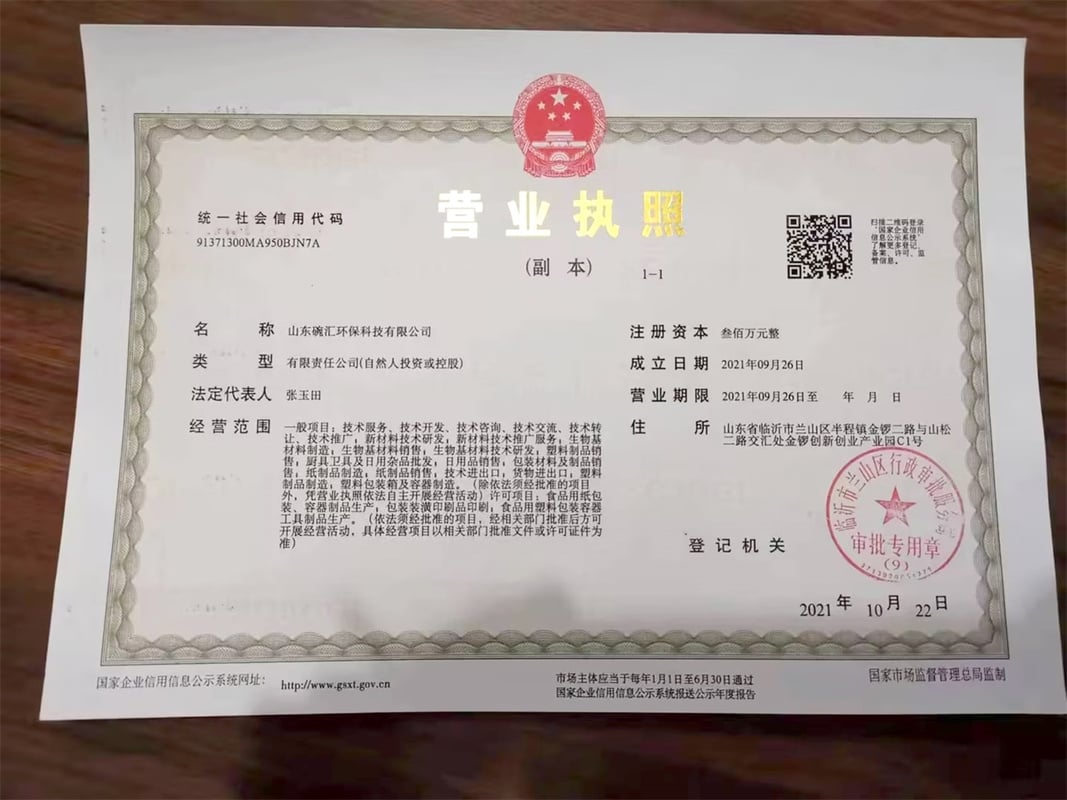
As different compliance certificate programs differ per destination market, a brand attempting to source food containers from an overseas manufacturer simply waving the correct certificate or listing certifications that do not pertain to your specific products or destination is a red flag. The most trustworthy approach is not just providing the certificate; rather, we, as your custom food packaging supplier, provide the actual evidence auditors ask for-Declaration of Compliance and your market’s and product-specific migration and grade test reports. This closed-loop process addresses the industry’s #1 compliance gap: a cert without a supporting test report.
Food-Grade
PP & PET raw materials
FDA 21 CFR 177.1520 / 177.1630 basis
FDA 21 CFR 177.1520 / 177.1630 basis
Hygiene Std
National standards met
Test Reports
Migration / grade on request
Leak-Proof
Press-fit / snap-fit sealing
Buyer Advisory: How to Audit Your Packaging Supplier
Our process encourages buyer-partners to ask for not only certificates of compliance, but also any applicable migration test reports. Additionally, one should confirm that the scope on your issued Certificate of Compliance applies to your actual products (not a different SKU) and that the certifying entity name listed actually corresponds with the invoicing and shipping name of your supplier-these three checks catch the vast majority of compliance gaps in private label or OEM food packaging.
Compliance Documentation Archive
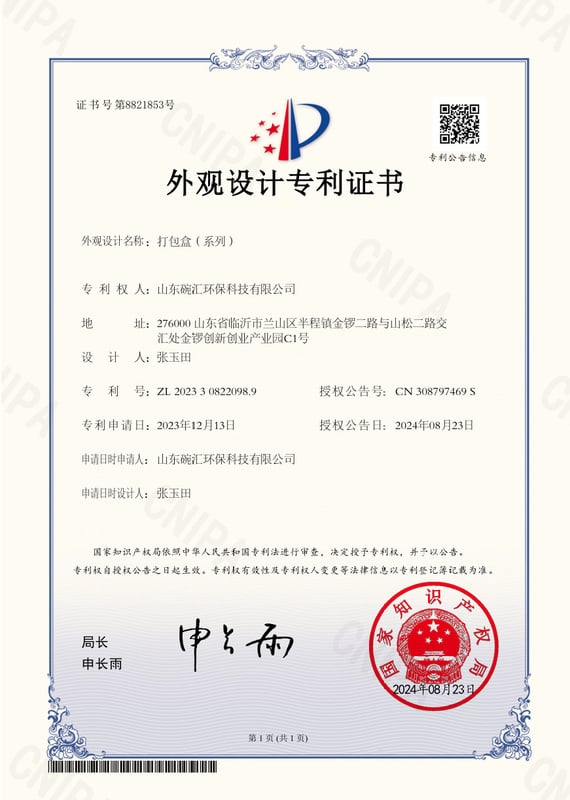
Procurement Guide: MOQ, Pricing, Lead Time & Global Export
For a wholesale food packaging supplier or any volume buyer, the fastest way to waste money sourcing food containers is to price against FOB costs. All that matters is landed cost, and with the current environment this could be meaningfully higher than what’s on the page. U.S. tariffs were recently enacted: •20% base tariff (10% reciprocal + 10% duty) on all Chinese imports •Additional 7.5%-25% on select categories (Section 301) This raises tariff burdens to 37.1% in September 2025. The spread between FOB and landed cost ranges from 15% (on low duty items) to over 40% (high tariff goods).
One key exception for buyers of our products: the headline antidumping duties (as high as several hundred percent) target specific aluminum foil containers and paper plates and do not apply to our PP and PET plastic food containers. We’ll go on record – to be clear, we will not claim there aren’t tariffs (because there are) but to show you real landed cost in your category and market, so you know and approve the exact budget needed.
15–40%+
Typical gap between FOB price and true landed cost — the number a transparent supplier helps you model before you commit.
Source: U.S. import landed-cost analysis, 2025. Silver-tier TCO guidance — request a category-specific model.
Named Hook — 7-Signal Food Container Supplier Vetting Scorecard
Give any supplier a 0-2 score on:
1) References food-contact standard by name not just “food-grade”;
2) Provides migration test reports upon request;
3) discloses production capacity by brand (not by product family);
4) owns its molds for custom product (OEM);
5) quotes landed cost (not FOB);
6) provides physical sample shipment;
7) Quotes lead time tied to ownership of line-time.
Terms, such as MOQ, tier pricing, and lead times, vary with the food container format, material type, printing complexity and destination country – so we don’t broadcast this and give you an irrelevant number. You tell us what you need and we give you the price. Our 30+ people in warehousing and logistics ship to food service customers in Europe, the Americas, the Middle East, APJ and South America (60+ countries total).
Product category: The easiest entry point is to start with our disposable food containers range, then bring the format to our China factory team for a manufacturing quote.
Product category: The easiest entry point is to start with our disposable food containers range, then bring the format to our China factory team for a manufacturing quote.
Food Container Sourcing & Evaluation Tools
01
02
03
FOB-to-Landed Cost Calculator
FOB price hides what you actually pay. Estimate the true landed cost of food containers imported from China, including 2025 tariffs
Access Tool
Thermoform-vs-Injection Container Selection Map
Tell us your container and we will recommend the forming process + material — the way we scope it on our own 86 lines.
Access Tool
7-Signal Food Container Supplier Vetting Scorecard
Score any supplier (including us) 0–2 on each signal. Total under 10/14 is where sourcing risk hides.
Access Tool
Technical Query // Data Metrics
Food Container Manufacturing — Buyer FAQ
MOQ depends on food container design and whether it’s a stock or custom-mold item. Custom orders usually have a higher minimum order than stock designs. Because the price for line time and materials are given relative to a specification we define it with you based on what you order – you can give us your preferred container material, format and target market for a realistic minimum.
Yes. We create molds and print brand logo on food containers and caps. New containers are custom created via our six step, Mold to Market Pipeline which includes an opportunity to sign off on your approval on physical product samples prior to manufacturing scale-up.
We manufacture our containers from food grade PP and PET, regulated under FDA 21 CFR 177.1520 and 177.1630, and hold national hygiene standards and internationally recognized food-safety certifications. Since regulations vary from one destination to another-the U.S. FDA structure requires different evidence than the EU, for example-landing your food container with actual market relevance is a priority. That’s why we identify your destination’s requirement, document that through a declaration of compliance, and deliver material grade and migration test reports specific to your product so your auditor can confirm quality first-hand rather than rely on a simple sticker.
That depends on your package. We form thermoformed thin-wall containers like trays and clamshells from PP/PET sheet extruded in-house, and make rigid snap-lid containers using in-house injection molding. By not confining us to a single capability, we can select the process most suitable for your product.
We may be able to serve as that; but there’s only one best fit for your application. Buyers typically ask whether food storage containers made in the usa are worth the premium over our overseas food packaging. Wonhi, with its on-site engineering and fully integrated operations in Asia, will work with U.S. and other overseas OEM manufacturers to deliver the best fit for your specifications, volume, and target market and provide total landed-cost and a declaration of compliance with your market in mind, but if your specification require an U.S. manufacturer we can work in finding this as well. The reality: while there are obvious transit-time advantages to domestic production, many offshore factory partners including the ones we work with are cost-competitive in custom-tooling, and scale and have a solid history of reliable global supply backed by solid evidence and landed-cost transparency.
Yes – and we want you to. Test the seal, the gram weight and the material in real samples before placing a large order.
Calculate landed costs, not FOB. PP/PET food containers, unlike paperboard or aluminum items that get hit with high headline anti-dumping duties, still face Section 301 duties, which add to their base price and will in the future affect other categories from China. we can run a simulation for your category and destination so that this is not an surprise for you.
[SYS-01] // PRODUCTION_DATA_INTEGRITY
How This Page Was Built
Capacity, tooling counts, and output figures on this page come directly from Wonhi’s own production data. The market data and regulatory information (FDA 21 CFR 177.1520/177.1630 and U.S. Tariff figures to Sept 2025) is extracted from public sources listed below. Exact pricing, MOQ, and lead times will be customized to your project, as accurate numbers depend on your food container format, material specification and intended market.