
Get in touch with Wanhui Company

Foam Hinged Containers
| Wanhui Foodservice PackagingFoam Hinged Containers — Insulated Clamshell Takeout Packaging
Two-piece insulated clamshells hold serving temperature from your pass line to the customer’s table – 10,000 at a time, with whole-mold custom development and brand logo printing.
ISO 9001 + 22000
Quality & food-safety systems
Custom Logo
In-house print & mold development
20 Years
Food packaging manufacturing
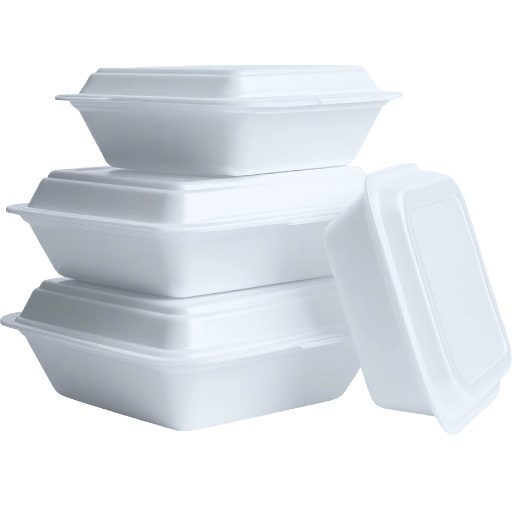
XPS / EPS
Closed-cell polystyrene foam
6″–13″
Footprint range, 1/2/3-compartment
White / Black
Stock colors + custom mold
Foam Hinged Containers: One-Piece Insulated Takeout Packaging
Foam hinged containers are the backbone of carryout in this country. Yet most foodservice buyers buy them on price, and end up inheriting problems they never priced in. A 20-minute delivery drive, a drive-through stack, a school cafeteria line- each one tests whether the package really does its job.
Why the one-piece clamshell design matters
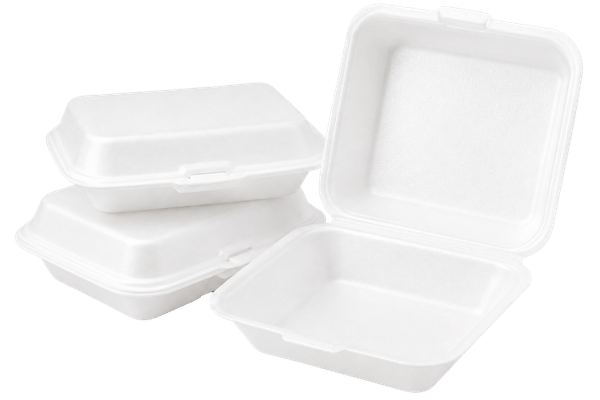
A foam hinged clamshell is a disposable take-out box formed from one piece of molded closed-cell polystyrene foam, with the base and lid joined by an integrated hinge. The one-piece design replaces the separate lid that gets lost, mismatched or stacked wrong during a busy session, and is the whole reason that foam hinged lid containers move faster across a pass line than two-part storage containers.
Where standard takeout packaging falls short
Hot entrees lose serving temperature during delivery, because single-wall paperboard and light plastic have too little mass to insulate.
Separate lids slow down packing, and produce mismatched-stock wastes in a high-pace kitchen.
Grease and sauce bleed into open fiber boxes, leaving customers with damp, soggy packaging.
Polypropylene take-out containers crush in transit, because wall gauge and rib profiles were never specified.
How Foam Hinged Containers Hold Temperature
The reason a foam clamshell keeps a hot lunch hot is no marketing trick, but structural: Polystyrene traps thousands of sealed air pockets, and trapped air is a very effective low-cost thermal insulator. That is the same physics behind building insulation boards.
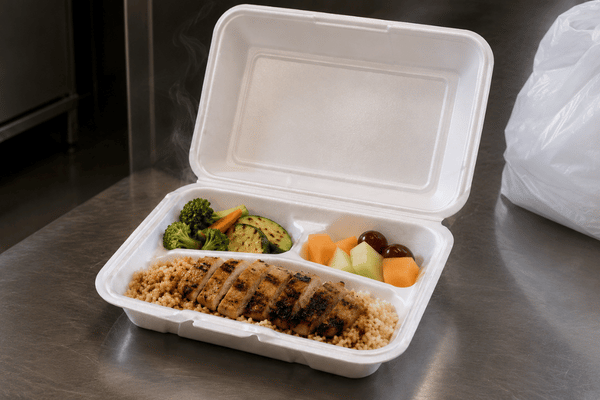
Sec. 01 // Thermal Resistance
Engineering Note — Why Foam Insulates
Expanded and extruded polystyrene foam provides a material thermal resistance of approximately R-3.6 to R-4.2 per inch of thickness, measured by the ASTM C518 heat flow test. Compared to a door layer of 0.020" single-wall paperboard or 0.016" thin-gauge plastic, the foam insulant is proportionally more significant. So the R-value of your container design remains proportional to the savings. In a foot operated through put environment, that inch thick wall helps hold the food closer to served temperature both way through delivery, fulfilling the American Foodservice System Association's recommended 1-2 hour holding window.
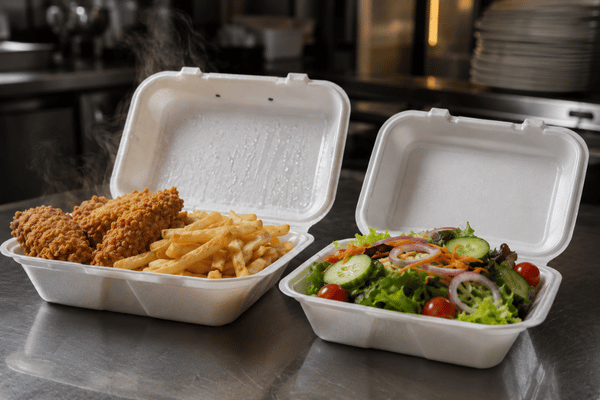
Sec. 02 // Temperature Retention
Hot food, cold food, and the microwave question
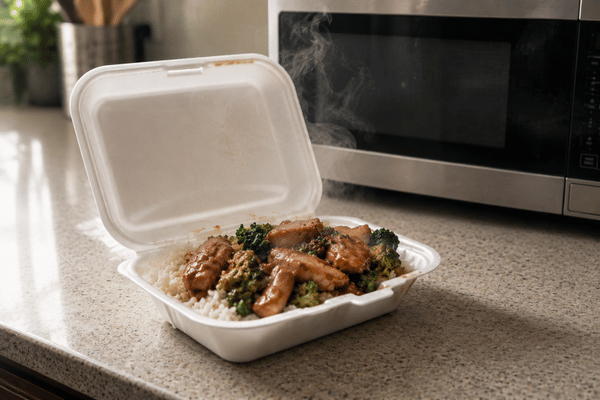
Insulation helps hot things stay hot, and it helps cold things stay cold. If your hot containers vent, then your cold containers retain, and vice versa. Vented lid choices vent steam from fried or juicy foods, so the food doesn't get soggy, and the package won't turn soggy under its own steady heat. Non-vented packages remain dry and crunchy under steady ice-cold foods.
Sec. 03 // Usage Boundaries
An honest limit — microwave use
Polystyrene foam holds resonance identification #6, and is suitable for refridgerating and cold storage, but just makes a slightly plastic sizzle in the microwave. We tell our clients this openly: foam hinged containers exist for transport and holding, they are not for cooking if you want them to stay in shape, and your menu signage should represent that reality.
“On the thermoforming line, the variable that determines insulation is wall consistency. We control bead density and sheet gauge so the foam cell structure stays uniform across the base and lid-uneven walls are where heat escapes and where a lid cracks at the hinge.”
— Wanhui Production Team, Thermoforming Workshop
Wanhui Foam Hinged Container Sizes & Configurations
Foam containers only perform when the size matches the portion. Oversized boxes let food slide and cool faster; undersized ones crush the lid closed and pop the closure tab. Wanhui supplies a full footprint range plus custom mold development when your menu needs a size that stock tooling does not cover.
Configuration
Typical footprint
Compartments
Lid / closure
Stock color
Sandwich / burger box
5–6 in
1
Tab-lock hinge
White / Black
Single hot entree
8–9 in
1
Secure-lock hinge
White / Black
Combo / 3-compartment meal
9–9.5 in
3
Hinge, vented optional
White / Black
Hot dog container
7 in
1
Tab-lock hinge
White
Hoagie / sub box
9–13 in
1
Hinge, all-purpose
White
Shallow deli / salad
8 in shallow
1–2
Non-vented hinge
White / Black
Three-compartment foam containers are the most requested line for combo plates, because the molded dividers keep a hot protein from bleeding sauce into two cold sides. Vented and non-vented lids are available across most sizes, and Wanhui can print your brand logo directly on stock or custom tooling.
Menu item
Recommended size
Compartments
Lid choice
Burger, wrap, single sandwich
5–6 in
1
Tab-lock
Rice/noodle bowl + protein
8–9 in
1
Secure-lock
Meat-and-two-sides combo plate
9–9.5 in
3
Vented if hot/fried
Fried chicken, fries, saucy items
9 in
1–3
Vented
Cold salad, deli, leftovers
8 in shallow
1–2
Non-vented
Hot dog, sub, hoagie
7–13 in
1
Tab-lock
That selection logic is the difference between a clamshell that protects food and a box that simply contains it. If your menu mixes hot and cold service, a procurement specialist can map your top items to the right SKUs before you commit a single carton.
Get Instant QuoteFoam vs Paper vs Plastic Takeout Containers: Spec Comparison
Buyers usually compare takeout packaging on sticker price, then discover the real cost on the loading dock and in the customer's hands. The table below sets foam against paperboard and rigid plastic on the dimensions that actually drive an operator's decision: insulation, weight, structural strength, microwave use, leak resistance, cost and recyclability.
| Specification | Foam hinged (XPS/EPS) | Paperboard | Rigid PP plastic |
|---|---|---|---|
| Wall structure | Closed-cell polystyrene | Single-wall fiber | Solid polypropylene |
| Insulation (R-value) | R-3.6-4.2 / inch 1 | Negligible (single-wall) | Negligible |
| Typical weight | ~5-15 g (lightest) | ~18-30 g | ~20-35 g |
| Crush resistance | Light, rib-reinforced rigidity | Moderate; weakens when damp | Highest absolute strength |
| Microwave reheating | Not recommended (resin #6) | Limited | Often microwave-safe |
| Grease & leak resistance | Non-absorbent | Needs coating/lining | Non-absorbent |
| Relative cost per unit | Lowest | ~1.5-2x higher 2 | Higher than foam |
| Recyclability | #6 PS - limited stream access | Wide, if uncoated | #5 - moderate access |
* Figures are typical industry ranges for comparison only; actual values vary by container size, wall gauge and supplier. Naming and grades vary between manufacturers - request Wanhui's spec sheet for verified data on a specific SKU.
Foam hinged containers win decisively on insulation, weight and unit cost - the three factors a high-volume delivery operation feels every single day. Rigid plastic wins on absolute crush strength and microwave use, while paperboard wins on recycling access. There is no universally best material here, only the right match for your service model.
Foodservice applications: matching containers to your menu
Foam hinged containers earn their place wherever food has to travel and stay at temperature without inflating packaging cost. Wanhui supplies operators across several channels, and each one stresses the package differently.
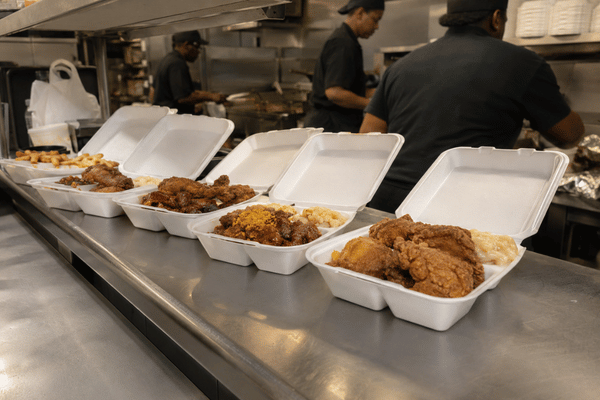
[APP-01]
Restaurants & carryout
Hot entrees, combo plates and fried items packed at the pass line. Its hinged lid speeds carryout service during peak rushes.

[APP-02]
Food delivery platforms
Insulation protects serving temperature through a 20–40 minute delivery window, which directly affects the customer's rating of the order.
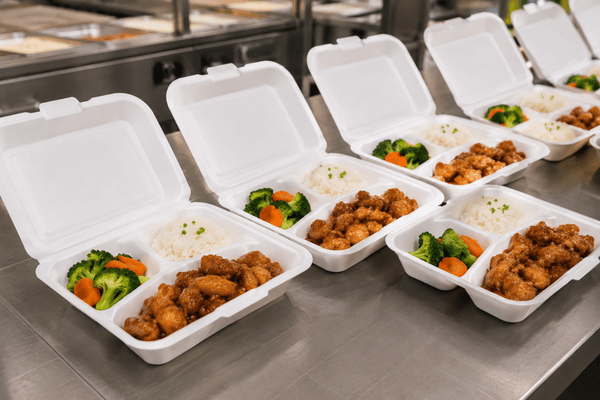
[APP-03]
Hospital & school canteens
High-volume tray service where consistent portioning and the three-compartment foam containers keep meal lines moving.
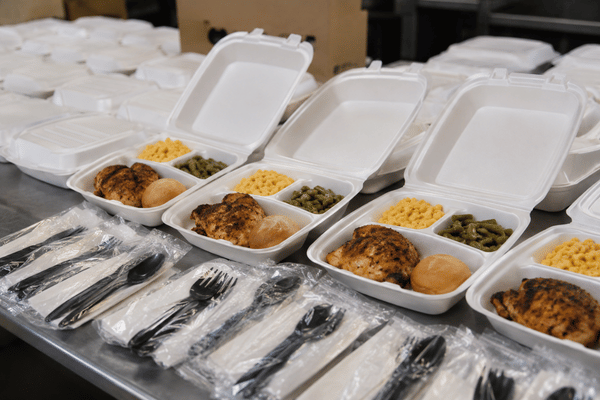
[APP-04]
Catering & events
Bulk meal boxes that hold heat during off-site transport, paired with disposable cutlery for a complete carryout set.
[SPEC-01]
Cold and frozen foods, not just hot service
Insulation runs both ways, so foam hinged containers are not only a hot-food package. The same closed-cell wall that slows heat loss on a hot entree slows warming on chilled deli salads, cut fruit and ice cream during transport. For supermarket grab-and-go and cold catering, that means the cold chain holds longer between the prep room and the display case.
[SPEC-02]
Application tip from the floor
Standardize on 2 or 3 SKUs for a food delivery-intensive menu rather than a dozen. Tighter ranges reduce mis-packs and stock turns over in the kitchen, and allow you to buy in larger, better value batches.
Food-Grade Compliance & Where You Can Sell Foam Packaging
Is foam packaging appropriate in your supply chain—and is it legal to sell there? Two questions, clear answers, a competent supplier will give you both before you buy.
Is polystyrene foam food-safe?
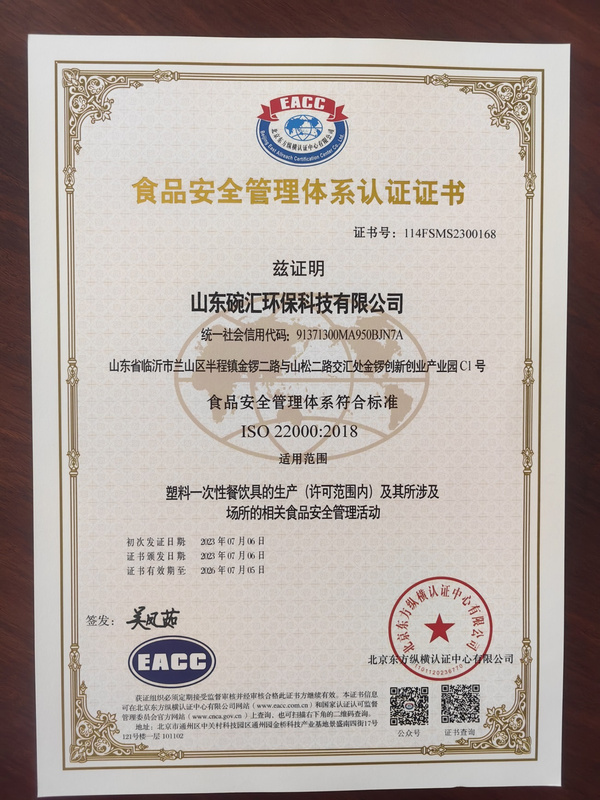
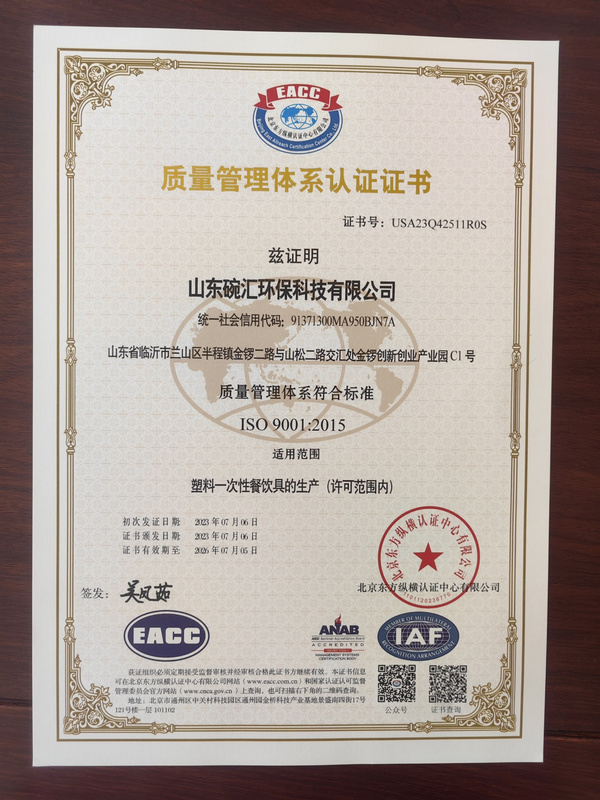
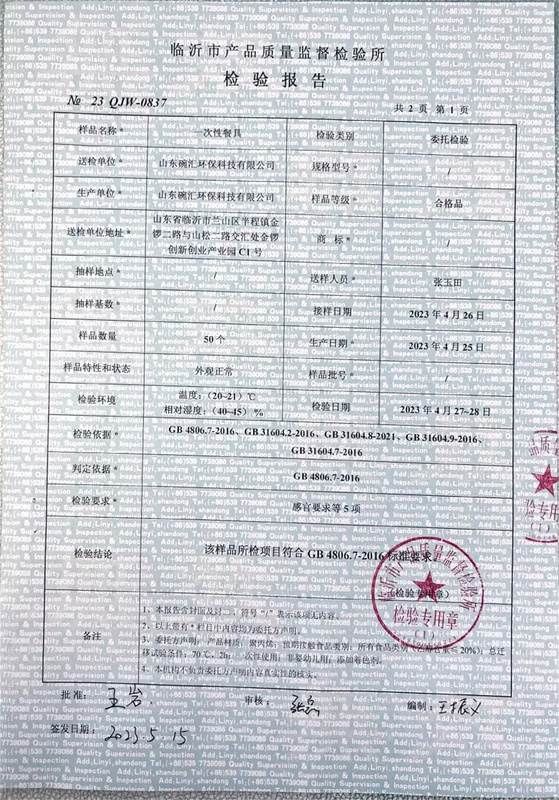
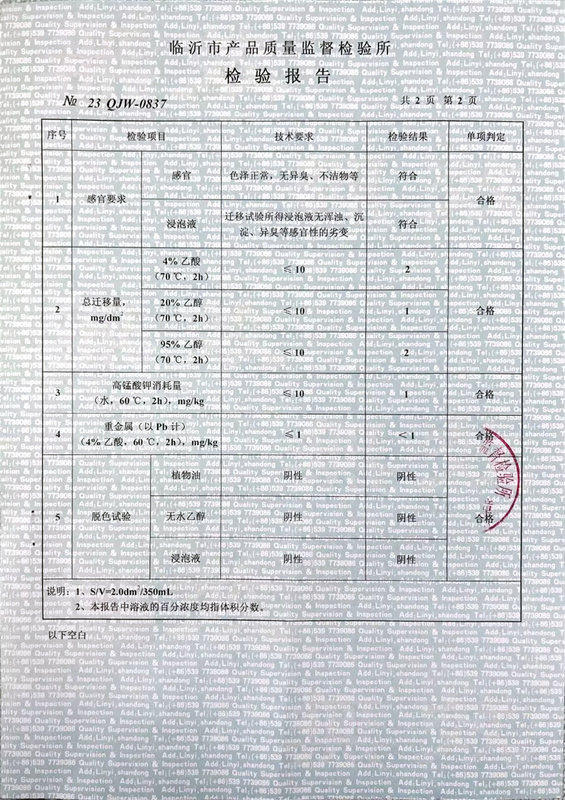
On safety, polystyrene is an FDA-approved food-contact material, regulated under 21 CFR Part 177. All Wanhui containers are manufactured to FCM conformance and quality management system ISO 9001 and food-safety management systems ISO 22000.
CER-01
ISO 9001
Quality management system
CER-02
ISO 22000
Food safety management (HACCP)
CER-03
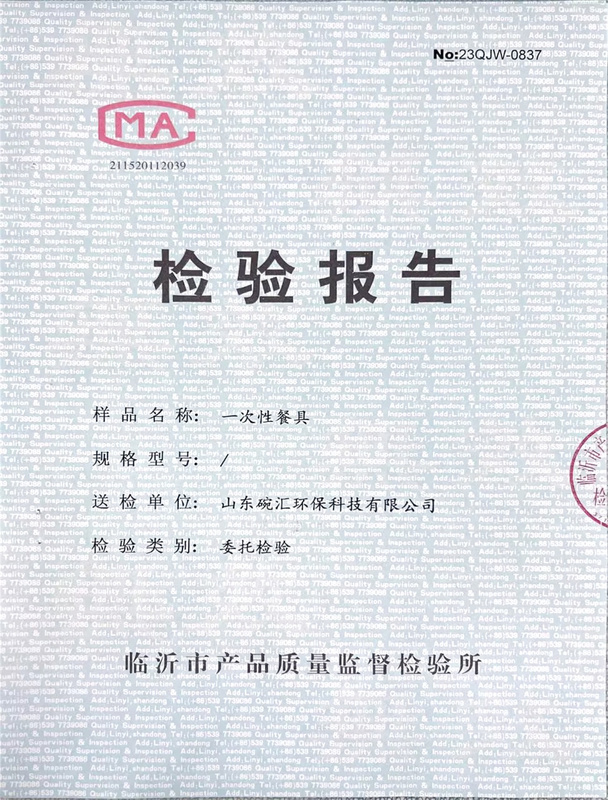
Production License
National foodservice manufacturing permit
CER-04
FDA 21 CFR 177
Food-contact polystyrene compliant
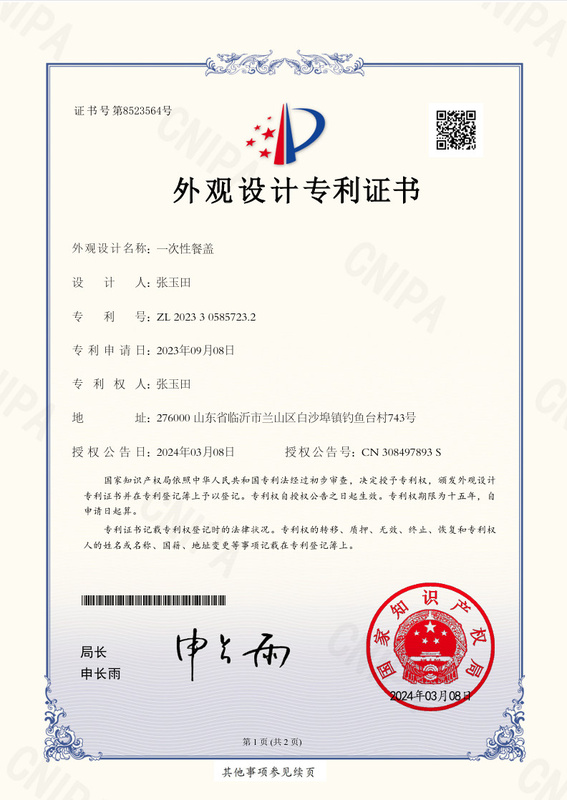
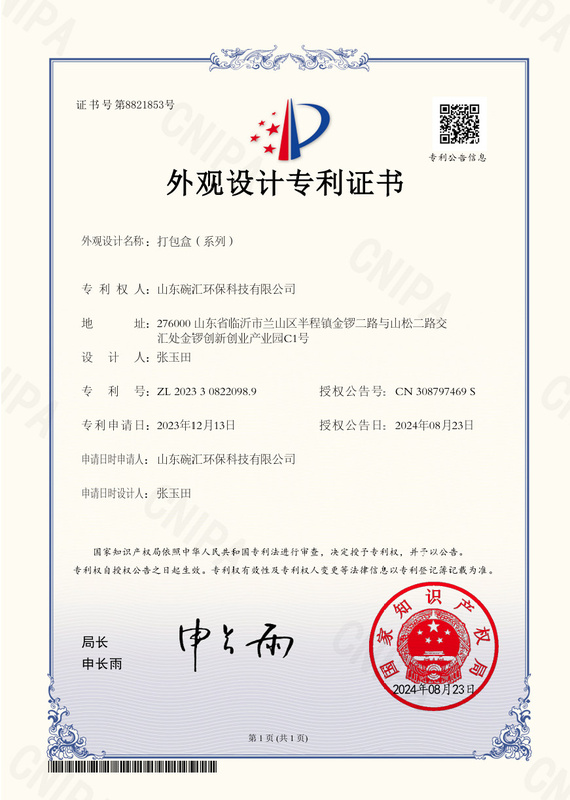
CER-05
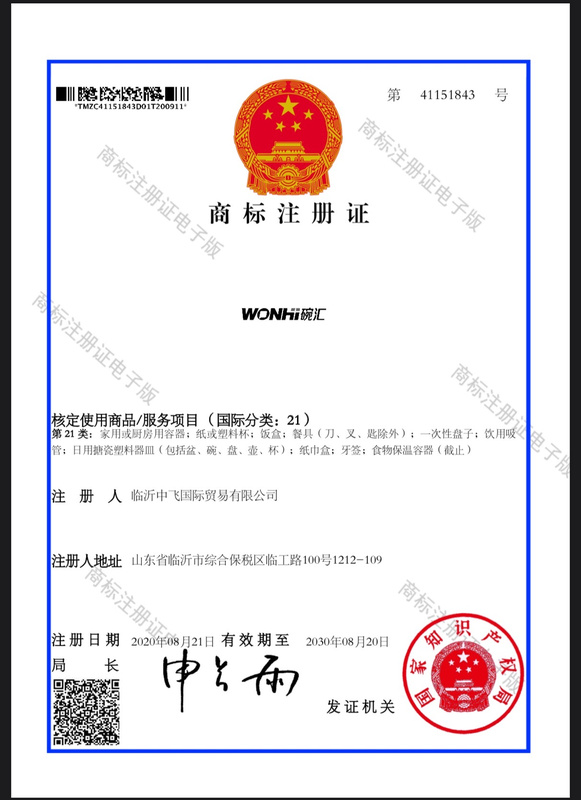
Utility Patents
Container body & lid design
Where foam packaging is — and is not — permitted
Foam regulation is the quietest part of the competition, so we will be direct. The European Union has banned expanded and extruded polystyrene food and beverage containers since 3 July 2021 under the Single-Use Plastics Directive. In the United States, as of 23 June 2022, more than ten states and Washington D.C. now ban or restrict EPS foodservice packaging—and the list is growing.
Buyer Decision Framework — Market Compliance
Foam hinged containers are entirely legal and still extremely common throughout many US states, the Middle East, regions of Asia-Pacific and South America-where Wanhui currently does business. They are not an option where EPS bans are erected—including the EU and an increasing number of US jurisdictions.
Confirm the rule for every destination
Find out the foam regulation in any market you will supply before placing any volume orders. Where foam is disallowed, Wanhui also makes plastic and biodegradable counterpart lines, so you will not need a new supplier—only a new product. Be aware, expanded polystyrene is not biodegradable, which is the reason for these bans.
How to Order Foam Hinged Containers from Wanhui
Overseas foam container sourcing should throw up an honest question: after added landed costs and lead time is factored in, will this work for us? We answer it with an open process - not just a price quotation - as the ideal price must relate back to your demands and specifications:
What drives your unit price
Order volume
The larger the order the lower the cost per thousand containers and premium carton.
Custom logo printing
And bespoke moldmaking compared against stock tooling.
Variability of size and pot count
Variety is bolstered by purchase volume, total SKU and fixture complexity, average order magnitude.
Landed cost physics
Such as carriage terms, will affect direct freight or landed costs at your port.
Quality inspection before shipment
Crushed cartons and cracked hinges are nearly always caused by under-gauged foam and poor carton filler usage. All steps are checked before leaving the factory - walls are checked for consistency, cartons checked for safe stacking. An order sample approval is justified - even when a photo would do - and confirm you are inspecting the real thing in the hand.
01
Furnish details of your size, compartment requirements, monthly volume, country of supply.
02
We advise SKUs, confirm specifications, and assemble a price quotation with lead time.
03
Approval samples - A print proof for your custom logo if needed.
04
Production, quality inspection, and export shipping to your port.
Procurement advisory
Request a wall gauge and carton count from any foam supplier - don't just ask for the price. Identical-looking containers can ship 10-20% lighter on foam content. The result on your delivered product is crushed lids, and there's no cheaper insurance than an accurate spec sheet.
Foam Hinged Containers: Enterprise Assessment Tools
Size Selector
Identify precise dimensions to optimize shipping and portion control.
Launch Tool
Compliance Checker
Verify material compliance against strict environmental regulations.
Launch Tool
Material Comparator
Evaluate foam specifications against alternatives for data-driven decisions.
Launch Tool
Order Estimator
Calculate bulk pricing, shipping volumes, and lead times for procurement.
Launch Tool
Get a Quote on Foam Hinged Containers
Send us your dimensions, volumes, and target market. Our packaging specialists will recommend the correct foam hinged container for your menu and quote you a clear price.
Request a QuoteFoam Hinged Containers FAQ
It is a clamshell takeout box molded from closed-cell polystyrene foam, with the base and lid joined by an integrated hinge. The one-piece design means there is no separate lid to lose or mismatch.
In the trade they are foam hinged containers, foam hinged lid containers, foam clamshells or foam takeout containers. "Styrofoam" is a brand name often used generically; the actual material is expanded or extruded polystyrene.
It is not recommended. Polystyrene foam carries resin code #6 and can soften or warp under microwave heat — foam hinged containers are designed for transport and holding, not reheating.
Yes. Polystyrene is an FDA-authorized food-contact material under 21 CFR Part 177, and the closed-cell foam wall is non-absorbent and insulating, which suits hot carryout service.
Polystyrene foam is not biodegradable and is difficult to recycle at scale. The EU has banned EPS food containers since 2021, and over ten U.S. states restrict them — always confirm the rule in your market.
Footprints run roughly 6 to 13 inches, in 1, 2 and 3-compartment configurations, with hot dog and hoagie shapes. Custom mold development is available for sizes outside stock tooling.
A vented lid releases steam from hot, fried or saucy food so it does not go soggy. A non-vented lid keeps cold and crisp items dry — choose by menu, not by habit.
Yes. Wanhui prints custom brand logos on stock and custom tooling, and develops custom molds for proprietary sizes and shapes.
Both depend on size mix, printing and volume. Send your specification and destination market, and we return a quotation with confirmed lead time — see the ordering steps above.
Containers nest and ship in sturdy cartons sized for stable stacking. Foam's light weight also keeps freight cost per thousand units low, which is part of why operators stock it in bulk.