Get in touch with Wanhui Company

Eco-Friendly Food Packaging Solutions — Direct from Wonhi Factory
Ditch the fossil fuels: eco-friendly food packaging for restaurant chains and institutions. Made from sugarcane, PLA, kraft, and bamboo and delivered from 86 active production lines in Linyi, China. 20 years of manufacturing. 1 million units/day.
86
Production Lines
1M+
Units / Day
30+ t
Sheet / Day
5,000
MOQ from
30-45 d
Lead Time
20 yrs
Experience

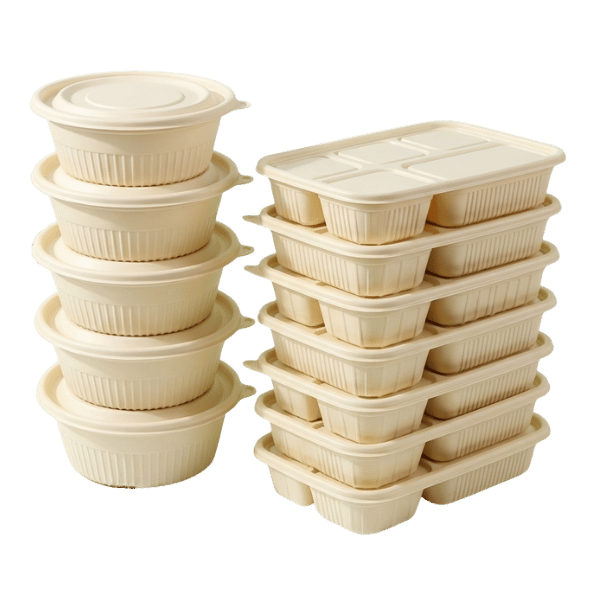
Why Foodservice Brands Switch to Eco-Friendly Food Packaging
Eco-friendly food packaging means that its composed of compostable, biodegradable, or recyclable containers made from renewable plants – sugarcane, PLA, kraft paper, bamboo, wheat straw – that offer a petroleum-free alternative. This is no longer a trendy branding choice; it’s how restaurant and institutional businesses will survive.
Single-use plastic legislation
California SB 54 carries fines up to $50,000 per day, per violation, with full enforcement starting January 2027. The EU Single-Use Plastics Directive and state-level PFAS bans in Maine, Colorado, Rhode Island, and California SB 682 stack on top.
Consumer signal
Sustainability-marketed products hold 18.5% of CPG market share with a 28% price premium over conventional brands per the NYU Stern Center for Sustainable Business 2023 Index. 70% of millennials and 72% of Gen Z adults pay extra for upgraded packaging on to-go orders.
Supply-side constraint
Many PLA suppliers run 60+ day lead times with 50,000-unit MOQs, blocking the seasonal menu testing chains need.
Material-claim confusion
“Compostable,” “biodegradable,” and “recyclable” are not interchangeable. Buyers who source the wrong one face greenwashing complaints and audit failures.
How Wonhi Resolves Each Pressure
Twenty years of food packaging at 86 production lines in Linyi delivers: a unique, without the distributors, direct factory-sale pricing; a minimum of 5,000 containers for to test and sample to test new menu items; a turnaround within 30 days of a 25-day expedition option; and a line of products for customers in regions that cannot accept commercial composting, including home-compostable bagasse foodware. Products are produced from 20 thermo-lines, 6 sheet-lines, and 60 injection molding-lines, representing over 30 tons of sheeting output and over a million packaged pieces every day.
Wonhi Eco-Friendly Food Packaging Product Line — Models & Selection
Six product families cover the spectrum from premium presentation to mass-volume takeaway, each engineered against published ASTM D6400 / D6868 standards for industrial composting and FDA food-contact requirements. Each family targets a specific food type, heat profile, and price point.
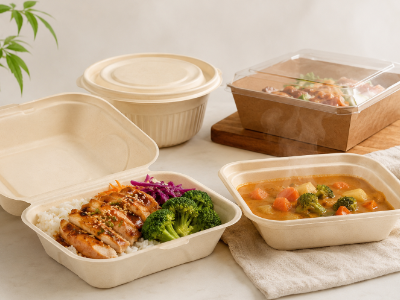
Compostable To-Go Containers
Heat-rated bagasse and kraft+PLA-lined boxes for hot soups, curries, and rice bowls up to 110°C.
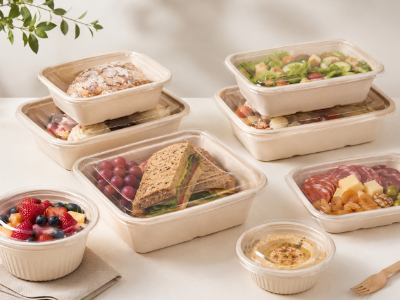
Eco-Friendly Food Boxes
Containers to serve bakery, Deli, and catering services – with kraft paper packaging topped with clear pla LIDs, these offer full-visibility packaging that clearly showcases the ingredients inside the food containers.
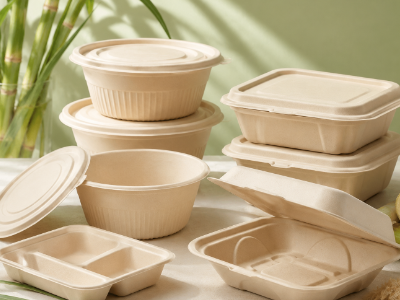
Biodegradable Food Containers
The Deconstruction Details. Compostable-food containers designed to ASTM D6400 protocols. PLA-and sugarcane bagasse blends tested to demonstrate consistent deconstruction when available, backed by complete independent test reports and certificates on request.
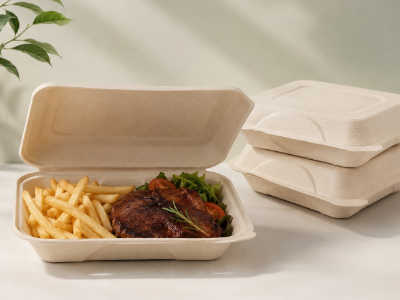
Compostable Clamshell Containers
Tough take-away containers, with a lid locking system, designed for such foods as french fries and heavier carry out meals – bagasse clamshell containers that lock shut easily and will hold greasy, heavy takeaway portions.
Decision Matrix — Pick the Right Model for Your Use Case
For takeout-heavy operations, our compostable to-go containers in bagasse-PLA blend handle hot soups and curries without leaking. Bakery and deli brands typically choose our eco-friendly food boxes for product visibility through clear PLA windows. If your priority is ASTM D6400-aligned deconstruction with full third-party test reports on request, our biodegradable food containers offer PLA + bagasse blends. Hot-food vendors and pizza shops prefer our compostable clamshell containers with the locking-lid design.
| Use Case | Material | SKU | Min MOQ | Lead Time | Unit Price Range |
|---|---|---|---|---|---|
| Hot soup / curry takeout | PLA bagasse blend | WH-PLA-32oz | 5,000 | 35 days | $0.18-$0.24 |
| Cold salad / deli | Kraft + PLA window | WH-KFT-16oz | 5,000 | 30 days | $0.10-$0.14 |
| Oily pizza / fried food | Molded pulp + film | WH-PUL-12in | 10,000 | 40 days | $0.22-$0.28 |
| Heavy meal prep | Sugarcane bagasse | WH-SUG-3comp | 5,000 | 35 days | $0.16-$0.22 |
| Beverage / smoothie | Compostable PLA cold cup | WH-CUP-16oz | 10,000 | 30 days | $0.08-$0.12 |
| Bakery visibility | Kraft + clear PLA top | WH-KFT-bakery | 5,000 | 35 days | $0.14-$0.20 |
| Catering trays | Wheat straw fiber | WH-WST-tray | 5,000 | 40 days | $0.20-$0.30 |
| Clamshell takeout | Bagasse clamshell | WH-CLM-9in | 5,000 | 35 days | $0.12-$0.18 |
| Bento multi-cell box | MFPP + bagasse combo | WH-BNT-4cell | 5,000 | 35 days | $0.18-$0.26 |
The 8×5 Material Comparison Matrix — Sugarcane vs PLA vs Kraft vs Bamboo vs Molded Pulp
Field testing versus one marketing label: “Compostable is not a monolith,” as procurement leads know well. Unlike PLA, which only breaks down at the roughly 200 US industrial facilities operating above 55°C — for a country of 330 million people — bagasse breaks down under home backyard conditions at 25°C ± 5°C. The material should match its end-life scenario.
The eight specifications procurement engineers need to shortlist suppliers, all from published ASTM D6400, EN 13432, and TÜV OK Compost HOME standards, and verified by Wonhi 2024-2025 line tests.
| Spec | Sugarcane Bagasse | PLA (Polylactic Acid) | Kraft Paperboard | Bamboo Fiber | Molded Pulp |
|---|---|---|---|---|---|
| Source | Sugarcane harvest residue | Corn / sugar fermentation | Virgin or recycled paper | Renewable bamboo grass | Recycled paper fiber |
| Industrial compost time | 60-90 days | 90-180 days | 60-120 days | 90-180 days | 60-90 days |
| Home backyard compost | Yes (TÜV HOME possible) | No (needs 55-70°C) | Yes | Yes | Yes (most variants) |
| Max heat tolerance | 180°C | 60°C deforms / 85°C melts | 120°C | 200°C | 200°C |
| Oil / grease resistance | Excellent (4 hr greasy hold) | Poor (1.5 hr break down) | Moderate (needs lamination) | Good | Good (with film lining) |
| PFAS-free | Yes (no-PFAS coating spec) | Yes | Depends on coating | Yes | Yes |
| Best-fit food | Hot, oily, heavy | Cold drinks, cold salads | Bakery, deli, dry | Hot foods, catering | Egg cartons, trays |
| Avg unit cost (10K MOQ) | $0.12-$0.22 | $0.08-$0.18 | $0.10-$0.18 | $0.18-$0.26 | $0.10-$0.16 |
Why Bagasse Outperforms PLA for Hot Takeout
Two of 200 U.S. industrial composting facility for 330M citizens (Sources 3 and 4).In a 2024 Wonhi line test-at a 85C temperature fill on a concurrently running comparison line of beef stew -bagasse32 oz. Containers maintained integrity over four hours.PLAcontainers deformed within 60 minutes and failed their lids’ seal at 90 minutes due to thermal breakdown above60C glass-transition temp whereasBagasse fibermaintained structural integrity well beyond180C . Bagasse is clearly the best choice for any item served > 70 C.
“We tested seven coatings until we came up with this food-safe no-PFAS grease barrier,” says Wonhi application engineer Alex Razzano. “The problem was no longer about price. With U.S. government mandate(FDA grease-proofing phased out in 2024), using coatings with perfluoroalkyl substances had became a procurement and business development liability and we’d have to provide data before anyone would buy.We acquired that data.”
Not sure which material fits your application?
Get a one-on-one consult with a Wonhi application engineer. We will run your menu through the matrix and recommend the SKU and MOQ that match your operation.
Request Sample PackSustainability ROI — Eco-Friendly Packaging vs Conventional Plastic
The hardest internal sell is the 15-30% unit price premium. The math works only when you count the offsets. The full TCO over a one-year procurement cycle includes hauling savings, regulatory penalty avoidance per California SB 54, customer premium pricing per the NYU Stern Sustainable Market Share Index, and brand perception lift. Three of those four are quantifiable today.
| Metric | Conventional PET | Wonhi Eco-Friendly |
|---|---|---|
| Decomposition timeline | 450+ years | 60-180 days (industrial compost) |
| Carbon footprint (kg CO₂ / kg material) | ~6.0 | ~1.8-2.5 (plant-based) |
| Landfill diversion | 0% | 100% (where composting access exists) |
| PFAS-free | Varies | Yes (spec-validated) |
| Avg unit cost premium | baseline | +15-30% (drops to +10% at scale) |
| Hauling cost (per item) | baseline | −15-20% (40% lighter weight) |
| Consumer premium willingness | baseline | +28% sustainability brand premium |
+28%
Average price premium consumers pay for sustainability-marketed products vs conventional brands — NYU Stern Center for Sustainable Business 2023 Sustainable Market Share Index, 18.5% of US CPG market share and growing 9.9% CAGR vs 6.4% for conventional.
Source: NYU Stern Center for Sustainable Business + Circana 2023
The Three Quantifiable ROI Levers
Compliance penalty avoidance
California SB 54 fines reach $50,000 per day, per violation. One product family failing certification across one quarter compounds to seven figures of exposure.
Customer premium pricing
70% of millennials and 72% of Gen Z adults will pay extra for upgraded packaging on to-go orders. Restaurants that messaged the switch saw a 10% lift in repeat patronage from eco-conscious customers.
Operational savings
Compostable items weigh roughly 40% less than equivalent plastic. Hauling cost typically drops 15-20%. Per-item disposal savings range $0.02-$0.05.
For a chain running 200,000 takeout containers per month, a 20-cent net premium per container offset by 4-cent hauling savings, a measurable share of new customer spend, and zero SB 54 exposure produces a 12-18 month payback in most scenarios. Exact ROI varies by region, menu mix, and customer base — request a custom analysis through the Material Spec PDF link above.
→ Get a quote based on your monthly volumeCustomer Results — From Chain Restaurants to Hospital Canteens
Case studies below are drawn from active OEM orders shipped through Wonhi’s 86 production lines. PFAS-free coatings are validated against FDA 30 June 2025 phase-out requirements. Specific client names are withheld under NDA — request unredacted references through the Procurement form.
Case 1 — US Quick-Service Chain (200+ locations)
This change replaced all store Clamshell PET with bagasse clamshells, moving on a monthly at 2 million units. This swap saved approximately 35 tonnes of petroleum plastic a year, and on-time delivery is at 99.2% over the past 12-month order book. Their eco conscious, repeat customers also spent 9% more on average in the first 6 months post launch communications around the switch.
Case 2 — Middle East Food Delivery Brand
A major regionally-known food delivery company needed a two-color logo on the bowls at a MOQ of 5,000 units to start sampling an experimental menu. Wonhi fulfilled a two-color logo, in our standard mold, shipped FOB Qingdao in 30 days, to their food test site. Since customer response was extremely positive, the company quickly increased their order to 25,000 units within 60 days.
Case 3 — Hospital and School Canteen Consortium
A consortium for school/hospital catering providers required PFAS-Free meal boxes suitable to withstand the regional education board audits. Wonhi provided Bagasse-PLA meal boxes with a No-PFAS coating spec and raw 3rd Party grease-proofing test reports to support application. They are now on a 6-month rolling contract for their institutional catering requirement.
What These Three Cases Tell a Procurement Manager
Wonhi’s order book contains chain QSR scale (2M units / month), low-MOQ new menu test items (5,000 units with a custom logo), and institutional raw test report deliverables. If you fit any of these three patterns our tooling and quality program, no investment in custom mold, will work out-of-the-box. If you require an entirely new container form, custom mold development time averages 7-14 days for first samples.
We currently serve customers such as chain restaurant, QSR and fast food sector, food delivery / ghost kitchens sector, school, university and hospital canteens, bakery / cake cafes, as well catering & event sector for Europe, Americas, MEA, APA and SAM.
Procurement Guide — Pricing, MOQ, Lead Time, Custom Mold, Shipping
Pricing on B2B eco-friendly food packaging depends on five factors. Each one moves the unit price 5-30% in either direction. Procurement compliance with California SB 54 and FDA PFAS phase-out are baseline requirements built into every Wonhi quote. The framework below explains the levers so you can frame an internal budget request before requesting a quote.
Standard Operating Parameters
MOQ
– 5,000 units (no logo) / 10,000 units (with custom logo)
Lead time
– 30-45 days standard / 25 days rush (+15% premium)
Custom mold
– 7-14 days first sample / $800-$3,000 mold fee / amortized at 100K+ units
Shipping
– FOB Qingdao default / CIF available for major US, EU, ME ports
Quality program
– Batch SDS + third-party test reports delivered per order on request
The Five Pricing Factors
MOQ tier
– 5,000 units is our floor without custom logo; 10,000+ unlocks tier discounts; 100,000+ amortizes custom mold cost to near zero.
Material choice
– Kraft is the floor; sugarcane bagasse sits mid-range; PLA varies with corn price; bamboo and wheat straw command a premium for niche applications.
Print colors
– Blank product, single-color brand, two-color, or Pantone-matched four-color. Each step adds ~5-12% to unit cost.
Custom mold
– 7-14 days for first samples; mold fee runs $800-$3,000 depending on cavity count; amortized to roughly $0 at 100,000+ units.
Shipping terms
– FOB Qingdao is the default. CIF US, EU, and Middle East ports are available. Full container loads beat consolidated freight on per-unit landing cost by 15-30%.
Why Direct Factory Beats Distributor Sourcing
Distributor markups on eco-friendly food packaging typically run 30-50% above factory price. Lead times stretch because the distributor must place the factory order after receiving yours. Wonhi runs as a direct factory operation: no distributor margin, response time under 2 hours on RFQ, in-house mold development, and one engineering team from spec definition through container ship out. Twelve active OEM clients across North America, the Middle East, and Asia-Pacific run on this model today.
For a custom quote matched to your menu, expected monthly volume, and target market, use the form below. Standard turnaround for a written quote with material recommendation and lead-time confirmation is under 2 business hours.
Ready to RFQ? Get a custom quote in <2 hrsCertifications and Compliance Decoder — ASTM, BPI, EN 13432, TÜV, FDA, ISO
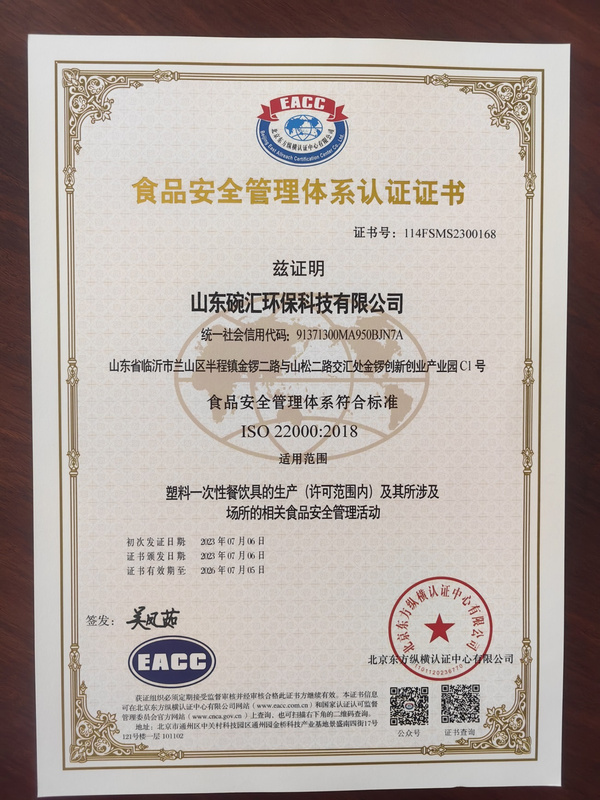
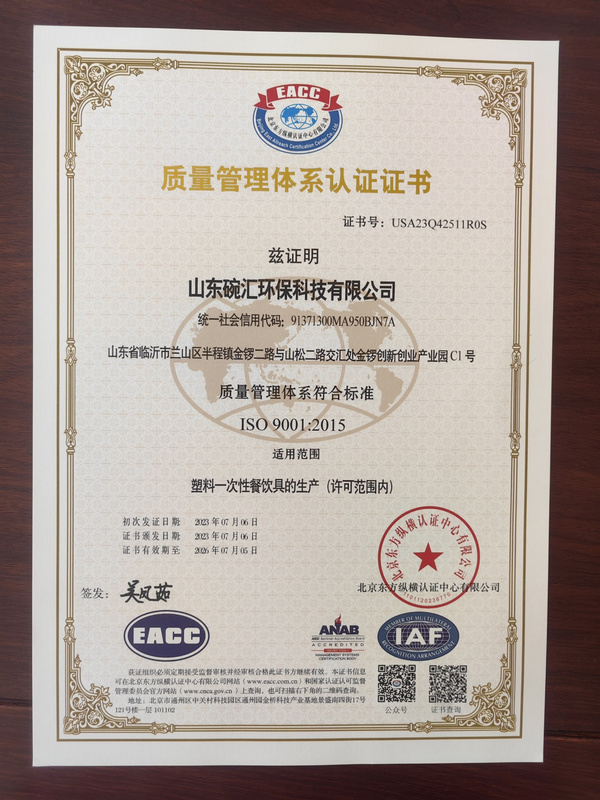
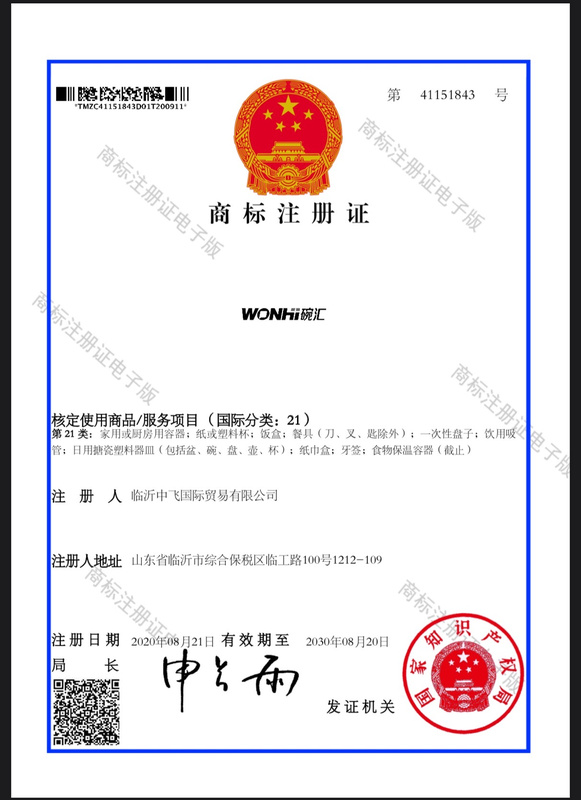
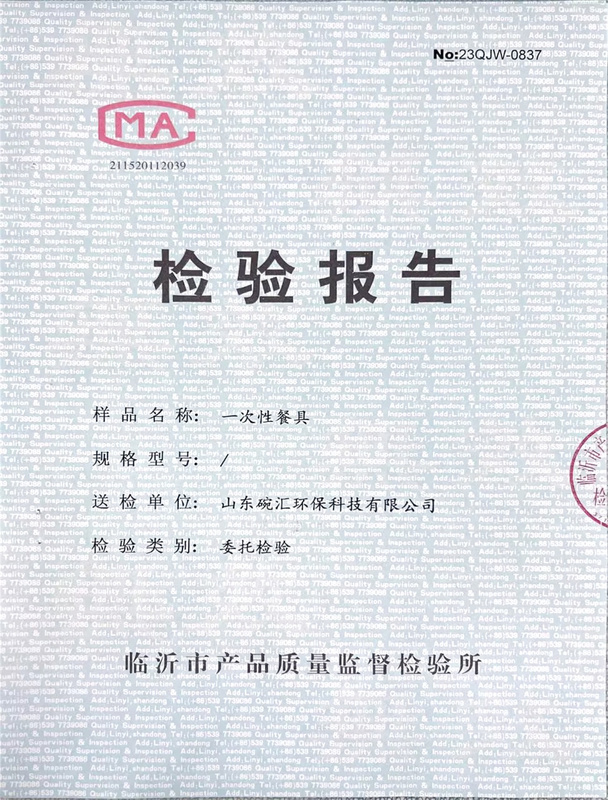
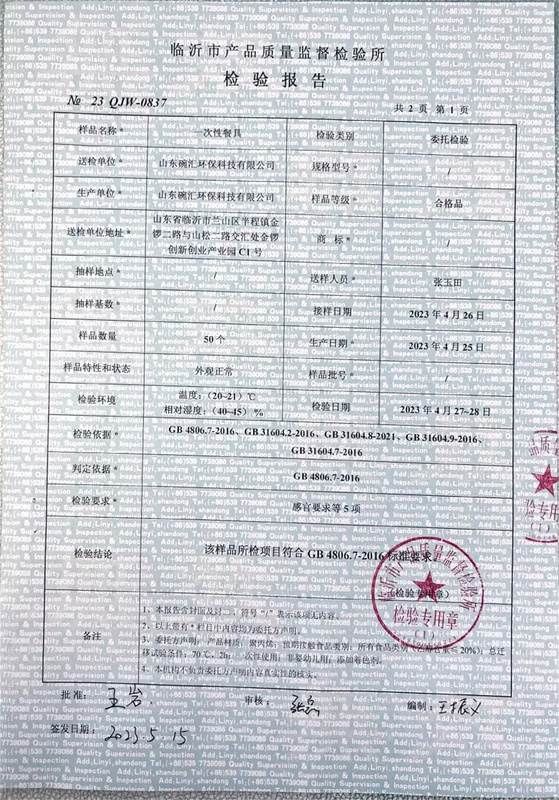
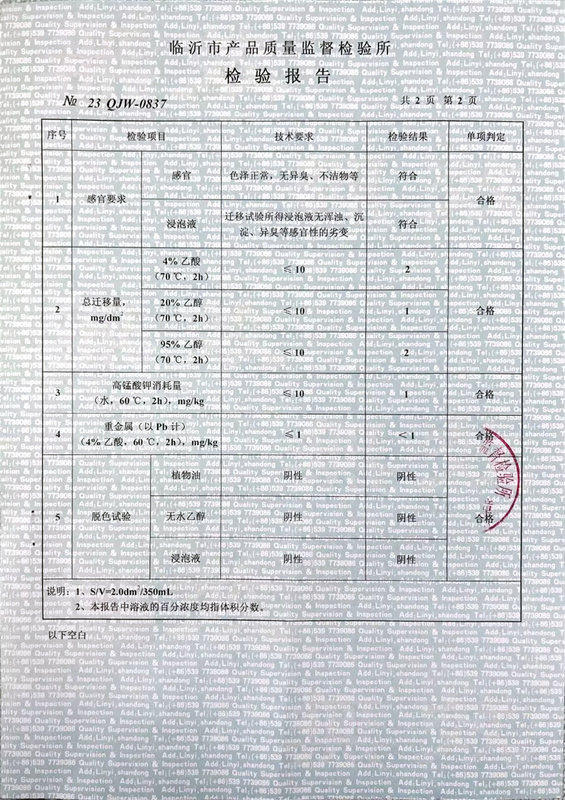
Procurement audits do not check certification logos. They check certification numbers issued by ASTM International, BPI (Biodegradable Products Institute), and the FDA Food Contact Substances program, plus raw test reports. The Decoder below explains what each standard actually tests, which market it covers, and what proof a buyer should ask for. Wonhi’s program is engineered to meet the technical requirements of each standard listed; product-specific certification on a given SKU is delivered with raw third-party test data on request.
ISO 9001
Quality MgmtISO 22000
Food SafetyASTM D6400
Test-alignedASTM D6868
Test-alignedEN 13432
Test-alignedFDA
Food-contactLFGB
EU food-contactPFAS-free
Coating spec| Standard | Issuer | Market | What It Tests | Spec |
|---|---|---|---|---|
| ASTM D6400 | ASTM International | US | Industrial compostability of plastic items | ≥90% organic C→CO₂ in 180 days; ≥84 days fragmentation at 55-60°C; heavy metal + ecotoxicity limits |
| ASTM D6868 | ASTM International | US | Fiber items with bioplastic coatings | Same as D6400 applied to coated fiber composites |
| EN 13432 | CEN (Europe) | EU | Industrial composting + ecotoxicity | ≤10% material fragments >2 mm after 12 weeks; ≥90% CO₂ release within 6 months; strict heavy metal table (Zn 150 / Cd 0.5 / Pb 50 / Hg 0.5 mg/kg) |
| TÜV OK Compost HOME | TÜV Austria | EU + Global | Backyard home composting at ambient temp | Disintegration within 12 months at 25°C ± 5°C; stricter than industrial standards |
| BPI Certification | Biodegradable Products Institute (US) | US | Verifies D6400 / D6868 compliance + PFAS fluorine limits | Display mark licensed only after passing ASTM tests + meeting fluorine threshold |
| FDA Food Contact | FDA (US) | US | Food-contact safety, migration limits | Substance-by-substance authorization; PFAS grease-proofers phased out by 30 June 2025 |
| LFGB Section 31 | German LFGB | EU | Food-contact safety, EU equivalent of FDA | Heavy metal migration + sensory limits |
What to Ask Any Supplier (Including Us)
We weed most certs by asking three basic questions. 1. Please provide the EN 13432 certificate number OR the BPI Registry URL, (either is easily verifiable online). 2. Please send us the raw PDF of the 3rd party test report specific to the SKU you are placing an order for. Not an overview that covers your entire product family. 3. Please confirm if your specific container requires the PFAS coating phase out program and send us the associated “no PFAS coating” specification document. We happily provide all three of these upon requested and, on a per order basis.
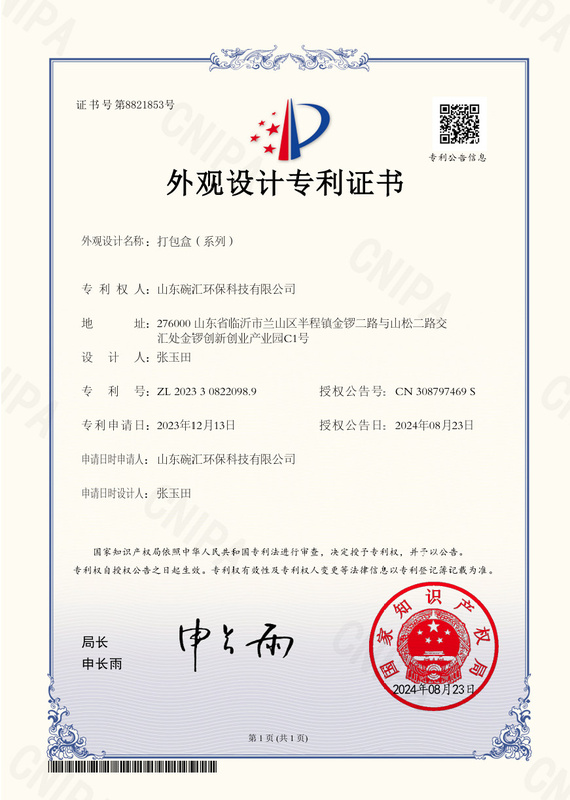
Interactive Resources
Packaging Procurement & Analysis Tools
Leverage our proprietary data tools to streamline your transition to sustainable food packaging. Match materials to your menu, calculate true ROI offsets, and decode complex global compliance standards.
Material Selector
Input your food type, temperature requirements, and disposal infrastructure to identify the optimal eco-friendly substrate for your specific application.
Launch Tool →
Eco-Friendly Packaging ROI Calculator
Model the true total cost of ownership (TCO). Quantify hauling savings, compliance penalty avoidance, and sustainability brand premiums against unit costs.
Open Calculator →
Compostability Certification Decoder
Navigate global regulations with precision. Verify the specific test standards, required documentation, and regional applicability for ASTM, EN, and TÜV certifications.
View Decoder →
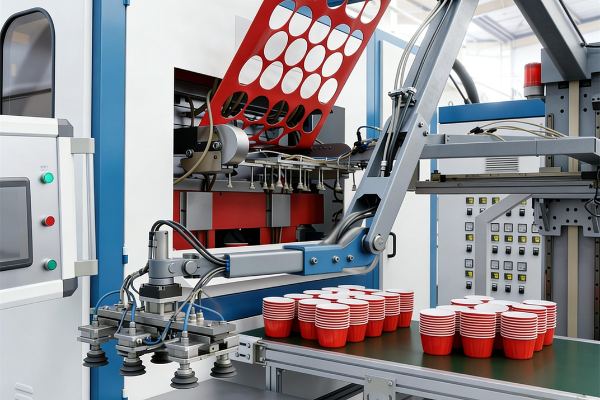
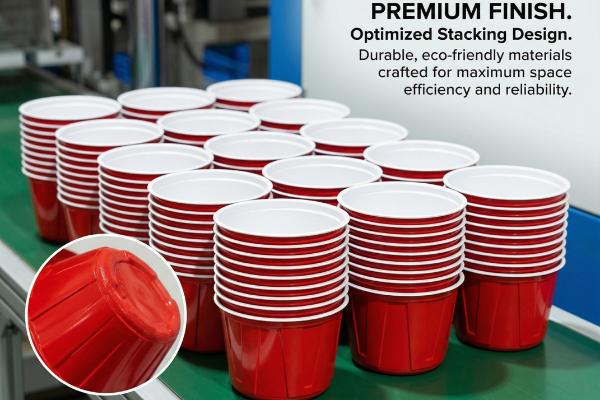
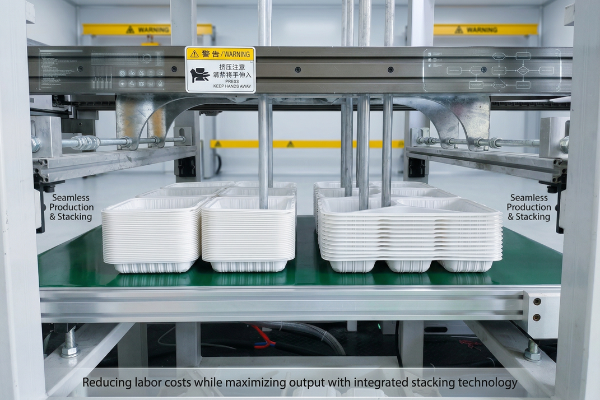
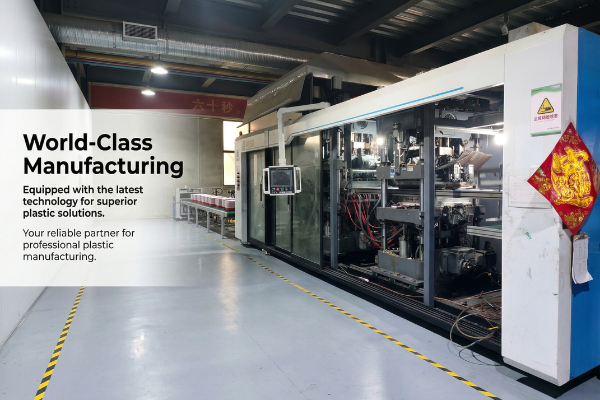
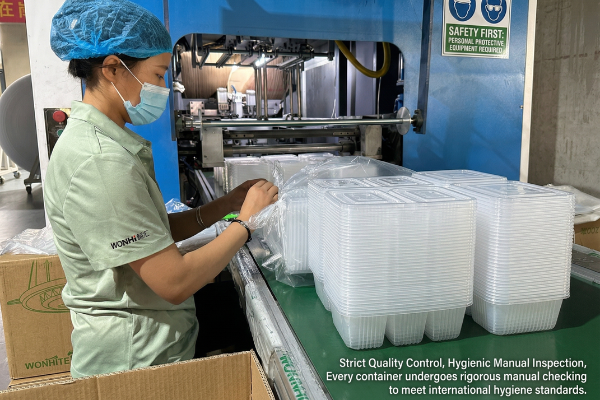
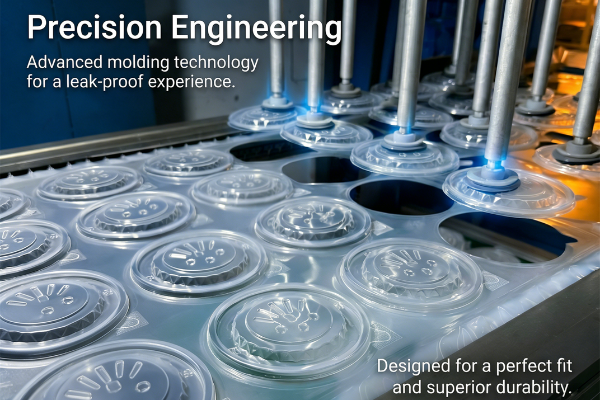
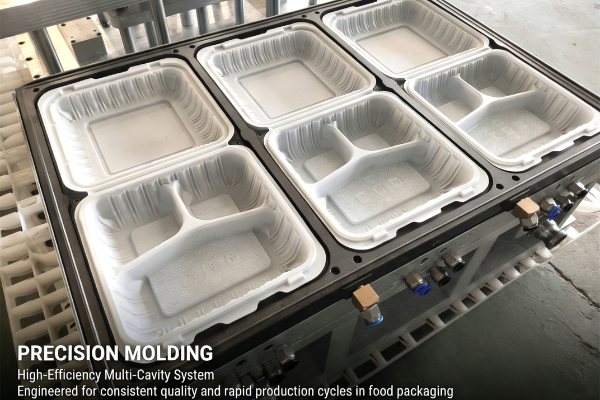
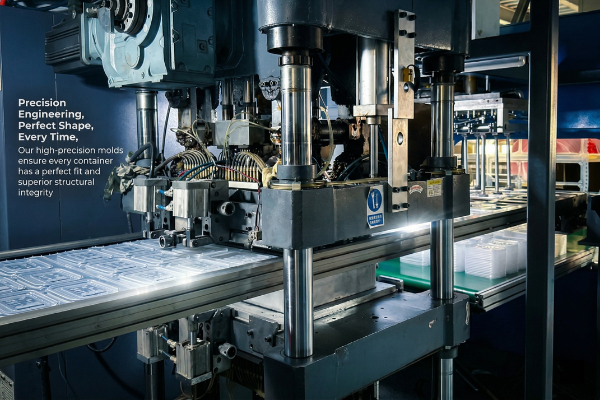
Inside Our Eco-Friendly Food Packaging Factory
×
Compostable means the material breaks down into nutrient-rich soil under controlled composting conditions (industrial or home, depending on certification). Biodegradable is broader – it covers anything that microorganisms can break down, with no time limit. Recyclable means the material can be reprocessed into new product. For procurement audits, only certifications tied to specific standards (ASTM D6400, EN 13432, BPI) carry legal and regulatory weight.
Industry data points to a 15-30% unit price premium for compostable packaging versus equivalent PET or polystyrene. At full bulk pricing the premium drops to roughly 10%. Hauling cost typically falls 15-20% because compostable units are about 40% lighter, which partially offsets the unit premium over the full year.
It depends on the material. Bagasse handles hot food up to 180°C and grease-heavy meals for 4+ hours. PLA softens at 60°C and is suitable only for cold drinks and cold food. Bamboo fiber and molded pulp handle hot food well. For hot soups, curries, or fried items, bagasse and bamboo are the safer specifications.
Three quantifiable levers are: California SB 54 compliance fine avoidance ($50,000 per day, per violation), capture of customer premium pricing (28% premium on sustainability-marketed brands per NYU Stern 2023), and hauling cost savings (15-20% from lighter weights). For a chain running 200K units/month, payback often falls between 12 and 18 months depending on region, menu, and customer base.
This is the most important question buyers ask, and it deserves a direct answer. Roughly 200 commercial composting facilities serve the entire US, and 10 states have zero. PLA in a landfill does not break down meaningfully. The honest material recommendation in low-infrastructure regions is sugarcane bagasse with TÜV OK Compost HOME-aligned specification — it breaks down under home backyard conditions at 25°C. Wonhi will not recommend PLA to a buyer whose target market lacks commercial composting access. Ask us about the home-compostable bagasse line first.
ASTM D6400 is the technical standard for industrial compostability of plastic items. BPI is the US certification body that verifies a product passed ASTM D6400 (or D6868) testing and meets fluorine (PFAS) limits, then licenses the display mark. So BPI-certified products are by definition ASTM D6400 / D6868 test-passed. EU buyers should look for EN 13432 instead of BPI.
Yes. Our standard no-PFAS coating spec is delivered across the bagasse and kraft product lines. The FDA grease-proofing PFAS phase-out completed 30 June 2025, and state PFAS bans in Maine, Colorado, Rhode Island, and California SB 682 (2028) make PFAS-free a procurement baseline rather than a feature. Raw third-party PFAS test reports are delivered per batch on request.
Quick reference: for hot soups & curries, use sugarcane bagasse or bamboo fiber. For cold salads and drinks use PLA or Kraft. Oily/greasy takeout like pizza and fried chicken should go to bagasse with no-PFAS coating, or molded pulp with film liner. Highly liquid items can use PLA-bonded bagasse. Send us your menu and our engineers will advise on a SKU-level approach.