Get in touch with Wanhui Company

ISO 9001 / 14001 Certified
Eco Packaging Manufacturer
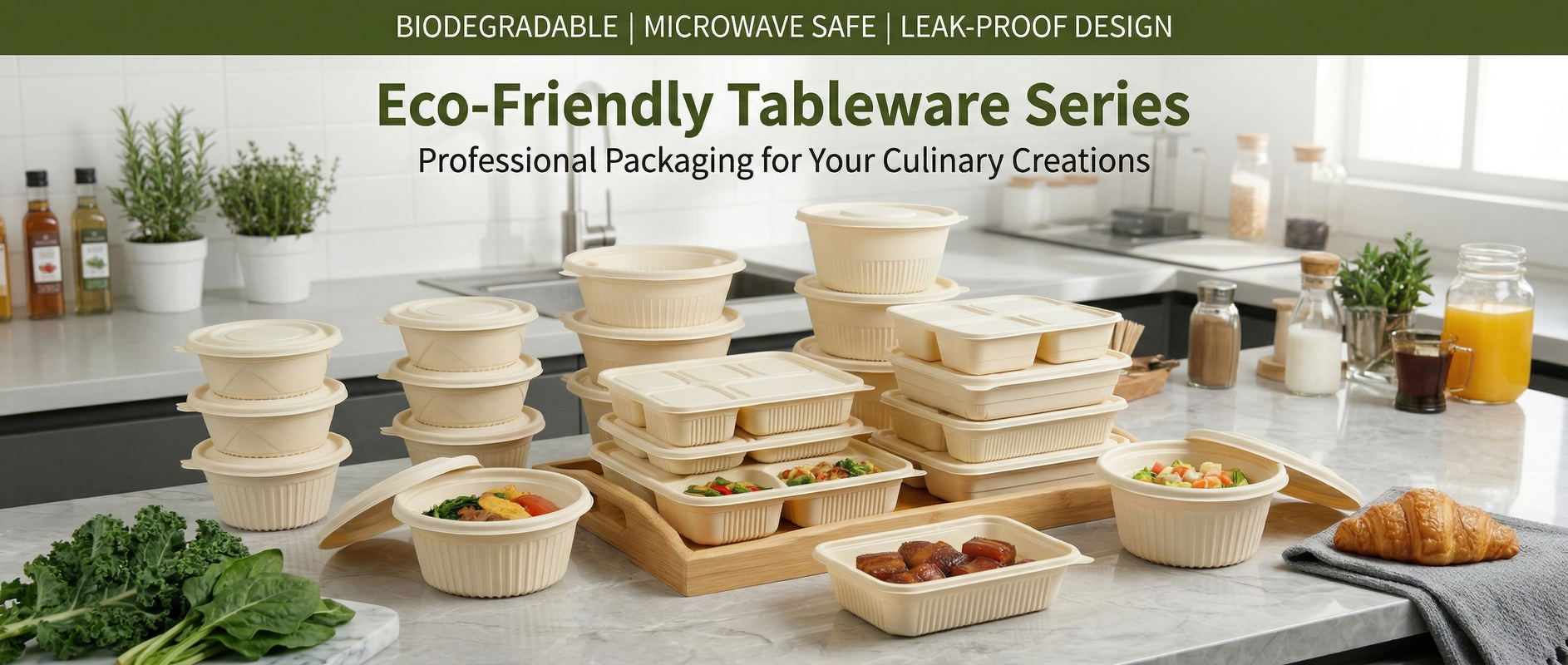
Eco Food Packaging Manufacturer — Biodegradable & Compostable Containers Built at Scale
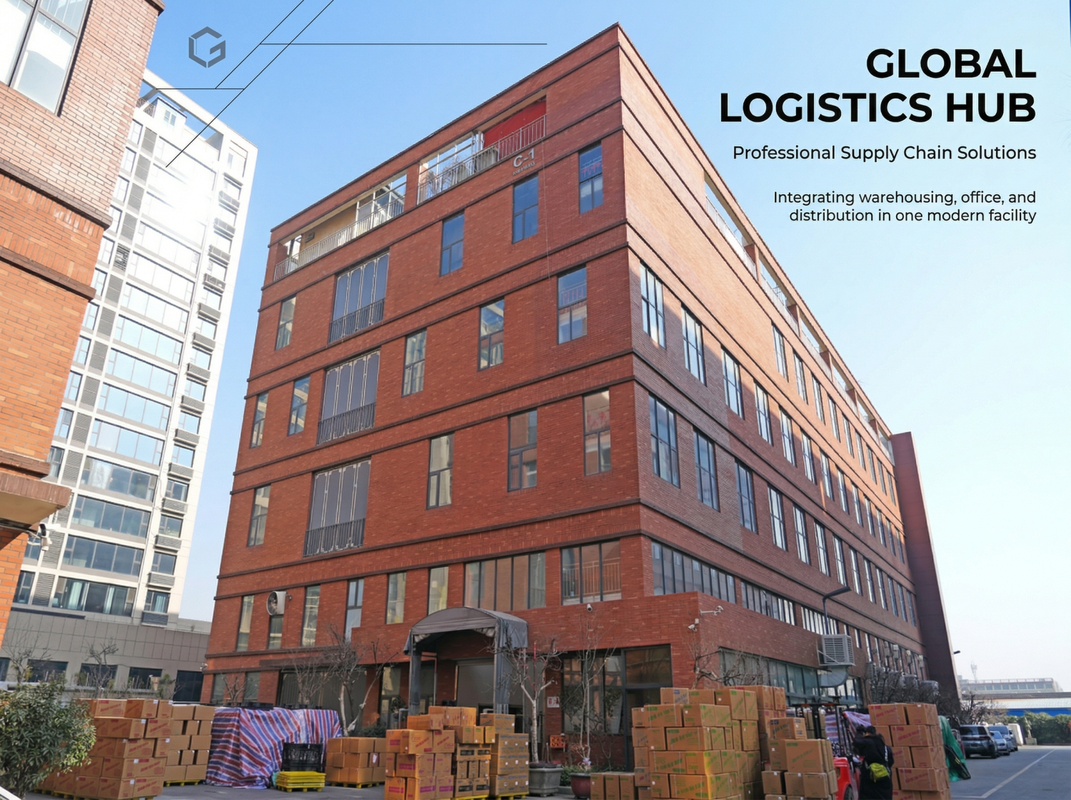
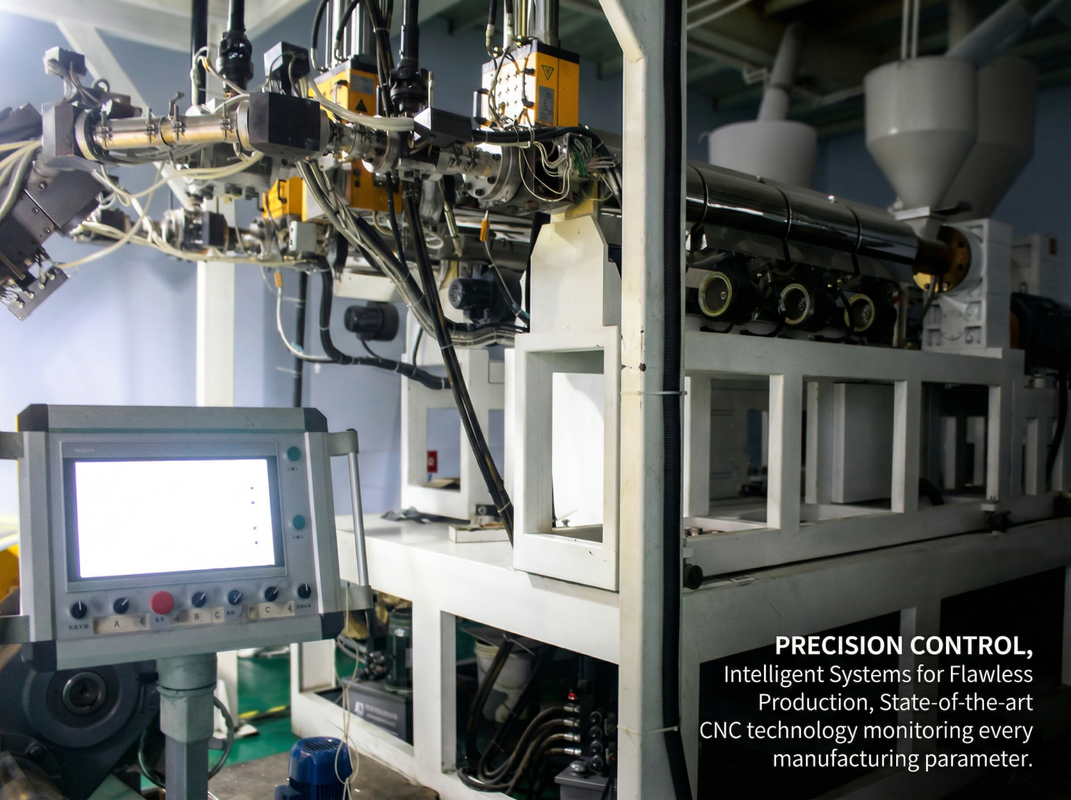
Eco food packaging suppliers used to charge a 40-60% premium over plastic sellers. By 2025, that premium has shrunk to around 15% on most wholesale contracts , and procurement teams running full Total Cost of Ownership models often find biodegradable packaging running 10-25% cheaper once disposal fees, ESG value, and supplier reliability are counted in . Wanhui has been making biodegradable food packaging for 20 years across five material lines, so you can ship cornstarch bowls, MFPP hinged containers, and thermoformed clamshells out of one factory instead of stitching together three suppliers.
5 Material Lines
Cornstarch · MFPP · Thermoform · IML · Plastic1M+ units/day
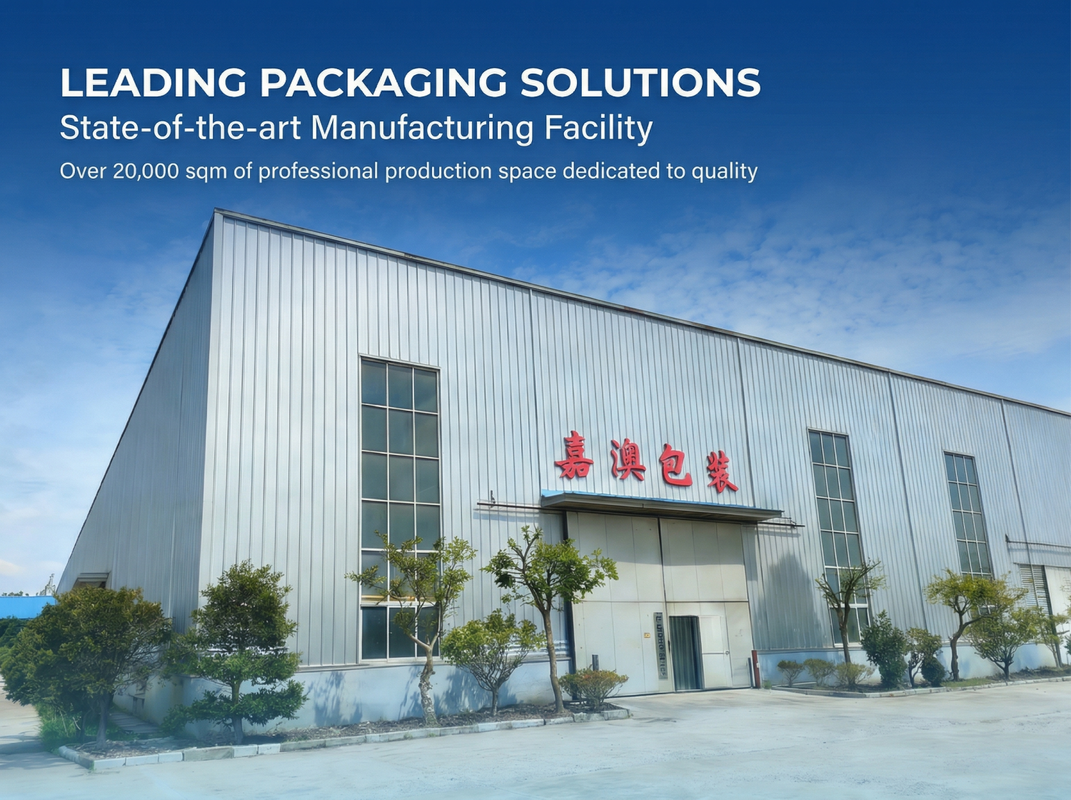
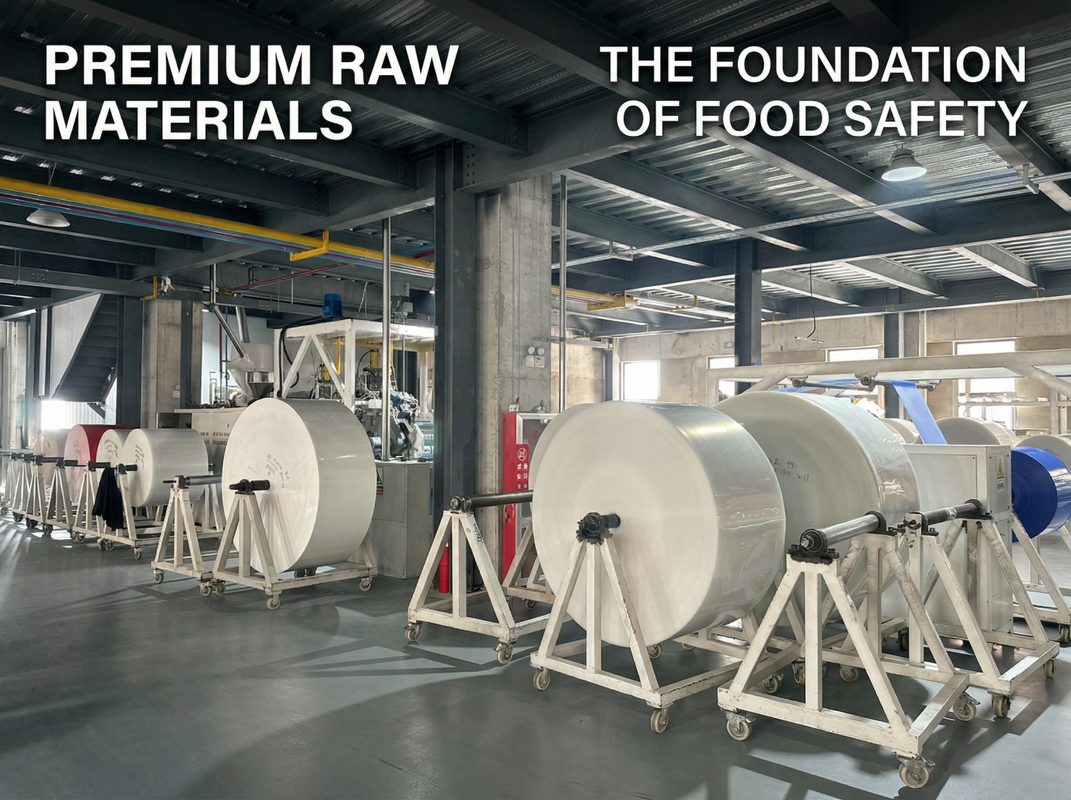
30+ tons sheet daily, integrated production200+ Staff
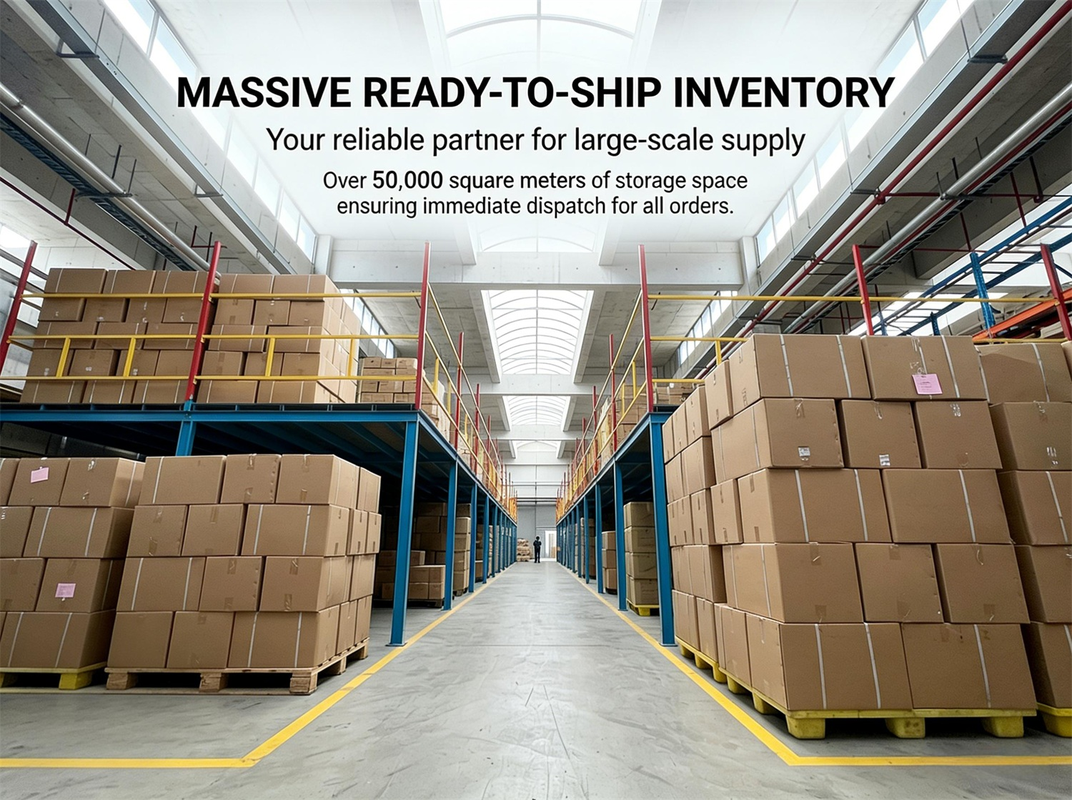
120+ production · 30 sales · 30 warehouseMOQ 5,000 pcs
Trial-friendly entry; production tier from 50kLead Time 15–45 days
Stock 7–15d · custom print 20–30d · custom mold 45–60dMulti-region Compliance
FDA · GB 4806 · EU 10/2011 · BPI workflow*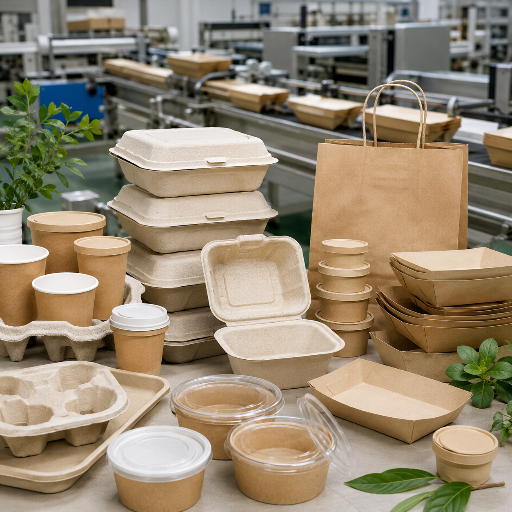
20 Years Specialized
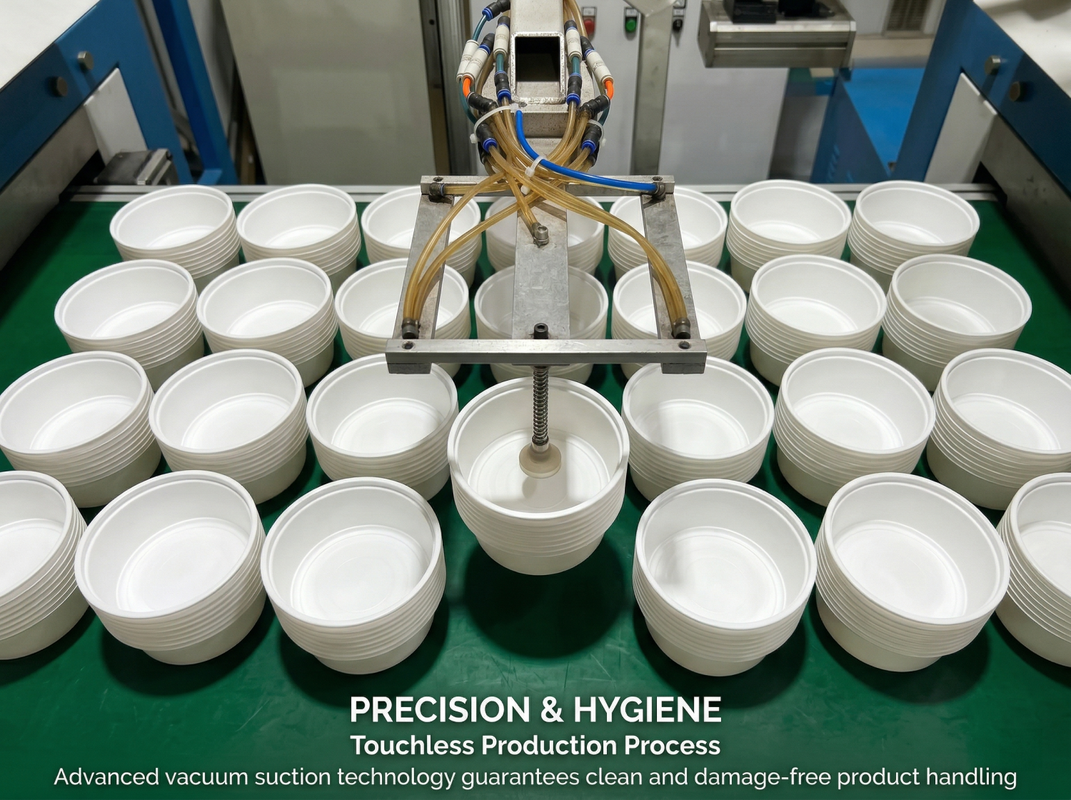
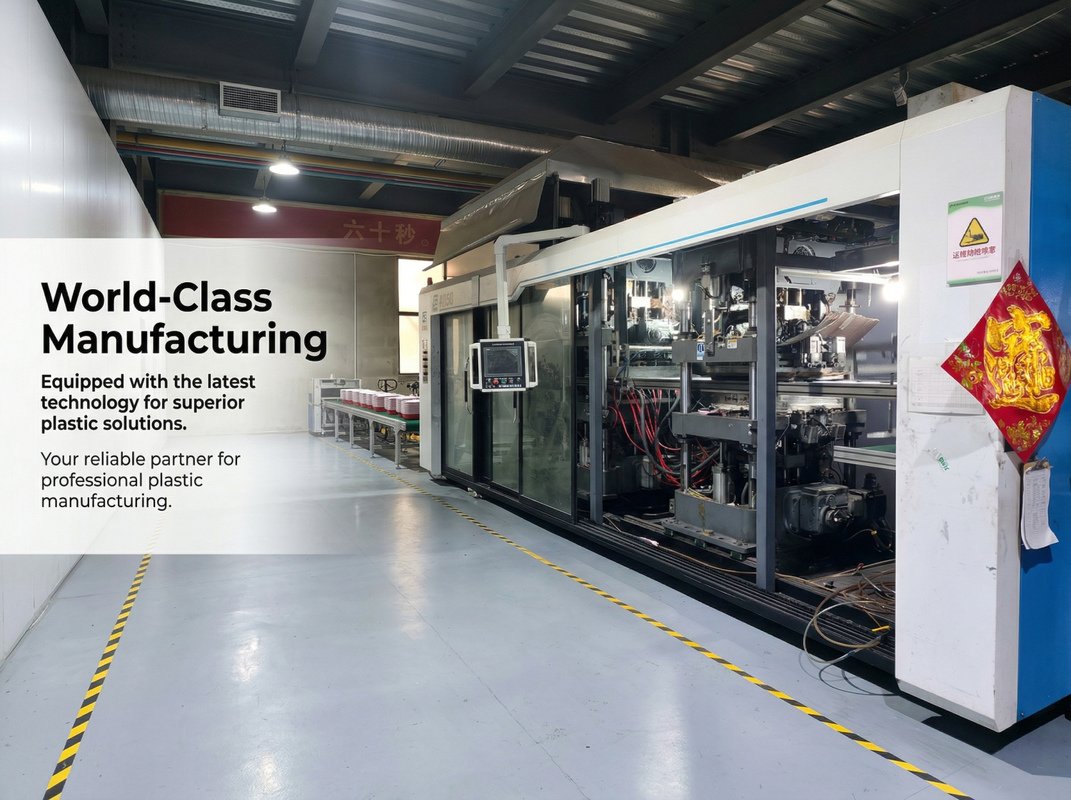
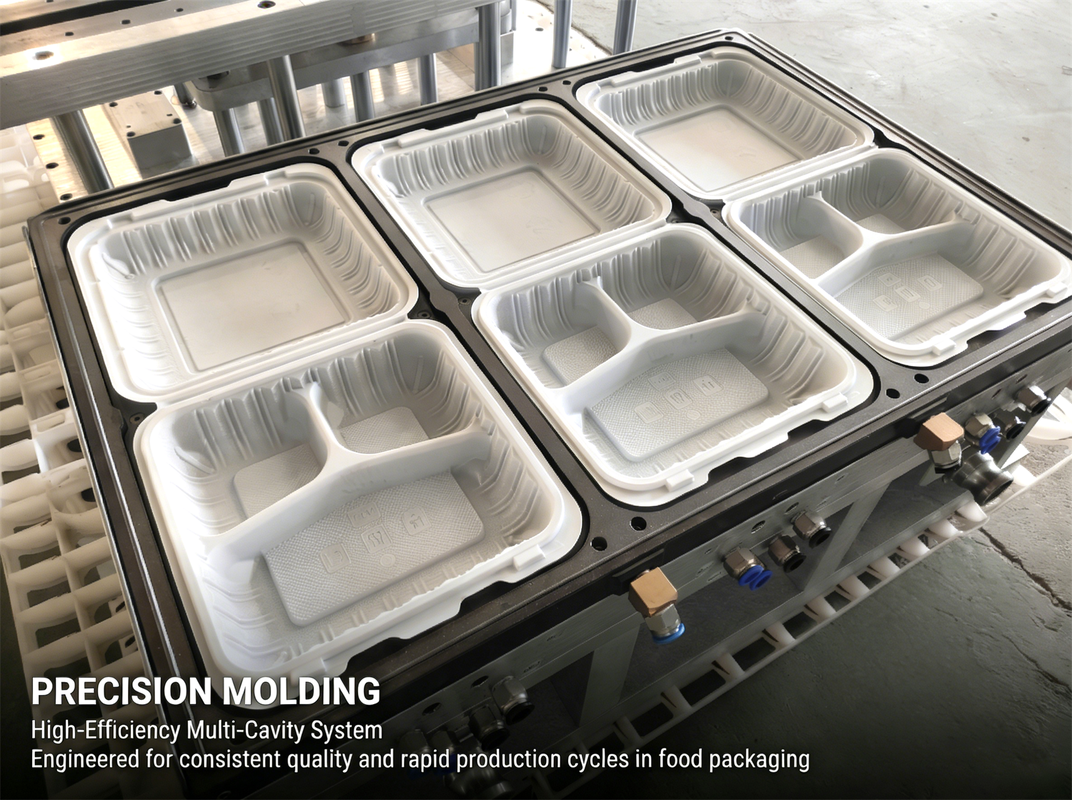
20 Thermoforming + 6 Sheet Extrusion + 60 Injection Lines1,000,000+ Units / Day
Integrated high-volume manufacturing capability5 Continents Export
Proven global shipping & logistics networkCompliance Workflow
Strict adherence to FDA · BPI* · GB 4806 · EU 10/2011
*BPI Certified Compostable is applicable to product SKUs that have achieved certification according to BPI’s audit pathway (ASTM D6400 / D6868). Wanhui maintains BPI submission readiness across the cornstarch and bagasse lines; request for the most current certification status document for your SKU.
Wanhui Eco Food Packaging Lines — Five Material Categories + Accessories
Single-material eco packaging manufacturers force any business to compromise. The cornstarch-only producer can’t supply a microwave-safe MFPP coated hinged box. The plastic-only supplier can’t satisfy your ESG report. Wanhui’s five-line offering means one purchasing order delivers the cold deli salad, the hot soup, the saucy entrée, the custom-brand retail bowl, and the cost-sensitive takeaway clamshell – all under the same quality control system, with flexible MOQ tiers and one set of compliance documents.
Featured Line
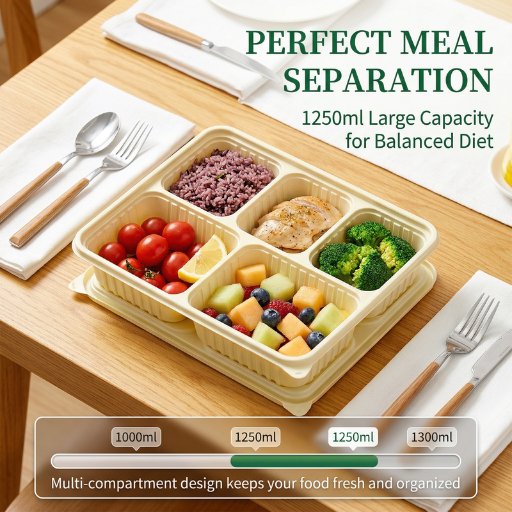
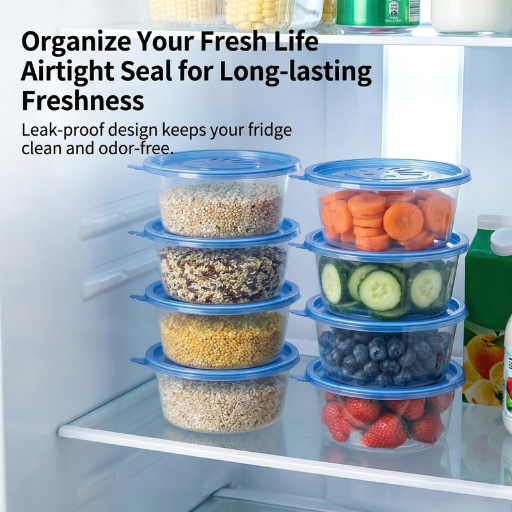
Biodegradable Cornstarch Containers
Made from plant-based corn starch and a food-grade PP blend in our biodegradable line. Industrial-compostable, BPI workflow-ready, certified to break down at 58°C in 90-180 days. Built for durability across cold salads, meal prep lunch box SKUs, bento sets, and eco-conscious brand owners with ESG reporting requirements.
Sizes: 280 ml – 1,500 ml clamshells, 600 ml – 1,200 ml bowls, 1–3 compartment bento
Temperature: -18°C to 80°C (microwave-safe under 3 min); not recommended for sustained 95°C+ liquids
MOQ: 5,000 pcs (trial) / 50,000 pcs (production)
Workhorse Line
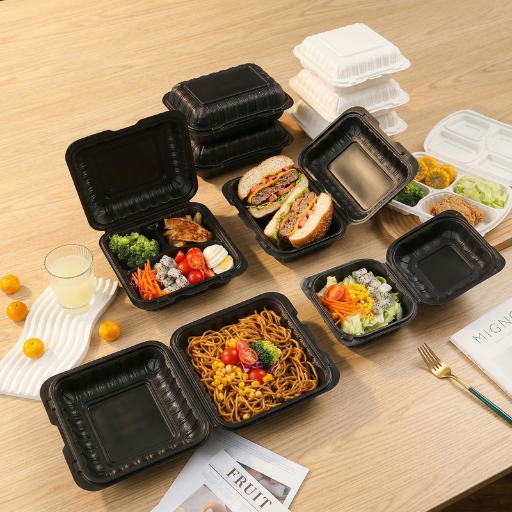
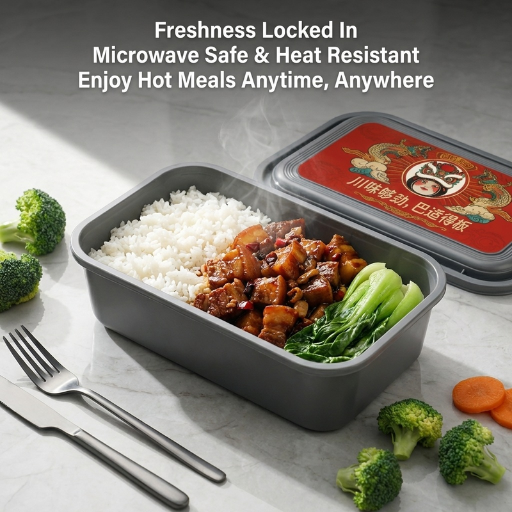
MFPP Hinged Lid Food Containers
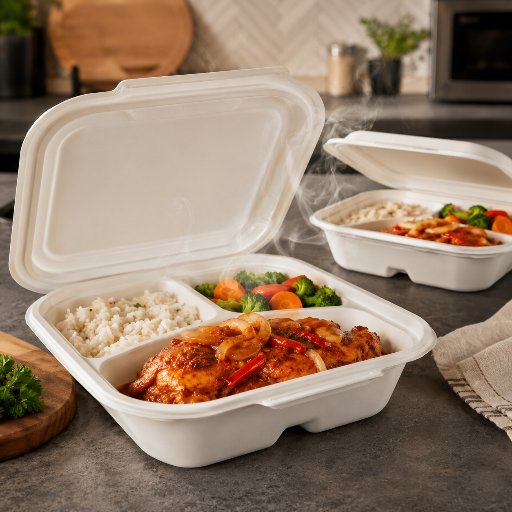
Mineral filler-filled PP with single hinged lid—high integrity, microwave-safe rated to 110C, seam-sealed. The industry standard takeout box for mid-tier delivery, chain restaurant foodservice, and high-volume catering. Complements our injection-molded sauce cups for a complete meal set.
Sizes: 350 ml – 1,400 ml, 1–4 compartment, oval & rectangular
Temperature: -20°C to 110°C, dishwasher & microwave compatible
MOQ: 10,000 pcs / 100,000 pcs full pallet
Premium Line
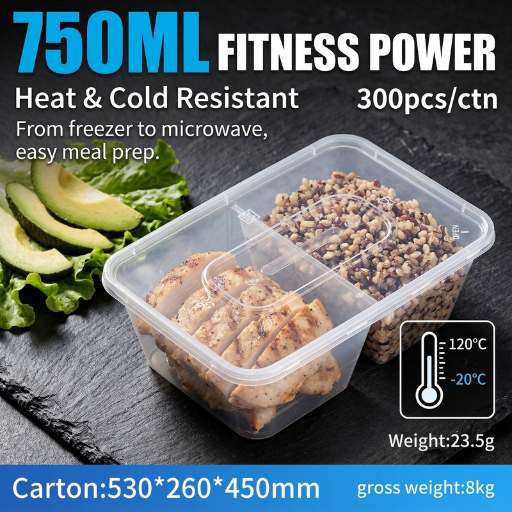
High-End Thermoform Containers
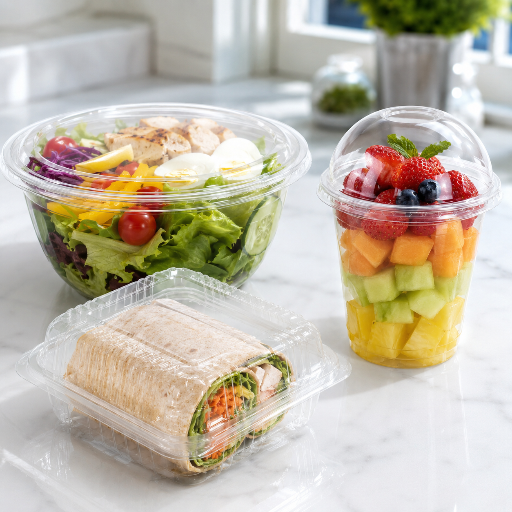
Pressure-formed PET / PP / PS sheet with tight tolerances and optically clear view. Used by premium chain restaurants for retail-equivalent deli salads, sushi platters, branded fruit bowls, and upscale takeout. Heavy-duty stacking, gentle hinge, retail-ready shelf presence.
Sizes: 250 ml – 2,000 ml, deli / clamshell / clear lid formats
Temperature: -18°C to 70°C (cold-chain optimized)
MOQ: 10,000 pcs / 200,000 pcs production
Brand Line
Film-In-Mold (IML) Containers
In-mould branding embeds your full-color brand design on the container wall—no need for peel-off labels. Wanhui supplies the print films and the mold creation in-house, so a four-color brand SKU can ship 45-60 days post-design locking.
Print: Up to 8-color CMYK + spot, full-surface IML
Materials: PP / MFPP base, food-grade PET overprint
MOQ: 50,000 pcs per artwork (one-time tooling)
Budget Line
Disposable Plastic Containers
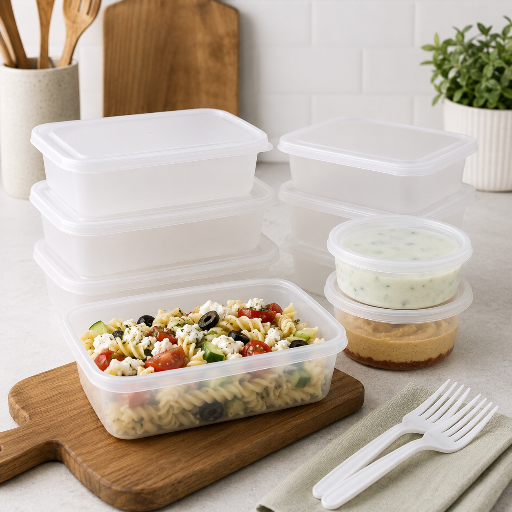
Injection-molded PP / PET / PS containers at volume-sensitive pricing. Food-grade, non-toxic, recyclable where the sourcing infrastructure exists. Perfectly honest when an ESG story isn’t the priority and low unit cost is – for example, internal canteen distribution or budget SKU delivery lines.
Sizes: 200 ml – 1,500 ml, 1–5 compartment
Temperature: Varies by resin (-18°C to 100°C for PP)
MOQ: 20,000 pcs entry, scales smoothly to FCL
Companion Line
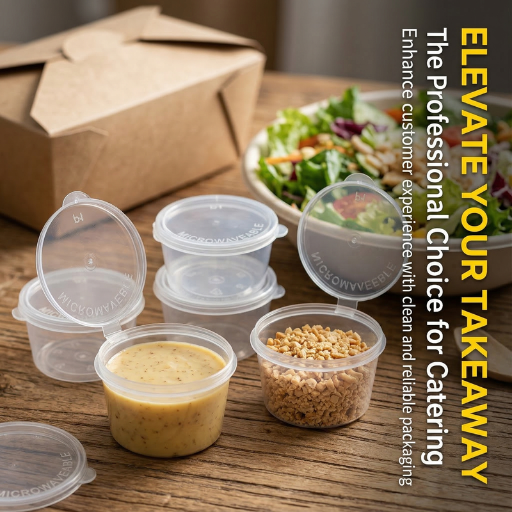
Accessory Products
Sauces cups, lid-equipped cups, disposable cutlery, soup cups with fitted lids—all the smaller components that make a meal-set seamlessly functional and that single-line manufacturers typically require you to develop separately.
Sauce Cups: 30 ml – 120 ml, hinged or 2-piece lid
Cups: 4 oz – 32 oz cold cups, hot cups w/ PLA-lined options
MOQ: 50,000 pcs typical, blendable with main order
Quick Selection Logic
Which Wanhui Line Fits Your Menu
| Your Menu / Requirement | Recommended Wanhui Line |
|---|---|
| Refrigerated salads, poké, meal preps, bento | ICB biodegradable compostable cornstarch |
| Hot-entres, rice (microwave approved, leak resistant) | MFPP (-95C) |
| Premium retail-shelf deli, sushi, fruit bowls | High-End thermoformed (quality, stackability) |
| Branded D2C / retail / chain SKU | Film-In-Mold (decal free, scratch-proof) |
| Inexpensive, high volumes canteen, in-house foodservice | Cheap plastic (cost optimization) |
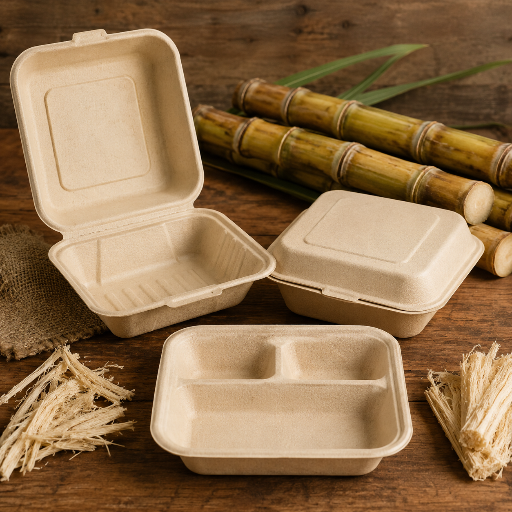
| Hot lounging soup (>=93C), frying kitchen contact | Bagasse / compostable Clamshell (OEM coop, request sample) |
Cornstarch vs Bagasse vs PLA vs MFPP vs PET — Four Decision Dimensions
One biodegradable food container can be the right choice for a cold salad and the wrong choice for a hot soup. Material selection is the single most common procurement mistake in this category — Dashan Packaging summarizes the issue in their 2024 importer guide as “choosing materials based on labels like eco-friendly, biodegradable, or recyclable without verifying compliance” . The four-dimension matrix below lays out the trade-offs so your team picks by data, not by label.

Dimension 1 — Performance (Operations View)
| Material | Max Temperature | Microwave / Freezer | Leak Resistance | Oil & Acid |
|---|---|---|---|---|
| Cornstarch / PLA | ~80°C sustained | Microwave < 3 min · Freezer ✓ | Good (with seal lid) | Limited at high heat |
| Sugarcane Bagasse | ~120°C / 250°F | Microwave ✓ · Freezer ✓ | Excellent (porous, no melt) | Excellent — handles hot frying oil |
| MFPP (Mineral-Filled PP) | ~110°C | Microwave ✓ · Freezer ✓ | Excellent (hinged seal) | Excellent |
| PET (Thermoform) | ~70°C | Microwave ✗ · Freezer ✓ | Excellent (rigid wall) | Good (cold-chain optimized) |
| PP (Plastic / Injection) | ~100°C | Microwave ✓ · Freezer ✓ | Excellent | Excellent |
Reddit operators consistently flag that “most ‘compostable plastic’ containers aren’t [microwave safe] – they’re designed to break down, heat speeds that up” . This is why we do not blanket-recommend cornstarch – we recommend it only where the use case fits.
Dimension 2 — Cost Structure (Owner / Finance View)
TCO Card — The Cornstarch Price Gap Has Closed Faster Than the Sustainability Reports
40–60% → 15%
Wholesale price gap vs conventional plastic, 2018 → 2025
-10% to -25%
Full-TCO outcome when disposal, environmental impact & ESG value are counted
8.4% CAGR
Global compostable packaging market 2025 → 2035
Procurement surveys in biodegradable fields commonly show levels in total ownership cost matching or beating traditional solutions once disposal surcharges, single-use-plastic penalties, brand value carried by the ESG outcome, and material durability over the meal cycle are factored in. Your final TCO depends on volume, region, and disposal infrastructure – ask us for a proposal and we will model it against your current vendor.
Dimension 3 — Procurement Impact (Procurement View)
Procurement is where good material choices die quietly. A perfect cornstarch SKU with a 12-week lead time and a 100k MOQ is the wrong call for a 20-location chain testing a new menu. We break out the procurement profile separately because it usually beats performance specs in the actual decision.
| Material | Typical MOQ Tier | Lead Time (Stock → Custom) | Supply Stability | Region Compliance Notes |
|---|---|---|---|---|
| Cornstarch / PLA | 5,000 / 50,000 | 15–25d / 30–45d | High (renewable feedstock) | FDA, EU 10/2011, BPI* (cornstarch line submission-ready) |
| Sugarcane Bagasse | 10,000 / 100,000 | 20–30d / 45–60d | High (seasonal sugarcane pulp) | FDA, BPI*, EN 13432 alignment |
| MFPP Hinged | 10,000 / 100,000 | 7–15d / 30d (existing molds) | Very High (Wanhui core line, 60 injection units) | FDA, GB 4806, EU 10/2011 |
| Thermoform PET | 10,000 / 200,000 | 10–20d / 30–40d | Very High (Wanhui core line, 20 thermoforming units) | FDA, GB 4806, EU 10/2011 (cold-chain only) |
| Plastic / Injection | 20,000 / unlimited | 7–15d / 30d | Very High | FDA, GB 4806; recyclable where infrastructure exists |
Dimension 4 — Use Case Fit (Decision Tree)
Pick by Scenario, Not by Sustainability Claim
→
High-volume budget take-out MFPP Hinged or food-grade PP
→
Premium chain with ESG reporting Cornstarch (cold & warm) + Bagasse (hot soup)
→
Hot soup, frying-oil contact, > 95°C Bagasse with PLA-lining
→
Cold salad, meal prep, retail deli Cornstarch clamshell or PET thermoform
→
Custom-branded retail SKU Film-In-Mold on MFPP base
→
Microwaved delivery (3–5 min reheat) MFPP (not cornstarch)
How Restaurants and Brands Cut Packaging Costs with Wanhui — Outcomes by Industry
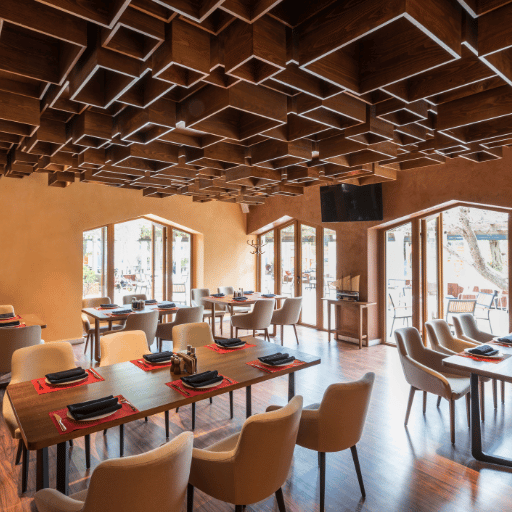
Four use-case profiles below reflect typical patterns from Wanhui’s chain restaurant, food delivery, and institutional canteen customers. Numbers shown are typical field ranges from procurement teams running biodegradable packaging at scale. Phase-by-phase Wanhui case data is available under NDA on request.


Click stack to cycle images
Chain Restaurants
Brand-Consistent Multi-Location Food Service Packaging — 50+ Stores, One QC System
Pain: A regional food service chain growing from 12 to 50+ stores cannot accept the SKU variation that comes from sourcing locally in each city. Brand consistency, food safety audit pass rates, environmental impact reporting, and ESG narrative all break under fragmented sourcing.
Solution: MFPP hinged takeout container (microwave-safe, 110°C rated) as the workhorse SKU + Film-In-Mold artwork lock for chain-branded sauce cups + cornstarch clamshell to cater the chain’s “Green Lunch” sub-menu.
Typical Outcome
Packaging unit cost reduced 12–15% vs imported premium brands
Operations
One PO covers 4 SKUs across 50 stores
Brand
ESG report cites BPI-pathway cornstarch SKU specifically
Food Delivery
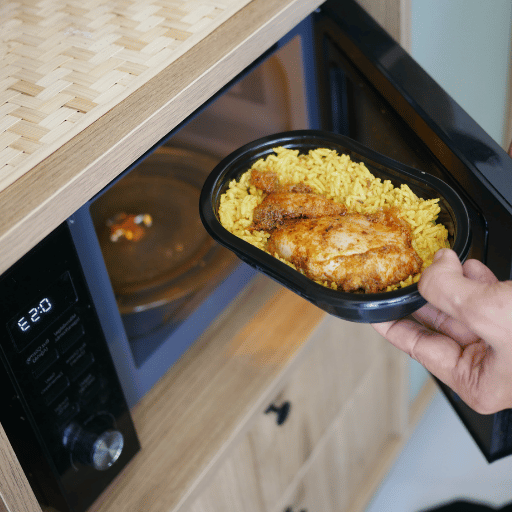
Last-Mile Leak Integrity — Saucy Meals, 30-Minute Delivery, Microwave Reheat
Pain: A complaint thread following a leaked curry is the operations metric nobody puts on a slide. Sub-1% leakage at fleet scale is the actual KPI.
Solution: MFPP double-seam hinged with the lid molded as one piece (eliminates the hinge-failure point) plus an inner PLA-lined option for the highest-acid menu items. Cornstarch sub-line serves the brand’s premium sustainable tier.
Typical Outcome
Leakage rate kept under 0.5% on saucy entrées at fleet scale
Operations
Microwave-safe; reheats in 90 seconds without warp
Brand
Cornstarch tier serves the ESG-conscious sub-brand
Hospital & School Canteens
Dual-Region Compliance for Institutional Procurement
Pain: Hospital and school canteens often source for both domestic and joint-program use, which means the SKU has to pass China GB 4806 and either FDA or EU 10/2011 in the same audit cycle. Single-region suppliers fail this dual-audit gate.
Solution: Cornstarch bowls plus MFPP entrée trays plus a food-grade PP accessory bundle – all manufactured to dual-region food contact standards, with compliance packs prepared per audit.
Typical Outcome
Single supplier covers GB 4806 + FDA / EU 10/2011 audits
Operations
4-week stock SKU rotation, FCL pricing
Compliance
Annual food contact cert sheet refresh included
Meal Prep & D2C Bento
Subscription Meal Boxes — Freezer-Safe Lunch Box SKUs, Microwave-Safe, Story-Ready
Pain: D2C meal prep canister brands expect their lunch box to take on cold-chain freight, stand for a week in the customer’s freezer, withstand microwave warping, and still appear on-brand on Instagram to a environmentally conscious subscriber base. The visual language is all wrong with plastic; bamboo warps in the microwave.
Remedy: plant-based cornstarch bento 3-compartment canister (conround bowl design 28oz), with PLA snap-on lid & sleeve branding. Freezer safe to minimum-18°C, microwave safe to 3 mins, fully composting positive brand message to the taxonomic family site.
Typical Outcome
Cornstarch tier supports the “biodegradable + BPA-free” brand line
Operations
Freezer to microwave to compost — full meal lifecycle
Brand
“BPA-free + biodegradable” claim survives lab audit
Certifications & Food Safety Compliance — Verified, Not Just Claimed
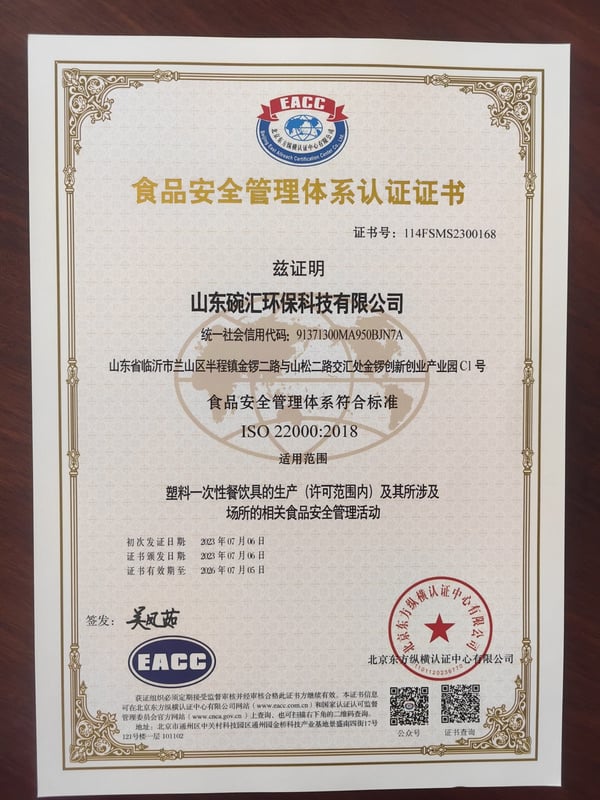
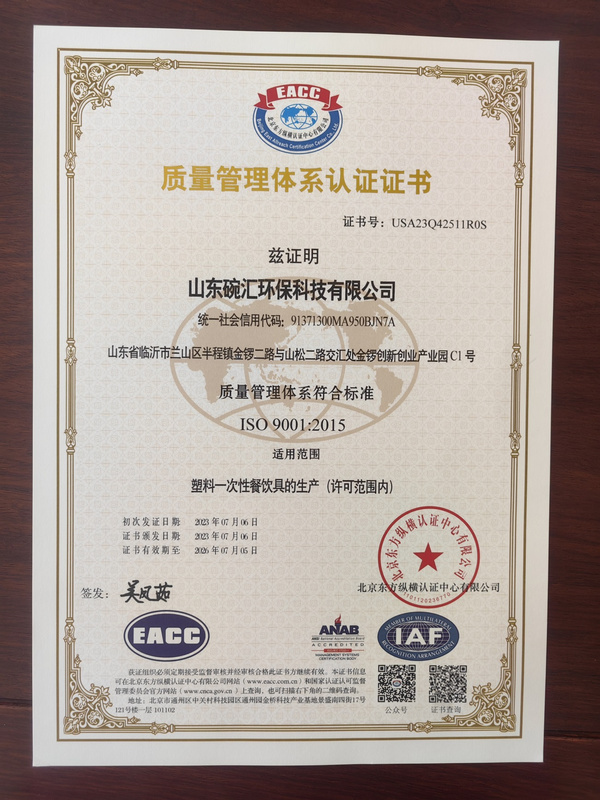
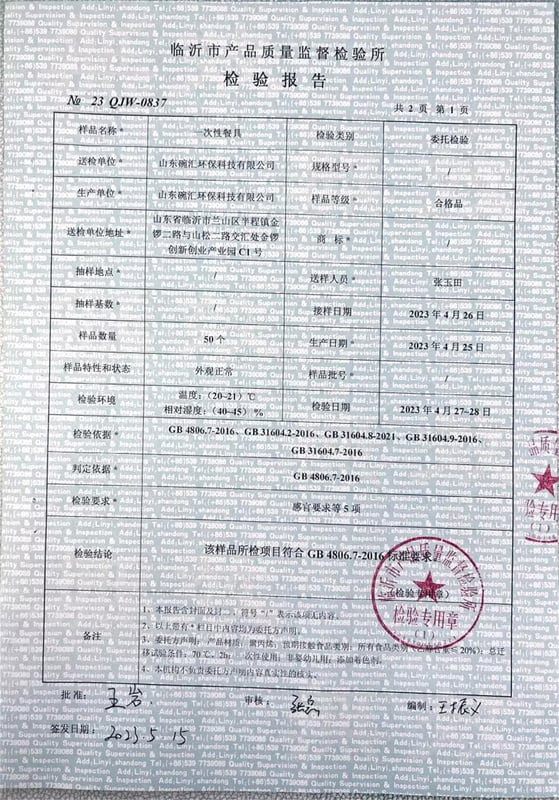
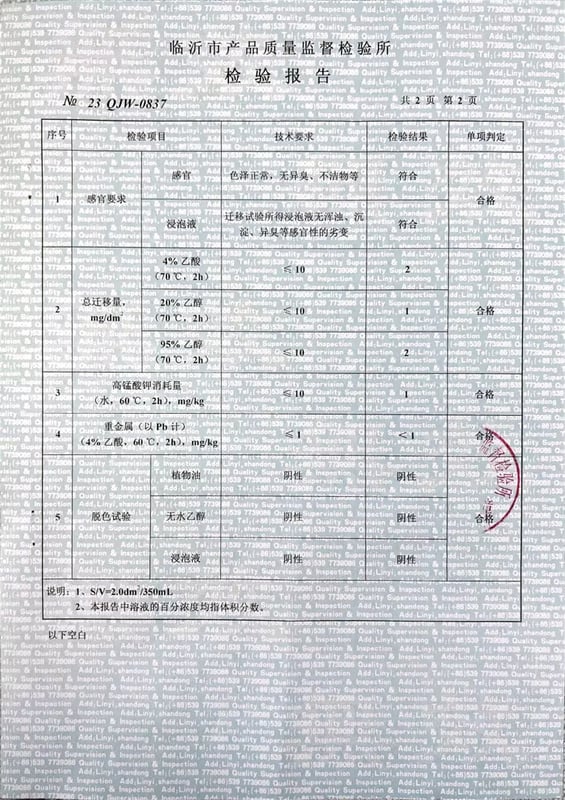
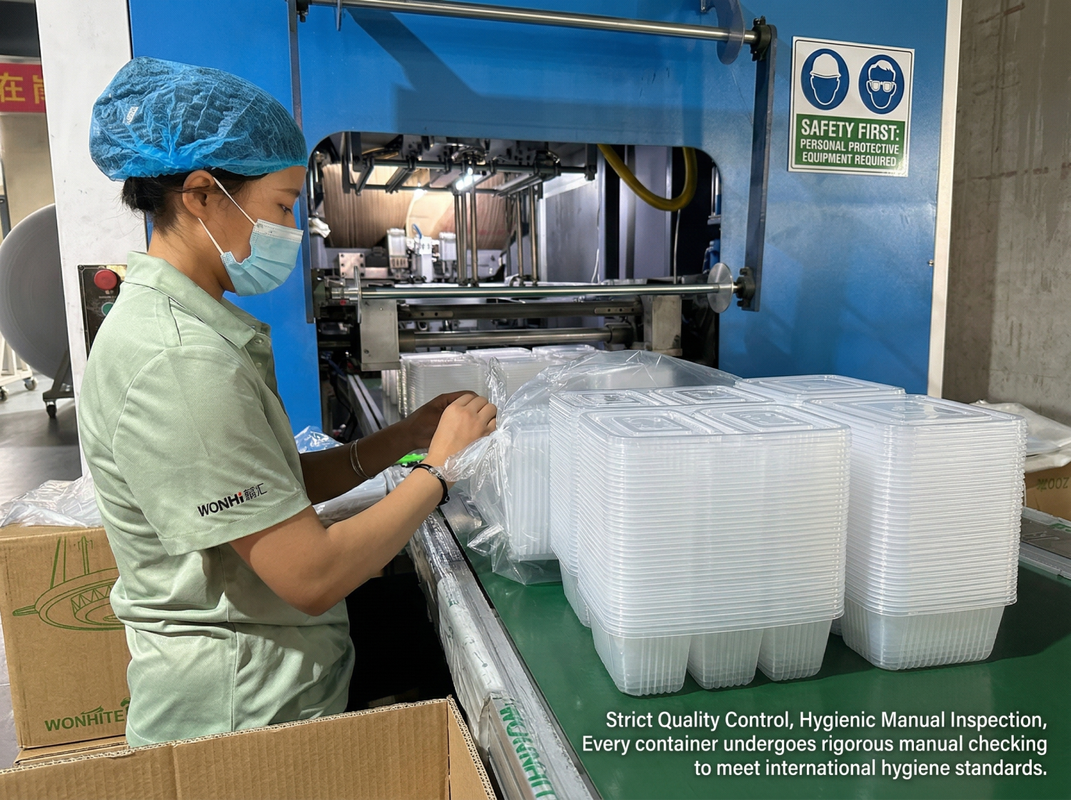
By far the most common procurement mistake in this category is buying on the strength of the word “biodegradable” without seeing the actual certificate. Wanhui treats compliance paperwork as a deliverable, not a marketing badge. Standards below are mapped to specific Wanhui SKU lines; the certification status sheet (issued certificate IDs, valid-through dates, applicable SKU lists) is available on request as part of the RFQ pack.
Food Contact Safety
FDA
21 CFR Part 177US food-contact polymer compliance — applies to all plastic and MFPP lines
EU
EU 10/2011European food-contact plastic regulation — workflow-aligned, certificate by SKU
CHINA
GB 4806.7-2016Chinese national food contact safety standard — applies to all food-grade lines
JAPAN
PL SystemJapanese positive list compliance — available for export-route SKUs
Compostability & Biodegradability
BPI*
BPI Certified CompostableCornstarch & bagasse lines on BPI submission pathway per ASTM D6400 / D6868. New July 2024 BPI labeling rule (green/beige/brown coloring) integrated into our product specs
ASTM
D6400 / D6868U.S. compostable plastic and coated paper standards — Wanhui cornstarch and bagasse formulations test against these
EU
EN 13432European compostable packaging standard — alignment for EU-bound SKUs (industrial composting required, not landfill recycle)
Manufacturing Quality & Material Sourcing
ISO
ISO 9001 QMSQuality Management System — Wanhui facility certified
HACCP
Food Safety PlanHazard analysis & critical control points — food contact line
BRC*
Packaging StandardBRCGS Packaging Materials — audit readiness for export SKUs
SOURCE
Non-GMO CornstarchFeedstock traceability for cornstarch line; spec sheets provided on request
BPI Certified Compostable status applies on a per-SKU basis. Wanhui’s cornstarch and bagasse formulations are submission-ready under BPI’s ASTM D6400 / D6868 workflow; ask for the latest issued-certificate status before placing a brand-claim order. BRC audit status updated annually — confirm with your account contact.
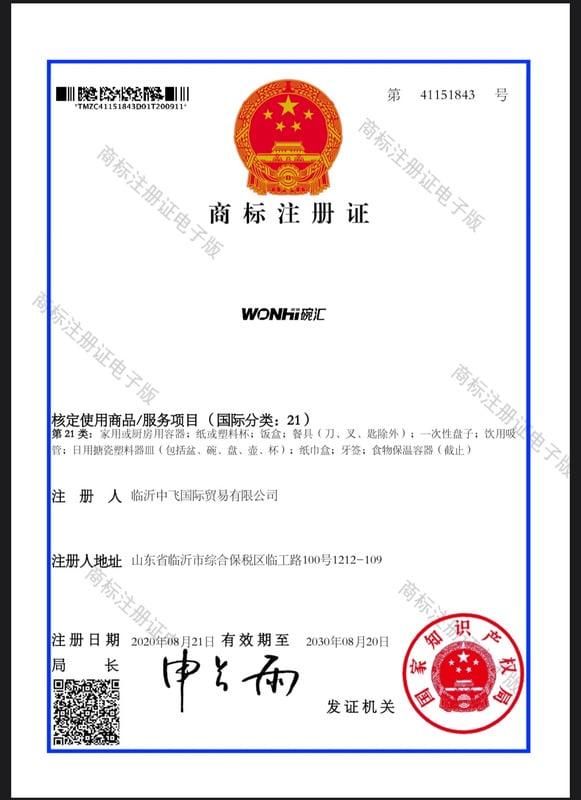
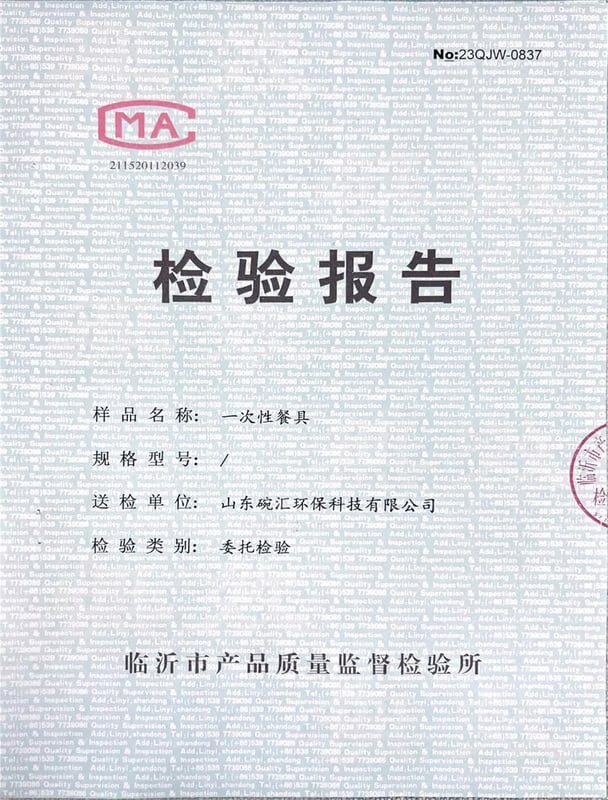
Verified Documentation Gallery
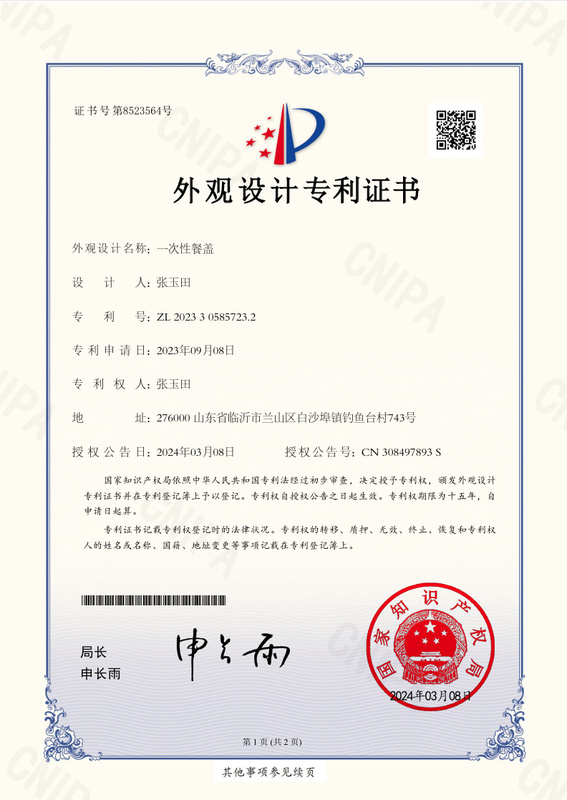
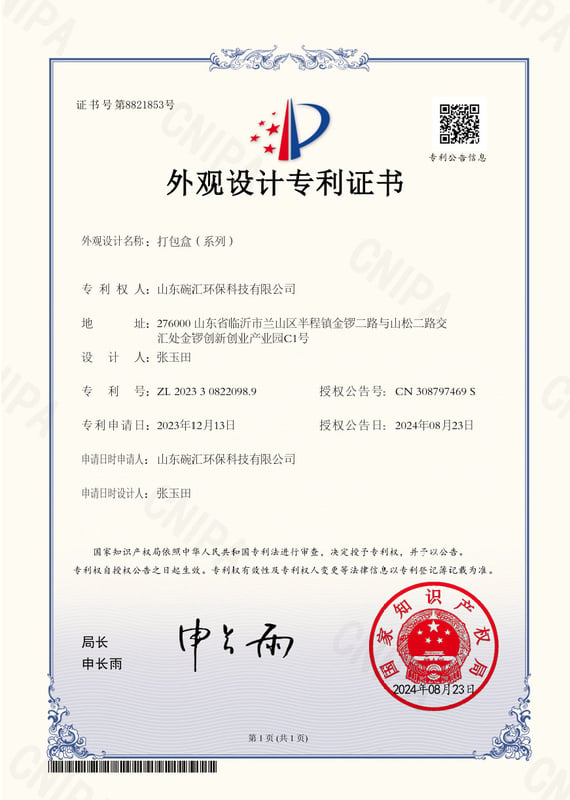
Authentic certificates and patent registrations (Click image to enlarge)
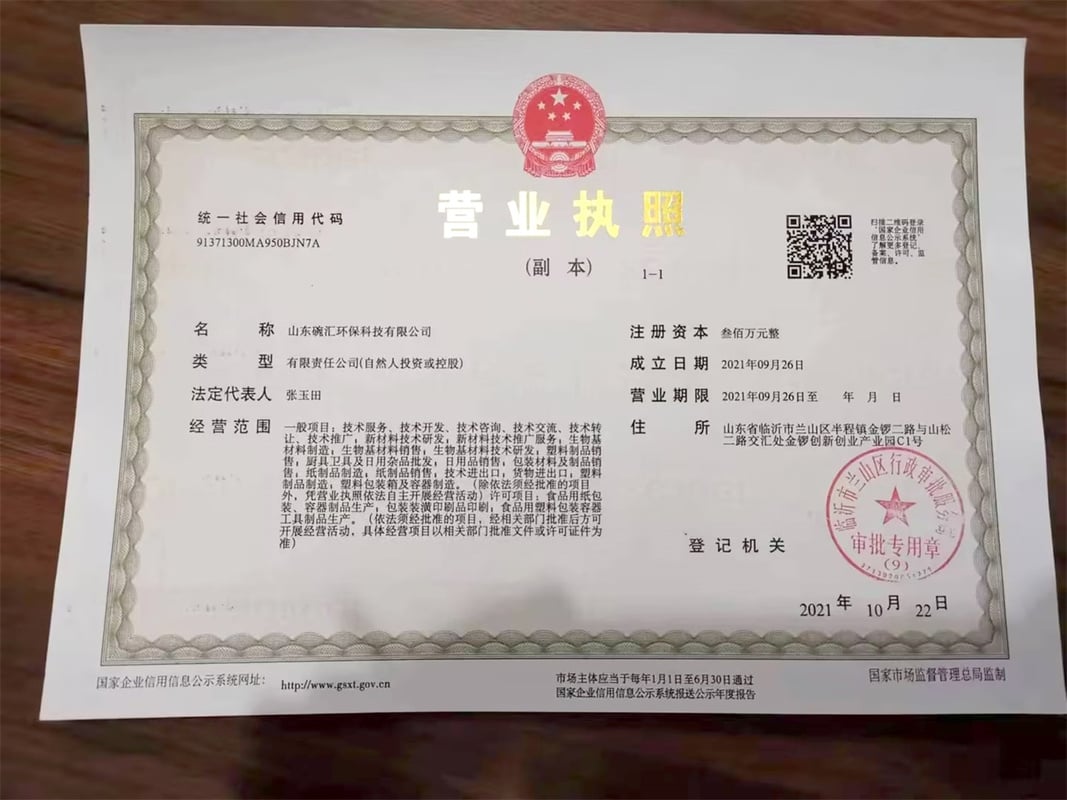
营业执照 (Business License)
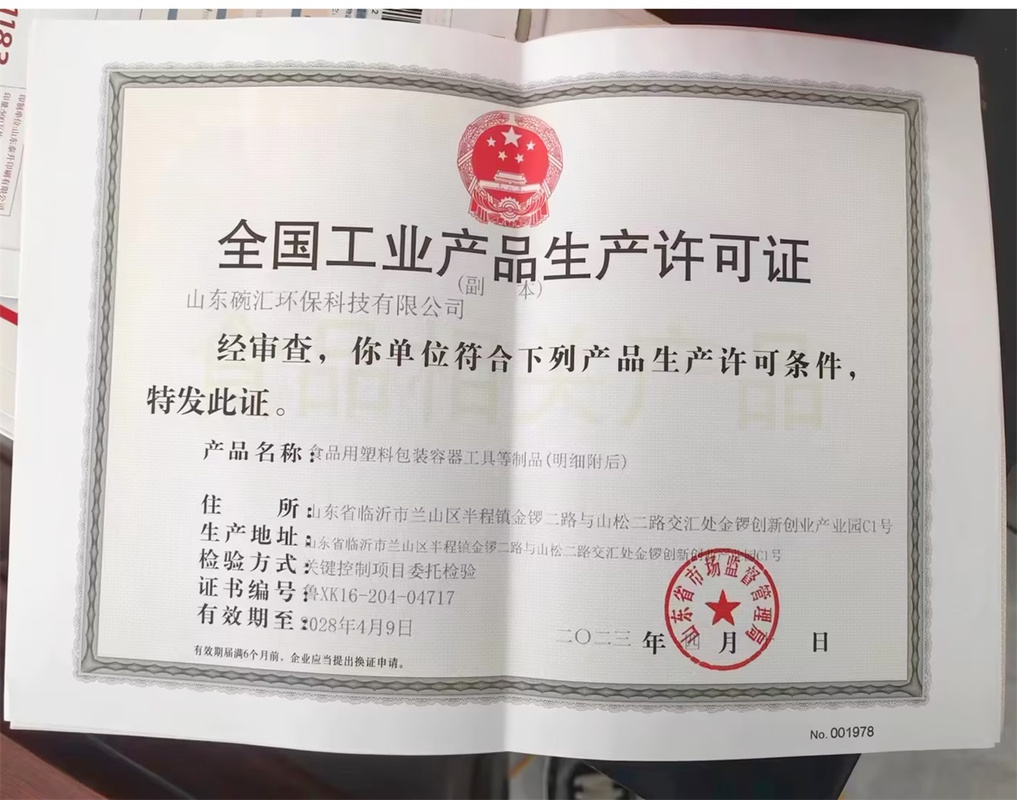
Procurement Guide — MOQ, Lead Time, Custom Branding, OEM Wholesale
One LinkedIn post summed up procurement risk in this category neatly: “Packaging is not a cost line. It is a brand decision. A supply chain decision. A long-term profitability decision.” The terms below are the ones procurement teams actually need to evaluate Wanhui against the existing supplier short-list – written as a working document, not a brochure.
| Production Asset | Count | What It Enables |
|---|---|---|
| Thermoforming lines | 20 | High-volume premium thermoform PET / PP container output |
| Sheet extrusion lines | 6 | 30+ tons of sheet feedstock daily — backward-integrated raw material supply |
| Injection molding lines | 60 | MFPP hinged, sauce cups, accessories — workhorse capacity |
| Daily finished unit capacity | 1,000,000+ | FCL-scale orders ship from existing capacity, not subcontracted |
| Workforce | 200+ staff | 30 sales · 30 warehousing & logistics · 120+ production · 20+ production management |
| Tier | Volume | Use Case | Notes |
|---|---|---|---|
| Sample | 5–10 pcs | Procurement evaluation | Free; courier paid by buyer or against future PO |
| Trial | 5,000 pcs | Small-scale market test, new menu launch | Stock SKUs only; minimal customization |
| Production | 50,000 pcs / SKU | Steady-state restaurant or D2C SKU | Blended SKU mix accepted to reach MOQ; custom print add-on |
| Custom Mold | 100,000+ pcs amortized | Brand-owned proprietary shape | Tooling amortized over 6–12 months; design lock 4 weeks |
Lead Time
- Stock SKU — 7–15 days from PO to shipment-ready
- Custom print on an existing mold — 20–30 days (artwork lock → film prep → production run)
- Full custom mold development — 45–60 days (design → CAD → tool steel cutting → trial run → production)
- Replenishment after the first production run — typically 15–20 days for blended SKU orders
Custom Branding Options
- Logo printing — offset or digital, 1–6 colors, on MFPP / plastic / cornstarch lines
- Film-In-Mold (IML) — full-surface artwork fused into the container wall, scratch-resistant, premium retail finish
- Custom mold development — proprietary shape with full IP rights for the brand owner; mold stored on-site for replenishment runs
Trade Terms
Wanhui supports FOB, CIF, FCA, and DDP shipping terms across all five material lines. We arrange FCL or LCL container loading depending on your region’s volume profile, and we operate standard T/T 30/70 or L/C at sight payment routes. Multi-region export — Europe, the Americas, the Middle East, Asia-Pacific, South America — runs from the same QC system as our domestic shipments, so the certification pack you receive in Frankfurt is the same one Mexico City receives.
For a detailed quotation against your specific SKU mix, volume tier, and target region, send your top 3 SKU descriptions through the form below — we return a costed proposal within 24 hours including landed-cost estimates and lead-time confirmation.
Interactive Procurement & Engineering Tools
Eco Food Packaging Material Selector
Answer 4 questions about your menu — get a Wanhui line recommendation in 30 seconds.
Launch Selector
Biodegradable Packaging TCO Calculator
Compare your current plastic supplier to a Wanhui biodegradable line — on full Total Cost of Ownership, not just unit price.
Calculate TCO
MOQ & Lead Time Estimator
Find the right entry path into Wanhui’s five material lines — stock SKU, custom print, or fully custom mold.
Estimate Time
Industrial solutions packaging gallery
Eco Meal Box Solution 1
Eco Meal Box Solution 3
Eco Meal Box Solution 8
Eco Meal Box Solution 9
Eco Meal Box Solution 11
Eco Meal Box Solution 14

Eco Meal Box Solution 16
Eco Meal Box Solution 17
Eco Meal Box Solution 21
Eco Meal Box Solution 24
FAQ — Buyer Decision Questions
It depends on the material. Sugarcane bagasse handles boiling soup and hot frying oil up to about 120°C / 250°F without melting or leaking. Cornstarch / PLA performs well for cold salads, room-temperature meal prep, and short microwave reheats under 3 minutes, but becomes unstable under sustained high heat. MFPP polypropylene is the workhorse for hot meals up to 110°C. Wanhui’s role is matching the right material to the actual meal – that is why we run all five lines instead of just one.
Yes for short microwave cycles (under 3 minutes at typical kitchen wattage) and yes for freezer storage down to -18°C. The caveat procurement teams should know: extended high-heat microwave runs accelerate the biodegradation that makes cornstarch attractive in the first place. For a meal that needs a full 5-minute reheat on a packed cafeteria schedule, MFPP is the safer choice – and the reason both lines exist on our floor.
Cornstarch and PLA tableware decomposes in 90–180 days under industrial composting conditions at 58°C . Sugarcane bagasse breaks down in 60–90 days under industrial composting and can compost in home systems with longer timelines. Both materials require active composting infrastructure — they will not meaningfully break down in a landfill. Standards ASTM D6400 (US) and EN 13432 (EU) both require greater than 90% conversion of carbon to CO2 within standardized testing windows .
For custom print on an existing Wanhui mold, the MOQ is 50,000 pieces per artwork. For Film-In-Mold (IML) on a stock container shape, the MOQ is also 50,000 pieces with a one-time amortized tooling cost. For a fully custom proprietary mold, the MOQ runs from 100,000+ pieces, amortized over 6–12 months of run-rate so the per-unit tooling cost stays modest. Samples are free for evaluation; trial production at 5,000 pieces is available on stock SKUs without customization.
A wholesale price gap that used to make biodegradable a “premium-only” choice has narrowed sharply. In 2018, corn starch and other eco tableware ran 40-60% more than conventional plastic; by 2025, that wholesale gap on most takeout containers is approximately 15% . When procurement teams run a full Total Cost of Ownership model — one that factors in waste disposal fees, single-use plastic surcharges in U.S. states with active bans, brand ESG value, and the durability of a right-fit material matched to the meal — biodegradable packaging has been showing 10-25% lower total cost in real procurement cases . Your specific TCO depends on volume, region, and your existing waste cost structure.
This category has matured. Top compostable packaging certifications (BPI, FDA food-contact, EU 10/2011) are no longer geographic. What matters now is whether the supplier can produce the certification documentation on demand, whether the production capacity is in-house or subcontracted, and whether the supplier can match a specific material to a specific meal. Wanhui ships from 86 production lines under one ISO 9001 quality system, with a 20-year track record across all five material categories and export experience across Europe, the Americas, the Middle East, Asia-Pacific, and South America. Compliance certifications travel with the SKU.
Across the five Wanhui lines we maintain workflow alignment with: FDA 21 CFR Part 177 (US food contact), EU 10/2011 (European food contact plastic), GB 4806.7-2016 (Chinese national food safety), ASTM D6400 / D6868 and EN 13432 (compostability standards behind BPI certification), and ISO 9001 (quality management). BPI Certified Compostable status applies on a per-SKU basis – cornstarch and bagasse formulations are submission-ready. Specific issued certificate IDs and valid-through dates are part of the RFQ pack; ask your account contact for the current status sheet.
Bagasse, yes – its porous structure tolerates hot soup and frying oil up to 120°C without melting or leaking . Cornstarch, mostly – leak performance is good with a properly seated lid and microwave safety is reliable for short reheats (under 3 minutes), but not for sustained high-heat use. For meals that demand both extended microwave runs and high-temperature integrity, the honest recommendation is MFPP polypropylene rather than cornstarch. That is the kind of material-to-meal match Wanhui’s five-line factory is built to deliver.
Ready to See a Sample on Your Desk?
Send us your top 3 SKU descriptions and your target region.
We will return a material recommendation, a sample kit, and a costed proposal within 24 hours – across all five Wanhui lines.