Get in touch with Wanhui Company

Biodegradable Food Containers
Plant-Based Disposable Packaging Manufacturer
FDA-compliant containers from 20 thermoforming and 60 injection molding lines, BPI- and ISO-certified, printed with OEM logos and developed with custom molds for foodservice operators around the world.
20+ Years in Food Packaging
1M+ Units/Day Capacity
FDA · BPI · EU 10/2011
ISO 9001 · ISO 22000
Exports to 30+ Countries
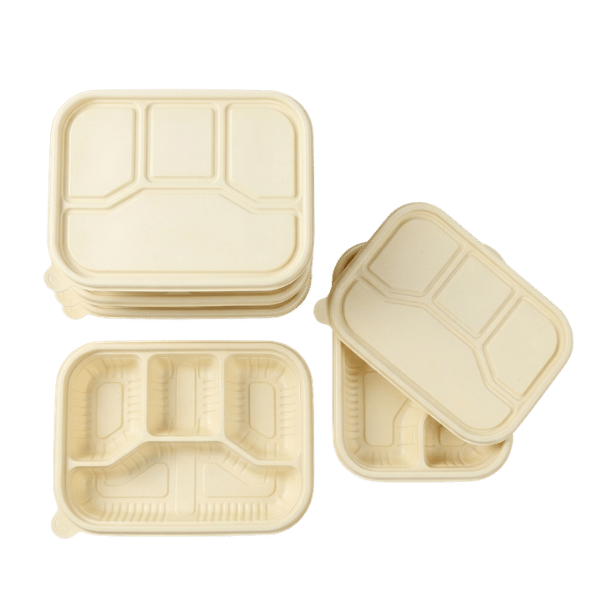
From Plastic Bans to Brand Asset — Why Foodservice Operators Switch to Plant-Based Containers
Biodegradable food containers are no longer a niche choice for eco-friendly cafés. They are now a compliance issue for any operator serving customers in the EU, California, New York, Washington, and a growing list of jurisdictions that treat single-use plastic as a regulated waste stream.
Regulatory Snapshot — 2024-2026
The EU Single-Use Plastics Directive (SUPD) became law 3 July 2021 and forced member states to reach agreement on separte collection and labelling policies by end 2024. Twelve U.S. states currently ban expanded polystyrene foam take-out containers or cups, with 5 others waiting in the wings.
Unprepared operators feel the pinch when their suppliers cut them off. Procurement teams have reported getting non-compliance notices from their delivery partners mere weeks after new legislation kicked in, sometimes with no backup supplier on file.
Biodegradable food containers solve all three issues. They ensure compliance with emerging legislation, they communicate environmental mindfulness to eco-entrausiastic customers without greenwash, and – when bought from a large enough manufacturer – they come at unit costs that competitive with Polystyrene.
Three Operator Wins from Switching
Legal cover
Avoid the credit risk of EU SUPD, California AB 1276 and municipal bans on expanded polystyrene take-out containers.
Brand support
Eco labels on packaging (BPI, OK compost, EU compliance marks) read as evidence, not marketing.
Cost position
Low prices on bagasse and PLA lines currently sit only 5-15% above polystyrene alternatives at volume.
The sugarcane-based packaging market hit USD 351.6 million in 2024 and is expected to grow at a CAGR of 9.7% through 2030. The increased need is not slowing; the number of domestic players is the only thing that determines whether your transition is a margin-neutral or margin-positive move.
Solution Summary
Materials
sugarcane bagasse, PLA, CPLA, bamboo fiber, kraft paper lined with PLA, cornstarch.
Product range
clamshells, bowls, trays, deli containers, take out containers, takeaway boxes, salad bowls, all with matching lids.
Certifications
FDA 21 CFR 177, EU Regulation 10/2011, BPI compostable under ASTM D6400, EN 13432, ISO 9001:2015, ISO 22000.
Custom printing
1-6 color logo printing, OEM mold development, custom sizes from 4 oz to 75 oz.
Capacities
30 tons of sheet/day, 1 million units/day across 86 production lines.
Want to see how each material handles your menu?
Jump to the material comparison ↓Our Biodegradable Container Range — PLA, Bagasse, Bamboo Fiber and Kraft Lines
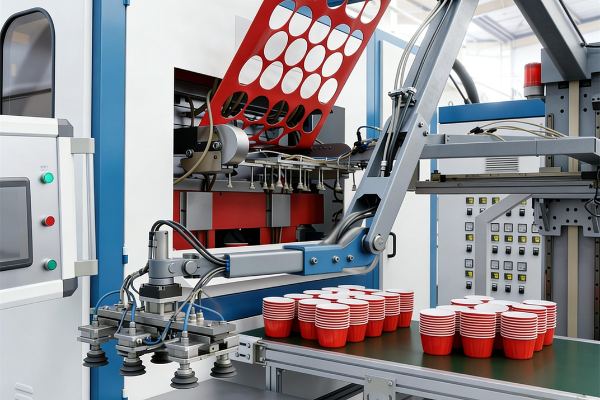
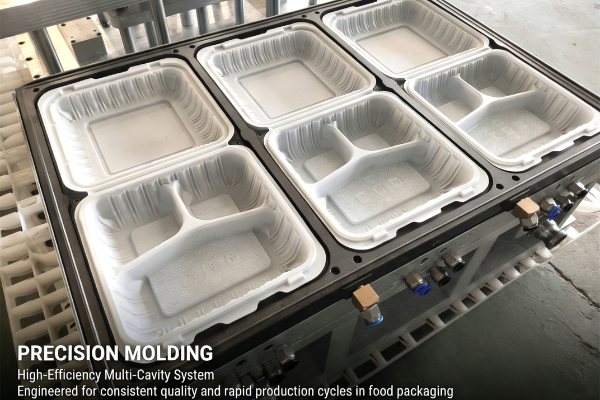
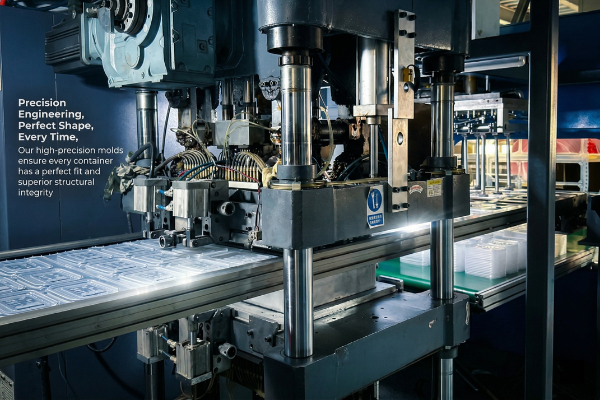
Pre-production our 20 thermoforming lines, 6 sheet extrusion lines, and 60 injection molding lines all run side by side. That mix is what allows us to Quote a run of 50,000 PLA cold cups and a run of 2-million bagasse clamshells in the same week without Outsourcing either to a third-party manufacturer.
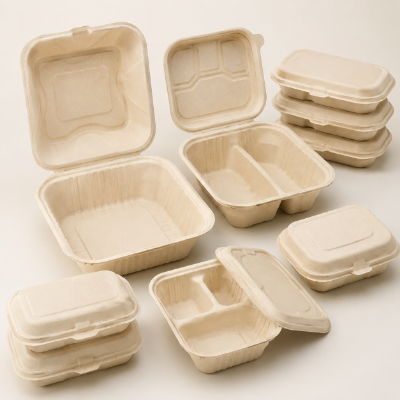
Sugarcane Bagasse Clamshells
- Hot food · Compostable · No PFAS added
- Sizes: 6″6″, 8″8″, 9″6″, 9″9″, 1-3 compartments – clamshells and take out containers
- Heat resistance: -25 C to 95 C short term 120 C.
- Grease and moisture resistant; no plastic coating required
- Industrial compost: 60–90 days per ASTM D6400
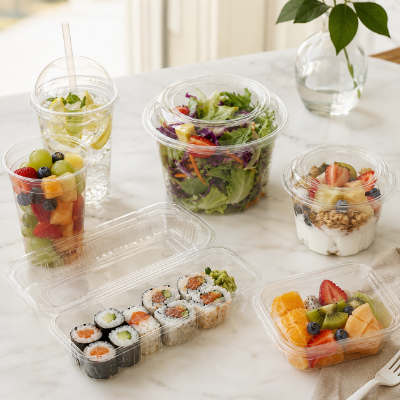
PLA Cold Food Containers and Cups
- Cold food · Transparent · BPI certified
- Sizes: 8 oz to 32 oz deli containers, salad bowls, hinged take-out.
- Made from polylactic acid (corn-derived bioplastic)
- Heat ceiling: 45°C — cold and ambient use only
- Clear visual presentation for salad, cut fruit, sushi

Bamboo Fiber Bowls and Trays
- Hot food · Durable · Microwave safe
- Round bowls 12–64 oz, square 24–48 oz, catering trays
- Heat tolerance: up to 100°C, short-term to 120°C
- Higher rigidity than bagasse, suitable for noodle bowls, rice bowls
- Compostable in industrial facilities; OK Compost INDUSTRIAL eligible
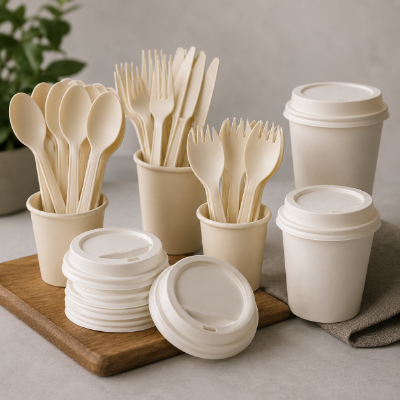
CPLA Cutlery and Heat-Resistant Lids
- Hot pairing · Crystallized PLA
- Forks, knives, spoons, sporks; matching hot cup lids
- Heat ceiling: 85C – bridges PLA’s cold limit and hot-food needs
- Compostable in industrial facilities
- Drop-in replacement for polystyrene cutlery in QSR settings

Kraft Paper Take-Out Boxes
- PLA lining · Folded or rigid
- Chinese-style pails, sandwich wraps, food pails, pizza boxes
- FSC-eligible kraft sheet with thin PLA inner lining for moisture barrier
- Microwave reheating safe up to 85°C
- Note: PLA-lined paper requires industrial composting, not backyard
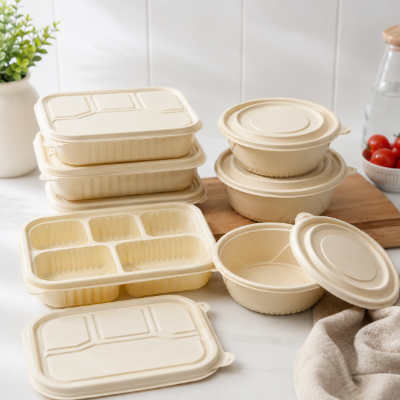
Cornstarch Meal Prep Containers
- Flexible · Snap lid · Reusable rinses
- Snap-on lid containers in 16, 24, 32 oz
- Heat ceiling: 60°C — refrigeration and short reheat only
- Freezer safe to -20°C
- Best for meal prep, ghost kitchens, deli grab-and-go
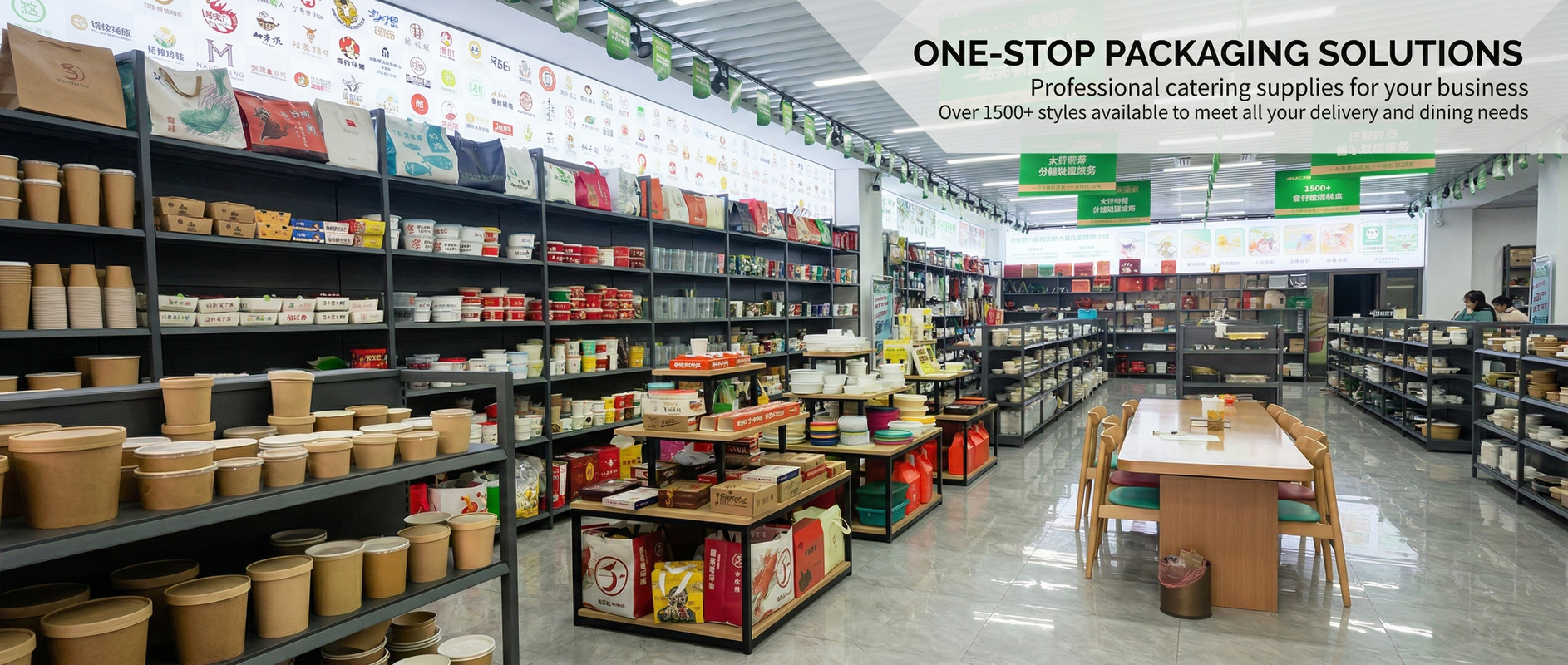
Each line ships with matching lids, configurable compartment counts, and stock as well as printed options. We hold open inventory on the top 30 SKUs by global volume, which is how we keep stated lead times at 30 days from PO for standard items.
Material Comparison — PLA vs Bagasse vs Bamboo Fiber vs CPLA vs Kraft
The single most common procurement mistake we see is treating “biodegradable” as one material. The five we run share certifications and the BPI logo, but they are not interchangeable across menu items.
Heat tolerance is the line that decides hot soup vs cold salad. Compost route is the line that decides whether your end customer can dispose of the container in good faith. Storage performance is the line that decides whether the package survives the walk-in fridge.
| Material | Source | Heat Ceiling | Oil/Grease | Moisture | Compost Route | Compost Time | Relative Unit Cost |
|---|---|---|---|---|---|---|---|
| Sugarcane Bagasse | Sugarcane fiber residue | 95°C (120°C short) | High | High | Industrial · Home (some) | 60–90 days | Baseline |
| Bamboo Fiber | Bamboo pulp | 100°C (120°C short) | High | High | Industrial | 60–90 days | +8–15% |
| PLA | Corn-derived (polylactic acid) | 45°C (cold use) | Medium | High | Industrial only | 90–180 days | +5–10% |
| CPLA | Crystallized PLA | 85°C | High | High | Industrial only | 90–180 days | +15–25% |
| Kraft + PLA Lining | FSC paper + PLA layer | 85°C | High | High | Industrial only | 120–180 days | +10–20% |
| Cornstarch Blend | Starch + binders | 60°C | Medium | Low–Medium | Industrial · Home (some) | 90–180 days | +5–12% |
Ranges reflect industry standards per ASTM D6400 and EN 13432 testing protocols. Unit cost benchmarks are relative; absolute pricing varies by volume, ink coverage, and Incoterms.
Decision Matrix — Match Material to Menu Item
Quick Picks- Hot soup, ramen, curry: Bamboo fiber bowls with CPLA lids
- Burger, sandwich, taco: Sugarcane bagasse clamshells
- Salad, cut fruit, cold deli: PLA hinged or PLA round deli containers
- Iced coffee, smoothies: PLA cold cups with PLA flat lids
- Hot coffee, tea: Kraft paper double-wall cups with CPLA lids
- Catering trays, banquet: Bamboo or bagasse rigid trays with PET-free lids
“We tested fourteen bagasse formulations before settling on the 28-gram-per-clamshell blend that holds 95C soup without sweating through the bottom. That single spec change cut customer complaints about delivery leaks by more than half across our pilot accounts.”
One nuance many buyers miss: home-compostable claims need separate certification (TÜV OK Compost HOME or BPI Home), not just ASTM D6400 industrial compostability. Marketing a PLA-lined cup as backyard-compostable invites a greenwashing complaint.
From RFQ to Container in 30 Days — How We Serve 200+ Foodservice Brands
We move volume because we move volume. A European cold-brew chain places monthly orders of 2 million PLA cups; a Middle East delivery aggregator pulls bagasse clamshells in 500,000-unit drops; a U.S. hospital network rotates printed bowls every quarter as menus change.
European Cold-Brew Chain
Switched from PET cups to clear PLA after EU SUPD enforcement. Two-color logo, recycled fiber sleeves, OK Compost INDUSTRIAL on every cup. Lead time from PO: 28 days door-to-warehouse.
Middle East Delivery Aggregator
Replaced foam clamshells across 1,200 restaurant partners. Bagasse 3-compartment design with hot-food-safe vented lid, six-color full-bleed branding on each lid. Standing monthly schedule, FOB Qingdao.
U.S. Hospital and School Foodservice
Cafeteria-grade bamboo bowls with PFAS-free coating. Required documents: FDA letter, BPI certificate, ISO 22000 audit. Six-week qualification, then auto-replenishment.
The pattern repeats whether the buyer is a catering house or a ghost kitchen — plus QSR chains, hotel banqueting, hospital foodservice, school lunch programs, and direct-to-consumer meal subscription brands all run the same playbook with us. The first order is exploratory; the second is a standing PO once the spec, the lead time, and the printing quality are proven.
Engineering Note — Why 30 Days Is the Right Anchor
Delivery leadtime for standard SKUs is 30 days, as we keep open inventory on our top 30 designs; custom logo printing requires an additional 7-14 days for plate work and color match approval; Fully OEM mold development is 45-60 days from artwork approval, with first-article inspection prior to mass run.
Reviewing your annual packaging volume?
Request a volume-based quote →Custom Logo Printing and OEM Mold Development for Your Brand
Off the shelf works for the proto run, brand owned packs where margin scales. We’ve had 4PCs of logo prints running worldwide across four continents, and it always begins with 3 questions.
Q1
Question 1 — How Many Colors and How Tight a Color Match?
We print 1-6 color flexography on bagasse and bamboo, 1-4 color offset on kraft paper boxes, and 1-6 color UV ink on PLA cups. Delta E 2.5 Pantone colors are approved against your brand swatch before mass run.
Foil stamping, embossing, and UV gloss varnish are available on kraft, paper, and CPLA. Soft-touch lacquer is incompatible with industrial compostability and we will alert you during artwork approval.
Q2
Question 2 — Will My Mold and Artwork Be Used for Other Buyers?
This is where our most common QA is – you worry about others, we lock you to your specs with four NPT gates in our OEM process.
OEM IP Protection Workflow
- Mutual NDA is executed before any artwork or 3D cavities are delivered for review.
- Cavity registration by your brand name, which includes your unique mold serial number permanently stamped in each cavity.
- Delivery lockout – the cavity will only run against your paused order.
- Buyback options – after 12 m/o of cumulative orders you can acquire the mold.
Q3
Question 3 — What’s the MOQ for OEM Mold Development?
Stock molds with brand-printed logos are available from 50K units/SKU. Custom mold development begins at 200K units/SKU for the initial run, and 100k reorders once paid for.
Certifications and Compliance — FDA, EU 10/2011, BPI, ASTM D6400
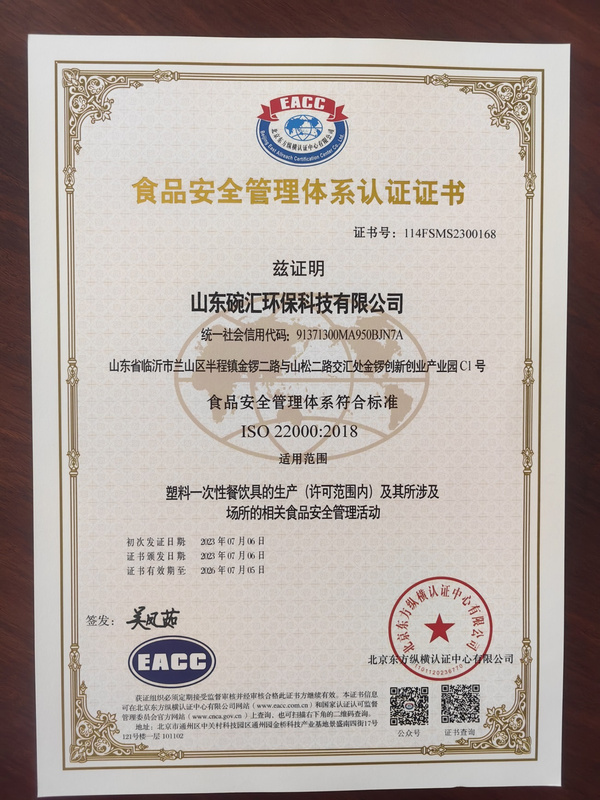
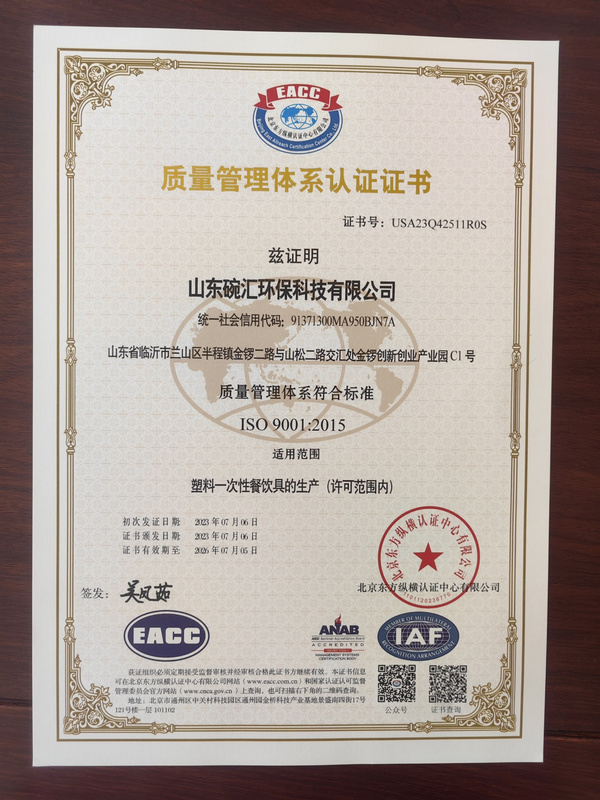
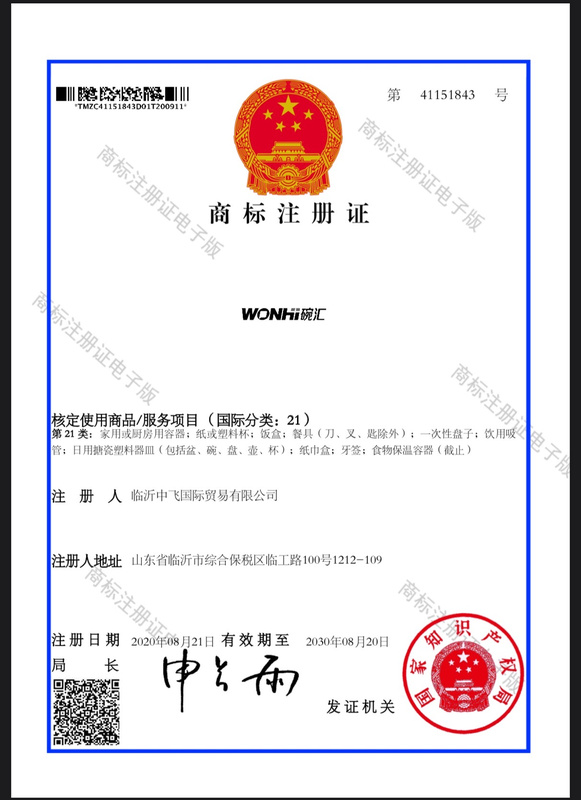
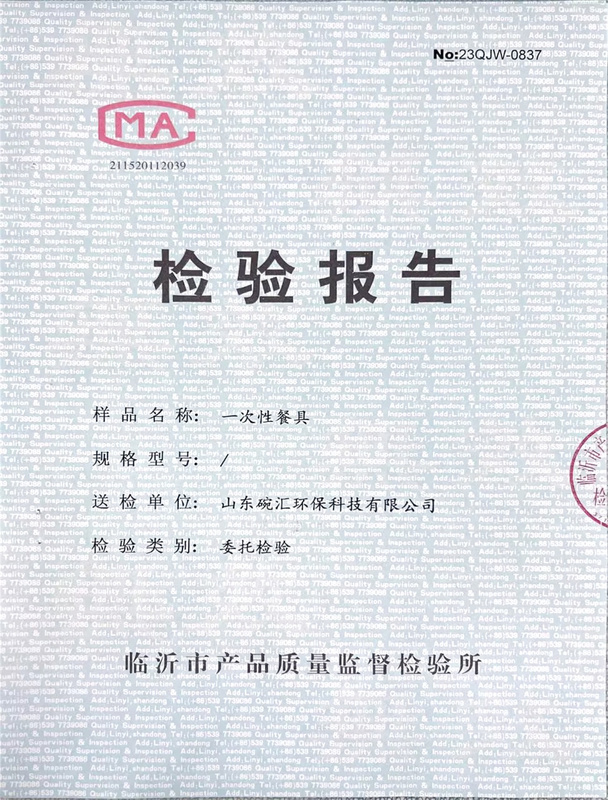
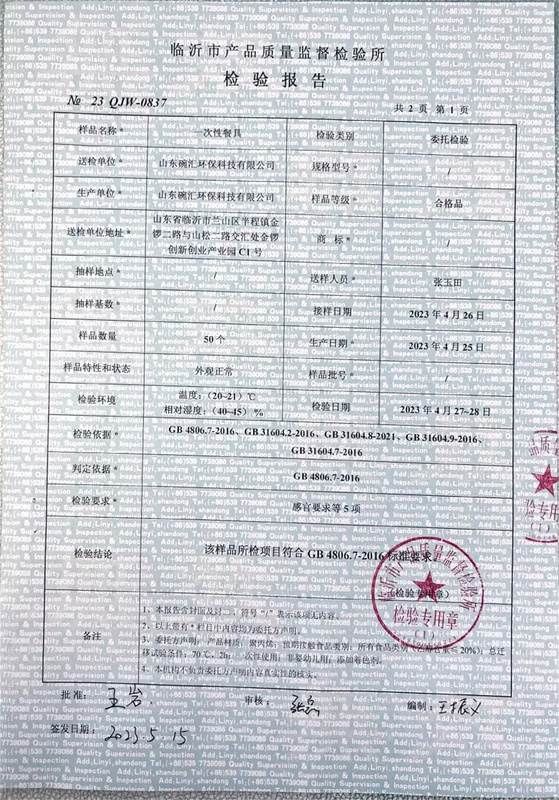
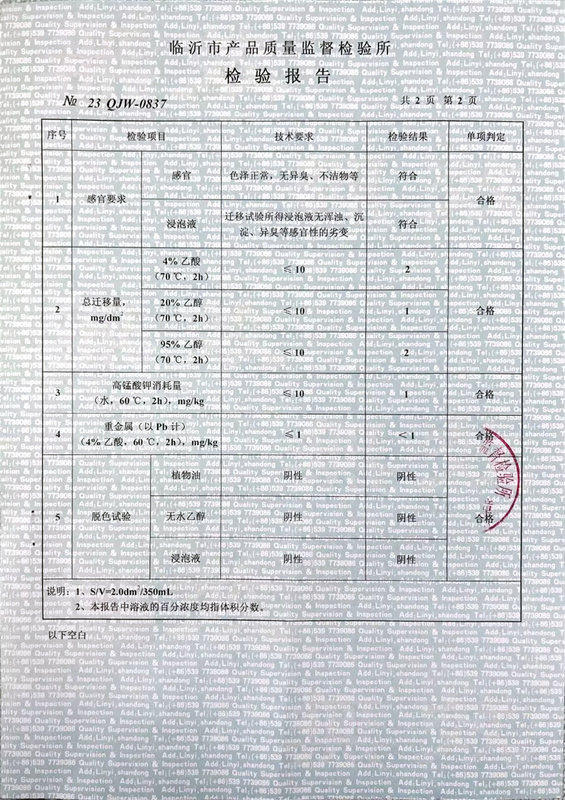
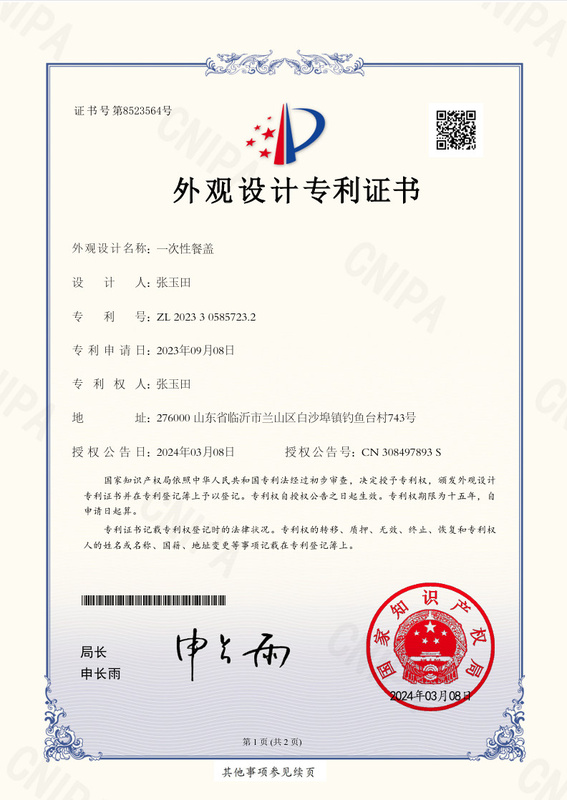
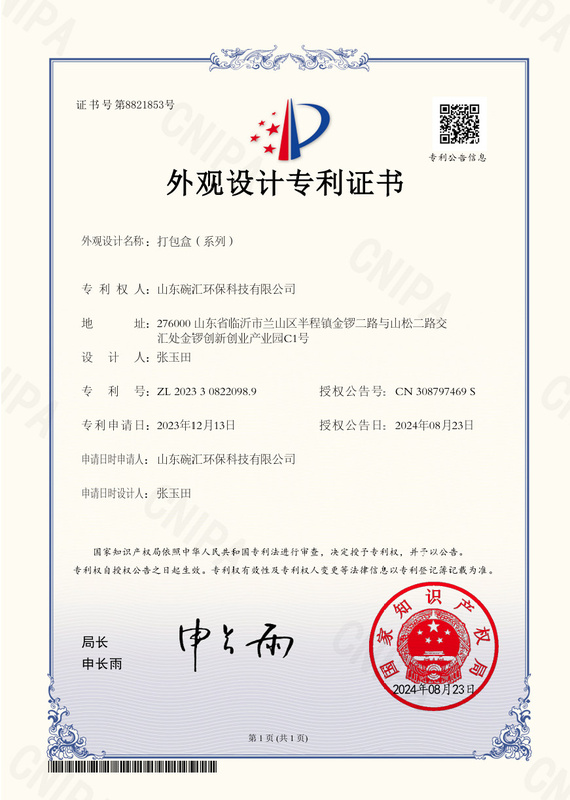
All of our active certifications cover the food contact and the composting claims behind the product, as well as the system certification to uphold both.
FDA
21 CFR Part 177 — food contact
EU Compliance
Regulation (EU) 10/2011 — plastics in food contact
BPI Certified Compostable
ASTM D6400 / D6868 — industrial composting
EN 13432
EU compostable packaging standard
OK Compost
TÜV Austria — industrial composting
ISO 9001:2015
Quality management system
ISO 22000
Food safety management system
No PFAS Added
All fiber products PFAS-free
×
![Enlarged Document]()
Procurement Guide — MOQ, Lead Times, Shipping and After-Sales
Most operators we speak to want one sheet of paper that answers the four questions sourcing teams ask before they bring us into the supplier roster.
Order Type
MOQ per SKU
Lead Time
Tooling Cost
Stock containers (unprinted)
10,000 units
30 days
None
Stock containers + custom logo print
50,000 units
37–45 days
Plate setup only
Custom OEM mold
200,000 units (first run)
45–60 days from artwork sign-off
Mold cost amortized over first 2 runs
Pricing Factors Framework
We quote against six cost drivers, and we are happy to walk a sourcing team through how each one shifts the per-unit number.
What Drives the Unit Price
Material
Bagasse is the cost baseline; bamboo, CPLA, and kraft-PLA each add a percentage premium.
Container weight
A 28-gram clamshell costs more than a 22-gram clamshell – and performs better under hot food.
Print coverage
1-color spot is the cheapest; full-bleed 6-color flexography adds plate setup and ink cost.
Order volume
Per-unit cost drops on a step function at 100K, 500K, and 1M units.
Incoterms
FOB Qingdao is our default; CIF and DDP options change the freight share.
Reorder frequency
Standing monthly POs unlock a frequency discount tier.
For a like-for-like benchmark, foodservice operators publicly report compostable hinged clamshells in the 16-22 range at full-truckload volume through national distributors. Custom-printed direct-from-manufacturer pricing typically lands within or below that band once tooling is amortized.
Payment Terms and Shipping
We accept T/T (30% deposit, 70% before shipment), L/C at sight for orders above $50,000, and Open Account terms for customers with 12+ months of trading history.
Default Incoterm is FOB Qingdao; CIF to most U.S. and EU ports is available with seven-day quote turnaround.
Samples, QC and After-Sales
Free samples ship to verified B2B addresses; we cover sample cost and you cover the express courier. Every production lot is QC-checked against AQL 2.5 (major) and AQL 4.0 (minor) per ISO 2859-1, with a photo-documented inspection report attached to each shipment.
Defects above the AQL threshold are eligible for replacement or credit at our cost, including return freight. Two-year shelf life applies to most fiber products when stored at <30°C and <70% RH.
Working on an RFQ this week?
Send your spec list → We’ll quote within 48hInside Our Biodegradable Food Containers Factory
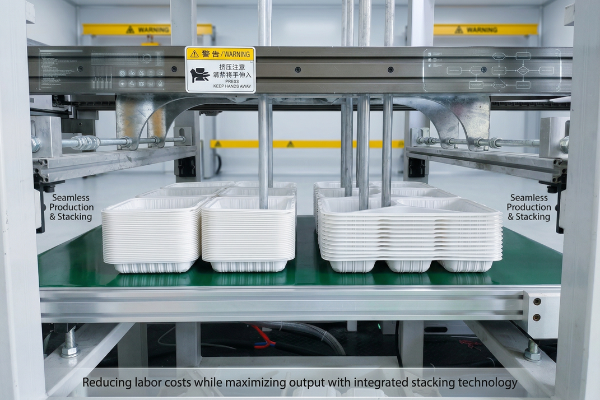
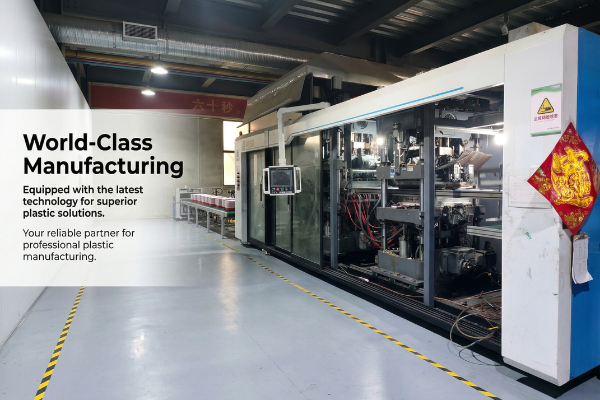
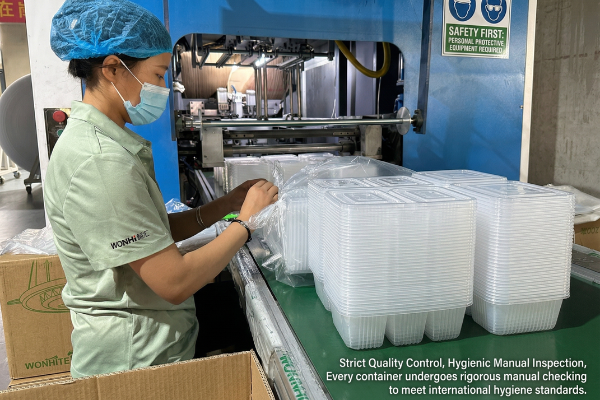
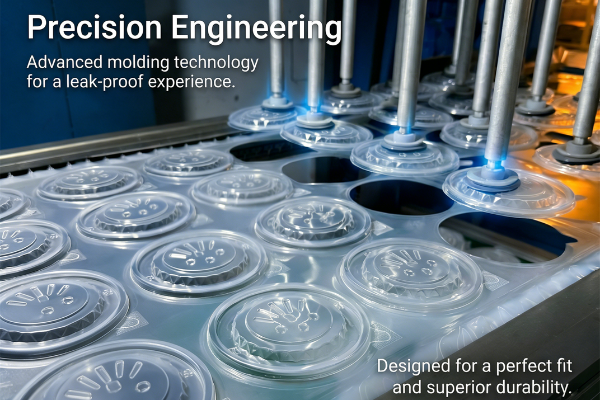
×
Sustainable Procurement Tools
Leverage our data-driven systems to optimize material selection, forecast packaging costs, and ensure strict compliance in your target markets.
01
Match menu to plant-based material
Find the optimal biodegradable substrate (Bagasse, PLA, Bamboo) based on your specific food temperature, grease level, and moisture requirements.
Start Quiz →
02
TCO Switch Calculator
Analyze the Total Cost of Ownership when transitioning from traditional plastics to compostable alternatives, factoring in MOQs, shipping, and disposal.
Calculate Costs →
03
Compliance Checker
Verify food-grade material compliance and validate environmental certifications (BPI, EN 13432, OK Compost) against regional market regulations.
Check Compliance →
Ready to specify your biodegradable food container program?
Share your menu mix, monthly throughput and print needs. We will send a quotation in 48 hours, with complimentary samples shipped to enrolled RFQ.