
Get in touch with Wanhui Company


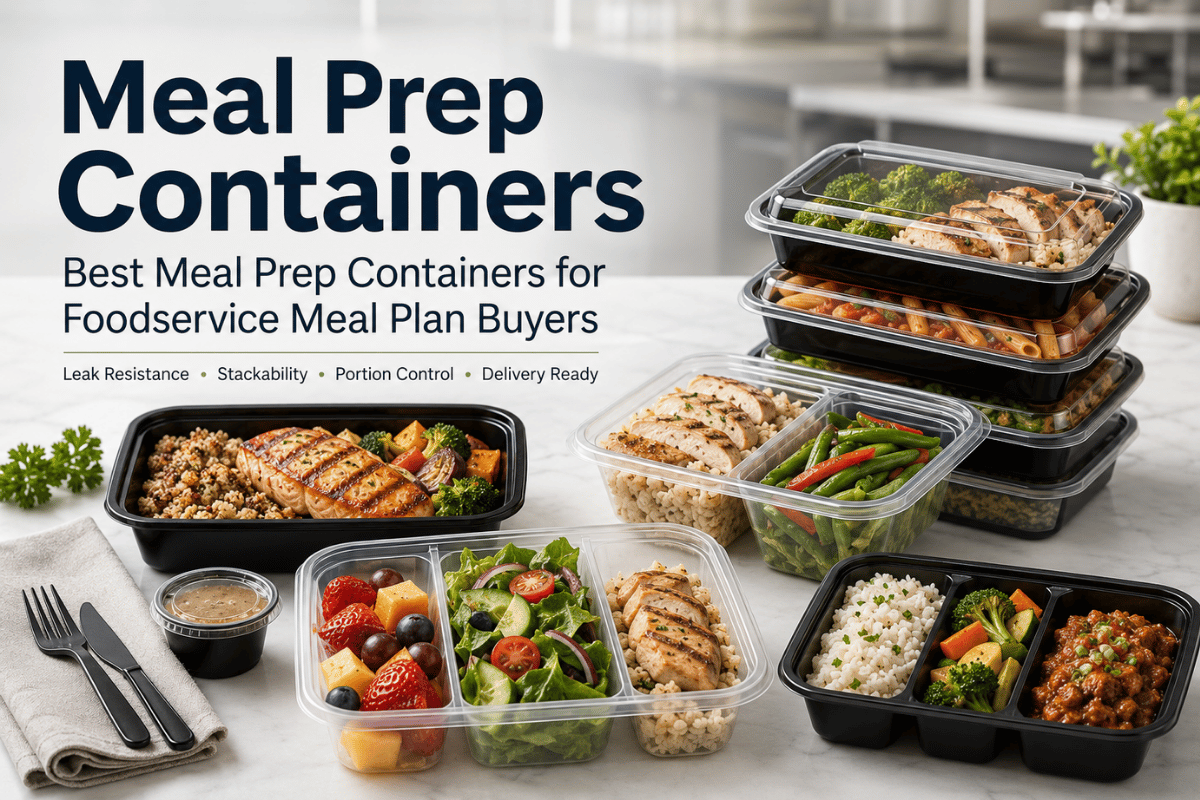
Meal prep containers may look straightforward, but a foodservice buyer still has to order meal prep containers for foodservice by the carton, match them to delivery menus, prove food-contact suitability, and keep the lid working in transit. Top meal prep containers for a restaurant, canteen, school, hospital, or distributor may not be the same containers that a home cook would purchase for a weekly lunch plan.
Foodservice purchases are driven by the operating model: one-time disposable or reusable, hot or chilled, 1-compartment or 3-compartment, branded or generic, sample order or bulk purchase. Commercial meal prepping needs a workable sourcing plan for food storage containers, disposable meal prep boxes, and containers with lids used in service conditions.
Quick Specs for Foodservice Buyers
| Decision | What to Confirm Before Buying |
|---|---|
| Material | PP, MFPP, biodegradable fiber, glass, silicone, or steel, with intended-use proof for food contact. |
| Temperature use | Microwave, freezer, dishwasher, hot-fill, or reheat claims must be confirmed per SKU. |
| Lid fit | Check locking lid style, snap lock lids, plastic lids, leak resistance, stackability, and courier handling. |
| Layout | Choose 1-compartment, 2 compartment, or 3 compartment formats around the meal, sauce, side dish, and portion control plan. |
| Sourcing | Ask for samples, MOQ, lead time, certificate pack, custom logo options, and custom mold feasibility. |
Meal Prep Containers with Lids: What Foodservice Buyers Need to Decide First
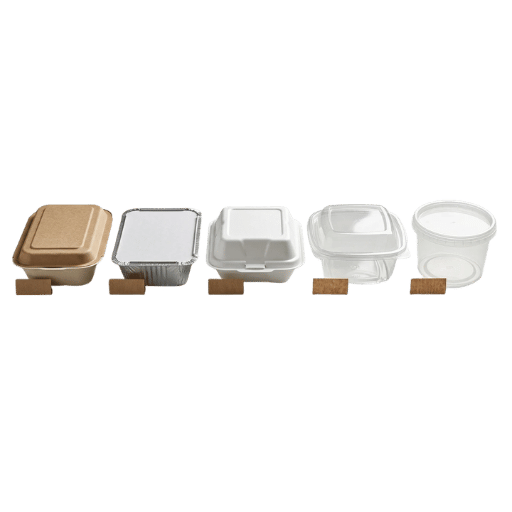
Most home shoppers ask which glass container keeps a fridge looking tidy. Foodservice buyers face a different question: which food container keeps food presentable through service, travels well, fits the menu, works with on-pack labeling, and can be reordered without surprises.
That is why “best meal prep” needs a channel-specific answer in commercial sourcing. Office lunch meal prepping programs may require stackable rectangular containers with lids, while school canteens may prefer a lower-cost disposable food container with a secure lid and simple portion-control layout. Hospital foodservice may value tray fit, odor control, and consistent labeling more than a consumer-style bento box look.
Commercial meal prepping benefits when the buyer defines the base, lid, label space, and carton configuration before changing colors or shapes. When meal prepping is sold as a weekly service, that repeatable specification can become the deciding factor.
Consumer searches for best meal prep containers often mention Rubbermaid Brilliance, Rubbermaid Brilliance containers, Prep Naturals, MCIRCO, a Pyrex set, lunch boxes, lunch containers with lids, glass jars, wide mouth mason jars, and airtight glass lunch containers; that research can help explain home kitchen storage, but it should not replace a commercial RFQ for disposable meal prep containers with lids.
| Home Meal Prep Question | Foodservice Buyer Question |
|---|---|
| Does it look good in my kitchen? | Does it hold menu quality through packing, stacking, and delivery? |
| Can I wash and reuse it? | Does the return, washing, and loss rate make reusable containers practical? |
| Is it microwave safe at home? | Which SKU is approved for the exact heating, chilled storage, or freezer use in the service plan? |
| Can I buy a small set? | Can the supplier support bulk orders, repeat colors, custom logo printing, and stable lead times? |
What container is best for meal prep in a foodservice setting?
Choose the container that best fits the meal, distribution channel, and handling route. Chilled foods put more stress on lid fit and anti-crush features than on a reusable shape. Hot rice bowls and sauced bowls raise questions about heat use, condensation, sauce separation, and stackability in courier bags. Weekly meal prep lunch programs often use only two or three standard containers so labels, sleeves, cartons, and storage racks stay simple.
Disposable vs Reusable Meal Prep Food Containers for Commercial Use
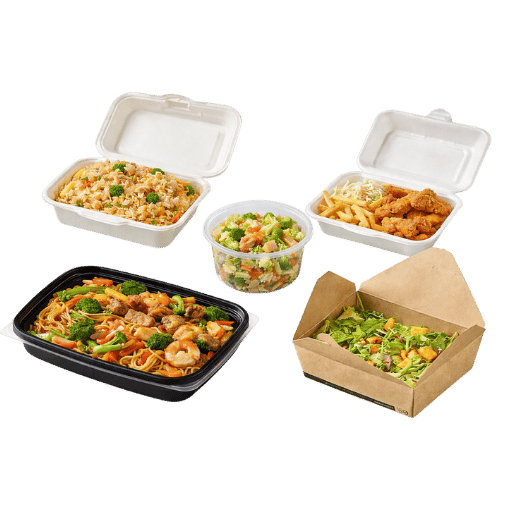
Reusable containers can work well for closed-loop meal services where the customer returns the container, the operation controls washing, and a moderate loss rate is acceptable. Reusable glass meal prep containers, borosilicate glass, stainless steel, and silicone can suit subscription lunch programs, corporate pantry service, or in-store lunch displays.
Disposable meal prep containers make the most sense when meals leave the operator’s control: delivery, takeout, event catering, hospital visitor meals, school lunches, airline-style service, or distributor resale. In those channels, a container that does not return to the operation can simplify the process. Buyers still need food-contact support, leak testing, and clear recycling or disposal guidance, but return logistics are no longer the main issue.
Subscription meal prepping can sit between these two models. Local meal services may use reusable containers for loyal customers who return them, then switch to disposable food prep containers for events, trial orders, and third-party delivery.
The list of containers to buy should separate a retail meal prep container set from wholesale cases for restaurants, because a meal container that works in kitchen storage may still fail in delivery cartons.
| Service Model | Reusable Fit | Disposable Fit |
|---|---|---|
| Closed employee meal plan | Good if return bins and washing capacity exist. | Useful for overflow days and visitors. |
| Third-party delivery | Weak unless a deposit system is in place. | Strong for one-way meals and courier handling. |
| Institutional canteen | Good for tray-return systems. | Good for grab-and-go, isolation wards, and after-hours meals. |
| Distributor resale | Limited, unless selling premium retail sets. | Strong when cartons, case packs, and common sizes are stable. |
Food Storage Materials and Food-Contact Safety: BPA-Free PP, MFPP, Biodegradable, Glass, and Steel
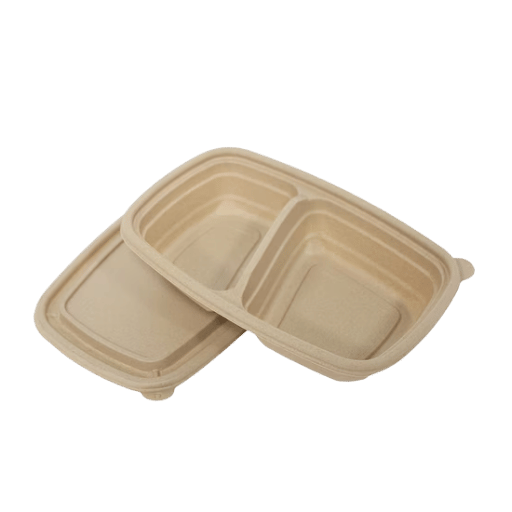
Food-contact safety begins with the material and the intended use. Federal food-additive regulations define a food contact substance as a component used in manufacturing, packing, packaging, transporting, or holding food, and 21 CFR 174.5 ties indirect food additive use to good manufacturing practice. That still does not make one container suitable for every food, temperature, or handling route.
Foodservice buyers need a clear answer to one question: what exactly will touch the food, under what condition, and for how long? PP containers for chilled grain bowls are different from fiber containers for sauced noodles, glass containers for repeat meal prepping, or metal containers for non-microwave storage. If an olefin polymer such as polypropylene is proposed, the buyer should confirm the applicable food-contact use conditions rather than treating the material name as a blanket approval.
For management-system evidence, ISO explains ISO 22000 as a food safety management system standard. Buyers may also ask whether a supplier can provide ISO 9001 quality-system evidence or ISO 14001 environmental-system evidence when those documents are relevant to the tender. These ISO references do not replace SKU-level food-contact documents, but they help the sourcing team decide which certificate pack to request.
For reusable programs, using glass containers, glass storage, large glass meal prep sets, 30 oz glass meal prep containers, and other oz glass meal prep containers can make sense when the operator controls breakage, returns, and washing.
| Material | Best Fit | Buyer Check |
|---|---|---|
| PP plastic containers | Disposable food prep containers, chilled meals, many hot-food programs when specified correctly. | Ask for material grade, intended-use statement, lid pairing, and microwave claim proof if needed. |
| MFPP | Menus needing a more rigid or upgraded disposable container feel. | Confirm heat, grease, and sealing performance against your menu. |
| Biodegradable fiber | Sustainability-led channels and dry-to-medium moisture meals. | Check local disposal rules, coating, sauce resistance, and lid match. |
| Glass container | Reusable programs, home-style weekly meal prep, premium in-house service. | Review breakage, weight, return rate, and plastic lids or silicone seals. |
| Stainless steel or metal containers | Reusable cold storage, outdoor service, non-microwave use. | Do not assume microwave use; confirm cleaning route and lid system. |
Is it better to meal prep in plastic or glass containers?
Home meal prepping often favors glass food storage containers, including Pyrex-style sets, for odor control and long-term reuse. To-go and meal delivery programs often need PP or biodegradable disposable containers because weight, breakage, return loss, and bulk cost matter. Foodservice teams can use glass for closed-loop programs and disposable containers for delivery or takeout without treating either material as universally better.
Engineering Tip: do not fall into the slippery slope of “food grade” as the exclusive proof point. Request the material name, food-contact statement, intended-use condition, lid material, and any microwave, freezer, or dishwasher test precedent tied to the particular SKU.
Leakproof Lids, Food Containers with Lids, and Stackability
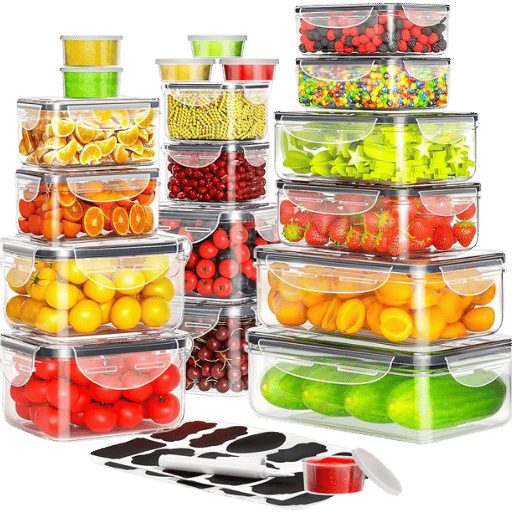
Most container failures happen at the lid, not the bowl. A lid that feels snug on a sample desk can still fail after sauce contact, hot filling, cold storage, courier bag movement, or side stacking. Leakproof language for meal prep containers with lids should be confirmed with the buyer’s own menu, particularly for oily sauces, soups, dressings, rice bowls, and chopped salads.
Airtight containers help with weekly meal storage and odor control, but a foodservice buyer should also test how quickly staff can close the lid during rush periods. Snap lock lids, locking lid styles, vented lids, and flat plastic lids alter labor speed and failure points. If a container and lid are marketed as a set, find out whether alternative lids from another SKU are approved.
A vacuum seal may matter for some reusable food containers with lids, but disposable foodservice packaging is usually judged by rim fit, lid stiffness, stack pressure, and whether the container is made from durable material for the intended route.
| Test | How to Run It | What Failure Looks Like |
|---|---|---|
| Sauce tilt | Fill with your thinnest sauce and tilt in several directions. | Drips at corners or lid flex around the rim. |
| Courier bag stack | Stack loaded containers in a delivery bag and move them for a short route. | Lid pop, crushed rim, or sauce transfer. |
| Cold-to-room change | Move chilled meals from fridge to prep bench and inspect condensation. | Wet label area, fogged display, or softening fiber. |
| Staff close test | Have line staff close 50 samples during normal prep speed. | Uneven closures, bent corners, or slow handling. |
Microwave, Freezer, Dishwasher Safe, and Hot-Fill Questions
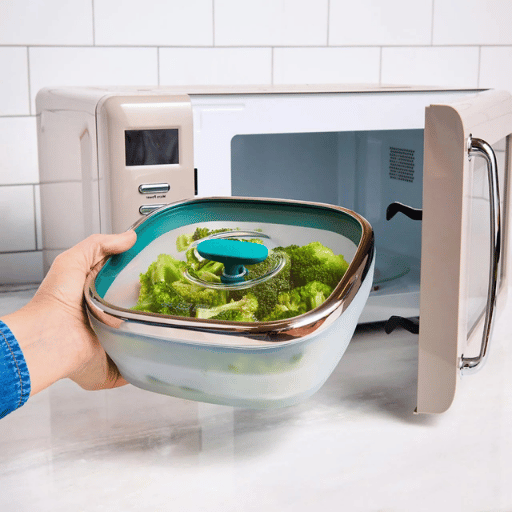
Temperature-use terms attract searchers, but they also create risk. CDC MMWR food-safety guidance advises dividing leftovers into shallow containers for rapid cooling and using leftovers within 3 to 4 days. CDC also tells consumers to refrigerate perishable food within 2 hours. These are food handling tips, not evidence that your chosen plastic container, lid, or fiber tray is freezer safe or microwave approved.
If you plan to reheat meals, freeze meals, or wash reusable containers, request supplier evidence for the intended use condition. “Microwave safe meal prep containers” should mean the specific container and lid combination has been evaluated for that microwave use. “Freezer safe” should depend on food type, storage time, lid seal, and whether the container resists cracking or freezer burn during your process.
When a buyer wants microwave and freezer claims, freezer and dishwasher use, or an oven-safe path, the supplier should define whether the claim applies to the base, the lid, or both.
Can you freeze meal prep containers?
Some containers may be suitable for freezer use, but the buyer should verify the exact material, lid, fill level, and thawing procedure. CDC guidance also links shallow covered containers with faster cooling and safer leftover handling. Standard freezer meal programs should test container strength, label adhesion, stacking, and lid removal after freezing.
| Claim | Ask Supplier For | Buyer Sample Test |
|---|---|---|
| Microwave | Container and lid use statement, venting guidance, and food-contact support. | Reheat your highest-fat and highest-moisture meals and inspect warping or odor. |
| Freezer | Low-temperature handling statement and lid seal guidance. | Freeze loaded samples, thaw them, and check cracking, label peel, and leak points. |
| Dishwasher safe | Reusable-use statement and cycle conditions. | Run repeated washes and inspect seal, warping, clouding, and lid fit. |
| Oven safe | Specific oven-use documentation. | Avoid assuming oven use for disposable plastics; use only documented formats. |
1-Compartment, 2-Compartment, and 3-Compartment Formats: Matching Menus to Container Layouts
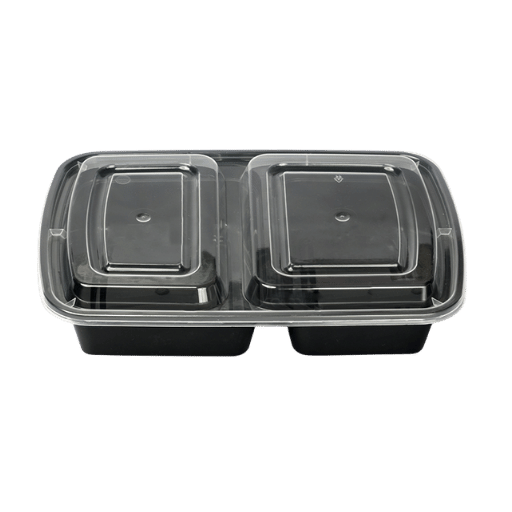
Compartment count is a menu choice. One compartment fits rice bowls, pasta, salads, noodles, and entrees when the food is meant to be mixed. Two-compartment separators help keep sauce-heavy proteins away from starches or hold a chilled side apart from a warm entree. Three-compartment formats support bento-style food packs, portion-control lunches, school meals, and menus where texture separation is key.
More compartments can make performance worse. Ribs and corners reduce usable volume, slow filling, and create sauce or cleaning problems in reusable packs. Disposable bento containers should be tested with the actual menu so staff can see whether each compartment fills quickly without food crossing the divider in transit. Meal prepping menus with sauce should run this test before a buyer approves 1-compartment, 2-compartment, or 3-compartment meal prep containers.
For prep bowls, 2-compartment meal prep containers, and other compartment containers, the sample test should include sauces, snack containers, and a healthy meal layout so staff can see whether small sides stay in place.
| Menu Type | Recommended Layout | Why It Works |
|---|---|---|
| Rice bowl, pasta, stir-fry | 1-compartment rectangular containers | Fast filling, simple label area, good stackability. |
| Protein plus side | 2 compartment | Keeps sauces, grains, and vegetables separated without overcomplicating packing. |
| Bento, school meal, portion-control meal | 3 compartment | Supports fruit, snack, main dish, and side dish separation. |
| Sauce-heavy items | 1 compartment plus separate cup, or deep 2 compartment | Reduces cross-contamination and lid pressure. |
Bulk and Wholesale Buying: MOQ, Samples, Custom Logo, and Custom Mold
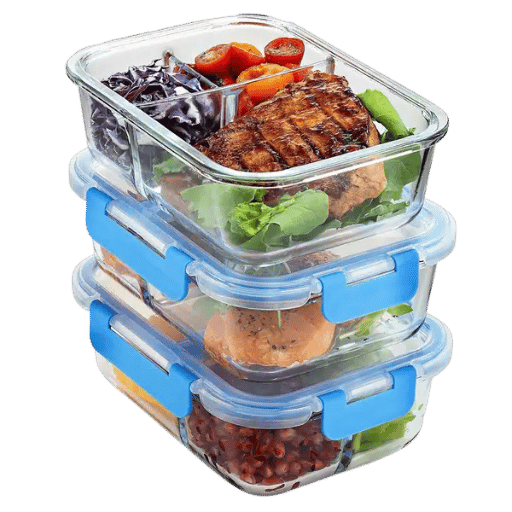
When a buyer moves from small packs to wholesale meal prep containers, the risk changes. One inexpensive sample can work well on the desk and still fail during cartoning, palletizing, printing, or reordering. Bulk buyers should request production capacity, line type, certificate pack, mold status, case pack, carton size, sample lead time, and print proof before approving a reorder.
Wanhui’s company profile states 20 years in food packaging containers, with 20 thermoforming lines, 6 sheet extrusion lines, and 60 injection molding lines. The supplied profile also states more than 30 tons of daily sheet output and daily processing capacity above 1 million units. Those details matter because meal prep boxes are usually reordered, not purchased once.
| Evidence Field | What the Buyer Should Log | Why It Affects the Decision |
|---|---|---|
| Supplier history | Record the supplier’s 20 years in food packaging and ask which product categories are covered. | Longer category history helps the buyer compare reorder risk, certificate handling, and quality control habits. |
| Sheet output | The profile states more than 30 tons of sheet material daily; if metric tonnes are meant, that is roughly 30,000 kg. | Capacity evidence matters when a distributor needs repeat cartons across several months. |
| Loaded meal weight | Log filled samples to the nearest 0.1 kg and repeat the check after lid closure. | A container that works empty may flex after the actual menu weight is added. |
| Rim and lid gap | Measure visible lid gap to the nearest 1 mm before and after the sauce test. | Small rim changes can explain leaks that staff miss during a quick sample check. |
| Label area | Measure the flat label area to the nearest 1 cm after the lid and sleeve are fitted. | Meal plan programs need readable labels without covering vents, seals, or brand marks. |
| Stack load | Log stack load in 1 kg increments using the buyer’s own delivery bag or shelf setup. | Stacking pressure can cause lid pop, crushed rims, or sauce transfer. |
| Courier route | Record a 1 hour route simulation if that matches the buyer’s normal delivery window. | Route time changes condensation, sauce movement, and label adhesion. |
| Cooling and holding | Use CDC’s 2 hours food-handling rule as a safety reference, then log the container test separately. | Food safety timing and packaging performance are related, but they are not the same claim. |
| Refrigerated leftovers | Translate the CDC 3 to 4 day leftover window into 72 hours and 96 hours for internal logs. | Hour-based logs are easier to compare across kitchens, canteens, and delivery teams. |
| Freezer sample | Check a loaded sample after 24 hours and again after 48 hours if freezer use is requested. | Short freezer checks can reveal cracking, label peel, and difficult lid removal before an order is placed. |
| Reorder review | Compare supplier delivery records in 1 month, 3 months, 6 months, and 12 months windows when purchase data exists. | A wholesale container should be judged on repeat supply, not only the first sample box. |
| Carton fit | Measure carton length, width, and storage clearance to the nearest 1 cm before warehouse approval. | Warehouse fit can change the real cost of bulk meal prep containers. |
Use the table as a measurement sheet, not as a universal pass-fail standard: record rim movement in 1 mm, 2 mm, and 3 mm notes, label panel space in 1 cm and 5 cm increments, loaded meal weight in 0.1 kg and 1 kg increments, shelf load in 5 kg and 10 kg steps, and route observations at 1 hour, 2 hours, 24 hours, and 48 hours only when those intervals match the buyer’s own operation.
Branded designs also need planning. A custom logo can support chain restaurant delivery, distributor resale, and corporate lunch programs, but container color, lid color, print position, ink type, carton markings, and lid clarity should be settled before full production. If a proprietary shape is needed, ask whether a custom mold is justified by order volume and whether the supplier can keep extra mold capacity for repeat runs.
Buyers ready to compare formats can review Wanhui’s custom disposable meal prep containers as the internal product resource for PP, MFPP, biodegradable, bulk, and custom logo sourcing.
Delivery, Canteen, Hospital, School, and Chain Restaurant Scenarios
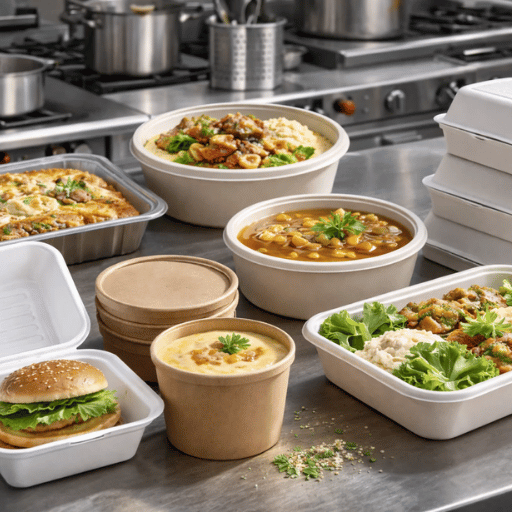
One food storage container cannot function the same across every channel. Delivery puts stress on lid closure and stacking. Canteens need quick, predictable filling and packing. Healthcare programs require clear labeling, controlled handling, and predictable supply. Schools often need portion control, safe rims, and easy opening. Chain operations care about pack branding and repeatable packing.
| Channel | Container Priority | Procurement Note |
|---|---|---|
| Delivery brand | Leak-resistant meal prep boxes, stackability, and sauce separation. | Test in courier bags, not only in a prep room. |
| Canteen | Fast filling, portion control, and consistent lid closure. | Use a limited set of sizes to keep food prep simple. |
| Hospital | Label area, odor control, and safe handling. | Confirm material statements and carton traceability. |
| School | 3 compartment options, easy opening, and low breakage risk. | Check edges, lid force, and portion size before ordering. |
| Chain restaurant | Brand consistency, custom logo, and stable repeat supply. | Approve print proofs and carton markings before scale-up. |
The 9-Point Foodservice Container RFQ Matrix
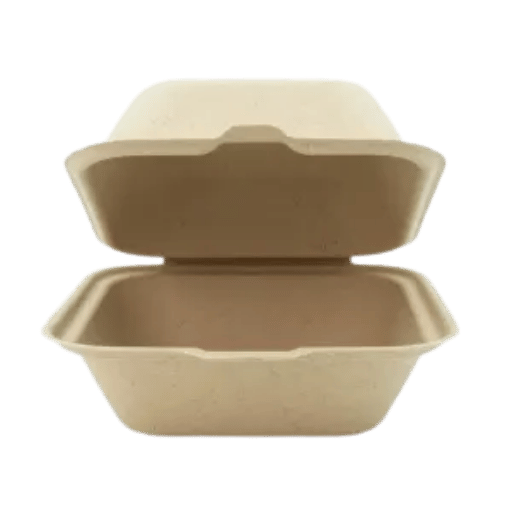
Serious RFQs should call for more than just a price. They make the buyer and supplier define the exact container, lid, material, use case, and service route before price is compared. Copy this matrix into a sourcing brief for bulk meal prep containers, disposable bento packaging, or branded food prep packaging. That single brief helps purchasing, kitchen, quality, and logistics teams compare the same evidence before the first carton is approved, instead of letting one team approve price while another later discovers that the lid, label, or freezer route was never tested.
| RFQ Point | Question to Ask | Evidence to Request |
|---|---|---|
| 1. Material | Is the container PP, MFPP, fiber, glass, silicone, or another material? | Material declaration and food-contact support. |
| 2. Size | Which volume, dimensions, and variety of sizes are available? | Spec sheet, drawing, and carton count. |
| 3. Compartment | Is the format 1-compartment, 2 compartment, or 3 compartment? | Sample set filled with your actual menu. |
| 4. Lid | Is the lid flat, domed, vented, locking, snap-on, clear, or colored? | Lid pairing list and leak test sample. |
| 5. Temperature use | Can this exact SKU be used for microwave, freezer, dishwasher, or hot-fill conditions? | Written intended-use condition and sample test data. |
| 6. Certificate pack | Which food safety, ISO 22000, ISO 9001, hygiene, or food-contact documents are available for the target market? | Current certificate files and test reports. |
| 7. Samples | Can the supplier send production-grade samples before deposit? | Sample invoice, sample lead time, and matching production spec. |
| 8. Branding | Can the container or carton carry a custom logo? | Print proof, color tolerance, and approved artwork file. |
| 9. Production and delivery | What is MOQ, production lead time, port, carton size, and reorder plan for bulk disposable meal prep containers? | Quotation, production schedule, and shipping terms. |
What Is Changing in Meal Prep Packaging for 2026?
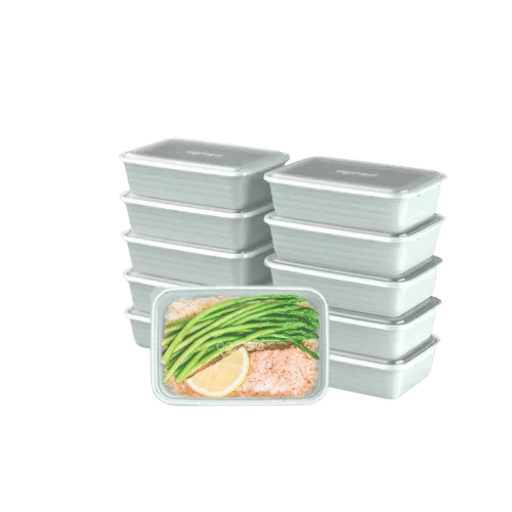
Packaging choices face several pressures at once. The European Commission’s Single-Use Plastics Directive points to broader efforts to reduce the environmental impact of some single-use plastic items. EPA’s Wasted Food Scale also reminds foodservice operators that preventing food waste is better than managing disposal later. For meal prep packaging, the container still has to protect the meal while fitting the buyer’s local disposal and recovery system.
National Restaurant Association coverage of off-premises packaging points in the same direction: packaging affects how food travels and how customers judge takeout quality. Better packaging can help protect temperature, taste, and perceived freshness, while claims such as compostable, recyclable, reusable, or biodegradable still have to work with local infrastructure.
- Material questions will get sharper as buyers ask why a supplier chose PP, MFPP, fiber, glass, or reusable formats for the target service.
- Proof requests will grow around BPA-free, microwave, freezer, recycled-content, and related claims.
- Channel-specific specs will matter more because delivery, weekly meal plans, and institutional lunch programs need different lid and compartment combinations.
- Branding pressure will push restaurants and distributors to use custom logo packaging for on-the-go meals.
FAQ
Are meal prep containers leak proof?
Short answer
Some are leak resistant. Test with your sauce, soup, courier bag, and stacking route before approving the order.
Are meal prep containers microwave-safe?
Short answer
Only when the exact container and lid combination is documented for microwave use. PP bowls, plastic lids, fiber trays, glass containers, and silicone covers can each have different use conditions, so ask for SKU-level proof, venting guidance, food-contact support, and sample results from a meal close to your own menu. Rice bowls with oil, sauce, and protein may behave differently from plain vegetables, and the lid may have a different use condition from the base.
Can disposable meal prep containers be reused?
Short answer
Some customers reuse disposable containers informally. Foodservice buyers should not sell a disposable container as reusable unless the supplier provides a reusable-use statement, because repeated washing, dish washing, staining, lid fatigue, and cracking can change performance.
How many containers do you need for meal prep service?
Short answer
Start with the weekly meal count, add test volume, allow for damage and menu changes, then calculate reorder timing from supplier lead time. Commercial meal prep food programs should also count lids separately if lids and bases are packed in different cartons.
What size meal prep containers do restaurants use?
Short answer
Restaurants commonly standardize around a small group of rectangular containers rather than many sizes. The right size depends on entree weight, sauce volume, side dishes, label placement, and carton storage.
Where should businesses buy meal prep containers in bulk?
Short answer
Businesses should buy from a supplier that can provide samples, repeatable production, food-contact documents, lid pairing, branding support, and clear lead times. Wanhui offers meal prep containers for foodservice buyers, including bulk and custom options.
Sourcing Next Step
When sampling disposable meal prep containers for delivery, canteens, schools, hospitals, chain restaurants, or distributor resale, bring your menu samples and review material, lid, temperature-use, and labeling details together.
Review Wanhui’s bulk meal prep containers and custom logo options.
About This Guide
This guide is written for foodservice sourcing rather than home kitchen product ranking. Wanhui makes disposable packaging containers for restaurants, delivery services, canteens, hospitals, schools, and distributors. The buyer checks above are meant to help teams ask better questions before ordering samples or approving wholesale container orders, especially when the same SKU must carry different menus, labels, cartons, and delivery routes without creating avoidable handling problems.
References and Sources
- 21 CFR 170.3: Food Additive Definitions
- 21 CFR 174.5: General Provisions for Indirect Food Additives
- 21 CFR 177.1520: Olefin Polymers
- CDC MMWR: Leftover Cooling and 3-4 Day Use Guidance
- CDC: Refrigerate Perishable Food Within 2 Hours
- European Commission: Single-use Plastics
- U.S. EPA: Wasted Food Scale
- ISO: ISO 22000 Explained
- ISO: ISO 9000 Family
- ISO: ISO 14000 Family
- National Restaurant Association: Off-Premises Packaging Trends
- Sustainable Packaging Coalition: 2025 Sustainable Packaging Trends Report