Get in touch with Wanhui Company


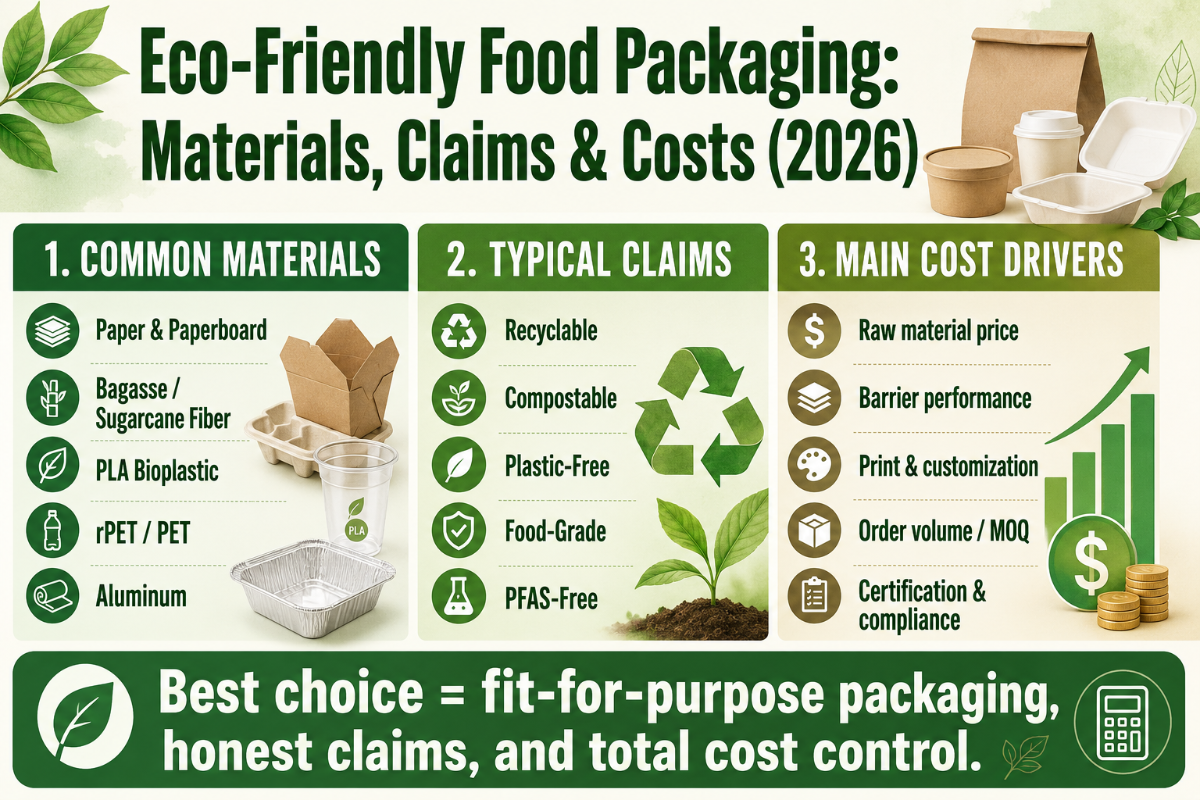
What makes a food package eco-friendly is one with smaller environmental consequences throughout its life than the conventional, petroleum-based alternatives it’s replacing – as either compost, recyclables, or reused material. The hard part isn’t finding containers that claim to be green. It’s determining which ones live up to the hype once they’ve left your counter. Here’s the breakdown of materials, labels, arriving regulations, and some basic math to help you choose a container that will outlast your meal and stand up to green-leaning customers.
Eco-Friendly Food Packaging at a Glance
| Three genuine pathways | Compostable · Recyclable · Reusable |
| Core materials | Bagasse, molded fiber, PLA, kraft/recycled paper, recyclable PP & rPET |
| Labels that mean something | ASTM D6400 / D6868, EN 13432, BPI, “PFAS-free” |
| 2026 driver | PFAS bans turning mandatory (EU PPWR Aug 12, 2026 + 12 U.S. states) |
| The catch | Only a minority of U.S. households have curbside composting access — disposal access decides real impact |
What Makes Food Packaging “Eco-Friendly” (and What Doesn’t)

An eco-friendly package is one that – from raw materials sourcing, through manufacturing and into disposal – has a lighter environmental footprint than its petroleum-plastic alternative. That, broadly, translates into three viable disposal methods: the package is either composted (breaking into soil under specific conditions), recycled (rejoining material-recovery supply chains), or reused (kept in rotation over and over). Anything else is just wrapping.
The issue is that “eco-friendly” and “green” aren’t legal terms with defined meanings. Some packaging may be made from plant-based materials but still go to a landfill where no organism will ever break it down. Therefore, the only useful question for buyers is: “Which of the three realistic routes does this material take, and where is that path available to my customers?” Hold this question throughout this guide.
💡 Key takeaway
Producing the package from plant-based sources – like sugarcane, corn or wood – decreases the upfront environmental impact, but a product must actually achieve the end state of the three feasible routes. And the routes are not equal: the EPA waste hierarchy ranks reuse above any single-use option, compostable or recyclable.
Compostable vs. Biodegradable vs. Recyclable: Where Your Packaging Actually Ends Up
These three terms – compostable, biodegradable, and recyclable – aren’t synonyms, and it’s a common and costly mistake for purchasers to treat them as such. A package that is compostable is verified to break down into compost under the specific conditions – almost always the hot, managed environment of a commercial composting facility. Biodegradable simply means the package will eventually break down, with no guarantee of when or under what conditions. Recyclable means the material is theoretically suitable for re-processing by a materials recovery system – if one exists in your region and accepts the material. The gap between these claims and the reality is why so much packaging calling itself “green” misses the mark.
The End-of-Life Reality Check
There are four likely final destinations for every piece of food packaging. When you are purchasing it, you want to take a moment to predict realistically what route your packaging actually takes to keep from being environmentally fooled.
| Destination | What actually gets there | The access reality (U.S.) |
|---|---|---|
| Industrial compost | Certified compostable fiber & bioplastics, if collected separately | Few households have curbside composting access; a 2023 BioCycle survey found ~56% of curbside organics programs reject compostable packaging outright |
| Curbside recycling | Clean recyclable PP (#5) and PET/rPET (#1) where accepted | Packaging & containers recycled at ~54% overall, but only ~13% of plastic packaging is actually recycled |
| Landfill / incineration | Most compostables that miss collection; mixed or soiled items | Where the majority actually ends up — in 2019 only ~5% of U.S. food waste was composted |
| Litter / waterways | Escaped lightweight items of any material | No material composts in open water; “marine biodegradable” claims rarely hold |
This is the counterintuitive insight that most guides miss: A compostable container that lands in a landfill is not a small victory-it can be a liability. Landfill environments are anaerobic (oxygen-poor), and a certified compostable bioplastic like PLA biodegrades negligibly there. It behaves much like petroleum plastic for years, and on the rare occasions it does break down anaerobically, it releases methane — a greenhouse gas roughly 28 times more potent than CO₂ over a century. In a dry landfill, biodegradable packaging can last almost as long as the petroleum product it was meant to replace. The disposal site matters as much as the material.
Can I compost “compostable” plastic in my backyard bin?
Rarely and this confuses well-meaning purchasers all of the time. There’s a consensus of three primary certifications (ASTM D6400, ASTM D6868, Europe’s EN 13432) for composting, all of which test for what is known as “industrial composting”: ~90% breakdown within 180 days in the -approximately-55-60˚C (130-140˚F) environment that a well-run composting facility maintains. backyard bin usually doesn’t approach that kind of heat; there is currently no US ASTM standard specifically for home composting. In fact, the “home-certified” standard is actually from Europe’s TÜV Austria and is known as “OK Compost HOME”. If it doesn’t claim home-certified, consider compostable to mean industrial compostable and be sure that your waste hauler accepts it.
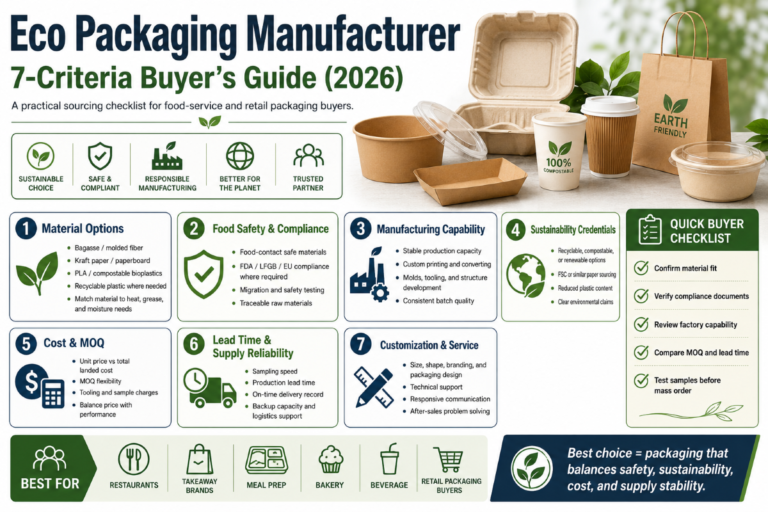
The Material Lineup: Bagasse, Molded Fiber, PLA, Paper, and Recyclable Plastics
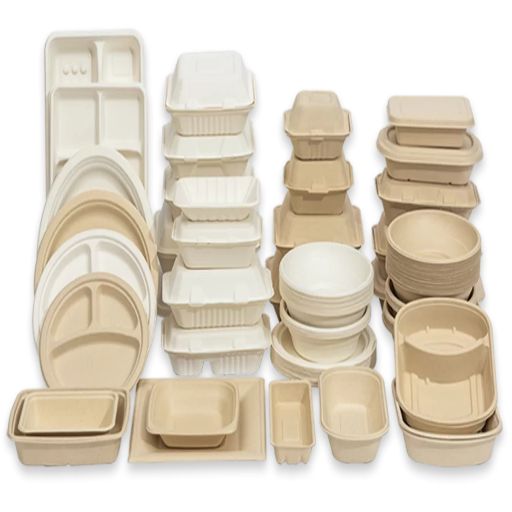
Eco food packaging is not one material; it is a shelf of materials with very different strengths. The 10-Material Eco Packaging Index below compares the common options across the metrics that decide a purchase — renewable source, the food they suit, heat ceiling, the end-of-life they are certified for, and rough relative cost.
| Material | Source | Best for | Heat limit | Certified end-of-life | Cost (1–5) |
|---|---|---|---|---|---|
| Bagasse | Sugarcane fiber (byproduct) | Hot meals, plates, clamshells | ~200°F+ (supplier-rated, varies by wall thickness); microwave & freezer safe | Industrial compostable (D6400) | 3 |
| Molded fiber (coated) | Recycled paper / plant pulp | Trays, bowls, protective packs | ~200°F+ with barrier coat | Compostable or recyclable* | 3 |
| PLA | Corn/sugar (polylactic acid) | Cold cups, lids, deli, salads | Softens ~113–131°F — cold only | Industrial compostable (D6400) | 4 |
| CPLA | Crystallized PLA | Hot lids, cutlery | ~185°F | Industrial compostable | 4 |
| Kraft paper (coated) | Wood pulp | Bags, wraps, dry/warm foods | ~185°F coated | Recyclable / compostable | 2 |
| Recycled paperboard | Post-consumer fiber | Boxes, sleeves, cartons | Dry/ambient | Recyclable | 2 |
| rPET | Recycled PET plastic | Cold deli, clear clamshells | Cold/ambient | Recyclable (#1) | 3 |
| Recyclable PP (#5) | Polypropylene (recycled-content option) | Hot soups, reusable-grade tubs | Microwave-safe to ~230°F | Recyclable where #5 accepted | 2 |
| Wheat straw / bamboo | Agricultural fiber | Plates, bowls, cutlery | ~200°F | Compostable | 3 |
| PHA | Microbial-fermented polyester | Films, coatings (emerging) | Varies by grade | Marine + industrial compostable | 5 |
Coating options have a significant impact on recyclability vs. compostability. A recyclable paper tray with a compostable barrier is unlikely to compost properly and will not be accepted in most recycling streams. Match coatings with local streams when possible.
Two material notes buyers underestimate. First, PLA looks like clear plastic but is the opposite of heat-tolerant — it begins to soften around 113°F, so a hot latte or steamy curry will warp it. Operators usually split inventory by station: PLA for cold cups, and bagasse or coated fiber for anything hot. Second, molded fiber’s grease resistance historically came from added PFAS “forever chemicals.” The 2024-2026 reformulation wave replaced them — products such as Sabert’s PULPUltra now reach hot-food grease resistance using a >95% bagasse body with a thin barrier spray and no intentionally added PFAS.
Matching Eco Packaging to the Food: Hot, Cold, Wet, Greasy, Frozen
The fastest way to a failed switch is to pick a product for its eco credentials while ignoring the physics of the food going into it. The chart below maps the five food conditions that break containers to the materials that hold up — with the temperature reality attached.
The Heat-Tolerance Pairing Table
| Food condition | Recommended eco material | Why / temperature note |
|---|---|---|
| Hot / steamy (soups, fried, curry) | Bagasse, coated molded fiber, recyclable PP, CPLA lids | Need ≥200°F tolerance; bagasse is commonly supplier-rated to ~200°F+ (varies by thickness). Vent the lid — trapped steam makes fiber soggy. |
| Cold (salads, drinks, desserts) | PLA, rPET, paper with PLA lining | PLA is clear and rigid when cold; never use it for anything above ~110°F. |
| Wet / saucy (broths, marinades) | Coated bagasse or PP with tight lid | Uncoated fiber wicks liquid; very saucy items need a lined or PP container. |
| Greasy (pizza, fries, burgers) | PFAS-free grease-resistant fiber or kraft | Confirm the grease barrier is PFAS-free — the old default was a forever chemical. |
| Frozen (prep, storage) | Bagasse, PLA, molded fiber | Most fiber and bioplastic tolerate freezing; check for cracking on rigid PLA. |
Does eco-friendly packaging hold up as well as plastic for hot or liquid foods?
For hot solids and most warm meals, yes — bagasse and coated molded fiber have caught up with foam and rigid plastic on heat and strength, which is why regions that banned polystyrene foam adopted fiber so quickly. Two honest weaknesses remain: thin uncoated fiber struggles with standing liquid and steam (it goes soggy), and PLA simply cannot take heat. Operators who succeed tend to keep one recyclable PP option for the soupiest items, use vented or properly coated fiber for hot food, and reserve PLA strictly for cold service. Matched correctly, most performance complaints disappear.
Reading the Labels: Compostable Certifications and PFAS-Free Claims

A certification: A promise the composter will believe vs. a promise the regulator might question. There are only four marks that really mean anything; one has recently begun to stand on its own.
- ASTM D6400 – This is the U.S. standard for a single industrial-compostable material (think of a fork or cup) and mandates roughly 90 percent biodegradation in 180 days.
- ASTM D6868 – The standard for items that have had a laminated film or coating applied over paper/fiber, like most coated cups and trays.
- EN 13432 – The European equivalent standard for industrial-compostable materials, basically the same standards and timeframes as ASTM D6400.
- BPI (Biodegradable Products Institute) – the third party verification program composters and many retailers accept; it tests against ASTM standards. The Austrian organization TÜV Austria’s OK Compost line even offers an explicit HOME tier.
📐 Engineering Note
Compostable is different than “PFAS-free”; a fiber container can have an official compostable certification but also contain PFAS chemicals or be PFAS-free while being strictly recyclable. In the EU under the PPWR, PFAS-free means fewer than 25 ppb of any one PFAS, less than 250 ppb total, and a maximum of 50 ppm fluorine total. When shopping, make sure to ask for both the certificate of composting, and a declaration of PFAS content-these are distinct items.
Greenwashing: Telling Real Eco Packaging From Marketing
The FTC’s Green Guides have established a clear threshold: If a product is described as simply “degradable,” it implies the whole thing must break down after its intended use in about a year. Any packaging intended for the landfill or the incinerator should never be called simply “biodegradable” at all. Similarly, a claim of “compostable” requires a qualifying explanation, either that it requires industrial composters that are inaccessible to the majority of customers, or that it can’t be safely home-composted. These guide lines turn most casual “green” messaging into legally actionable claims that come back to bite operators. Use these five flags to help you spot what doesn’t pass muster:
The 5 Greenwashing Red Flags
- Watch out for vague value judgments – “eco-friendly,” “green,” a leaf or sprout icon – any word that isn’t attached to a specific standard is merely ornamental.
- “Biodegradable” without a specific time period or conditions specified. (After all, everything eventually biodegrades.) Per the FTC, unless an explicit timeframe for break down has been defined, this wording makes no sense as a claim for items headed for the landfill.
- Absence of any third-party certification from ASTM D6400/D6868, EN 13432, BPI, or TÜV — as opposed to a “self-certification.”
- Home versus industrial trickery; an article might bear a big “compostable” on the package, but smaller print will add, “in an industrial compost facility” only, making it useless to most consumers.
- Described as “recyclable” in terms of material chemistry, but not by local practices; many municipalities reject some resins and forms (like coffee cups, even lined ones).
An extremely boring way to prevent a greenwashing lawsuit is this: associate a certifiable claim (e.g., BPI or D6400) with an actual end-of-life situation in your local region, and avoid stating things you cannot actually demonstrate with proof.
What It Costs and the Business Case for Switching
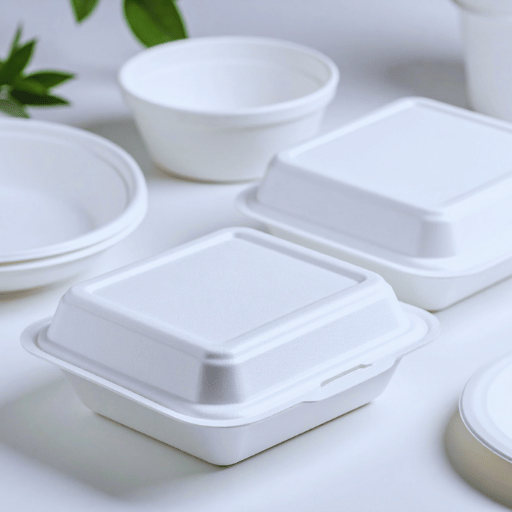
Although eco-friendly packaging can still come at a cost, it’s often not as drastic as it seems. By 2030, industry analysts anticipate the premium on PLA-based compostable film will narrow to roughly 20-40% over conventional plastic, potentially reaching parity on high-volume items by 2035, and next-generation PHA already sits at about a 15% cost advantage over PLA. Meanwhile, many foodservice items made from molded fiber are now cost-competitive with plastic.
How much more does eco-friendly packaging cost than conventional options?
Expect a unit price premium, but don’t fixate on it — the unit price is only about 30% of a packaging program’s true cost. Disposal is where the big swings happen: commercial composting services typically run $40 to $80 per ton, and costs quietly balloon in regions with poor collection infrastructure. On the upside, demand is real — about 73% of U.S. consumers say they would choose compostable packaging for a roughly 5% price increase, and avoided foam-ban penalties plus brand value largely offset the premium. The case is strongest where a mandate is forcing the shift (see below) and weakest where the switch is purely for marketing.
When making the change, all purchasers need to look at the – fully landed cost, taking into consideration units, disposal, and legal exposure. A manufacturer that runs both fiber and recyclable-plastic lines and can guide you through this fast-changing field is worth more than the cheapest single quote. Our eco-friendly food packaging solutions are built around that approach.
Regulations and Bans Driving the Switch (U.S. & EU, 2026)
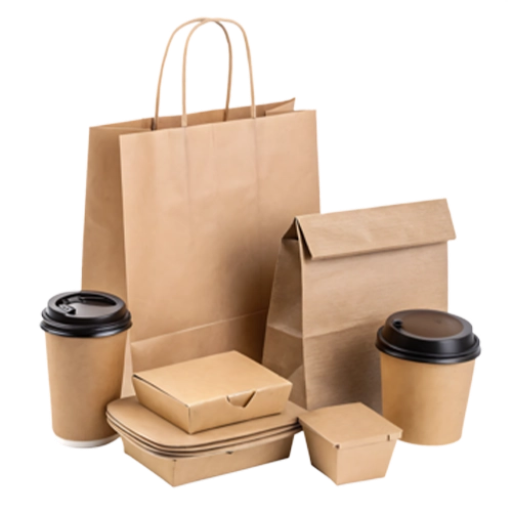
For a long time, sustainability was viewed as a brand choice. By 2026, many markets – in the EU and U.S. – will make it the law, with tight deadlines. In February 2025, the eu adopted the Packaging and Packaging Waste Regulation (PPWR), which includes the following ban on intentionally added PFAS in food-contact packaging: Effective August 12, 2026, Food contact materials cannot contain deliberately added PFAS above a limit of 25 ppb for any single PFAS, 250 ppb for any combination of PFAS, and 50 ppm total fluorine. This regulation does not allow grandfathered goods, meaning even if materials are created before the ban, they cannot enter the market afterward.
Individual U.S. states are moving quickly on a patchwork approach to regulating food packaging PFAS. By 2026, twelve U.S. states will have banned intentionally added PFAS in food packaging: California, Colorado, Connecticut, Hawaii, Maine, Maryland, Minnesota, New York, Oregon, Rhode Island, Vermont, and Washington. New York’s ban took effect at the end of 2022; California’s plant-fiber rule on January 1, 2023 (triggering at 100 ppm total organic fluorine); and Minnesota’s in 2024, ahead of its sweeping “Amara’s Law” phase-out. Maine’s plant-fiber packaging rule takes effect in May 2026. Polystyrene-foam foodware bans add a parallel layer in a growing list of states.
⚠️ Action item
If you sell into the EU or any of these states, audit your current packaging for PFAS-free status and certified end-of-life before your next procurement cycle – not after a deadline passes.
What’s Changing in 2026 and Beyond
Industry analysts project the eco food packaging market growing from roughly $225 billion in 2026 toward $450 billion by the mid-2030s – on the order of 8% a year, with the compostable-and-biodegradable segment growing faster still – though estimates vary by report scope. Three forces explain the curve, and each carries a near-term action.
Regulation is the accelerant. The 2026 pivot from voluntary to mandatory PFAS-free packaging – the EU’s August deadline plus the widening U.S. state bans – is pulling demand forward. If you have not started reformulating, the runway is now measured in months.
Materials are catching up. The technical story of 2024-2026 is PFAS-free grease resistance: early non-fluorinated coatings failed hot-grease tests, but current bagasse-and-barrier systems pass, and thermoformed molded fiber has reached cost and performance parity with plastic for many trays and bowls. Expect paper and molded fiber to keep taking share as foam bans spread.
Infrastructure remains the unsolved problem. Compostable materials will keep outrunning the collection systems that make them meaningful until curbside composting access grows well beyond today’s minority of households. For the next few years, the smartest buyers will hedge – choosing recyclable formats where recycling streams are strong and compostable formats only where composting is genuinely available.
“We see the same pattern with foodservice buyers worldwide: the material almost always works – the disposal route is what makes or breaks the sustainability claim. We steer customers toward the format their region can actually process, whether that is certified-compostable fiber or recyclable, PFAS-free PP, rather than the option that simply photographs greenest.”
Frequently Asked Questions
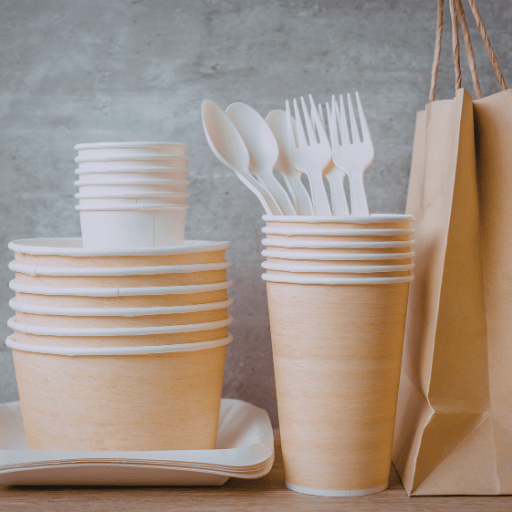
What makes food packaging truly “eco-friendly”?
View Answer
Genuinely eco-friendly packaging completes one of three real pathways after use: it is certified compostable and reaches a composting facility, it is recyclable and accepted by a local stream, or it is reusable. Renewable materials such as bagasse or PLA help on the front end, but a container only earns the label if its end-of-life route actually exists where customers dispose of it.
Are paper food containers compostable?
View Answer
Uncoated paper and kraft are generally compostable and recyclable. The complication is the coating: many cups and trays use a plastic or bioplastic liner for moisture and grease resistance. A PLA-lined paper cup is industrial-compostable but not recyclable, while a polyethylene-lined cup is neither. Check for an ASTM D6868 mark, which covers coated paper products specifically.
Are compostable containers recyclable?
View Answer
No — and putting them in the recycling bin causes problems. Compostable bioplastics like PLA are not compatible with the PET or HDPE recycling streams and are treated as contaminants that can spoil a batch. Compostable items belong in an industrial-compost collection, not curbside recycling. When in doubt and no compost collection exists, they unfortunately go to landfill.
How should I store PLA and other bioplastic containers?
View Answer
Keep PLA cool and dry, away from direct heat or sunlight, since it softens near 113°F. Stored properly, sealed stock stays stable for a year or more.
Do customers actually care about sustainable packaging?
View Answer
The data says yes, with a limit. Surveys consistently find a large majority of U.S. consumers — around 73% — prefer compostable or sustainable packaging and will accept a modest price increase of roughly 5% for it. The caveat is credibility: customers increasingly recognize vague claims, so a certified, honest claim builds loyalty while greenwashing now invites backlash and even regulatory complaints.
What is the most eco-friendly food packaging?
View Answer
There is no single winner — it depends on the food and your local waste infrastructure. Reusable packaging has the best impact where return systems exist; otherwise, recyclable PP or rPET wins where recycling is strong, and certified-compostable bagasse or fiber wins where composting collection is available.
How do I dispose of compostable to-go containers?
View Answer
Put them in a commercial-compost or municipal organics collection if your area offers one — that is the only route where they break down as designed. Do not place them in curbside recycling, where they contaminate the plastic stream, and avoid backyard bins unless the product is specifically home-certified, since most need the sustained heat of an industrial facility. If no compost collection exists in your region, they will end up in the landfill, which is exactly why confirming local access before you buy matters so much. The most useful thing a brand can do is print clear disposal instructions on the package itself.
Need help matching eco materials to your food, your market’s regulations, and your local waste streams?
Why We Wrote This
Wonhi (Shandong Wanhui) has manufactured food packaging containers for 20 years, running thermoforming, extrusion, and injection lines that process over a million units a day for restaurants, delivery brands, and institutional canteens across five continents. We make recyclable PP and PET food packaging and build custom molds – so we wrote this guide the way we advise customers: material-neutral, evidence-first, and honest about the disposal gap, because a packaging claim that fails at end-of-life helps no one.
References & Sources
- National Overview: Facts and Figures on Materials, Wastes and Recycling — U.S. Environmental Protection Agency
- 2025 Limited Scope Technical Report — Compostable Materials — U.S. Department of Agriculture (AMS)
- Environmental Claims: Summary of the Green Guides — U.S. Federal Trade Commission
- Packaging and Packaging Waste Regulation (PPWR) — European Commission
- Life-cycle assessment of bioplastics: production to end-of-life — National Library of Medicine (PMC)
- State PFAS Laws Tracker (2025–2026) — MultiState