Get in touch with Wanhui Company

Wholesale Meal Prep Containers — Disposable, Bulk Pricing & Custom Logo from Wanhui
Wholesale meal prep containers in PP, MFPP, PET and cornstarch – assembled on 86 manufacturing lines at our ISO 22000:2018 + ISO 9001:2015 lead-certified plant, FOB shipped Qingdao, custom logo and mold options available.
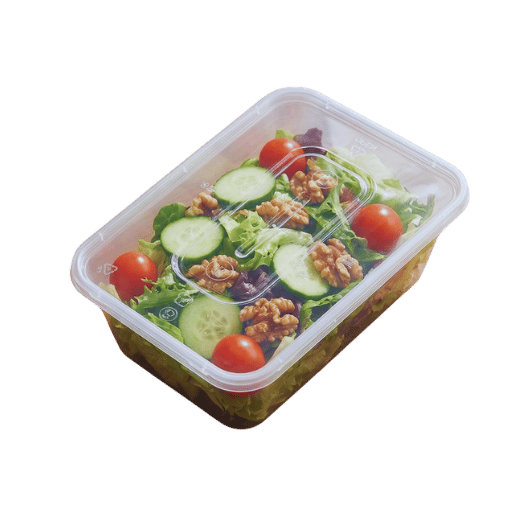

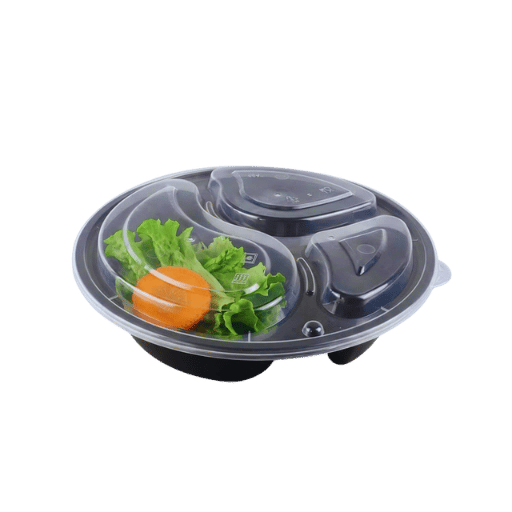
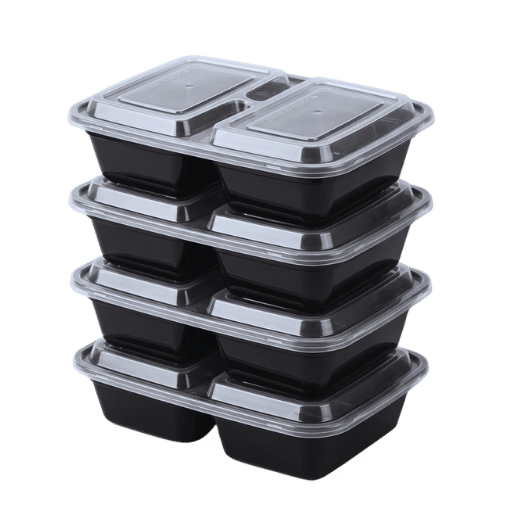

- Materials
- PP · MFPP · PET
Cornstarch · IML - Sizes
- 280 ml
– 3,500 ml - Compartments
- 1 / 2 / 3 / 5
- MOQ Start
- 5,000 PCS
per SKU - Lead Time
- 25-35 days
standard - Custom Logo
- Print + IML +
custom mold
Why B2B Buyers Switch to Wanhui Meal Prep Containers
Most procurement teams already know the meal prep container category. The hard part is finding a single supplier who can quote PP, MFPP, PET and biodegradable lines side-by-side, ship a 40-foot container without breakage, and turn around a custom-printed mold inside 35 days.
Quote fragmentation
Five separate suppliers for five materials — five MOQs, five lead times, five compliance audits, five different food container ranges to cross-reference.
Sample-to-mass drift
First-time importers approve a single golden sample, then mass production drifts on color, gauge, or compartment dimensions.
Mold ownership ambiguity
Custom mold paid for by the buyer, but ownership clauses absent from the manufacturer contract — making future supplier swaps painful.
Compliance discovered too late
FDA, LFGB or commercial composting standards surface only after the first customs hold or platform takedown.
Wanhui addresses these by consolidating five material lines, two patent-protected designs, and ISO 22000:2018 + ISO 9001:2015 systems under one Shandong-based factory operation.
0 yrs
Experience
Specialized in food packaging containers
0 lines
Equipment
20 thermoforming + 6 sheet + 60 injection
0 t/day
Raw Capacity
Sheet material output capacity
0M+
Daily Output
Finished container throughput
0+
Workforce
Production, QC, logistics, sales
Sizes & Compartments — From 280 ml to 3,500 ml, 1-5 Compartment Options
Meal prep portion control starts with picking the right cubic inches per dish. Our active SKU range covers four families that map directly to common meal architectures.
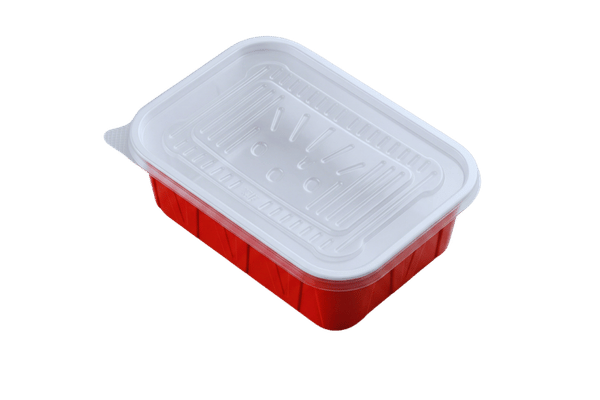
Hero · Multi-compartment
Red & White V-Ribbed Blister Pack
- 280 – 3,000 ml
- 1 / 2 / 3 compartments
- V-ribbed reinforcement, cat-ear lid tabs
- Food-grade PP, U-shaped vents
- Microwave-safe

Black Rectangular MFPP, Hinged
Cold prep / salad
- 700 – 1,000 ml
- 6×6 / 8×8 / 9×6 / 9×9 inch footprints
- One-piece hinge, no separate lid
- MFPP — microwave + oven safe to 220°F
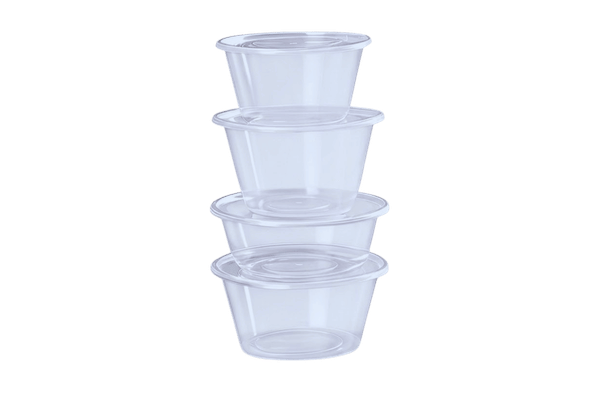
Clear Round PET Bowl, 3-Caliber Series
300 – 1,750 ml across 120 / 150 / 180 mm calibers
- Crystal-clear lid, anti-fog option
- Stackable to 50% storage savings
- Compostable
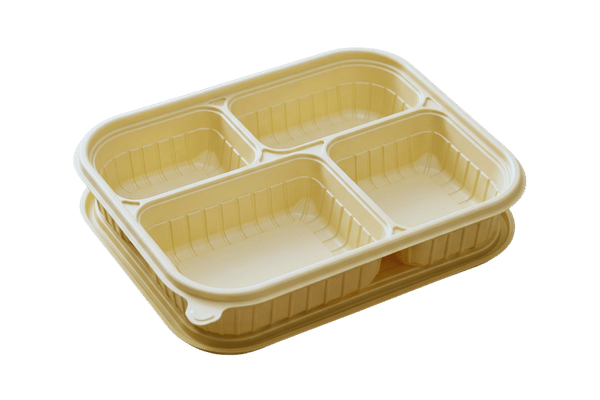
Compostable
Cornstarch Multi-Compartment Tray
- 350 – 1,500 ml
- 1 / 3 / 5 compartments
- ASTM D6400 + EN 13432 compostable
- Plant-based, BPA-free
Compartment Sizing Cheat Sheet — Recommended dimensions per meal type
Lifestyle needs to match personal dish style, not just container shell size, so here's a Matrix featuring ideal compartment volume and depth for your preferred composition, before samples are purchased.
| Meal architecture | Entrée bay (ml) | Side bay (ml) | Sauce well (ml) | Recommended compartments |
|---|---|---|---|---|
| Protein + 2 sides (fitness meal prep) | 350-450 | 180-220 × 2 | 30-50 (optional) | 3 + 1 |
| Single-portion entrée bowl (Asian / pasta) | 650-900 | — | 50-80 (paired sauce cup) | 1 (deep) |
| Salad + protein topper | 500-700 | 150-200 (topper) | 30-60 dressing | 2 + 1 |
| Bento-style 5-cell (kids / catering) | 250-350 | 120-180 × 3 | 30-50 | 5 |
Material Options — PP, MFPP, PET, Cornstarch & IML Compared
Choosing between five materials and one factory seldom comes down to "what's cheapest:" it boils down to "what tolerates my use case at most affordable stable price." the matrix below forms the comparison framework no competing GO-LIVE external seller page publishes.
| Material | Heat ceiling | Cold floor | Leak rating | Oil resistance | Microwave | Dishwasher | Compostable | Relative $/unit |
|---|---|---|---|---|---|---|---|---|
| Standard PP (injection) |
≤120°C | -20°C | ★★★★ | ★★★ | Yes | Yes | No | $ (lowest) |
| MFPP (mineral-filled) |
≤104°C / 220°F | -25°C | ★★★★ | ★★★★★ | Yes | Yes | No | $$ (mid) |
| PET (thermoformed) |
≤70°C | -40°C | ★★★ | ★★ | No | Hand wash | Recyclable (PETE 1) | $ (low) |
| Cornstarch / PLA | ≤85°C | -10°C | ★★★★ | ★★ | ≤60s reheating | No | ASTM D6400 + EN 13432 | $$$ (premium) |
| High-end thermoformed PP |
≤120°C | -20°C | ★★★★ | ★★★★ | Yes | Yes | No | $$ (mid) |
| IML-printed PP (in-mold label) |
≤120°C | -20°C | ★★★★ | ★★★★ | Yes | Yes | No | $$$ (premium) |
When to choose each — at a glance
PP (standard)
Default for high-volume disposable food container lines where unit cost dominates. Suits restaurant takeout and canteen reheating where the customer microwaves once and discards.
MFPP (mineral-filled)
Choose when food delivery routes hit 60+ minutes and the buyer expects oven-safe reheating. Mineral fillers add structural rigidity that cuts crush failures during transport in stacked cases.
PET (thermoformed)
Cold-chain only — salads, fruit cups, dressings. Freezer safe to -40°C with crystal-clear airtight lids that sell visual food merchandising in retail-ready meal prep.
Cornstarch / PLA
For brand commitments to compostability or sustainability mandates. Note: these break down only at industrial composting facilities, not backyard piles.
IML-printed PP
For private-label or DTC food service brands where the container is brand surface area. Photo-quality graphics survive dishwasher safe cycles because they are molded into the wall, not applied as an adhesive label.
High-end thermoformed PP
For chain restaurant private-label or premium meal kit brands wanting a thicker, more flexible feel than injection PP. Same temperature envelope, leak resistant, slightly higher unit cost.
"We tested mineral-filling ratios from 12% to 28% before locking the MFPP recipe used in our hinged lid lines. Below 18% the heat-ceiling drops too low for reliable microwave use; above 24% the impact resistance starts to fall in cold storage. The recipe sits at 22% because that's the band where every spec passes simultaneously."
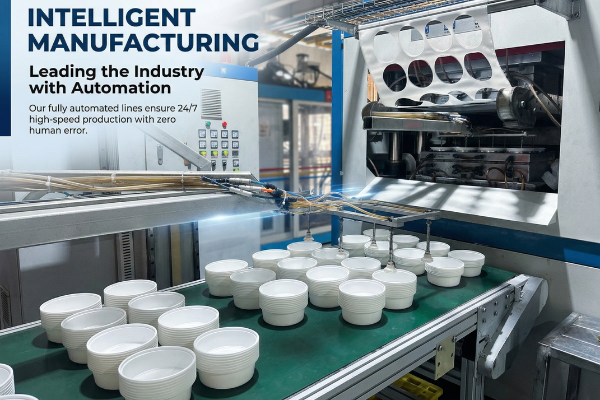
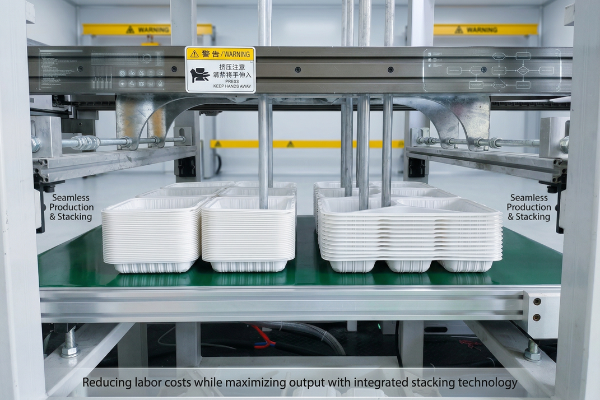
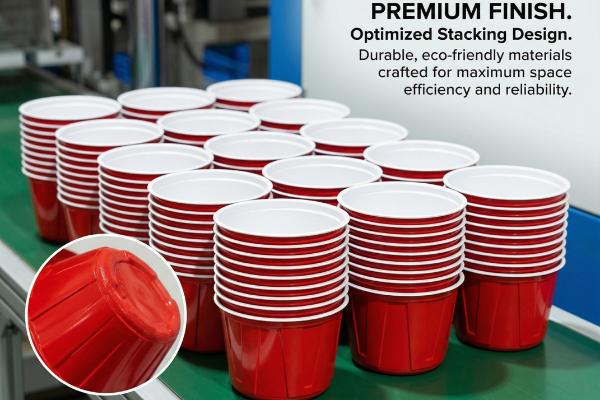
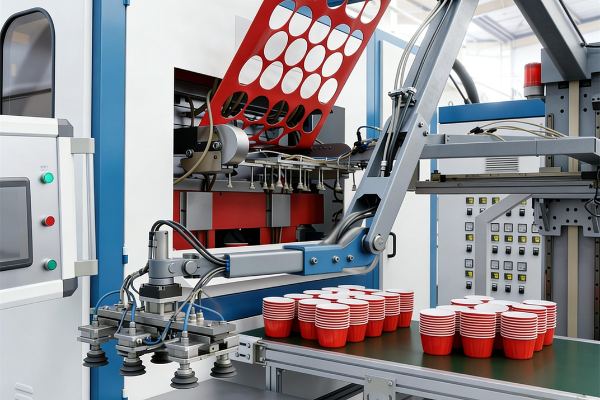
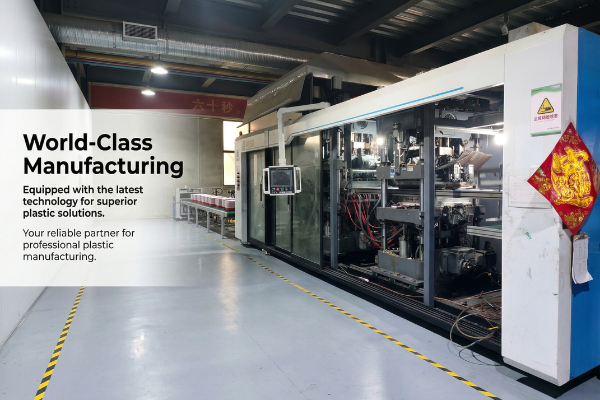
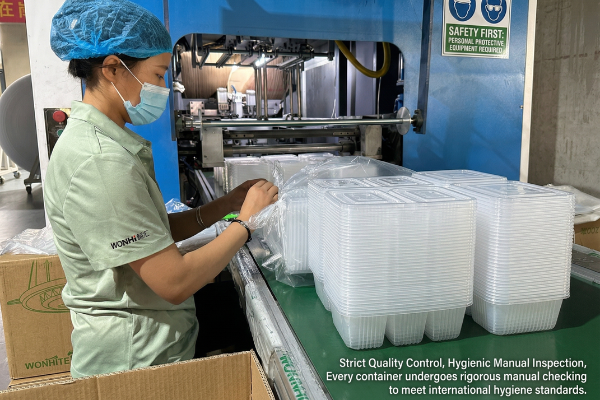
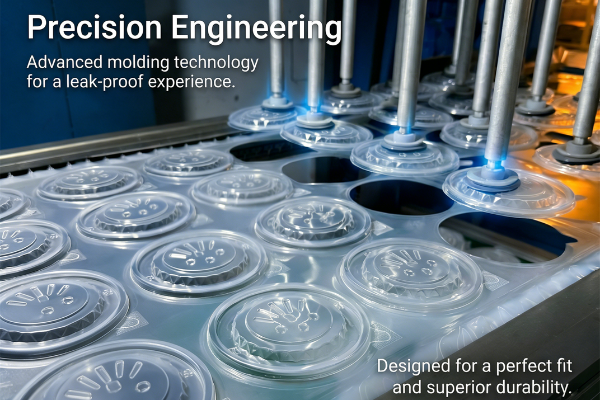
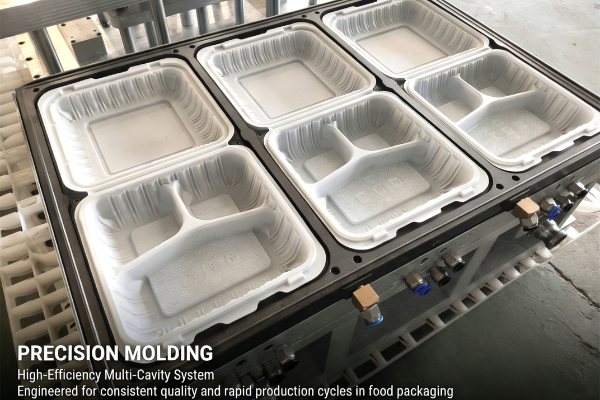
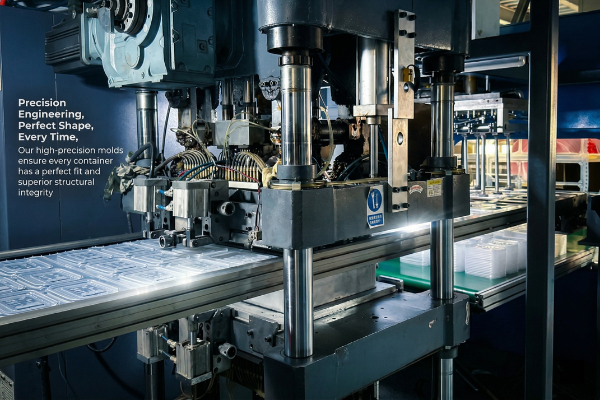
Meal Prep Containers Factory

✕
❮
❯
Specifications — Side-by-Side Spec Comparison
This is the table that the procurement team would like prior to sending an RFQ. Each row is a hero SKUs that is live on our Shandong manufacturing line. Case quantities are actual shipping configurations, they are not theoretical maximums.
Filter Matrix
| SKU code | Material | Capacity | Compartments | Footprint | Microwave | Freezer | Stack-save | PCS / case |
|---|---|---|---|---|---|---|---|---|
| RW-V-280-1 | PP (V-ribbed) | 280 ml | 1 | 4.5 × 3.5 in | Yes | Yes | 50% | 1,000 |
| RW-V-650-1 | PP (V-ribbed) | 650 ml | 1 | 5.4 × 4.0 in | Yes | Yes | 50% | 500 |
| RW-V-900-3 | PP (V-ribbed) | 900 ml | 3 | 9.0 × 6.0 in | Yes | Yes | 40% | 300 |
| BLK-RECT-32 | MFPP | 950 ml (32 oz) | 1 | 8.75 × 6.18 in | Yes (≤220°F) | Yes | 45% | 150 |
| BLK-COMP-32 | MFPP | 950 ml (32 oz) | 2 | 8.75 × 6.88 in | Yes (≤220°F) | Yes | 40% | 150 |
| MFPP-HG-991 | MFPP (hinged) | 900 ml | 1 | 9 × 9 in | Yes | Yes | 50% | 150 |
| CLR-150-800 | PET | 800 ml | 1 | 150 mm dia | No | Yes (-40°C) | 55% | 200 |
| CLR-180-1500 | PET | 1,500 ml | 1 | 180 mm dia | No | Yes | 50% | 200 |
| BIO-CS-3-900 | Cornstarch | 900 ml | 3 | 9.0 × 6.0 in | ≤60s only | Yes | 40% | 250 |
| IML-PP-700 | IML PP custom | 700 ml | 1 | 7.0 × 5.0 in | Yes | Yes | 45% | 300 |
Bulk Ordering — MOQ, FOB Pricing & Custom Branding
Like most Chinese factory sites, prices are generally "contact for quote," so we've posted FOB Qingdao tier ranges for the four hero SKUs. Procurement shouldn't have to wait three days to know whether a project pencil out.
Tier Pricing Transparency — FOB Qingdao ranges by MOQ
Values below are for 2025 production runs at standard color (no Pantone match), single color logo print where noted, 30 day lead time. Final pricing is affected by resin index at time of order and any custom mold amortization.
| Hero SKU | MOQ 5,000 PCS | MOQ 10,000 PCS | MOQ 50,000 PCS | MOQ 100,000 PCS |
|---|---|---|---|---|
| 28 oz Black Rect MFPP, single bay | $0.10 – $0.13 / unit | $0.08 – $0.11 | $0.06 – $0.09 | $0.05 – $0.07 |
| 32 oz 3-compartment Rect MFPP, hinged lid | $0.18 – $0.22 | $0.15 – $0.19 | $0.12 – $0.16 | $0.10 – $0.13 |
| 24 oz Round Cornstarch Bowl, separate lid | $0.14 – $0.18 | $0.12 – $0.16 | $0.10 – $0.13 | $0.08 – $0.11 |
| 28 oz IML Custom-printed PP, single bay | $0.20 – $0.26 | $0.17 – $0.22 | $0.13 – $0.18 | $0.11 – $0.15 |
Pricing variables that contribute to your final figure: resin grade (food-grade PP vs MFPP additive ratio), color match ( standard black/white no charge; Pantone match adds ~5-8%), number of printing layers (single layer, 4-color process), and amortization of costs for custom mold (net-new shapes).
Cost-per-Meal Card · Industry Benchmark
Per-dish packaging cost — what the math looks like at scale. Industry guidance from ghost-kitchen operators is Packaging at 500-$2,000 monthly for small-to-mid delivery operations. Per-dish cost (not per-order - check by dish) usually falls in the levels below for our FOB tier pricing.
$0.06 – $0.09
Per dish at MOQ 50K PP single-bay (Wanhui FOB) — typical for high-volume meal subscription brands
$0.10 – $0.13
Per dish at MOQ 50K MFPP 3-compartment (Wanhui FOB) — typical for premium fitness or chef meal prep brands
$0.10 – $0.13
Per dish at MOQ 50K PLA cornstarch 3-cell (Wanhui FOB) — typical for sustainability-positioned meal kit brands
Range figures only - final cost based on final freight and customs duty, reorder increments. asked for a Cost-per-Meal worksheet for your menu structure.
Custom branding workflow
Three customization paths, each with different mold-cost and lead-time profiles:
01
Logo print on stock SKU
Single or multi-color silk-screen print on existing molds. No mold cost. +5-7 days to standard lead time. Your design retained.
02
IML in-mold label
Photo-quality graphics integrated into container wall, during injection. Mold expense amortized on a per-piece basis at MOQ 50K+. +10-14 days prototyping first-run.
03
Custom mold (new shape)
Entirely new container form factor designed for your brand. Mold expense $4,500-$18,000 per cavity, transfer of title on purchase order #2 or 3. First-lot prototype production 8-12 weeks lead time.
Container loading — pallet and freight planning
For a hinged single bay 28 oz MFPP (PCS/case 150, case 14 12 9 in): 20-ft. container = around 360 cases (54,000 PCS) in full pallet configuration; 40-ft. HQ = approx. 880 cases (132,000 PCS). Your warehouse manager can estimate receiving compared to these volumes - complete per-SKU container loading info available from spec sheet.
"We replaced our previous US-distributor PP supplier with Wanhui's MFPP hinged line for our 90-store delivery brand. Per-dish packaging cost dropped from $0.18 to $0.11 at our 80,000-unit monthly volume. The hinge stayed sealed through the door-handoff failure mode that broke the previous supplier's clamshells in 4-7% of deliveries."
Certifications & Manufacturing Authority
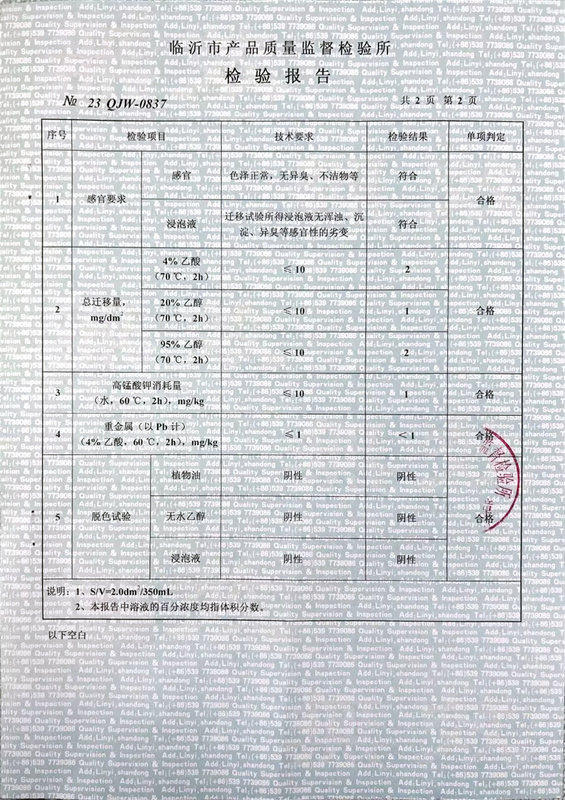
Buyer confidence in this category isn't solely established by cert logos - it's established by cert quantities a buyer can cross-reference, and evidence of production scale a buyer can review during a factory tour. We provide both.
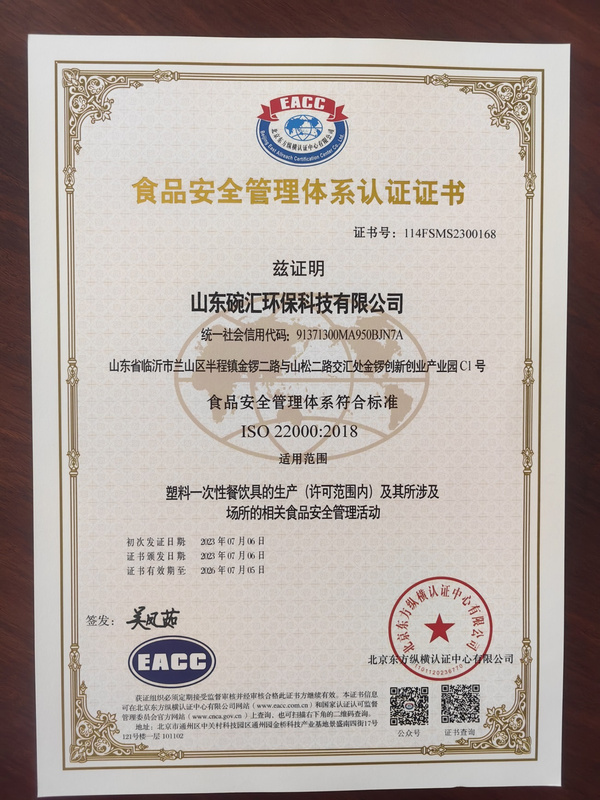
ISO 22000:2018
114FSMS2300168
Food Safety Management — issued by EACC
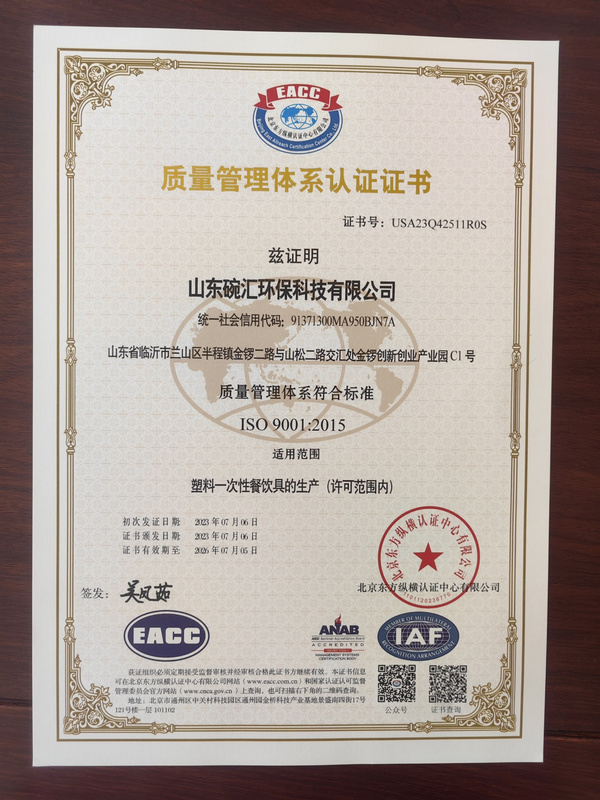
ISO 9001:2015
USA23Q42511R0S
Quality Management — EACC, ANAB-accredited, IAF MLA
CN Production License
鲁XK16-204-04717
Plastic food packaging — Shandong Market Supervision Admin
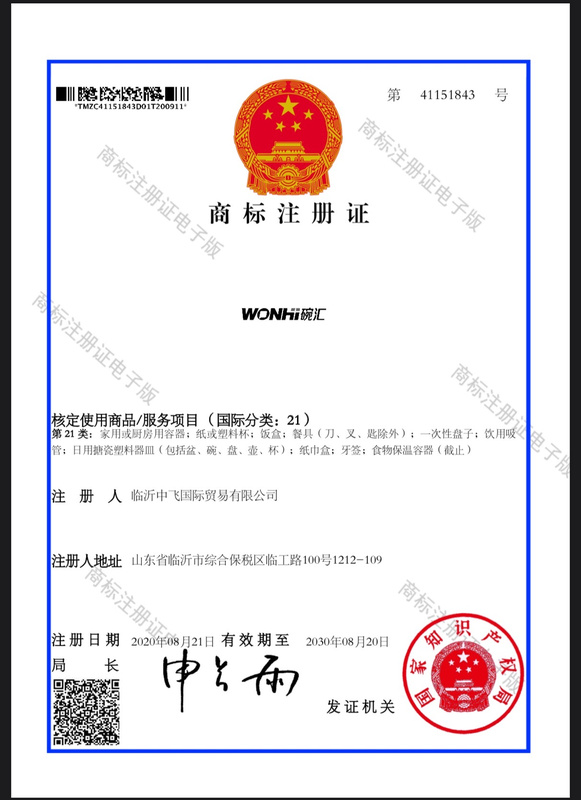
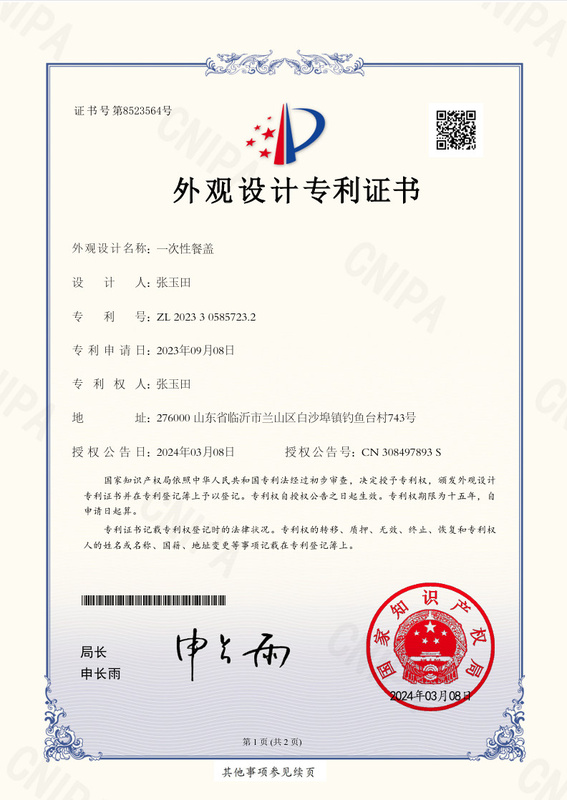
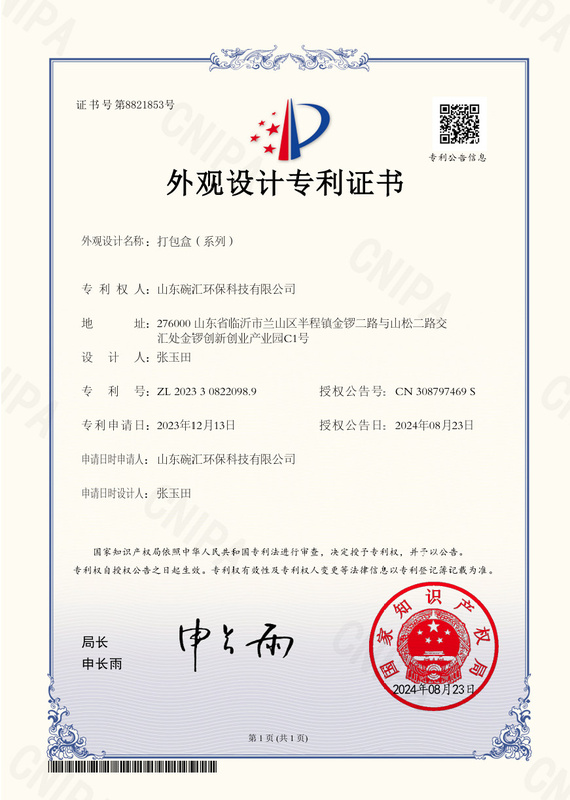
2 Utility Patents
Meal Box + Container Lid
China National IP Administration
Raw Material Standards
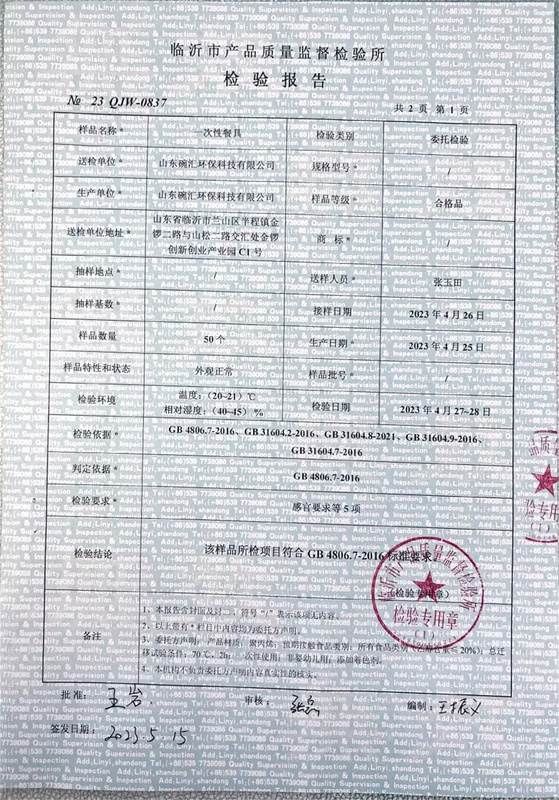
Raw material approval for our PP and MFPP lines conforms to FDA 21 CFR 177.1520 olefin polymer norm, the normal food-contact standard for polypropylene in North American buyers. LFGB and EU 10/2011 migration tests can be provided upon request for European shipments.
Our three-checkpoint QC ladder
- Incoming raw material verification — resin grade and mineral-filler ratio confirmed against the spec the original manufacturer commits to per batch.
- In-line quality control (DUPRO) at 30% and 70% of run completion - monitor color variation, gauge variation and compartment dimension to prevent batch blowout.
- Pre-shipment quality assurance (PSI) prior to balance payment allocation - default acceptance sampling using AQL, or 100% coverage for new SKUs or high-profile retail programs at an additional, per-piece fee.
Meal Prep Container Optimization Tools
Cost Per Meal Calculator
Calculate exact per-serving packaging costs to optimize bulk procurement ROI.
Access CalculatorMaterial Decision Wizard
Select optimal container materials based on temperature, durability, and compliance needs.
Start Decision WizardContainer Loading Calculator
Maximize freight efficiency and reduce logistical costs with optimal container configurations.
Calculate Freight LoadFrequently Asked Questions
What is the best material for bulk meal prep containers — PP, MFPP, PET or compostable?
Each material answers a different question — standard PP is the cheapest microwave-safe option dominating high-volume disposable meal prep, while MFPP adds heat-ceiling and crush resistance for premium delivery brands. PET is cold-chain only and ideal for salad and dessert lines. Cornstarch (PLA) suits brands with a sustainability mandate, accepting the commercial-composting caveat and the higher per-unit cost.
Are disposable meal prep containers microwave-safe?
Standard PP and MFPP containers are microwave-safe up to 104°C (220°F), while PET softens above 70°C and is not microwave-safe. PLA cornstarch tolerates only brief reheating no longer than 60 seconds. Always check the SKU spec sheet — the symbol stamped on the container base is the authoritative answer.
How many compartments do I need for portion-controlled meal prep?
For fitness meal prep with one protein and two sides, 3-compartment is the standard answer; for single-portion delivery (one bowl per dish), 1-compartment with a separate sauce cup is more efficient. Bento-style five-cell trays suit kids' meals and catering platters, and the Compartment Sizing Cheat Sheet above maps meal architecture to compartment counts and bay volumes.
What is the typical MOQ for wholesale meal prep containers from a Chinese factory?
Industry MOQ ranges from 5,000 PCS for stock SKUs to 50,000+ PCS for custom-printed or custom-mold runs. Wanhui's standard MOQ is 5,000 PCS per SKU on stock molds, with custom IML printing requiring 30,000+ PCS to amortize plate cost. Net-new mold development requires 50,000+ PCS as a first-run threshold.
What is the lead time for custom-printed meal prep containers?
Stock SKUs ship in 25-35 days from PO, logo print on stock molds adds 5-7 days, and IML adds 10-14 days for the first run before dropping to standard lead time on reorders. Custom mold development takes 8-12 weeks for the first golden sample, then 30-day production runs thereafter — peak season (Q4) adds 7-14 days.
Can I order free samples before placing a bulk order?
Yes — we send up to five sample SKUs free of charge for evaluation, with international courier cost buyer-paid (typically $35-$60 to North America or Europe via DHL or FedEx). Custom-printed samples cost $80-$150 depending on print complexity, and sample lead time runs 5-7 working days from request.
What food-safety certifications should B2B meal prep container suppliers have?
The minimum baseline for any food service manufacturer is ISO 22000 food safety management and ISO 9001 quality management; North American buyers should verify FDA 21 CFR 177.1520 raw-material compliance for PP, while European buyers should verify EU Regulation 10/2011 migration limit compliance. German market entry typically requires LFGB §30/31 testing per batch — Wanhui holds ISO 22000:2018 cert 114FSMS2300168 and ISO 9001:2015 cert USA23Q42511R0S.
How are bulk meal prep containers shipped from China — 20-foot or 40-foot container?
Most orders ship FOB Qingdao in either 20-foot or 40-foot HQ (high-cube) containers. As a planning benchmark, a 28 oz MFPP single-bay SKU loads approximately 54,000 PCS in a 20-foot or 132,000 PCS in a 40-foot HQ. Mixed-SKU consolidation is supported when total volume justifies a full container; LCL (less-than-container-load) is available for orders under 15 cubic meters at higher per-unit freight.
Can you build a custom mold for a unique meal prep container shape, and who owns the mold?
Yes — net-new mold development is one of our two core differentiators, with mold cost in the $4,500-$18,000 range depending on cavity count and complexity (paid as a one-time charge). Mold ownership transfers to the buyer on the second or third reorder, formalized in the supply agreement, which protects you against future supplier-switch friction — a common B2B sourcing pain we deliberately address upfront.
What is the cost per dish (not per order) in bulk meal prep packaging at scale?
Per-dish cost at MOQ 50,000 PCS at FOB Qingdao typically lands in the $0.06-$0.13 range depending on material and compartment count. Calculate per dish, not per order — a three-dish delivery with one container per dish costs three times the single-container price. Add freight, customs duty and last-mile to model true landed-per-dish cost.
Are biodegradable cornstarch containers durable enough for delivery routes?
Yes for routes under 60 minutes with moderate-temperature food — PLA cornstarch tolerates 85°C continuous and resists oil and moisture for typical delivery transit. Long-route hot food (chili, soup with extended hold times) is a closer call where MFPP is the safer choice, while cold dishes and ambient meals are well-served by cornstarch with no compromise.
Plastic vs glass meal prep containers — which makes sense at B2B scale?
Glass is rare at B2B meal prep scale because of three constraints: weight (20× heavier per unit, freight cost prohibitive), breakage rate (2-5% in transit even with bubble wrap), and microwave heating safety (thermal shock from hot food into cold glass). Reusable plastic (PP / MFPP) handles closed-loop subscription models well; disposable plastic dominates single-use delivery and meal-kit channels.