Get in touch with Wanhui Company

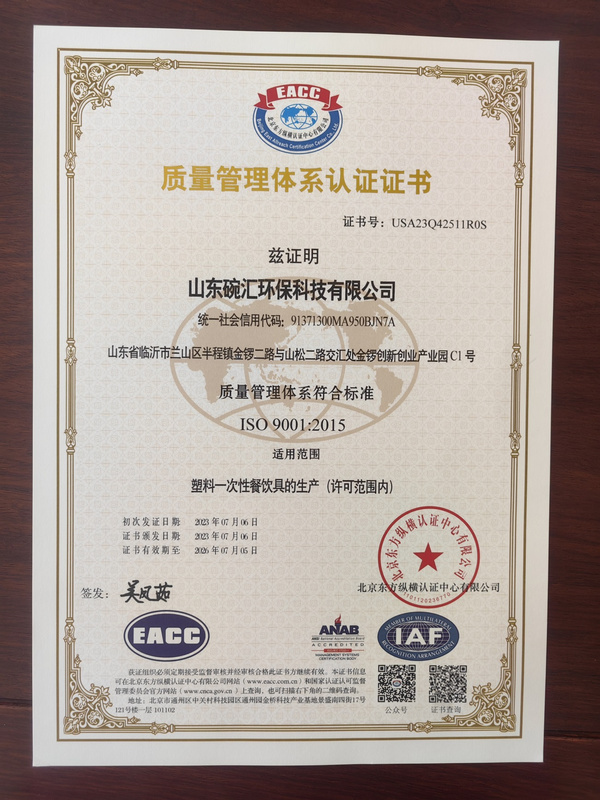
ISO 9001 Certified Manufacturer
Custom Take Out Containers
Factory-Direct Food-Grade Packaging for Restaurants, Delivery & Catering
Custom designed take outs containers manufactured to your specification by a 20 years PP and MFPP manufacturer. Logo printing, custom mold development and food grade material certified to GB 4806, FDA 21 CFR 177.1520 and EU 10/2011-shipped from Shandong to five continents.
- Manufacturing since 2005
- Daily output 1M+ units
- Catalog spans 6 product families
- Exports across 5 continents
- Production team of 200+
At a Glance — What You Get from Wanhui
280 – 3000 ml
Standard size range across PP & MFPP families
2–4 weeks
Lead time for Logo-printed orders
6–10 weeks
Lead time for Custom Mold Development
FOB / CIF
Flexible Incoterms via Qingdao & major ports
FDA / EU / GB
Tri-region food-safety compliance
Logo + Mold
Both customization tiers in-house
From Leaks to Brand Recognition — How Custom Take-Out Containers Solve the Real Pain
Custom take out containers can be food grade disposable packaging built to the brand owner’s specifications—material, size, color, printed logo or embossed mold—for restaurants, delivery operators, caterers, and institutional foodservice. Foodservice packaging covers an extensive product range, from pizza boxes and food trays to clamshells, printed takeout containers, to-go cups, and drink carriers. Custom containers fuse branding with leakage-and microwave-proof handling so that the take-out meal reaches the customer in tact, and the seller gains future brand inducement.
Common Purchasing Roadblocks
Most restaurateurs and purchasing managers hit the same brick wall. Cheap containers that melt or distort when heated in the microwave; terrible clamshells leak sauce into the transit bag; a provider disappears under a holiday load; a compostability seal used literally meant “compostable at a factory in the middle of nowhere”; or a buyer orders too much to realize a 10% volume discount, dollars are frozen for half a year, and then the next menu has a completely different size requirement.
The Broken Sourcing Model
The real problem is broken sourcing. Most “custom” package suppliers are printing Shops or aggregators . They do the design work and the container sourcing from a factory up stream. They haven’t got the mold, the resin, the extrusion line, lead time, schedule yada yada. When the factory misses schedule the printer has no say. When a customer asks “what’s the melting point of that grade of PP?” the printer doesn’t know, because the printer didn’t make the resin sheet.
DIRECT FACTORY
The Direct Factory Solution
Wanhui is doing exactly this at the source. We have 20 thermoforming machines, 6 sheet extrusion lines and 60 injection molding lines all under one roof in Shandong. We produce more than 30 tons of food grade polypropylene sheet per day and ship out more than 1 million finished containers per 24 hours. Printing of logo, development of custom molds, color matching of sheet, quality check are all done in-house–so when you talk to our sale engineer-you are talking to the factory.
Custom Take-Out Container & Food Container Range — Sizes, Materials, and Configurations
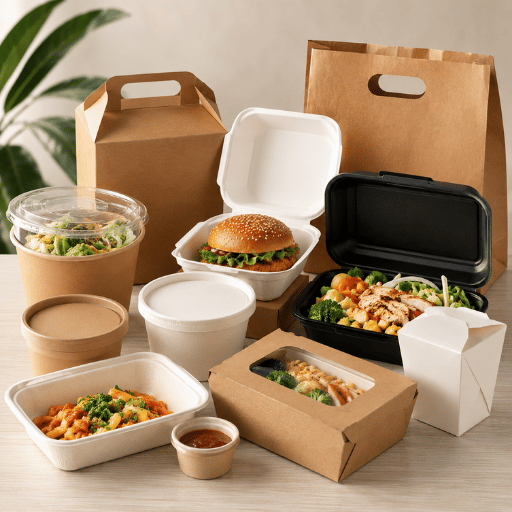
Wanhui’s custom take out container catalog spans six product families across food-grade PP and MFPP (modified food-grade polypropylene), with sizes from a 280 ml single-portion bowl to a 3000 ml family-meal box. Every family can be custom printed with your logo on the lid or sleeve, and every family supports custom mold development if you want a shape outside the standard library. Adjacent product lines — food trays, beverage carriers, pizza boxes, and eco-friendly takeout boxes — round out a single-supplier procurement footprint, so you can customize one PO across hot meals, cold deli, and drink packaging.
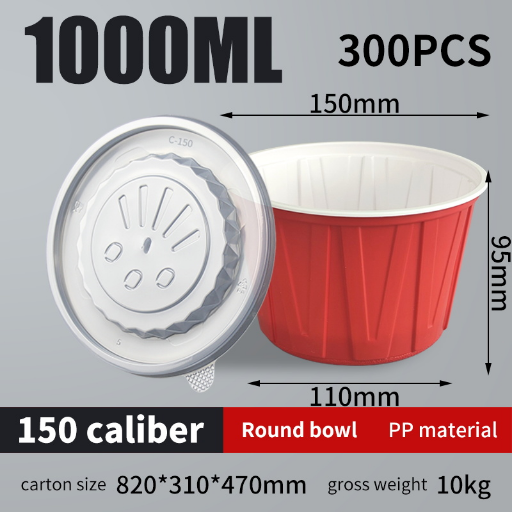
1. Red & White Blister-Pack (PP, V-Ribbed)
- Material 100% virgin food-grade PP
- Capacity 280 ml – 3000 ml
- Structure V-shaped reinforced ribs
- Lid Cat-ear easy-open tabs
- Vent U-shaped steam holes
- Best for Hot meal boxes, rice + saucy dishes
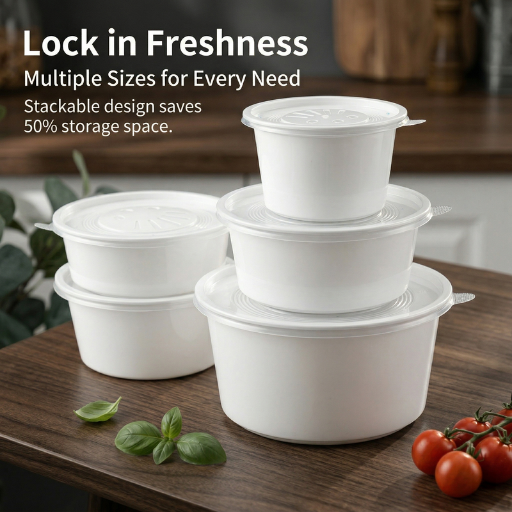
2. White Round Bowls (Stackable)
- Material BPA-free food-grade PP
- Capacity 300 ml – 1750 ml
- Storage Up to 50% space saving when nested
- Lid Secure snap-on, freshness lock
- Microwave Yes
- Best for Soup, congee, salad, meal prep

3. Clear Bowls + Blue Lids
- Caliber 120 / 150 / 180 mm
- Capacity 300 ml – 1750 ml across calibers
- Pack qty 200–450 pcs / case
- Seal Airtight, leak-resistant
- Visibility Crystal-clear PP body
- Best for Salads, fruit cups, desserts, deli
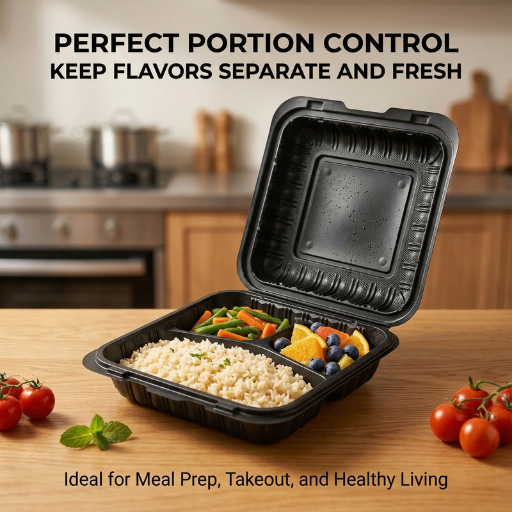
4. MFPP Hinged One-Piece Containers
- Material Modified food-grade PP (MFPP)
- Footprint 6″×6″ / 8″×8″ / 9″×6″ / 9″×9″
- Capacity 700 ml – 1000 ml
- Hinge Integrated one-piece (no lid loss)
- Heat Higher heat tolerance than standard PP
- Color Black or white
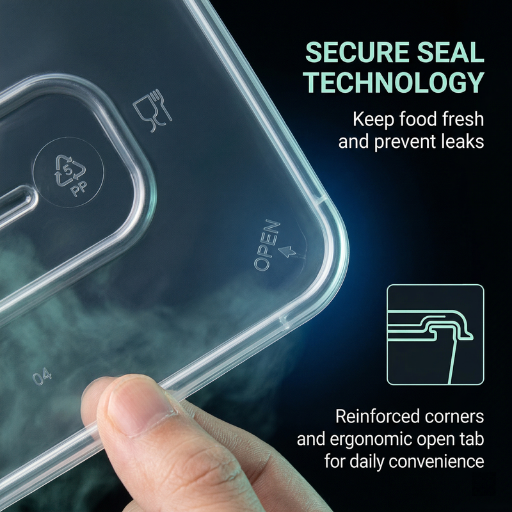
5. Disposable Plastic Containers
- Variants Clear and black
- Material Food-grade PP
- Capacity Multi-size range
- Use General disposable foodservice
- Microwave Yes (PP base)
- Best for Mixed cold/hot deli, retail prep

6. Custom Mold Development
- Process In-house design + tooling
- Geometry Unique footprint, embossed logo on lid
- MOQ Higher than Logo-printed (mold amortization)
- Lead time 6–10 weeks for first production run
- Use Differentiated brand packaging
Technical Deep-Dive — for Engineering buyers.
Our standard PP grade meets FDA 21 CFR 177.1520 specifications for olefin polymers in food contact, with a melting point near 160 °C and resistance to typical microwave reheating temperatures. The MFPP grade is engineered for higher heat tolerance (suitable for steam-table holding and standard microwave reheating cycles) while maintaining the same FDA, EU 10/2011, and GB 4806.7 compliance profile.
Decision Matrix — Match Your Menu to the Right Family
| Food Type | Recommended Family | Why |
|---|---|---|
| Saucy hot meals (rice, curry, stir-fry) | Red & White Blister-Pack PP (family 1) | V-ribbed strength + tight cat-ear lid + steam vent |
| Soup, congee, hot broth | White Round Bowls (family 2) | Stackable, secure snap-on lid, microwave-safe |
| Cold salad, fruit, desserts | Clear Bowls + Blue Lids (family 3) | Crystal-clear visibility, airtight seal |
| Burger, sandwich, fried snack | MFPP Hinged One-Piece (family 4) | One-piece hinge — no lid loss, higher heat tolerance |
| Mixed deli / retail prep | Disposable PP Containers (family 5) | Clear or black, broadest size flexibility |
| Brand-defining packaging | Custom Mold (family 6) | Unique geometry + embossed logo on lid |
Material Selection Framework — PP vs MFPP vs Paper Kraft vs Foam vs Bagasse Fiber
Finding the optimal food safe packaging material is a 4-factor problem: tolerances to heat, likelihood of leaks, able to withstand microwave, and disposition at end of serviceable life. No one broad solution but rather a sound solution that fits your menu, your delivery window, your regulatory market, and your customer services parameters. Above is a matrix that compares five mainstream options on objective design feature parameters.
PP (Wanhui main)
- Heat Tolerance: −20 °C to 120 °C
- Leak Resistance: High
- Microwave: Yes
- Compostable: No (mechanically recyclable)
- Indicative Unit Cost: Low–Medium
MFPP (Wanhui premium)
- Heat Tolerance: −20 °C to 140 °C
- Leak Resistance: High
- Microwave: Yes (extended)
- Compostable: No (mechanically recyclable)
- Indicative Unit Cost: Medium
Paper Kraft + PE coating
- Heat Tolerance: ≤ 80 °C
- Leak Resistance: Medium (sogs at length)
- Microwave: Limited
- Compostable: Partial (PE liner blocks)
- Indicative Unit Cost: Medium
Foam (PSP / EPS)
- Heat Tolerance: ≤ 90 °C
- Leak Resistance: Medium
- Microwave: No
- Compostable: No (banned in many jurisdictions)
- Indicative Unit Cost: Lowest
Bagasse Fiber
- Heat Tolerance: ≤ 100 °C
- Leak Resistance: Medium-Low
- Microwave: Yes (limited)
- Compostable: Yes (industrial facility)
- Indicative Unit Cost: Highest
The compliance filter is the second Filter.
PP is approved by Food and Drug Administration FDA 21 CFR 177.1520 (Olefin polymers) in the U.S. and EU 10/2011 (Plastics materials and articles intended to come into contact with food) in the European Union. Polypropylene is precluded from the addition of bisphenol A and phthalates and does not require a PFAS based grease-resistance coating to keep greasy foods from leaking since it is not paper based fiber containers – an escalating issue every quarter as the scope of PFAS restriction increases across U.S. states and EU member states.
When PP wins on margin, on oily sauces, on microwave-reheated menus: for example, a fried-rice container, or a curry box, or a soup bowl, or a saucy noodle clamshell. When bagasse fiber wins on margin, it wins in ESG-driven contracts where the buyer’s customer demands industrial compostability, and the control on the unit-cost premium is reasonable. Foam wins only on raw unit price, and that win is shrinking fast as cities and counties ban polystyrene foodservice ware. Paper-with-coating wins on shelf-appeal with cold or dry foods, but not for hot saucy menus.
In total, we tested fourteen sheet thickness variants and two PP grades before we finally selected the V-rib geometry for our red-and-white blister-pack. The cat-ear easy-open tab adds only 0.3g of resin to each container, but it removes the lid-pop failure mode we encountered repeatedly in field returns—and that failure mode is what causes customers to call us up and complain, rather than the add’l gram of resin.
For most of the operators of mixed menus and global delivery markets, Wanhui’s advice will be based on a PP + MFPP line with an environmentally-conscious bagasse line for the ESG-sensitive customers. This is what we are working on: a range of multi-materials that requires only one purchase order from your purchasing team to cover hot, cold, greasy and ESG-driven SKUs-from to-go containers to pizza boxes and holders – without needing you to qualify three separate suppliers.
Compliance, Food Safety & Certifications
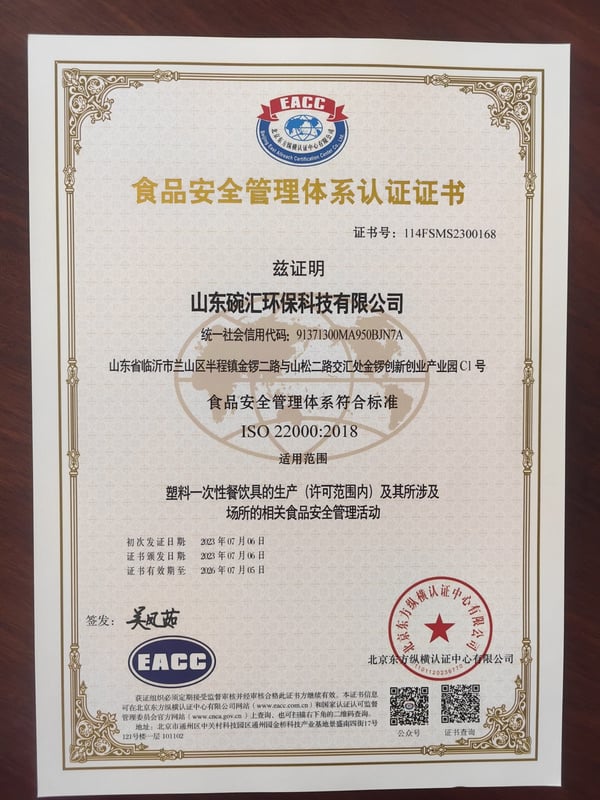
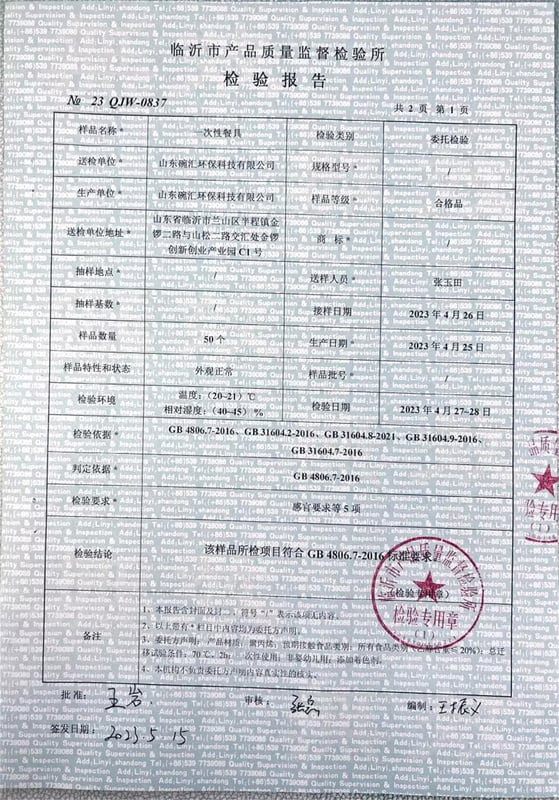
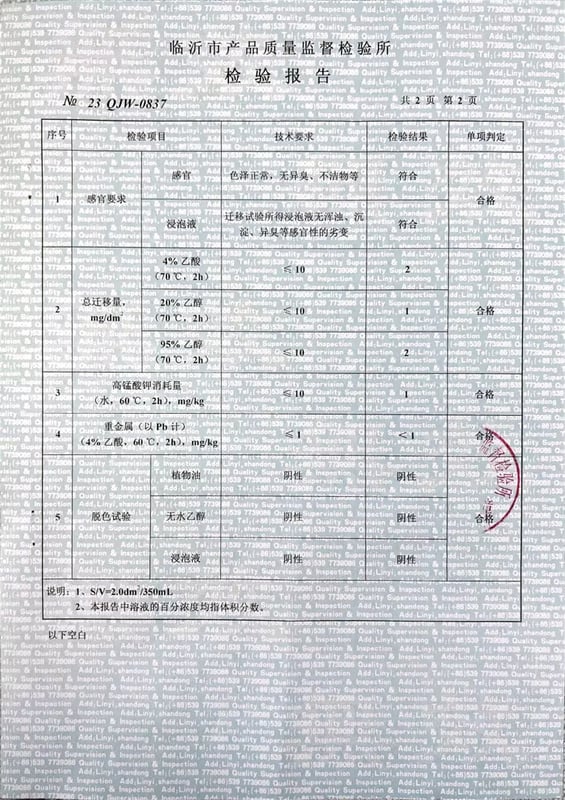
Food safety is undeniable for custom food containers. Wanhui’s entire range of products use 100% virgin food grade resin – no post-consumer or reprocessed material – and produced through a quality management system tailored to three sets of public health regulations from three regional markets: US (the FDA), the European Union (EU10/2011), and China (GB 4806.7).
What Each Standard Actually Regulates
FDA 21 CFR 177.1520 specifies requirements for olefin polymers used in food-contact articles in the US—melting point, maximum n-hexane extractable fraction and maximum xylene-soluble fraction at defined temperatures. Wanhui’s standard PP grade Is certified under this code for repeated food contact at temperatures similar to microwave reheating steps.
EU 10/2011 defines the positive list of authorized substances used in plastic food contact materials within the EU and sets up the Overall Migration Limits (OML) and the Specific Migration Limits (SML) for toxic substances. Wanhui can provide the migration test documentation upon request when products are sold to EU markets.
GB 4806.7 is the Chinese national standard of plastic food-contact materials. It applies to all containers manufacturers in China for domestic Chinese market and exports from Chinese factories. Wanhui’s national hygiene-standard certification is 40 06 7110 0099.
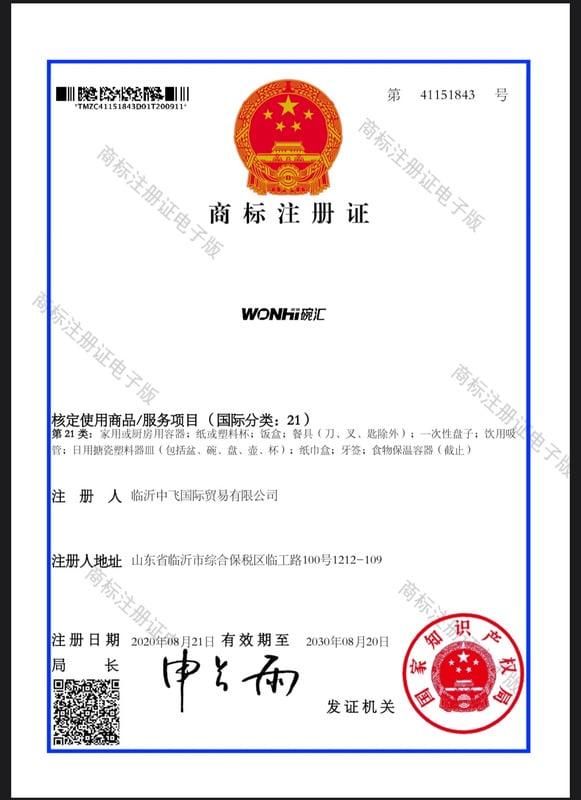
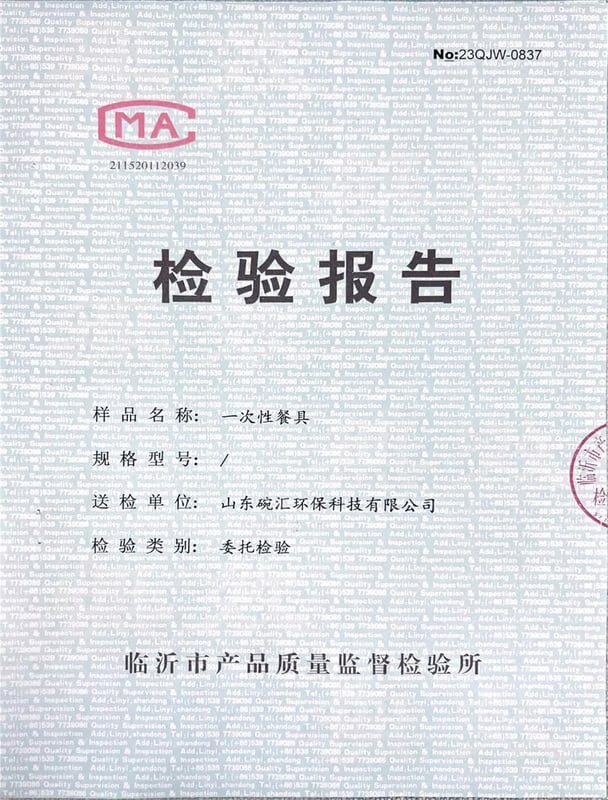
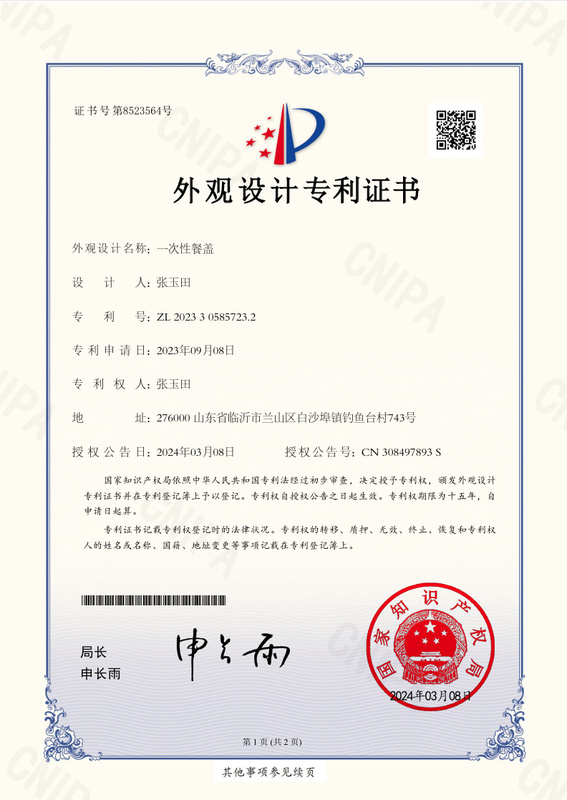
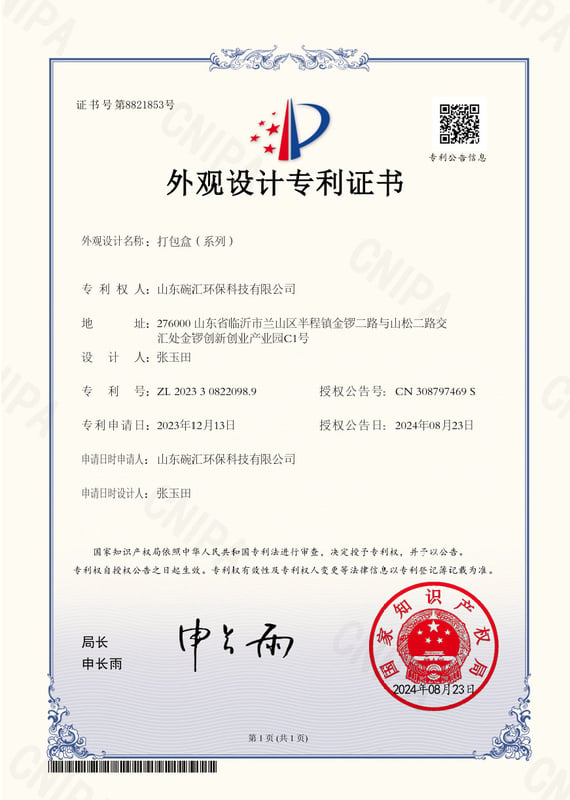
For institutional / chain-restaurant purchasers, the question is rarely “do you hold a certificate” but rather “can you produce a certificate, SDS and migration test report when our auditor asks.” We can – and do – do this for purchasers across Europe, the Americas, the Middle East, Asia-Pacific and South America.
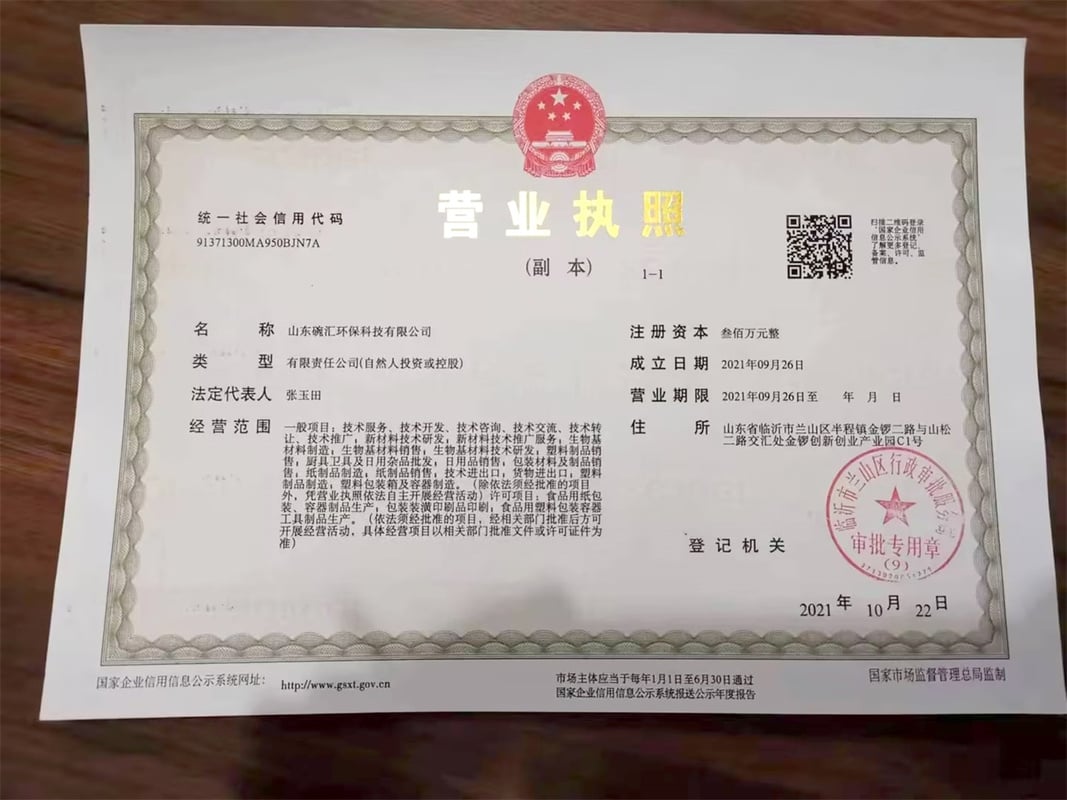
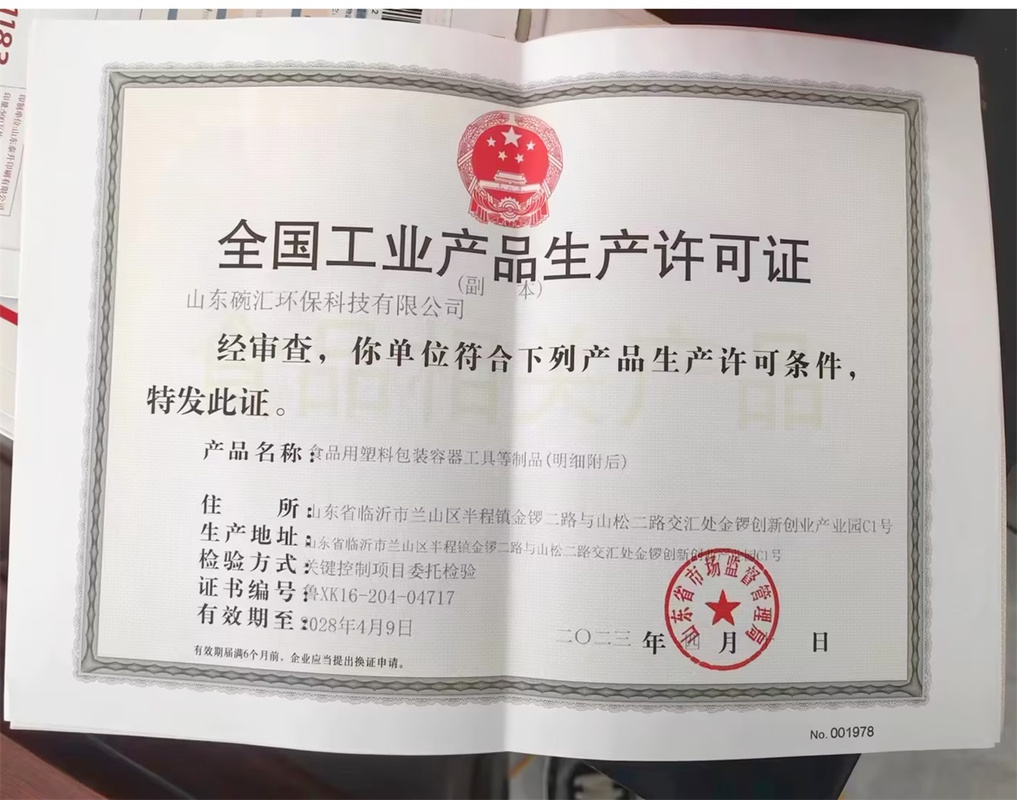
Business License
FDA 21 CFR 177.1520
U.S. olefin polymer food contact
EU 10/2011
EU plastic food contact regulation
GB 4806.7
China national plastic FCM standard
BPA-Free
Intrinsic to food-grade PP
PFAS-Free
No fluorinated grease coating required on PP
Phthalate-Free
No plasticizer migration risk
Customer Results — Print Quality, Lead Time, and Brand Lift
The business case for branded take out containers boils down to three metrics: how clearly you logo is imprinted, how consistently the packaging comes intact to the table, and how many impressions of the brand it makes per each delivery.
To illustrate, here is the flow pattern we observe among the chain restaurants, delivery companies, and institutional cafeterias we work with in five geographies.
Where Wanhui Containers Are Already Working
Chain Quick-Service Restaurants
High volume, multi-SKU users ordering more than 50,000 units per SKU per month. Logos print batch-to-batch consistancy is the gate keeping metric – a slight color drift causes devaluation of brand perception. In house printing line for Wanhui holds color within spec due to tight tolerances.
Food Delivery Operators
The last mile Delivery also subject the packaging to vibration, temperature swing and stacked load. The V-ribbed PP family was originally specified by a delivery-volume customer whose former foam boxes were giving back for lid-pop and sauce leak in transit.
Hospital & School Canteens
Institutional foodservice accounts need multi-size sets (single-portion, family-size, hot, cold) on tight cost controls. Wanhui supplies single-PO multi-family lineups that simplify procurement and cut warehouse footprint via stackable bowls.
Total Cost of Ownership Framework Silver Tier
The TCO is then a well then TCO = UnitCost + StorageCost + ReplacementCost + ReliabilityCostg BrandRecallLift.
According to industry buyer surveys, this translates to operators who transition from opportunistic buying of individual generic stock SKUs to a single-source factory partnership experiencing a 30-40% five-year TCO in the takeout packaging— material savings being further complemented in part by lower waste, fewer emergency reorders, and better volume-tier fit (Source: industry buyer-experience reporting, MrTakeOutBags 2025).
Where Reliability Cost = lost-sale cost when a supplier is late on holiday-rush delivery, and Brand Recall Lift= per-delivery impressions of a printed or embossed logo, where we use an average out-of-home media CPM benchmark. Wanhui provides our unit-cost and reliability inputs; the brand-recall value is a function of your delivery volume and avg. impressions per order.
Print Quality and Custom Mold Capability
Logo printing on a PP lid is processed through our own multi-color print line, meaning you can specify a complete brand palette in a single quotation.
There are no add-on fees for additional colors, logo templates, or maximum-corner counts, and custom mold art development provides a one-of-a-kind container footprint, embossed lid logo on the surface (as opposed to printed graphics that can scuff), and proprietary geometry that keeps your competition away from your display identity.
Custom molds require a larger first round MOI to absorb tooling, but the moving average cost on repeat orders is comparable to stock SKUs.
Custom Order Process — Pricing Factors, MOQ, Lead Time & Logo Printing
Custom take out container pricing is based on 6 factors. Not a flat, per piece number: material grade (PP vs MFPP vs bagasse), container family, order quantity, level of customization (logo print vs custom mold), number of colors, and Incoterm ( FOB Qingdao vs CIF destination port). The table below links this all back to the kinds of question your finance team will in the end be asking.
The Six Pricing Factors
| Variable | How It Moves Your Quote | Practical Question |
|---|---|---|
| Material grade | PP → lowest; MFPP → moderate premium; bagasse → highest | Does your menu need extended heat tolerance or compostability? |
| Container family | Round bowls and clamshells nest differently — affects pack density and freight | Which family matches your menu (see Decision Matrix)? |
| Order volume | Volume tiers unlock unit-cost reductions; tooling amortizes faster | What’s your realistic 12-month consumption per SKU? |
| Customization tier | Logo print MOQ is lower; Custom Mold MOQ is higher (amortizes the tooling) | Does the brand benefit from embossed geometry, or is printed logo enough? |
| Color count | In-house printing carries no per-color surcharge | Full brand palette, or single-color logo? |
| Incoterm | FOB Qingdao vs CIF destination changes who carries freight and customs | Does your team handle freight, or do you want delivered cost? |
Enterprise Packaging Procurement Tools
Data-driven calculators and estimators to streamline your supply chain decisions.
Custom Take-Out Container Material Selector
Three questions, factory-direct recommendation. Match your menu to the right Wanhui product family in under a minute.
Open Selector
5-Year Total Cost of Ownership Calculator
Compare ad-hoc reseller procurement against a single-source factory partnership over five years. Inputs are yours; the framework is the same one used by chain-restaurant buyers when they switch suppliers.
Launch Calculator
MOQ & Lead-Time Estimator
Two questions, indicative ranges for MOQ tier and production lead time. For confirmed numbers tied to your spec, request a Wanhui quote.
Get Estimates
Premium Custom Take Out Containers
Showcase
01 / 10
Frequently Asked Questions About Custom Take Out Containers
Yes. Both our standard PP and MFPP grades are formulated for repeated microwave reheating cycles. PP has a melting point near 160 °C and does not absorb microwave energy itself; heat transfers from the food to the container. We recommend using vented or partially-opened lids during reheating to prevent steam pressure buildup. (Reference: FDA 21 CFR 177.1520.)
MOQ varies by product family and color count. Logo-printed orders against existing molds are typically lower MOQ than custom mold development. Most flexible packaging suppliers in the industry quote 3,000–5,000 units as a starting tier — Wanhui’s MOQ is set per inquiry against your target volume and SKU mix. Smaller pilot runs may be possible by stacking SKUs on a shared print setup.
Logo-printed orders against existing molds: 2–4 weeks from confirmed PO. Custom mold development: 6–10 weeks from approved drawing to first production run, then 2–4 weeks for reorders. Add transit time depending on your Incoterm and destination port. Holiday and Chinese New Year periods extend these windows.
100% virgin food-grade polypropylene (PP) and modified PP (MFPP) for our main lines, plus bagasse fiber for ESG-driven contracts.
Yes — sample boxes by courier, with optional test-print runs for visual approval before tooling.
Yes — and the reason matters, because the answer to “is this safe?” is different for plastic vs paper-based packaging. Every Wanhui product line uses 100% virgin food-grade polypropylene resin, never post-consumer or recycled feedstock, which means no contamination drift batch-to-batch. PP as a polymer is intrinsically BPA-free, phthalate-free, and odorless: it does not require BPA stabilizers and does not contain plasticizers. PP also does not require a fluorinated grease-resistance coating, which is what makes paper-based fiber takeout containers a growing regulatory concern as U.S. states and EU member states expand PFAS restrictions. On request, we supply the SDS, third-party migration test report, and the regional certification pack (FDA, EU 10/2011, GB 4806.7) needed by your import market.
Yes. Custom mold development is a core in-house capability — we run 60 injection molding lines and have a dedicated tooling team. The process moves from a 3D drawing review to mold tooling to first-article approval to production run. Tooling cost is amortized into the first-order unit price, and the mold remains available for your reorders.
A reseller is a layer between your brand and the source manufacturer. When the factory’s production schedule slips, the reseller has no control. When your auditor asks for the raw material SDS, the reseller does not have it. When you need to change sheet thickness or polymer blend mid-program, the reseller has to renegotiate with their own supplier. We are the source manufacturer — 20 thermoforming lines, 6 sheet extrusion lines, 60 injection molding lines, 200+ production team, single point of accountability.
Yes. We ship FOB Qingdao or CIF destination port depending on your preference. Our logistics team prepares the commercial invoice, packing list, and certificate pack required by your import market. We have active export experience across Europe, the Americas, the Middle East, the Asia-Pacific region, and South America.
Ready to Build Your Custom Take-Out Container Spec?
Request a quote, free samples or our complete spec matrix PDF file. A dedicated Wanhui account engineer returns to you within 1d working day.