Get in touch with Wanhui Company

Food Trays
Food Trays — Direct-from-Factory Manufacturer | Wanhui (Custom Sizes & OEM Branding Available)
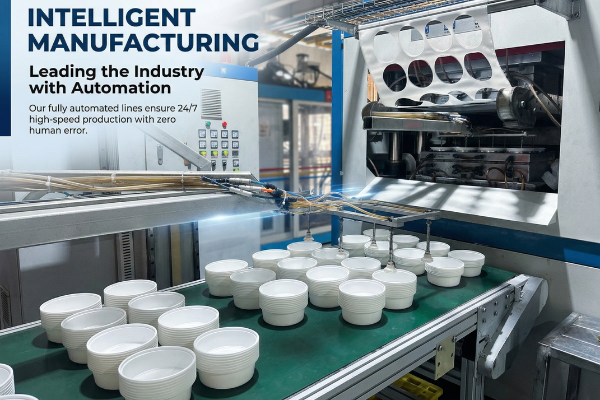
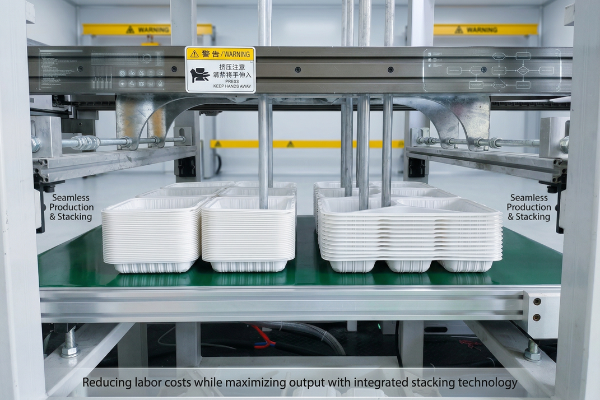
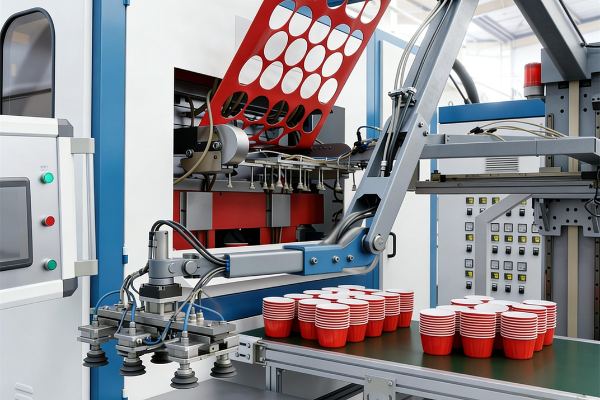
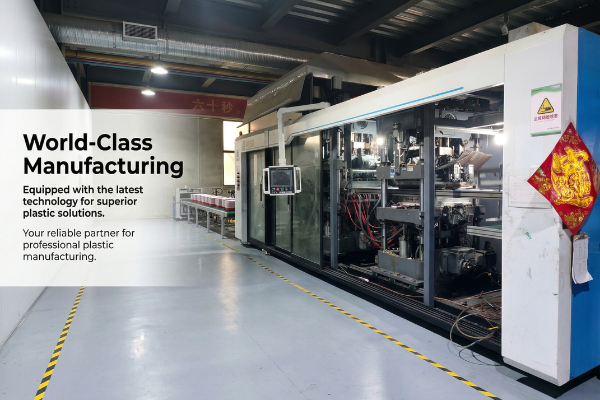
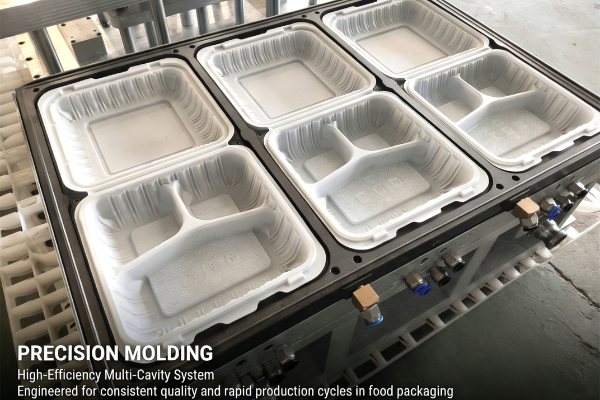
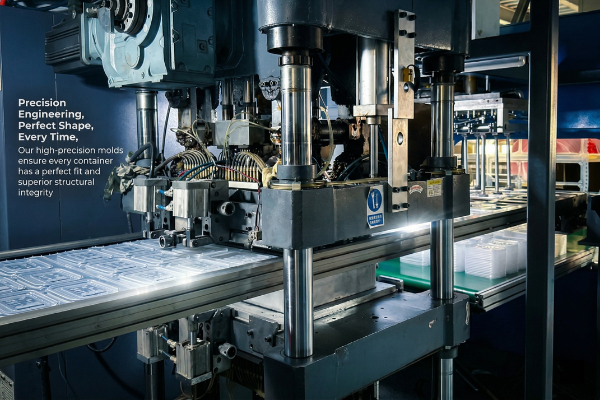
Bulk food trays from a 20-year Shandong factory — PP, PET, MFPP, sugarcane pulp. 20 thermoforming lines and 60 injection molding lines produce 1M+ units per day. Custom mold, OEM logo printing, FDA-compliant, ships to six continents.
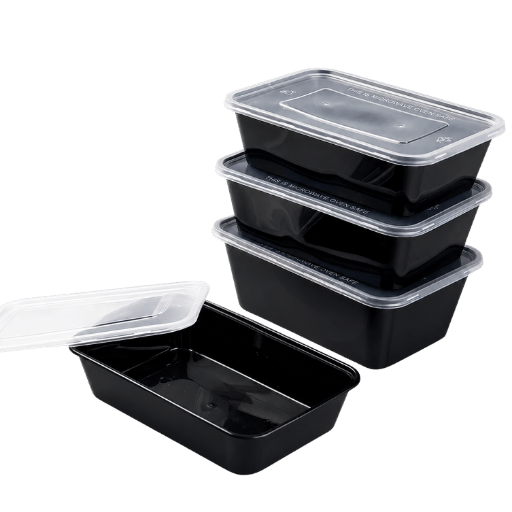
20yr
Manufacturing
86
Production Lines
6
Continents Shipped
ISO + FDA
Certified
Tray Types — Serving, Catering, Deli & Specialty
The food trays category covers far more than the “flat plastic platter” many buyers picture. We organize our catalog around the three primary use modes that drive 80% of B2B procurement, plus four specialty subtypes for niche operations.
Primary Trays
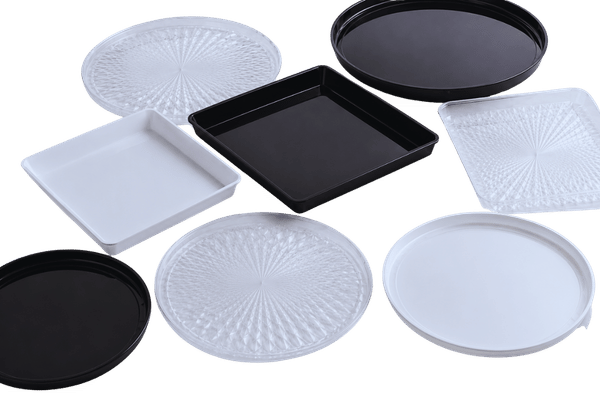
Serving Trays
Round and square plastic platters for buffets, bakery display, and front-of-house presentation. PP and PET stock options; clear or solid color.
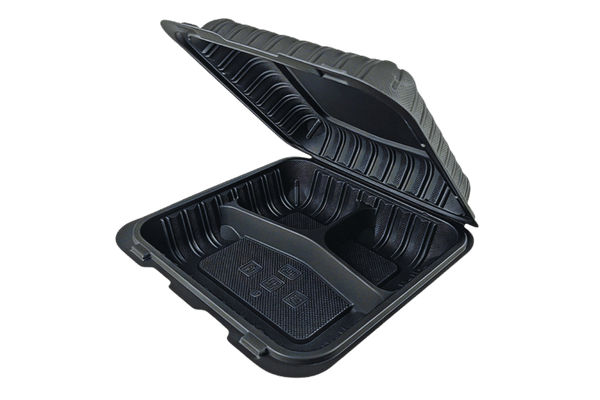
Catering Trays
Rectangle and large-format with hinged or snap-on lids — our MFPP one-piece hinged design eliminates lid loss during transport and stacks securely in cartons.
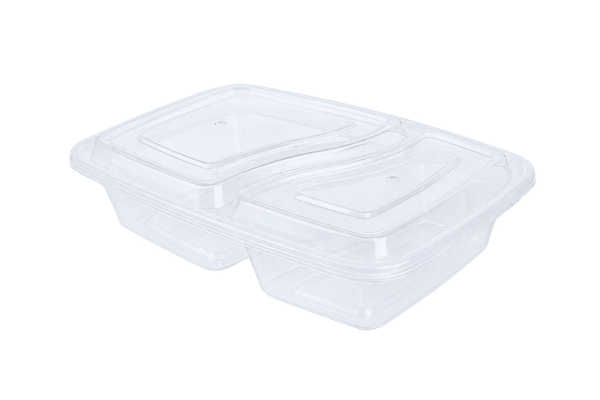
Deli Trays
Compartment and divided trays for deli counters, charcuterie, and cold side packaging. 2-, 3-, 5-compartment formats in clear PET or food-grade PP.
Specialty Subtypes
To-Go & Take-Out
Single-use trays for ghost kitchens and third-party delivery operators.
Hot Dog Trays
Fluted paper or PP boats for concessions and stadiums.
Nacho Trays
Multi-compartment chip-and-dip formats — disposable, stadium-grade.
School Lunch Trays
Compartment-divided, microwave-safe, BPA-free for cafeteria service.
Decision Matrix — Pick the Right Tray Type
| Tray Type | Best Use | Capacity Range | Typical Material | Closure |
|---|---|---|---|---|
| Serving | Buffet display, bakery presentation | — | PP, PET clear | Lid optional |
| Catering with Lid | Off-site catering, event drop-off | 700–3,500 ml | MFPP, PET | Hinged or snap-on |
| Deli Compartment | Cold counter display, charcuterie | 300–1,500 ml | PP, PET clear | Snap lid (dome) |
| To-Go Hinged | QSR delivery, ghost kitchen | 700–1,000 ml | MFPP food-grade | Integrated hinge |
| Compostable Compartment | Eco-positioned QSR, school lunch | 400–1,200 ml | Cornstarch (PLA-based) | Snap-on lid |
Materials & Sizes — From PP to Compostable Pulp
Material choice is where most plastic food trays procurement mistakes happen. A buyer specs PP for a 400°F oven application and the tray melts; another over-pays for CPET when standard PP would have worked.
Material × Use Case Selection Matrix
Material
Heat Tolerance
Microwave
Conventional Oven
Freezer
Cost Index
PP (Polypropylene)
Up to 160°C / 320°F melt point
Yes — to ~250°F
No
Yes
★ Lowest
MFPP (Modified PP)
Higher rigidity than standard PP at elevated temp
Yes
Limited (short cycles)
Yes
★★
PET (Clear)
Cold to 70°C / 158°F
Limited
No
Yes
★★
CPET
−20°F to 400°F dual-ovenable
Yes
Yes — up to 30 min
Yes
★★★★
Cornstarch / Bagasse / PLA Pulp (biodegradable)
Cold to 90°C / 194°F
Limited
No
Yes
★★★
PP is the right answer for ~70% of foodservice trays. Where buyers need oven-to-table dual functionality, CPET justifies its premium with a -20°F to 400°F operating window.
Standard Size Grid (Stock SKUs)
Format
Compartments
Length / Diameter
Capacity Range
Typical Use
Round Bowl
1
120 / 150 / 180 mm caliber
300–1,750 ml
Salad, hot soup, meals
Hinged-Lid Container
1 or 2
6×6 / 8×8 / 9×6 / 9×9 inch
700–1,000 ml
Take-out, catering
Rectangular Tray
1, 2, 3, or 5
Varies — custom available
300–3,500 ml
Deli, school lunch
Sauce Cup Accessory
1
1, 2, 3, 4 oz
25–100 ml
Dressings, dips
Naming conventions vary across manufacturers — confirm dimensions against your SKU master before finalizing an order.
“We tested 14 PP resin grades before settling on the food-grade MFPP we use for hinged catering trays — it’s the only one that holds rigid edge geometry through a 1,200-cycle thermoforming run without micro-cracking.”
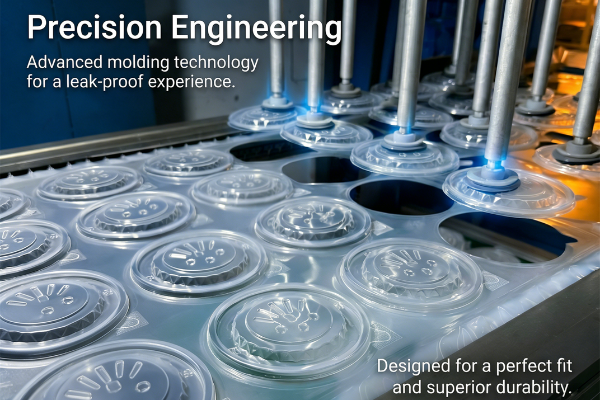
Food Trays Factory

✕
❮
❯
Tray Solutions — Real Customer Wins
The most common reason a foodservice buyer leaves a US distributor for a direct-factory relationship is unit cost — but the second reason, almost always, is custom-spec flexibility the distributor can’t deliver. The two cases below are representative of the work we’re doing in 2025; full client references available on quote request.
Case Study A · Meal Kit Operator (EU)
5M-unit Custom Compartment Tray Saved 18% on CPU
European meal-kit subscription brand needed a 4-compartment PP tray with branded IML labeling, replacing a US-distributor SKU that was burning their unit economics.
Annual volume
5,000,000 units
CPU savings vs prior supplier
18%
Custom mold lead time
42 days
Case Study B · QSR Chain (Middle East)
3-Color Branded Catering Tray, 6-Week Door Delivery
Regional QSR chain needed a 12-inch hinged catering tray with 3-color brand printing and a full FDA-compliant cert package for customs clearance across three Middle East markets.
Order quantity (initial PO)
120,000 units
Door-to-door lead time
6 weeks
Cert package included
FDA + ISO + Patent
Trust Stack — What Ships With Every Wanhui Order
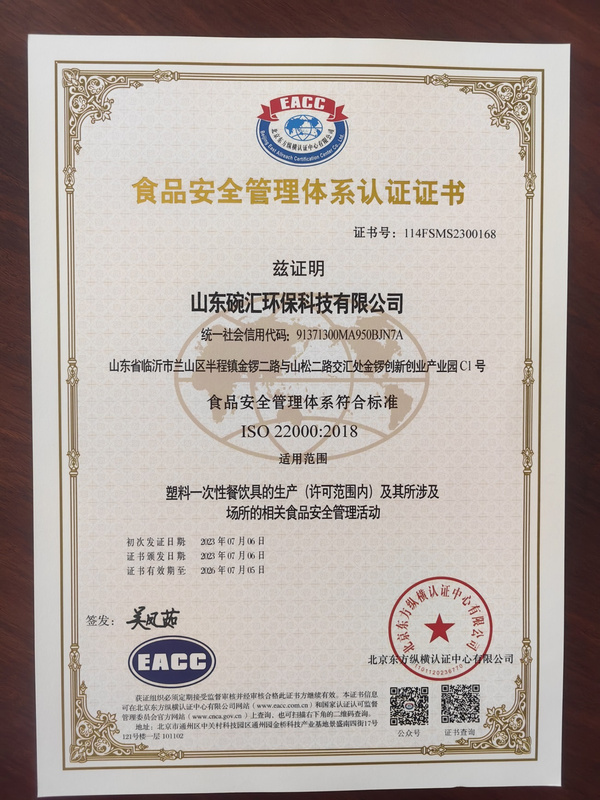
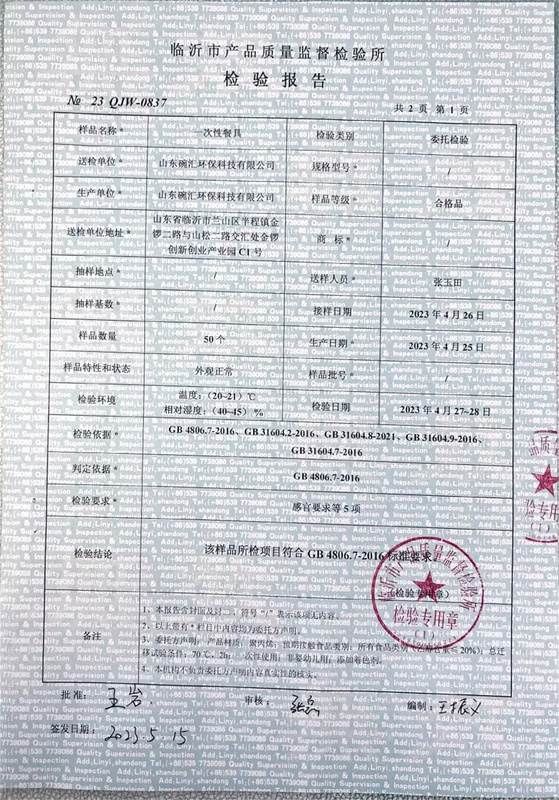
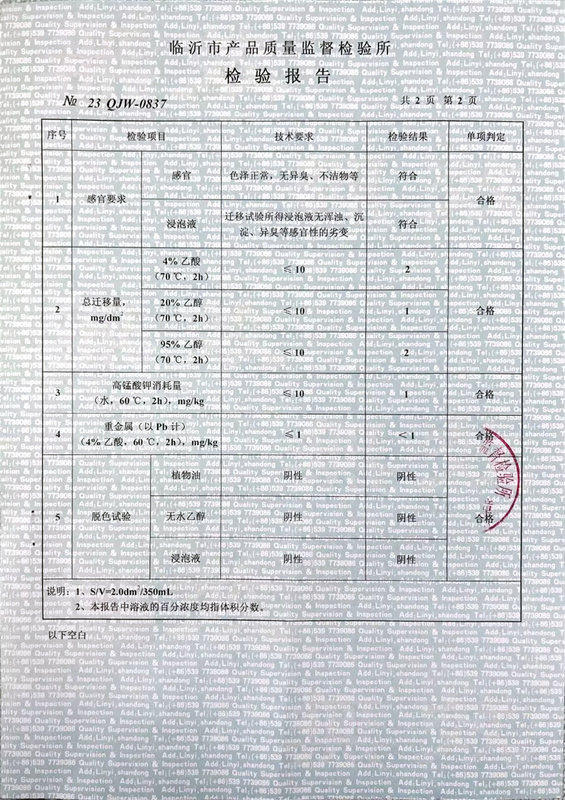
Production License
Food contact authorized
Food Safety Mgmt
ISO 22000-aligned
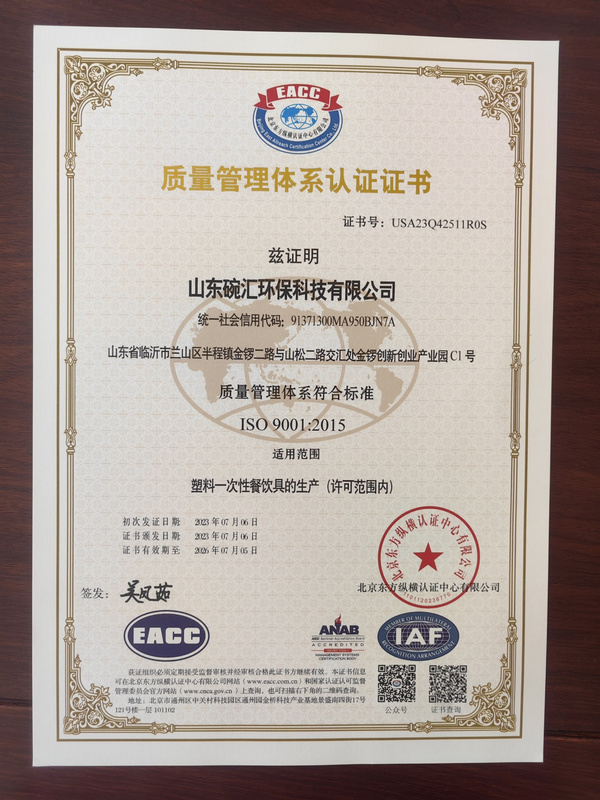
Quality Mgmt System
ISO 9001-aligned
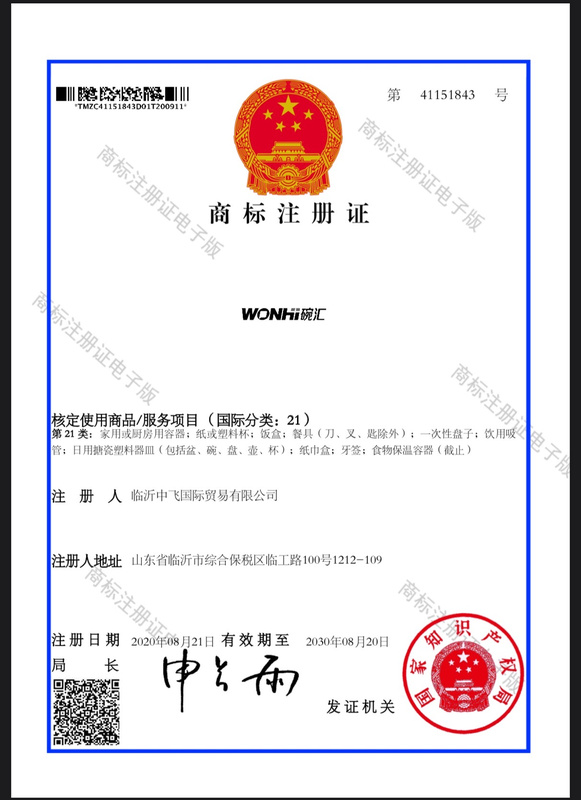
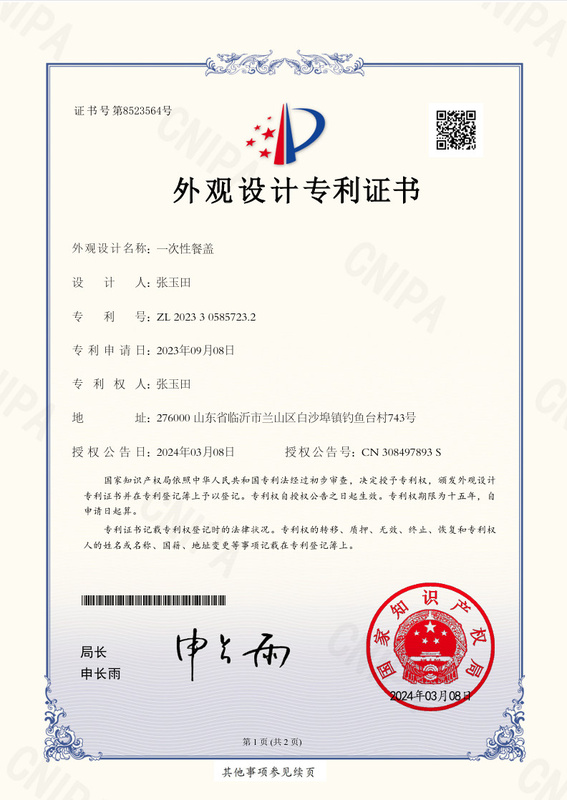
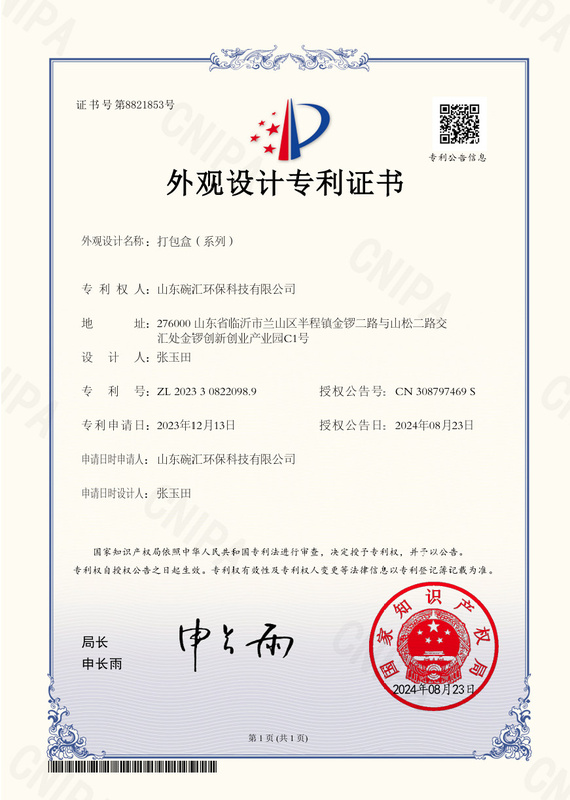
2 Patents
Packaging box + lid
Each shipment includes the cert package above, a QC sample retain, and a finished-goods inspection report. Buyers reselling into regulated markets (EU, GCC, North America) can request additional documentation at quote stage so customs clearance is never the bottleneck.

Applications — Where Wanhui Trays Ship
The global foodservice disposable packaging market reached USD 74.93 billion in 2025 and is forecast to hit USD 150.66 billion by 2035 — a 7.5% CAGR. The growth concentrates in the six verticals below, each with its own spec priority and procurement rhythm.
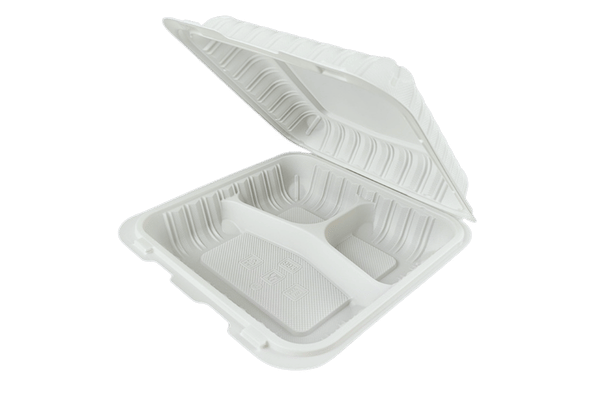
Catering & Events
Hinged-lid catering trays, large-format compartment platters.
Spec Priority
lid security during transport, brand-printed exterior.
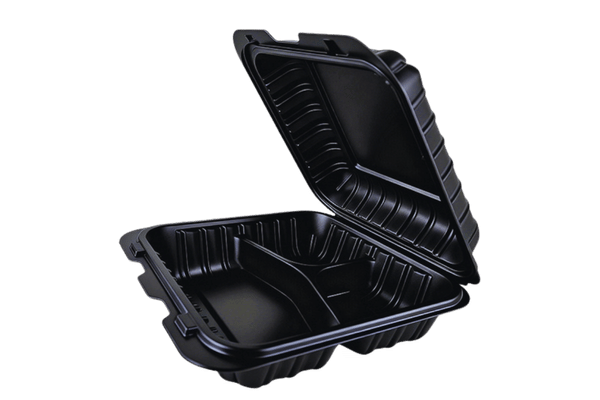
QSR & Quick-Service Restaurant
To-go hinged containers, compartment trays for combo meals.
Spec Priority
microwave-safe, leak-resistant, low CPU at high volume.

Grocery & Supermarket Deli
Clear deli trays with snap-on dome lids, divided platters for prepared foods.
Spec Priority
visibility, freezer-to-display compatibility.
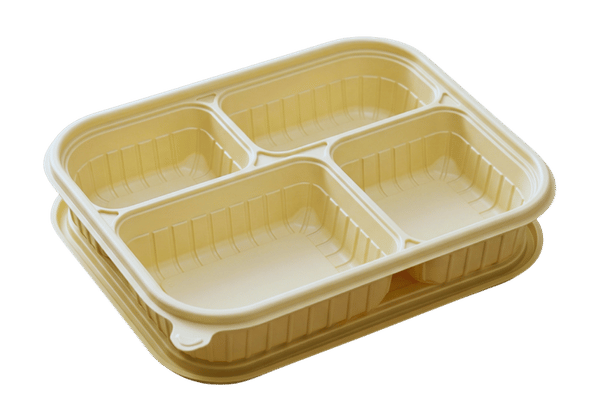
School & Hospital Foodservice
Compartment lunch trays — both PP standard and cornstarch compostable.
Spec Priority
BPA-free certification, microwave-safe, kid-friendly.
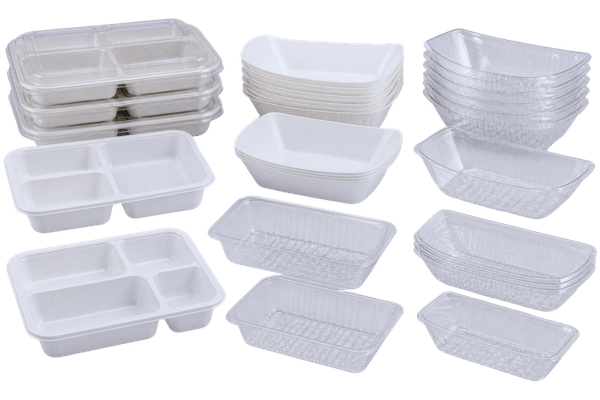
Concession & Stadium & Airline
Hot dog boats, nacho trays, in-flight meal trays.
Spec Priority
stackable, single-use, branded for venue operators.
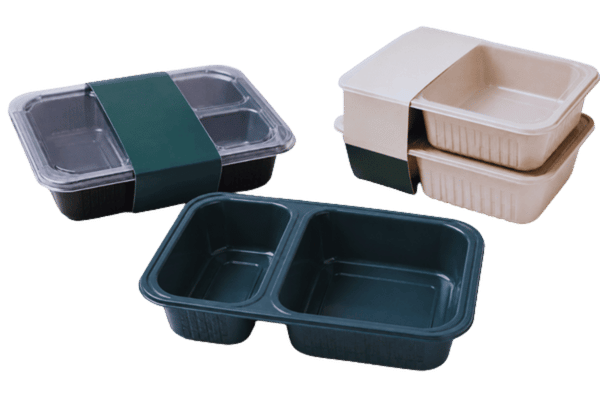
Meal Kit & D2C Subscription
IML-branded compartment trays, custom-mold formats for unboxing experience.
Spec Priority
brand differentiation, e-commerce-ready packaging.
How to Order — MOQ, Custom Mold & Lead Time
The single biggest source of B2B packaging procurement regret is supplier opacity — “unit price without verification creates hidden costs that quietly erase savings.” We publish the entire procurement framework below so the math is transparent before you ever fill out a quote form.
The 3-Step Order Process
1
1 Tell Us the Spec
Size, material, quantity, branding requirements. Send a sample image, a competitor SKU, or a 2D drawing — we can quote from any of these.
2
2 We Quote in 24 Hours
Includes per-unit price, custom mold cost (if needed), lead time, payment terms, and FOB / CIF shipping options for your destination port.
3
3 Production, QC, Ship
30% T/T deposit confirms; balance due before bill of lading release. Air-freight expedited delivery available for urgent restocks.
Procurement Transparency Card
What You’re Actually Paying For
MOQ — Stock SKU
From 5,000 pieces per SKU
MOQ — Custom Mold
From 30,000 pieces per first PO
Lead Time — Standard
15–25 days from PO confirmation to FOB Qingdao
Lead Time — Custom Mold
35–50 days total (mold fabrication + first production run)
Custom Mold Cost
USD $3,000–$15,000 — amortized against first PO
Payment Terms
30% T/T deposit · 70% balance before B/L · L/C at sight on orders ≥ USD $50,000
Sample Policy
5–7 stock samples free · Custom samples USD $50–$300 (refundable on production order)
Food Tray Configuration & ROI Tools
Material Selector
Evaluate and select the optimal food-grade materials for your specific packaging requirements. Ensure safety, compliance, and performance.
Use Tool
Capacity Calculator
Accurately calculate the volume and dimensions needed for your custom food trays. Optimize portion control and shipping efficiency.
Use Tool
Custom Mold ROI
Analyze the return on investment for custom tooling solutions. Make data-driven decisions for your long-term packaging strategies.
Use Tool
Ready to Spec Your Food Trays?
Send us your size, material, quantity, and branding requirements. We’ll come back with a detailed quote — including custom mold cost, lead time, and shipping options — within 24 hours. No call required to get pricing.
Frequently Asked Questions
What materials are food trays made of, and which is best for hot food?
Food trays are most commonly made from polypropylene (PP), PET, CPET, MFPP, foam (EPS), aluminum foil, paper pulp, or compostable cornstarch / PLA fiber. For hot food applications, PP is the standard choice (microwave-safe to roughly 250°F per FDA-compliant deli container specs); for dual oven-and-microwave use, CPET is the only thermoplastic that handles -20°F to 400°F reliably.
What’s the MOQ for custom-printed food trays?
For stock SKUs with custom logo printing, we accept orders from 5,000 pieces per SKU. For fully custom-mold trays (your own shape and dimensions), the first PO needs to clear 30,000 pieces to amortize the mold cost across a sensible per-unit price. We’re more flexible than most direct-factory peers — small-batch buyers often start with stock SKUs and graduate to custom mold once volume scales.
Are Wanhui food trays microwave-safe? Oven-safe? Freezer-safe?
All our PP, MFPP, and CPET trays are microwave-safe and freezer-safe. Conventional oven safety depends on material: standard PP is not oven-safe; CPET handles up to 400°F for 30 minutes; cornstarch / PLA is microwave-limited and not oven-safe. Each spec sheet shipped with your samples calls out the temperature limits explicitly.
How long does shipping take to the US, Europe, or Middle East?
Standard sea freight is 22–35 days to the US West Coast, 28–40 days to North Europe, 18–28 days to Gulf ports. Add the 15–25 day production lead time on top. For urgent restocks, air freight reduces total transit to 4–7 days at roughly 4–6× the sea freight cost — we’ll quote both options so the math is transparent.
What certifications do Wanhui trays carry? Are they FDA / EU food-contact compliant?
Our PP and PET food-contact materials comply with FDA 21 CFR 177.1520 (olefin polymers) and EU Regulation 1935/2004 framework requirements. The factory holds Production License authorization, Food Safety Management System certification, Quality Management System certification, and two issued patents covering packaging box and lid designs. Cert documentation packages ship with every commercial order; pre-purchase verification copies are available on request.
Can you print our brand logo on the trays? Setup cost?
Yes — three options. (1) Single- or multi-color flexo printing on stock SKUs, no setup fee for orders above 10,000 pcs. (2) IML (in-mold labeling) for premium branded and private label trays, where the graphic is embedded in the container wall and won’t peel or fade — ideal for retail-ready and meal-kit packaging. (3) Custom-color resin matching for solid-color trays. Pantone-match available with a one-time color development charge.
How is custom mold pricing calculated?
Custom injection or thermoforming mold cost runs USD $3,000–$15,000 depending on geometry complexity, number of cavities, and material grade. We typically structure the payment as 50% upfront for mold fabrication, with the balance amortized against your first production order — so the mold cost shows up in your per-unit price rather than as a separate capital expense. Subsequent reorders see the per-unit drop.
What’s the difference between PP and PET food trays?
PP (polypropylene) is opaque or solid-color, microwave-safe to ~250°F, and the lowest-cost food-grade thermoplastic — the workhorse for take-out and catering. PET is crystal-clear, freezer-safe, and excellent for cold display (deli, salad, charcuterie) but limited above 158°F.
CPET is the heat-treated cousin of PET that withstands oven temperatures up to 400°F.
Buyer rule of thumb: PP for hot applications, PET for cold display, CPET reserved for true dual-temperature SKUs.
How many catering trays do I need for 50 guests?
For a buffet-style event serving 50 guests, plan on roughly 8–12 large catering trays (16–18 inch) for entrée display, 4–6 medium (12–14 inch) for sides, and 2–4 small for desserts. Add 20% overhead for crew samples and presentation rotation. Single-portion to-go trays for a 50-person plated-style event would need closer to 60–65 units (10–15% breakage / spec-change buffer).
What’s your QC process and defect rate?
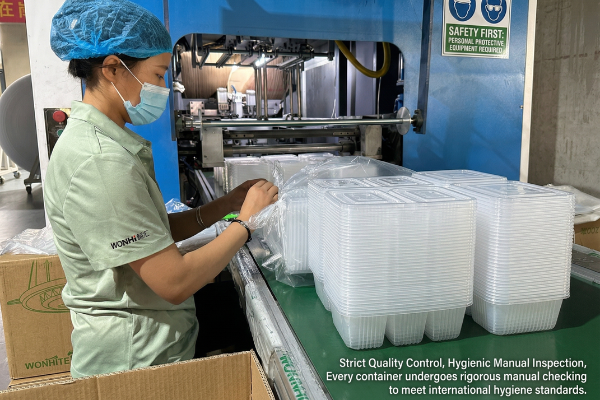
Every production run goes through inline visual inspection (every 30 minutes), random dimensional check (every 2 hours), and a finished-goods sample retain pulled from the last carton of each PO. Defect rate on commercial-grade tray runs averages below 0.5% — claims processing within 14 days of receipt for any container that arrives outside the spec sheet tolerance.