Póngase en contacto con la empresa Wanhui

Contenedores de alimentos compostables para llevar « Certificado BPI, Sin PFAS, al por mayor directo del fabricante
Contenedores de alimentos compostables para llevar construidos para restaurantes, marcas de entrega de alimentos y operadores institucionales de servicios de alimentos que necesitan envases para llevar certificados y respetuosos con el medio ambiente, además de la economía unitaria de un fabricante directo de fábrica de 20 años detrás de cada pedido. Almidón de maíz (resina de almidón de maíz), bagazo, PLA y líneas de bambú «todos los BPI/ASTM D6400 + EN 13432 listos, todos sin PFAS, todos de origen vegetal y enviados a granel desde nuestro propio piso de producción de 86 líneas. Ya sea que su menú lo indique como comida para llevar, para llevar, para llevar o para llevar, el contenedor ecológico para llevar bajo su marca sostenible está a una cotización de distancia. No importa los nombres de su menú, ya sea para llevar, llevar, llevar o llevar, el contenedor ecológico para llevar que habla de su marca sostenible está a una cotización de distancia.
Solicite cotización mayorista
Nivel MOQ desde 3.000 de unități
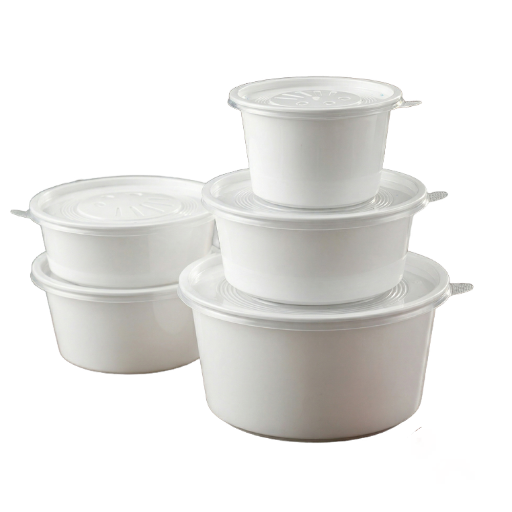
PLT-01 / Almidón de maíz · PLA · Bagazo · Bambú
// 02
Resumen de la solución
ESPECIFICACIONES.01
Certificado BPI + ASTM D6400 + EN 13432
ESPECIFICACIONES.02
Sin PFAS en todos los SKU
ESPECIFICACIONES.03
4 líneas de materiales: maicena / PLA / bagazo / bambú
ESPECIFICACIONES.04
Nivel MOQ desde 3000 unidades
ESPECIFICACIONES.05
Salida de hoja de 30 toneladas/día
ESPECIFICACIONES.06
Procesamiento de más de 1 millón de unidades/día
Todos los roles
Del plástico de un solo uso al compostable « Los restaurantes de turno no pueden posponerlo

CUMPLIMIENTO NORMATIVO //
Si tiene un restaurante, una marca de entrega a domicilio o una cocina institucional en California, Nueva York, Washington o cualquiera de los otros estados que ya aplican prohibiciones de PFAS o EPS, su elección no es plástica versus otra cosa (es un riesgo de cumplimiento en una fecha límite).
La ley de responsabilidad del productor SB-54 de California entró en vigor el 1 de mayo de 2016 y el registro del productor vence el 1 de junio de 2016 . Dieciocho estados ahora tienen restricciones de PFAS en los envases de alimentos, varios de los cuales apuntan a PFAS agregados o detectables intencionalmente a 100 ppm o más en contenedores de fibra vegetal.
Los contenedores compostables para llevar, con la infraestructura certificada adecuada, salen de esa envolvente de riesgo y entran en una categoría de embalaje sostenible que los reguladores ya están trabajando para respaldar.
FÓRMULA DE ADQUISICIÓN //
La fricción del comprador aquí es real y vale la pena nombrarla. Un restaurante que paga $25 por caja por poliestireno (virgen) puede ver $64 por caja por acero biodegradable. Una prima bruta de 156% alcanza con fuerza el margen operativo. Los operadores exitosos cierran esa brecha de tres maneras:
- al elegir fuente directa de fábrica (eliminando los márgenes de los revendedores),
- aprovechando los precios escalonados en lugar de los precios de casos B2C, y
- al considerar la adopción de compostables como una cobertura regulatoria Y una fortaleza de marca que enfrenta el cliente, no como un costo puro de los bienes tal como se compran.
Ésa es la fórmula de adquisiciones que incorporamos en cada cotización.
Cree su fórmula de adquisiciones →
PROYECCIÓN DEL MERCADO //
A nivel mundial, se estima que el embalaje compostable en el servicio de alimentos es aproximado $20,24 mil millones en 2025, y se prevé que alcance $32,50 mil millones para 2034, con restaurantes de servicio rápido que ofrecen 42% de eso .
La regulación, no el sentimiento, es lo que respalda esta cifra de crecimiento. Si utiliza contenedores compostables en 2026, comprará antes de una curva cada trimestre.
Nuestra línea de contenedores compostables « Materiales, tamaños y compartimentos EN + PROC
Construimos cuatro líneas de material (almidón de maíz, ácido poliláctico (PLA), fibra de bagazo y compuesto de bambú) bajo un solo techo de fabricación, ya que ningún material cubre todas las aplicaciones de servicios de alimentos. Los contenedores de ramen caliente, poke frío, bento para microondas y “tipo” de entrega tropical requieren diferentes necesidades de funcionalidad tradicional o de microondas, estabilidad de los recipientes y rango de temperatura, y presentación interior. Aquí está nuestro mapa de cómo enrutamos los casos de uso de materiales.
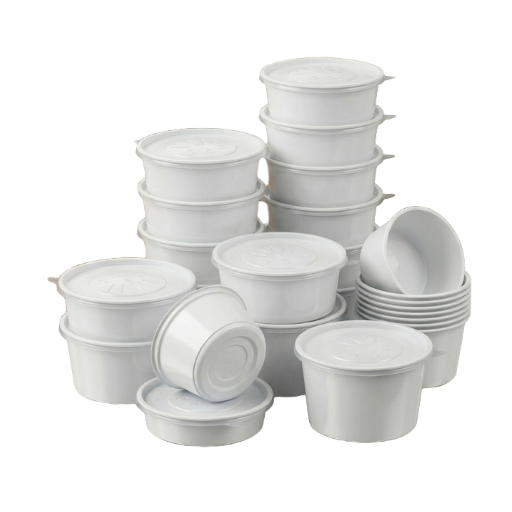
MAÍZ
Contenedores de maicena « Comida caliente, aptos para microondas
Hecho de resina renovable a base de maicena, adecuado para platos calientes, fríos, secos y picantes. Sin BPA, no tóxico y aprobado de calidad alimentaria. Apto para microondas para recalentamientos de 2-3 minutos. Nuestra gama exclusiva está diseñada para restaurantes que requieren un recipiente para cubrir todo su menú.
- Rango de temperatura
- «20°C până la 110°C
- Microondas
- sí (2-3 min)
- Mejor para
- arroz, fideos, entrés mixtos
- Disponible
- conchas, cuencos, 1/2/3/5 compartimentos

BAGAZO
Fibra de Bagazo de Caña de Azúcar « Comida Caliente, Alta Temperatura
Prensado a partir de fibra de caña de azúcar reciclada, también conocida como bagazo, un subproducto de la fabricación de azúcar, no un cultivo virgen. El bagazo resiste temperaturas de 200 °C y no se deforma con aceite caliente a 100-120 °C ni con agua hirviendo a 120 °C. Este es el embalaje para sopa, alimentos fritos y catering a fuego alto.
- Rango de temperatura
- hasta 200°C seco
- Resistencia al aceite
- 100-120°C
- Mejor para
- sopa caliente, productos fritos, catering
- Disponible
- conchas, platos, bandejas, cuencos
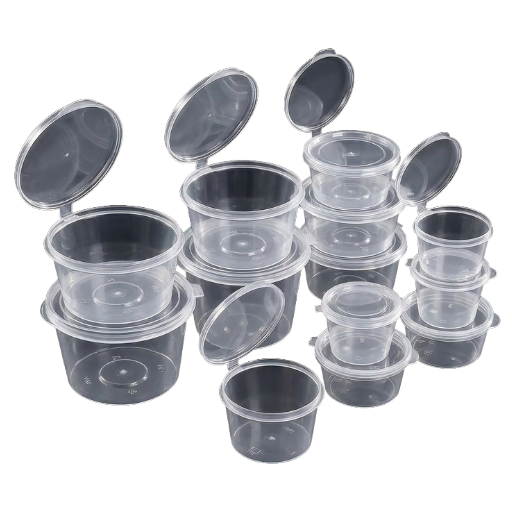
PLA
Clear PLA « Alimentos fríos, comercialización visual
Translúcido en recipientes plásticos de PLA destinados únicamente a alimentos fríos. El PLA se derrite a temperaturas superiores a 60 C, así que utilice esta línea para ensaladas, frutas cortadas, delicatessen frías, microvegetales o exhibiciones para llevar y llevar donde la participación del cliente es más importante.
- Rango de temperatura
- 0°C a 50°C (solo frío)
- Microondas
- no
- Mejor para
- ensalada, fruta, delicatessen, tazas frías
- Disponible
- contenedor de delicatessen rectangular, redondo, tapa abatible
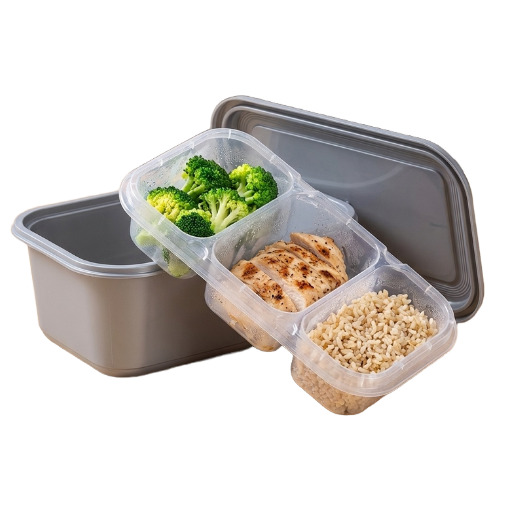
BAMBÚ
Compuesto de bambú « Textura premium
Mezcla de bagazo y fibra de bambú prensada en un recipiente con una sensación más pesada, lo que supone una experiencia más premium para las marcas que venden a un precio superior, donde la experiencia de unboxing importa. Mismo perfil de biodegradación que el bagazo, pero con una superficie más texturizada.
- Rango de temperatura
- hasta 180°C seco
- Microondas
- sí (corto)
- Mejor para
- entrega premium, catering
- Disponible
- tazones, platos, bandejas de sushi
Matriz de decisión « Coincide el material con la aplicación
| Aplicación | Material recomendado | Temperatura máxima | Resistencia al aceite | Microondas |
|---|---|---|---|---|
| Sopa caliente / ramen / pho | Fibra de bagazo | 200°C | 100-120°C | Sí |
| Arroz/fideos/entrada mixta | Almidón de maíz | 110°C | 90°C | Sí (2-3 min) |
| Ensalada fría / poke / fruta | Claro PLA | 50°C | N/A | No |
| Artículos fritos/bandejas de catering | Fibra de bagazo | 200°C | 100-120°C | Sí |
| Entrega premium/sushi | Compuesto de bambú | 180°C | 95°C | Sí (corto) |
| Microverdes / delicatessen | Pla transparente con bisagras | 50°C | N/A | No |
SYSTEM / SILVER · TCO ADVANTAGE
Compostable vs Plastic and Styrofoam — Performance and Cost Comparison EN + MGR
The honest comparison restaurants require is seldom the one industry folks point to. Compostable containers are not always cheaper, and denying as much unreasonably frustrates a buyers engagement. Below is the side-by-side comparison we present to restaurant chains when asked to justify our pricing against their incumbent foam supplier. Specific math sits in the rows below.
| Dimensión | Polystyrene (EPS) | Polipropileno (PP) | Compostable (Bagasse / Cornstarch) |
|---|---|---|---|
| Typical case price (200-ct, 8×8″ clamshell) | $25 | $32 | $48-64 |
| Per-unit cost | $0.125 | $0.16 | $0.24-0.32 |
| Hot food safe (>80°C) | Limitado | Sí | Yes (bagasse/cornstarch) |
| Microwave safe | No | Some | Yes (bagasse/cornstarch) |
| Sin PFAS | N/A | N/A | Yes (our line) |
| EPS ban-compliant (CA, NY, WA, others) | No | Sí | Sí |
| EPR registration fee exposure (CA SB-54) | Alto | Alto | Reduced (compostable category) |
| Fin de vida | Landfill (500+ yrs) | Recyclable in theory, rarely in practice | Commercial compost (12 weeks / 6 months full) |
“Compostable TCO over 24 months: typically 25-40% lower than the all-in cost of running foam through 2026 EPS-ban states”
The real figure to compare during a TCO conversation is not unitcost, but compliance and brand-risk-adjusted total cost for the next 24 months. A foam case is 25 dollars of our money today, but if your State passes on EPS or PFAS and your case cost remains zero your operating license has none. We have built the full costing-model in our wholesale quote system: every quote we provide breaks down premium materials, MOQ tiers, custom molding amortization and shipping costs in detail, so that your buyer can easily argue the number to the CFO.
Industry studies show the full cost on single-use plastics – including EPR registration, PFAS testing and brand damage prevention in EPS aware jurisdictions- dutifully whittles away 25-40% of the apparent unit-pricing edge grocery operators experience when operating across a multi-market delivery topology. Exact figures are flexible by state and enterprise scale; ask for an individualized quote based on your delivery topology if you require detail.
APPLICATIONS
Where Our Containers Get Used — Industries and Applications MGR + EN
Over the course of 20 years in contract manufacturing, we have provided disposable food service packaging to QSRs, food delivery joint marketing initiatives, institutional university cafeterias and hospital cafeterias. Our packaging is shipped to markets across Europe, the Middle East, South America, Asia-Pacific and the Americas. Three application contexts are encountered more frequently than others, and each influences the specification sheet in distinct ways.
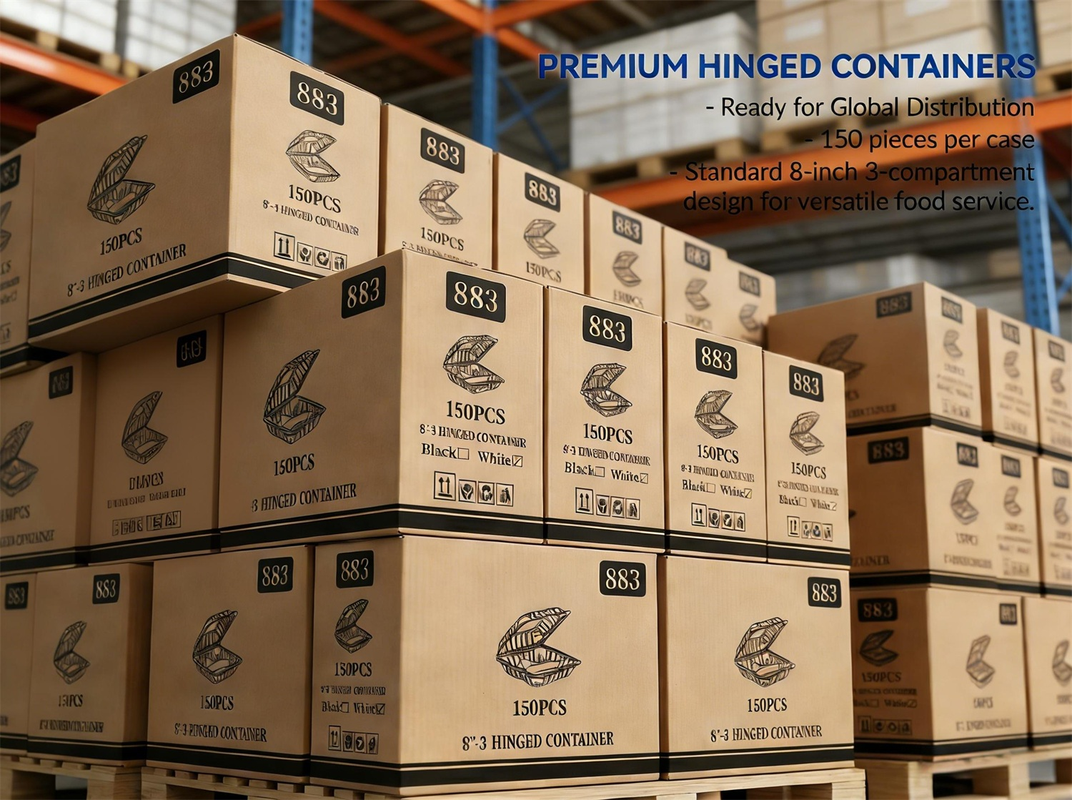
01
Chain Restaurants and QSR Delivery
Quicker service should be 50% of the compostable food service packaging demand worldwide . For chain accounts we generally ship out cornstarch and bagasse SKUs, with custom logo printing and delivered on a tier-2 or tier-3 MOQ schedule (20,000-50,000/unit/package per ship). We can ship out stock SKUs within 14-21 days of receiving order confirmation, custom-molding has an additional 30-45 days for first production.
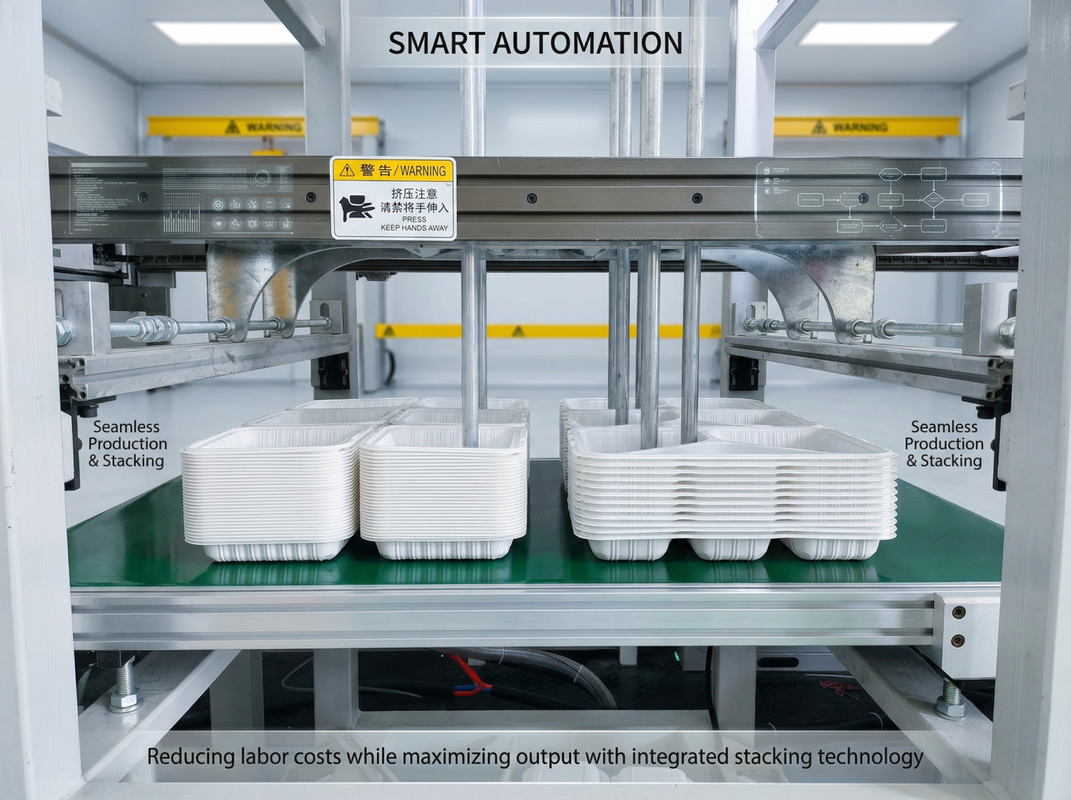
02
Comedores hospitalarios y escolares
Institutional foodservice: There is regulatory pressure that PFAS free and food contact certification are typically a hard low bar for acceptance of bid. Our bagasse and cornstarch lines are cleared for; both FDA food-contact and BPI standards for BPI certification eligibility.
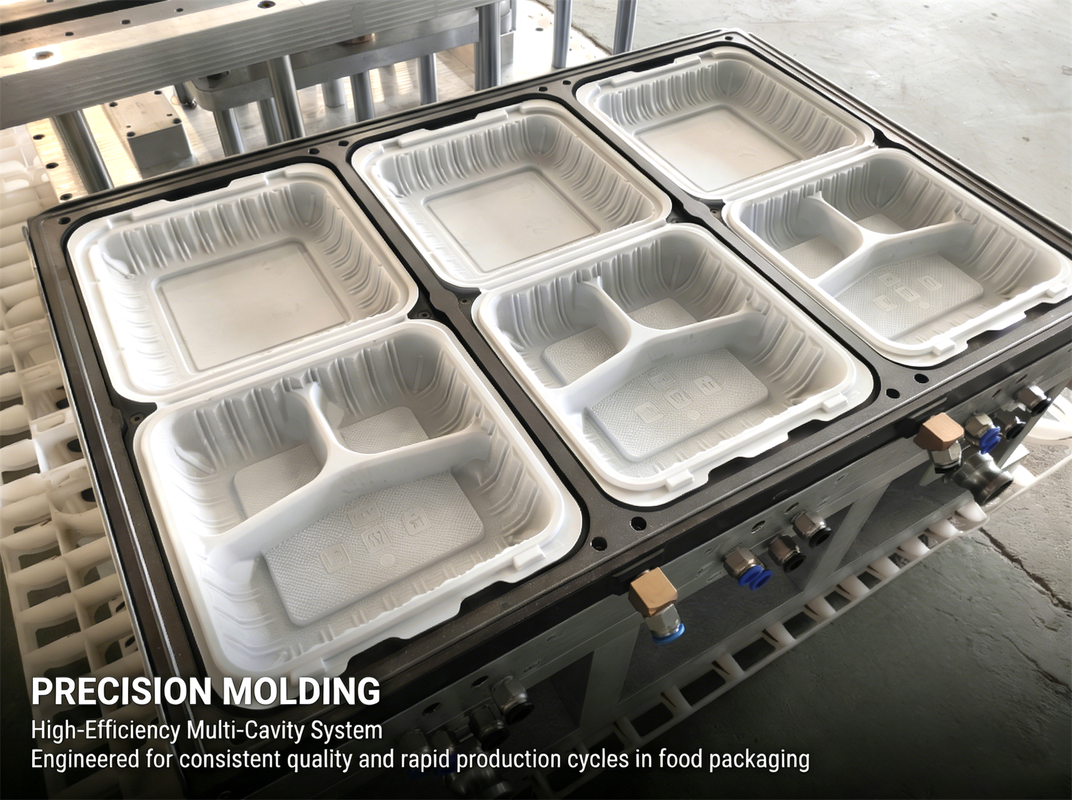
03
Food Delivery Brands and Cloud Kitchens
Delievery-first operators are most concerned about 3 properties – leak resistance over 20-40mins of transit, holding hot food hot, and a container that can withstand moderate stacking. Bagasse with a PLA lining (our PLA-lined fiber SKUs) gets the job done here – completely hot-food friendly, oil-tight at the seam, and visually neutral at the unboxing moment that influences the delivery app review rankings.
Certifications and Compliance — BPI, ASTM D6400, EN 13432, FDA Food Contact PROC + EN
Every compostable packaging discussion on reddit keeps returning to a particular line: “All I keep hearing is that bio-plastics and compostable packaging really isn’t much different from single use plastics.” It’s a justified skepticism. Noone has been shipping this much greenwashed product without creating doubt. Our reply is not a louder claim; it is a document set.
- BPI
- Biodegradable Products Institute mark, ASTM D6400 / D6868 eligibility
- ASTM D6400
- North American compostable plastics standard, industrial composting
- EN 13432
- European compostable packaging — 12 wk disintegration, 6 mo biodegradation
- PFAS-FREE
- Below 100 ppm intentional or detectable, CA DTSC compliant
What Each Certification Actually Covers
| Standard | Región | Scope | Disintegration | Full Biodegradation |
|---|---|---|---|---|
| ASTM D6400 | North America | Compostable plastics (PLA etc.) | ≤12 weeks @ 58°C | ≤180 days |
| ASTM D6868 | North America | Bioplastic + substrate (PLA-lined fiber) | ≤12 weeks @ 58°C | ≤180 days |
| EN 13432 | Europe (EU) | Packaging materials | ≤12 weeks | ≤6 months |
| TUV OK Compost INDUSTRIAL | Europe (voluntary) | Industrial facility verification | ≤12 weeks | ≤6 months |
| TUV OK Compost HOME | Europe (voluntary) | Home compost — stricter | ≤12 months @ ambient | ≤12 months |
[SYS-01] PROCUREMENT & MGR
Wholesale Pricing, Moq, And Lead Time — Direct From Our 20-Year Factory Proc + Mgr
Most of the suppliers for compostable containers that you find on the first page of Google are resellers stocking shelves for the likes of world Centric,Eco-Products,Vegware,and other branded SKUs; that sourcing model creates a cost layer of 30-50% between the factory and the kitchens.
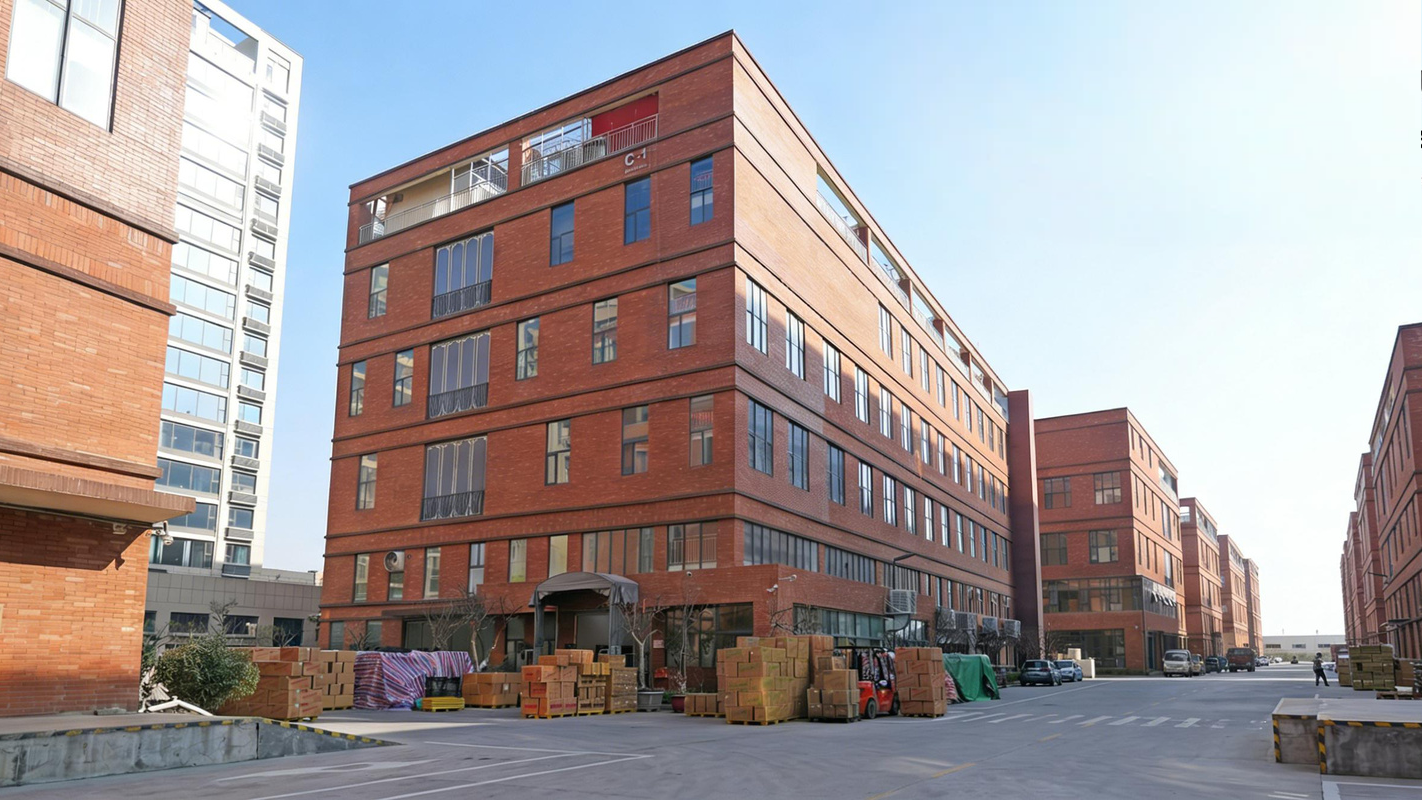
[FAC-DATA-LOG]
We are the factory – Shandong Wanhui has manufacturing experience in food packaging containers dating back to the 80s, based out of our Lanshan District facility which is served by 20 thermoforming lines, 6 sheet extrusion lines, 60 injection molding lines and over 200 staff ( including 120 in production and 30 in sales and logistics each).
What Drives Our Quote Numbers
The public site does not display cost per case as each B2B order would have different drivers to actual costs. Price will be set by:
- [VAR-01] Material line bagasse fiber/corn starch both, could be more. PLA cold line and bamboo composite are more expensive.
- [VAR-02] MOQ tier three tiers (3,000 / 10,000 / 50,000 units per SKU). Each tier enables a saver/unit price.
- [VAR-03] Custom branding stock SKUs ship naturally unprinted and light-colored; logo printing adds a plate-up fee that is written off into the run amortized over the numbers run.
- [VAR-04] Custom mold development if you need a non-stock size / geometry, we tool it. Mold development cost is amortized over first 3-5 runs.
- [VAR-05] Shipping mode sea freight on tier-3 orders, air freight on tier-1 rush orders.
MOQ Tier Structure
| Nivel | Units per SKU | Mejor para | Lead Time (Stock) | Lead Time (Custom Print) |
|---|---|---|---|---|
| Nivel 1 | 3,000 – 9,999 | Independent restaurants, ghost kitchens | 14-18 days | 21-28 days |
| Nivel 2 | 10,000 – 49,999 | Small chains, delivery brands, regional distributors | 18-24 days | 28-35 days |
| Nivel 3 | 50,000+ | National chains, food service distributors, institutional contracts | 24-30 days | 35-45 days |
The single largest procurement myth we encounter is presumption about what it takes to meet deadline and committing to rush-up charges or side-stepping proof reviews to save a week and finding out after a mass production run 50,000 pieces as-drawn was in-error. Our quote process builds in a 3-day proof cycle before plate cutting. We would inform you the proof was wrong before we cut the plates.
Request a Custom Quote →
Tell us your monthly volume and SKU mix; you will have an itemized quote within 24 hours.
OEM / ODM CAPABILITIES
Custom Branding, Logo Printing, and Mold Development MGR + PROC
Our unique market advantage is something most of our competitors cannot do for you: printing genuine brand logos and developing new mold shapes at the factory. If your entire shipping container is a brand component to your customer; a delivery box they snap pictures of, an advertisement tray at an event with your logo facing out, a school cafeteria bowl that signals your company’s use of environmentally preferable foodservice packaging – then we are not offering you as much value by substituting 200,000 stocks as-DEEMED-.
Custom Print Capabilities

View Print Specifications
- 4-color flexo printing on bagasse and cornstarch based resins
- Food-safe water-based inks, FDA-compliant
- Edge-to-edge artwork on lids and bases
- Cost to print: minimum 10,000 units per SKU. (Tier 2 entry)
Custom Mold Development
For non-stock sizes/ geometries – a proprietary bowl shape, a portion-controlled layout, a brand-distinguishing clamshell figure – we develop the mold here in our Indiana facility. Typical custom mold development timetable:
CAD review and DFM consultation
3-5 days
Tooling fabrication
15-25 days depending on complexity
First-article inspection sample
5-7 days post-tooling
Production run
per tier lead time
Mold amortizes over first 3-5 runs. By repurchase in year 2 you have the same cost per unit as a stock SKU; but you have a container nobody else is shipping.
How Compostable Containers Get Disposed Of — A Realistic Guide MGR + customer-facing
This is the section most supplier websites overlook because the honest answer is uncomfortable. Compostable does not equal composting made easy. A tested-binomially “compostable” container that ends up in a landfill does in fact act much as a piece of non-composting plastic in same landfill – anaerobic conditions inhibit biodegradation to a snail’s pace. Outcome here depends entirely on whether the container reaches a commercial facility.
The Two Disposal Categories That Actually Work
- Commercial composting / industrial composting
- 58C (140F), monitored aerobic conditions. ASTM D6400 and EN 13432 tested in the static conditions comparable to real-time commercial composting. Most BPI-certified offerings decompose in about 12 weeks at a commercial facility. BPI maintains a posted list of acceptable facilities at FindAComposter.com.
- Municipal organics collection
- If your city has green-bin collection routes to a commercial composting facility, compostable containers can go in with the rest of the organic waste stream. Review your city accepted-materials list – some garbage collection agencies accept BPI-certified materials, some only food scraps.
What Does Not Work
- Backyard home composting
- most ASTM D6400 tested-polymer composts in a home green-compost tumbling barrel. 58C (140F) is really hot compared to most home compost bins; for ASTM D6400, “OK Compost HOME” statements from TUV indicate they will compost well in general consumption.
- Landfill
- the most common disposal pathway in the U.S. Compostable if going to landfill; there is no true difference except that compostables in a landfill create methane in the same proportions as normal food waste; the carbonation process just takes many months or years.
- Standard recycling
- compostable plastics will cause contamination in PET and HDPE recycling streams. In practice they are typically disposed of as residual.
FIELD NOTE
“Most compost facilities do not accept compostable bags so they are a waste in many ways”.
Solution: Don’t give up on compostable packaging. Tell the customer how to dispose with the call-out on the container itself, so the end user isn’t left with the task of interpretation. Every custom print run ship with a 30-character disposal call-out option (ex., “Compost where accepted Check city guide”).
If your core customer is in a city with no organic collection or commercial composting, your sustainability profile is underpowered but your compliance benchmark remains. PFAS-free, EPS-foam ban-compliant and EPR-power remains unchanged even if the container doesn’t end in a commercial compost. That distinction is relevant to your procurement energy.
Interactive Planning Tools For Compostable Containers
Compostable Container Material Selector
Access Selector
Calculadora de TCO compostable versus plástico
Calcular el TCO
Wholesale MOQ + Per-Unit Cost Estimator
Estimate Costs
Todos los roles
Preguntas frecuentes
¿los contenedores compostables para llevar son realmente compostables?
Sí, siempre que el contenedor lleve una certificación BPI, TUV OK Compost o EN 13432 y se procese en una instalación de compostaje comercial. Estas certificaciones en sí se confirman mediante pruebas de laboratorio de terceros en condiciones controladas. La variabilidad se sitúa al final de su vida útil, no en el contenedor en sí. Publicamos nuestro número de certificado en la hoja de especificaciones del producto para su verificación directamente con la entidad certificadora.
¿cuál es la diferencia entre compostable y biodegradable?
“Biodegradable” is a broad claim with no defined time limit, deadline or end result: everything will break down eventually. “Compostable” is an quantifyable claim: ASTM D6400 or EN 13432 require that the container disintegrates within 12 weeks and biologically decomposes to non-toxic organic material within 6 months. Biodegradable without certification number=marketing language; compostable with certification number=legally defined claim.
¿sus contenedores están libres de PFAS y cuál es la documentación?
Cada línea compostable de Wanhui se envía sin PFAS, definido como inferior a 100 ppm intencional o detectable, según el estándar DTSC de California. Proporcionamos un informe de prueba PFAS del trimestre actual de un laboratorio externo con cada pedido de muestra, para que su revisor de seguridad alimentaria pueda validar rápida y fácilmente.
¿qué es el MOQ y qué cubre realmente el Nivel 1?
El nivel 1 comienza con una cantidad de 3000 unidades/SKU, una cantidad deliberadamente baja para un pedido OEM; la mayoría de las fábricas en nuestra escala de producción cuentan en miles o miles de miles. Se eligió la entrada a 3000 unidades porque los restaurantes independientes y las cocinas fantasma necesitan una opción mayorista B2B real, no solo un precio de caja B2C. Si desea realizar un pequeño piloto exploratorio para probar nuestras ofertas de menú, nuestro paquete de muestra gratuito satisface esa demanda.
¿cuánto dura el plazo de entrega, incluida la impresión personalizada?
Los SKU originales se enviarán en 14 a 18 días desde la confirmación del pedido en el Nivel 1, luego trabajarán entre 24 y 30 días en el Nivel 3 para tiradas más grandes. La impresión personalizada del logotipo tarda entre 7 y 10 días para la configuración de la placa y la aprobación de la prueba. Por lo general, se requieren entre 20 y 30 días adicionales para la producción inicial de moldes personalizados para geometrías únicas. Enviamos ilustraciones de prueba 3 días antes del corte de la placa, por lo que tenemos la oportunidad de corregir errores al principio del proceso.
¿puedo meter comida aceitosa caliente en un recipiente compostable sin problemas de fugas?
Yes—but the material matters. Bagasse fiber withstands 100-120C hot oil, and 200 C dry heat without warpage or seam leaks. Cornstarch is compatible with hot-food temps up to 110 C, and It survives a two- or three-minute microwave cycle. Clear PLA cannot go into hot-food combos — It puckers at 60 C, and is only Cold. We will show you our Decision Matrix on this page; if you aren’t sure of your application, send us your menu, and we’ll make a recommendation.
¿Qué envases de plástico utilizan actualmente la mayoría de los restaurantes y por qué cambiar?
Default sourcing for most existing restaurant container procurement in the U.S. is polypropylene, or polystyrene (EPS). EPS is now a foodservice “banned” product in California, New York, Washington, as well as an expanding list of other 50+ states. PP is still permitted, but it holds PFAS threat, and is having EPR costs applied to its All-in, as well as against the EPR burden for compostables. Once again, compostable appears to be the least-bumpy path out of the EPR and regulatory bans (which is why Quick-Service Restaurant clients jumped in so fast).
¿son estos contenedores una buena opción si mi ciudad no tiene instalaciones comerciales de compostaje?
I’ll be honest, its ultimate composting result will be disappointing. Federal regulations on commercial composter operation specs (58 C aerobic) cannot be matched by backyard composting, and these outcomes are still mostly dictated by federal standards; so you’ll reap the reactive PFAS-free, EPS-ban-compliant, and EPR-pleasing has-5-out-of-6 customers-is-justas-good as-is outcome. If your goal is regulatory compliance combined with a story to related to your brand, the bottom line is still Yes. If you’re a dedicated closed-loop compost operation and your city cannot afford infrastructure, a commercial reusable container rental program may be the better solution, and we will tell you so in the quoting process.
Tendencia ahora