Póngase en contacto con la empresa Wanhui


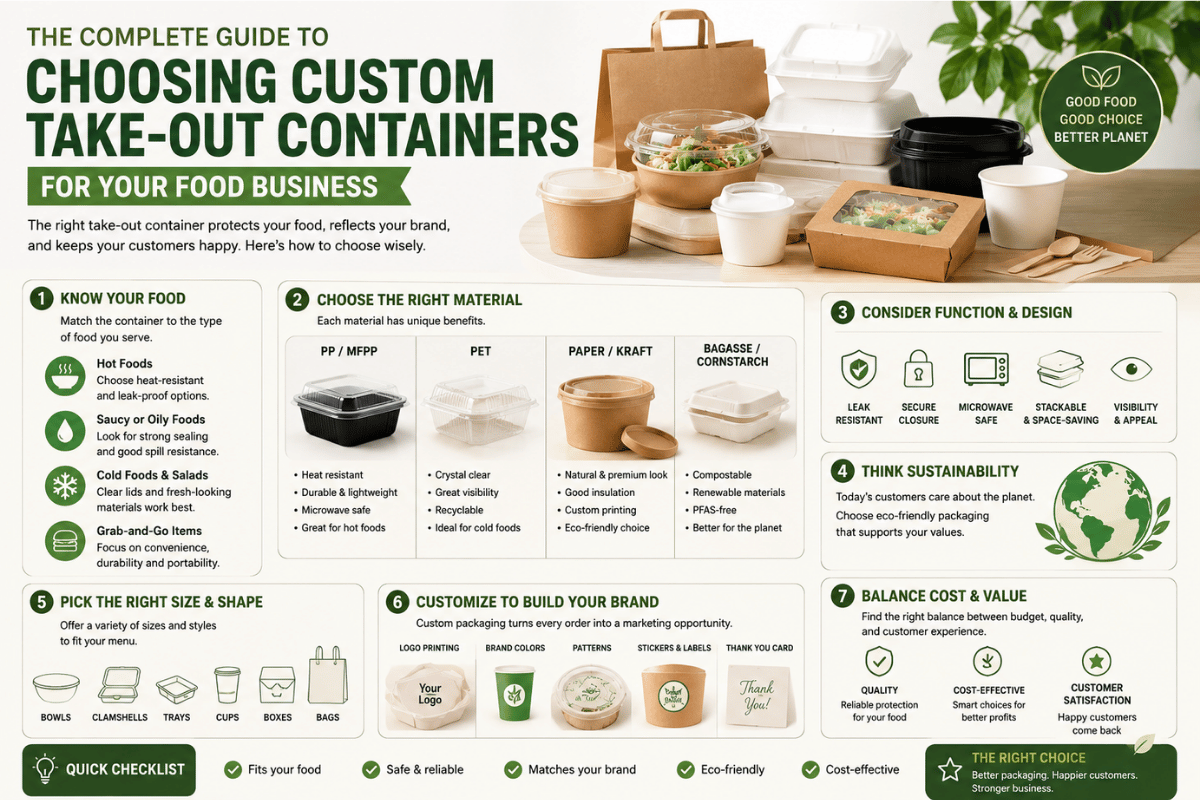
Los contenedores personalizados para llevar son cajas, tazones, bandejas y bivalvas de calidad alimentaria, construidos según las especificaciones propias de una marca de alimentos: tamaño, material, color y logotipo impreso, en lugar de comprarse como stock simple. Elegirlos bien es más difícil de lo que parece. Un solo pedido afecta la seguridad alimentaria, el rendimiento de los microondas, el control de fugas, las reglas de reciclaje y una cantidad mínima de pedido que puede ascender a decenas de miles. Esta guía analiza cada decisión en el orden en que realmente lo cumple, sin ningún discurso del proveedor adjunto.
¿Ya sabes lo que quieres y solo necesitas un fabricante? Saltar adelante para contenedores para llevar personalizados construidos según las especificaciones. ¿Sigues pesando materiales, tamaños y costos? Comience aquí.
Referencia rápida: materiales para contenedores para llevar de un vistazo
| Material | Límite de calor típico | Microondas | Fuga/grasa | Fin de la vida |
|---|---|---|---|---|
| PP (polipropileno) | ~120°C / 250°F | Sí | Alto | Reciclable #5 (bordillo limitado) |
| PET/rPET | ~70°C / 158°F | No | Alto | #1 reciclable (ampliamente aceptado) |
| Bagazo (fibra de caña de azúcar) | ~95-100°C / 205°F | Sí (ráfagas cortas) | Medio | Comercialmente compostable |
| Papel kraft + forro | ~85°C / 185°F | Limitado | Medio | Reciclable/compostable por revestimiento |
| Espuma/eps | Techo aislante y bajo | No | Medio | No reciclable; prohibido en muchas zonas |
| Aluminio | Apto para horno | No | Alto | Ampliamente reciclable |
Las temperaturas máximas enumeradas son medias y están sujetas a variaciones según el espesor de la pared y el paquete de aditivos específico. Consulte siempre la hoja de datos de un proveedor específica del artículo elegido.
¿qué son los contenedores personalizados para llevar (y cuándo vale la pena la personalización)?
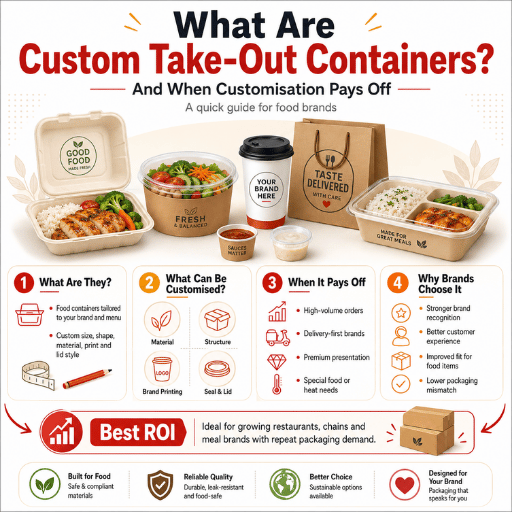
Un contenedor personalizado para llevar: una caja, tazón, bandeja o almeja de alimentos creado para su marca de alimentos en función de sus especificaciones exactas en lugar de seleccionarse entre artículos estándar prefabricados.
Personalizado puede significar dos cosas distintas, y confundir una con otra puede ser un error costoso para un comprador primerizo.
Impreso a medida es un contenedor prediseñado y preherramientado con su marca aplicada mediante impresión. Su forma ya está establecida; sus gastos cubren sólo la impresión. Custom-molded es un diseño de contenedor original fabricado a partir de una herramienta especializada, un molde, mecanizado para su forma precisa.
Imprimir una forma existente es en gran medida un trabajo de semanas; La puesta en marcha de un molde es un proceso de herramientas industriales que dura meses y una inversión mucho mayor. Para la mayoría de las marcas de servicios de alimentos, la ruta impresa es suficiente.
¿cuál es el propósito de la personalización?
La única función de los contenedores estándar es contener alimentos. Un contenedor de marca continúa sirviendo incluso después de salir de la cocina, sentarse en el escritorio del cliente de entrega, ser fotografiado o reutilizado en casa, toda la publicidad no compensada de su marca. Es un gasto que una concha genérica no podría generar.
Este beneficio se produce a expensas del compromiso a largo plazo, ya que usted se ve obligado a cumplir con los requisitos mínimos de pedido y soportar plazos de entrega más largos. En consecuencia, la personalización es rentable una vez que su demanda respalda constantemente una tirada antes de futuros ajustes a su concepto de servicio de alimentos.
💡 Regla del pulgar de equilibrio
Si no se consume una tirada completa de impresión personalizada en aproximadamente 9 a 12 meses, opte por personalizar solo la impresión. Reconfigurar un molde que ya no se adapta a su negocio, o descartar la impresión parcialmente utilizada a medida que evoluciona su concepto de servicio de alimentos, anula efectivamente la inversión realizada en su artículo personalizado.
Conclusión clave: decida siempre entre impresión personalizada y moldeo personalizado antes de solicitar una cotización.
Esas dos rutas difieren en costo, cronograma y riesgo, y la impresión personalizada suele ser la mejor opción.
Comparación de materiales de contenedores para llevar: PP, PET, papel, bagazo, espuma y aluminio
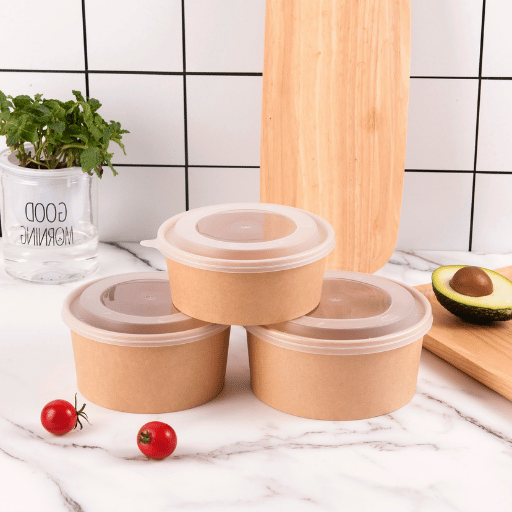
La elección del material dicta todo lo demás, incluida la tolerancia al calor, la compatibilidad del horno para sus clientes, la resistencia a derrames, el costo general y el cumplimiento de la comerciabilidad. A continuación analizamos cómo se comportan realmente los materiales comunes para contenedores de comida para llevar.
El polipropileno (PP) es el caballo de batalla de la comida caliente para llevar. Se mantiene estable hasta 120°C, por lo que es verdaderamente seguro para microondas y resistente al aceite y la grasa. Por eso las cajas de comida para llevar y los recipientes de sopa son en su mayoría PP. El PET y el rPET reciclado son transparentes y rígidos como el vidrio, adecuados para alimentos fríos como ensaladas y frutas cortadas, pero se ablandan alrededor de 70°C y no se pueden poner en el microondas. El bagazo (pulpa de caña de azúcar) se puede moldear en bandejas y bivalvas firmes y compostables que funcionan en refrigeradores y pulsos cortos de microondas, pero es propenso a ablandarse por el contacto prolongado con alimentos húmedos y aceitosos. Las cajas de papel Kraft, la clásica caja plegable para llevar y cajas para pizza, dependen de un revestimiento de PE o PLA, que decide la resistencia a la grasa y si la caja se puede reciclar o convertir en abono.
El poliestireno expandido (espuma) aísla a bajo precio pero no se puede calentar en el microondas, es casi no reciclable y un número cada vez mayor de autoridades han prohibido su uso en catering, como se detalla en la sección sobre regulación a continuación. Las bandejas de aluminio pueden soportar temperaturas del horno que derretirían la mayor parte del plástico y se reciclarían fácilmente, pero impiden que las microondas funcionen y son más caras.
¿son mejores los contenedores para llevar de plástico o papel?
El ganador absoluto tampoco es el fracaso de diferentes maneras. Los plásticos (PP) contienen líquidos y se recalientan fácilmente, pero, si bien son reciclables en papel, la mayoría de los recipientes de plástico para llevar no se utilizan en la práctica. Generalmente se considera que el papel y las fibras tienen mejor credibilidad ambiental y son compostables donde existen instalaciones, pero a menudo son peores para contener líquidos o aceites y una caja de papel forrada puede ser más difícil de reciclar que un recipiente de PP limpio. Quizás más concretamente, la apariencia limpia de algunos materiales de origen vegetal se ve estropeada por las fugas, y una caja de papel que falla en el transporte no es una buena medida de relaciones públicas. La respuesta radica en comprender ambos y elegir la comida para llevar adecuada para su alimento específico y las condiciones de reciclaje locales.
✔ Donde gana el PP
- Platos calientes, picantes o soposos
- Los clientes de alimentos se calentarán en el microondas
- Sellos herméticos y fiables a prueba de fugas
- Costo unitario más bajo en volumen
⚠ Donde gana Fiber / Kraft
- Mercados con prohibiciones de espuma o plástico
- Marcas que venden una historia ecológica visible
- Comida seca y tibia (no líquidos de remojo prolongado)
- Acceso al compostaje comercial
Si no estás seguro de qué resina se adapta a tu menú, una estructurada selector de material de contenedores para llevar reduce la lista corta de tipos de alimentos por tipo de alimento y, para líneas de origen vegetal, el contenedores compostables para llevar la gama muestra qué formatos de fibra están disponibles.
Punto clave: Elija siempre la resina antes de la forma para llevar ‘PP gestante para alimentos calientes que estén calientes, húmedos o que se cocinen en el microondas, PET para artículos fríos y estética limpia, y bagazo o papel kraft cuando la prohibición y la compostabilidad sean factores clave.
Cómo hacer coincidir el recipiente con su comida (frío, caliente, sopa, frita, ensalada)
Una de las rutas más rápidas para un cliente descontento es utilizar un único recipiente para todo el menú. Los alimentos fallan de diferentes maneras “la sopa se filtra, la comida frita se empapa, la ensalada se marchita «, por lo que el recipiente adecuado es una llamada comida por comida. Utilice la matriz siguiente como punto de partida.
| Tipo de alimento | Riesgo principal | Contenedor recomendado |
|---|---|---|
| Sopa, curry, salsa picante | Fugas, presión del calor | Cuenco de PP con tapa a presión ajustada a juntas |
| Comida frita (papas fritas, tempura) | Vapor → empapado | Caja kraft ventilada o bandeja perforada |
| Ensalada, tazones fríos, fruta cortada | Marchitez, mala visualización | Cuenco transparente de PET/rPET |
| Red caliente, arroz + acompañamientos | Mezclar, recalentar | Almeja con bisagras de PP o bandeja de 3 compartimentos |
| Pizza, panes planos | Vapor atrapado, aplastante | Cajas de pizza kraft corrugadas con respiraderos |
| Catering/multiporciones | Derrame, apilamiento | Bandejas grandes de PP o aluminio con tapas de bloqueo |
Dos modos de falla merecen especial atención, porque se encuentran detrás de la mayoría de las quejas sobre comida para llevar: condensación y textura perdida. Cuando un recipiente de comida caliente se sella, el vapor atrapado se condensa en la parte inferior de la tapa y gotea de regreso sobre la comida. Los productos crujientes y empanizados son los que más sufren. Para mantener crujientes los alimentos fritos se necesita una tapa que ventile «una tapa perforada o una caja kraft que respire «aunque eso va en contra del instinto de sellar todo herméticamente.
Una tienda de pho que se dedica a la entrega aprendió esto de la manera más difícil. Empacaba caldo en almejas poco profundas destinadas a platos de arroz secos, con tapas a presión nunca clasificadas para sellar líquido « y aproximadamente una entrega de cada ocho llegaba al cliente con caldo suelto en la bolsa. Cambiar la línea de sopa a tazones de PP profundos con tapas ajustadas, manteniendo las almejas para platos secos, acabó con las quejas de fugas. La lección es contundente: los líquidos necesitan un recipiente diseñado para líquidos, no la caja más cercana en el estante.
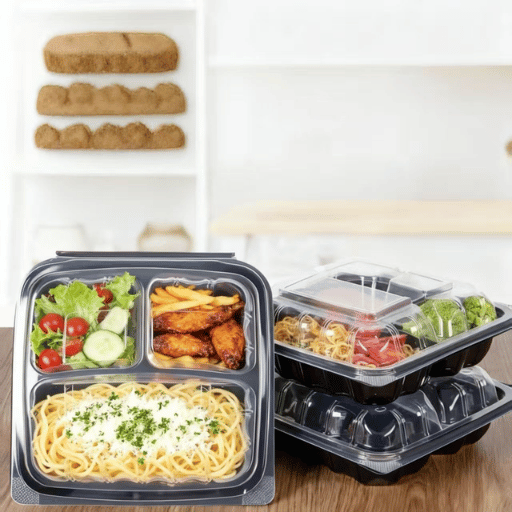
Pentru mâncare cu compartimente, Contenedores de 3 compartimentos evite que una mayor y dos lados se desangren entre sí, mientras que el catering a granel se sirve mejor con productos resistentes bandejas de comida dimensionado para porciones compartidas.
Lección principal: cada elemento del menú debe clasificarse según su probabilidad de causar problemas y combinarse con un recipiente. Todos los líquidos tendrán tapas selladas, todos los alimentos fritos tendrán respiraderos y todos los alimentos fríos tendrán una vista clara.
Tamaños y capacidad de contenedores para llevar: una guía práctica de dimensionamiento
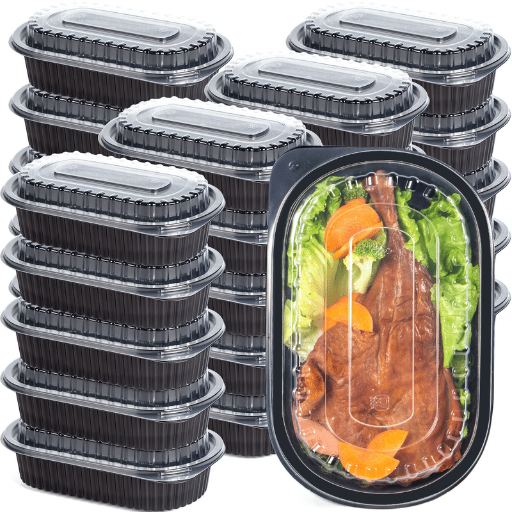
Si bien la capacidad en las hojas de especificaciones a menudo se enumera por volumen (oz líquido o ml) en los pedidos de contenedores, esta cifra no cuenta la historia completa.
Para evitar fugas de alimentos y garantizar un asiento adecuado en la tapa, siempre debe llenar hasta un volumen de trabajo del 75 al 80 por ciento. Tome sus decisiones de pedido en torno a este número de trabajo, no a su valor de catálogo.
| Nivel de tamaño | Capacidad | Uso típico |
|---|---|---|
| Pequeño | 8-12 oz (250-350 ml) | Guarniciones, salsas, salsas, postres |
| Medio | 16-26 oz (500-750 ml) | Tazones individuales, ensaladas, tazones de arroz |
| Grande | 28-38 oz (800-1100 ml) | Caramelo abundante, platos de fideos, combos |
| Familia/catering | 48 oz-ñona 100 oz+ (1400-13000 ml) | Porciones compartidas, bandejas para fiestas |
A menos que su menú necesite tamaños especializados para platos inusuales, normalmente tres o cuatro tamaños son suficientes.
Para ahorrar dinero y simplificar la gestión de inventario, se debe priorizar la selección de una familia de contenedores que permita la reutilización de tamaños de tapa en 2 o 3 contenedores. Al tener un solo tamaño para múltiples formatos de contenedores, la dotación de personal puede cometer menos errores al elegir tapas en el calor del momento y reducirá el costo total por artículo.
📐 Nota de ingeniería
No especifique la capacidad máxima al realizar sus pedidos.
Si un recipiente etiquetado como “32 oz” está demasiado lleno, hará que su tapa se expanda o el sello se doble; un recipiente clasificado para una porción de trabajo de 24 a 26 oz viajaría de manera confiable. Al informar a un fabricante sobre el tamaño correcto, el detalle que más importa es el peso del plato, no su número de catálogo.
Lección clave: haga que realizar pedidos sea fácil y rentable dimensionando de 3 a 4 contenedores para manejar niveles de llenado 75-80% y, si es posible, use tamaños de tapa comunes.
¿los contenedores para llevar son seguros para microondas y reciclables? La respuesta honesta

Que un reclamo sobre el embalaje de un contenedor pueda hacerse o no de forma legal o de buena fe depende completamente de la resina utilizada y, desafortunadamente, el símbolo de reciclaje en la parte inferior no puede ayudarlo a tomar ninguna de las dos decisiones.
¿se pueden utilizar recipientes de plástico para llevar para microondas?
Si está legalmente permitido o es un punto de marketing acreditado agregar texto de reclamo a la tapa o caja de un contenedor está completamente dictado por el contenido de resina del plástico. Sólo un tipo de plástico comúnmente utilizado, el PP (polipropileno), es seguro para microondas a 120 °C; de ahí que las comidas recalentables normalmente vengan en cajas de alimentos de PP. El PET puede descender hasta 70 °C y cualquier cosa que contenga espuma puede ser un desastre derretido.
La resina, en lugar de marcas genéricas, es el indicador definitivo: si su envase está marcado con “5 PP” y tiene documentación del proveedor que indica que el artículo es seguro para microondas, entonces puede comercializarse de forma segura como tal. De lo contrario, no sería aconsejable hacer este reclamo en su caja de alimentos.
¿se pueden reciclar los contenedores para llevar en casa?
Con mucha menos frecuencia de lo que la gente cree. El código de resina estampado en un contenedor simplemente identifica el contenido, no si los programadores locales lo aceptarían. Según el Agencia de Protección Ambiental de EE. UU, 2018 en Estados Unidos solo se reciclaron alrededor de 8,7% de plástico, e incluso las botellas de PET solo lograron 29,1%.
Entonces, la dura realidad de servir envases a sus clientes es que su contenedor (hecho de resina “reciclable”) probablemente se dirige al vertedero. ¿Más obvio?
Contenedor de plástico negro para llevar. Debido a que los clasificadores ópticos no pueden ver el negro contra una cinta transportadora oscura, estas cosas siempre caen en la basura, a pesar de que su resina (#5 PP) es realmente reciclable (per Reciclar inteligente Massachusetts, por ejemplo.) Sólo el PET #1 y el HDPE #2 se reciclan a un nivel significativo.
⚠️ Importante: Reciclable en Teoría 1 1 Reciclado en la Práctica
No imprima “reciclable” en un contenedor sin antes asegurarse de que la resina, el color y el formato sean aceptados mediante procesos de reciclaje en aquellos lugares donde operan sus clientes. Cualquier reclamo de reciclaje sin dicha investigación representa un riesgo de lavado verde. Si busca una historia justificable sobre el final de su vida útil, la respuesta podría ser un contenedor de PET claro y no negro o una caja comercial de fibra compostable.
Si su modelo puede soportarlo, la respuesta más fuerte a ambas preguntas es salir por completo de los desechables. Formatos duraderos y aptos para lavavajillas, como envases reutilizables para preparar comidas cambie la ecuación para los servicios de comidas por suscripción y las comidas en el campus de circuito cerrado.
En pocas palabras: la seguridad de los microondas se aplica por tipo de resina (PP sí, PET no). Reciclabilidad por aceptación local de ese material, no por la etiqueta ‘¡no dejes que los mensajes del final de tu vida útil se apliquen al plástico negro!
Seguridad y cumplimiento de los alimentos: lo que realmente significa “grado alimentario”
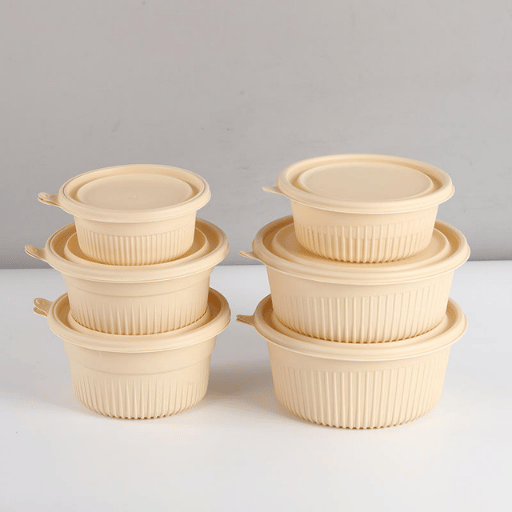
“Grado alimentario” no es una palabra de marketing sin sentido ‘es una designación requerida por la ley y es su obligación garantizar que cualquier componente que toque su alimento tenga esa designación para su mercado en particular.
En los EE. UU., la FDA supervisa los materiales plásticos en contacto con alimentos en la sección 21 CFR Parte 177 de su reglamento, donde 177.1520 se refiere específicamente a los polímeros de olefina, la clase en la que pertenecen el polietileno y el polipropileno en la gran mayoría de los envases para llevar. Los compuestos más recientes utilizan el sistema de notificación de contacto con alimentos de la FDA. En la UE Reglamento (UE) no 10/2011 describe plásticos de calidad alimentaria con sustancias y niveles máximos de migración (este es un subreglamento, según una regla marco que no contiene elementos transferibles que representen una amenaza para la salud de los productos alimenticios), mientras que, en China, el documento GB 4806.7 especifica reglas para los alimentos que entran en contacto. Propiedades de los plásticos.
Una afirmación de ‘calidad alimentaria’ no tiene sentido sin la documentación que la respalde. El comprador nunca debe salir de fábrica sin una copia del informe de la prueba de migración y una declaración de conformidad relativa a la resina y el colorante exactos utilizados (no un certificado genérico de fábrica). Es el pigmento y aditivo para el que se realizan las pruebas de migración.
Antes de autorizar cualquier pedido de contenedor de comida para llevar personalizado, pregunte y consérguese:
- ✔
Una declaración de cumplimiento que cite la normativa aplicable a su mercado (FDA 21 CFR, EU 10/2011 o GB 4806.7) - ✔
Un informe de prueba de migración/extracción emitido por un laboratorio acreditado para la resina y el colorante especificados. - ✔
Confirmación de que el recipiente está fabricado con resina virgen de calidad alimentaria (en lugar de una nueva molienda reciclada inespecífica que podría ser inapropiada para el contacto directo con alimentos).
Si la caja tiene un reclamo compostable, solicite la referencia de certificación detrás de ella: un independiente verificador de cumplimiento compostable ayuda a confirmar que una caja de fibra cumple con un estándar aceptado.
Conclusión clave: Trate el “grado alimentario” como un reclamo para verificar. Obtenga una declaración de cumplimiento y un informe de prueba de migración vinculado a su resina y colorante exactos archivados antes de que comience la producción.
Cuánto cuestan los contenedores personalizados para llevar (y qué genera el precio)
No existe un precio único para un contenedor personalizado para llevar. El costo total es el precio por contenedor multiplicado por el volumen, más cualquier otro embalaje. Al menos seis factores mueven ese precio unitario, y conocerlos mantiene un presupuesto honesto y muestra dónde se rellena una cotización.
Material
La fibra y el rPET suelen costar más por unidad que el PP virgen
Volumen de pedido
El precio unitario cae bruscamente a medida que la cantidad supera cada nivel de MOQ
Imprimir colores
Cada color adicional puede agregar una placa y un cargo de configuración
La primera división importante: ¿su presupuesto es para impresión personalizada o para un contenedor moldeado a medida?
Para imprimir un contenedor a medida, se incurre en costos de configuración para la impresión y un MO (Q) moderado, generalmente un rango de miles a decenas de miles de cada diseño de impresión único. Por el contrario, la creación de un molde personalizado tiene costos de herramientas y configuración de una escala sustancialmente diferente y debido a que estos costos de herramientas se pagan por adelantado y se amortizan en cada caja, los MOQ del molde son significativamente más altos, solo apropiados para grandes volúmenes, demanda constante o una forma única que de otro modo no se podría obtener.
Olvídese del precio unitario, se trata del costo por pedido atendido. Simplemente agregue el precio de cada componente, es decir, cada contenedor, tapa, bolsa e inserto, y obtendrá el costo de embalaje por pedido. De hecho, un contenedor con un precio dos centavos más alto puede ser mucho más barato si esos 2 centavos adicionales evitan que una entrega dañada se extravíe y un reembolso costoso.
Al analizar los pedidos realizados a través de fábricas en el extranjero, considere el ‘costo de aterrizaje’ (su cotización más todos los envíos, derechos de importación y tarifas de importación) y, en los estados a partir de 2025, tenga en cuenta las tarifas de embalaje en los estados que adoptan la responsabilidad ampliada del productor. discutido en la siguiente sección.
Una cocina en la nube con tres marcas virtuales golpeó directamente la pared MOQ. Cada marca quería su propia cubierta impresa, pero ninguna podía consumir una tirada separada en un año. La solución fue un contenedor neutral compartido, con la identidad de la marca trasladada a una funda impresa y una pegatina (una de las cuales empaquetaba SKU a un volumen que generaba una ruptura de precio real). A MOQ y estimador de tiempo de entrega y a calculadora de costo total de propiedad a cinco años haga que esa compensación sea concreta antes de comprometerse.
Conclusión clave: cree el presupuesto total en torno al costo por pedido atendido y el ‘costo de aterrizaje’, en lugar del costo unitario del contenedor.
Si las cantidades de pedido requeridas son demasiado bajas para un molde hecho a medida, imprima su diseño en un recipiente estándar, guárdelo o agregue una pegatina.
Diseño de envases personalizados que construyen su marca

La impresión, el elemento ‘premium’ de cualquier contenedor personalizado, debería ofrecer valor.
¿qué buena impresión de envases reproduce diseños limpios en una superficie torpemente curvada, a gran velocidad y en una línea de producción.
Los métodos de impresión difieren con cada contenedor: Flexo es adecuado para papel y cajas kraft, bueno para sólidos de bajo costo. Para obtener la mejor definición, Offset se utiliza a menudo para fundas impresas y cajas plegables. Para gráficos impresos en cajas kraft, que durarán, ofrecemos etiquetado en molde: una película impresa se integrará en un recipiente de plástico en el proceso de moldeo.
Alternativamente, podría considerar el método de impresión directa que coloca las obras de arte directamente sobre una pared o tapa de plástico. Ambos métodos de impresión presentarán diferentes límites de color y costos, y usted podrá servir mejor su obra de arte en ese entorno.
Para un reciente empaque de cambio de marca de cadena de ensaladas, se presentó un logotipo diseñado para pantallas, compuesto por finos degradados y letras gris pálido. En una superficie kraft llena de baches, los colores se estriaron y las letras casi desaparecieron. La impresión habría costado semanas y otra configuración.
los logotipos de embalaje requieren el envío de una versión plana de alto contraste con colores de manchas distintos antes de aceptar pedidos.
💡 Consejo profesional: resumen de diseño de embalaje
Antes de aprobar muestras de obras de arte: presente al fabricante una obra de arte vectorial original, definiciones exactas de colores puntuales, el diseño sobre un terreno plano y los márgenes de mantenimiento para cada cara del contenedor.
Diseño dentro de una gama de uno o dos colores para mantener la impresión económica; una imagen vibrante a todo color se untará a velocidad de producción.
Algunos consejos de diseño servirán bien a cualquier producto: asegúrese de que el logotipo se imprima bien en su tamaño actual; nunca agrupe diseños de un borde de una cara a otra; asegúrese de que su contenedor se reconozca fácilmente: una forma icónica o una banda de color sólido distintiva funcionan mejor.
Trate la obra de arte como ingeniería de empaque, no como una ocurrencia gráfica de último momento.
En resumen: sea realista acerca de las limitaciones de color; proporcione ilustraciones de logotipos planos y de alto contraste con colores puntuales definidos; y apruebe en muestras de productos antes de un trabajo de impresión grande.
Cómo conseguir un fabricante confiable de contenedores para llevar
El lugar donde adquiere marca la diferencia en calidad, puntualidad y resolución de problemas. Ayuda a diferenciar entre el fabricante y el revendedor o agente.
Si simplemente busca algún logotipo agregado a una línea de productos (algunos trabajos de impresión necesitan tan poca atención que recibirá lo que busca de cualquiera), puede usar un revendedor que venda contenedores de existencias y aplique su logotipo; estos generalmente conllevan un margen de precio y le dan poca influencia sobre el contenedor en sí. Pero si necesita un tamaño particular o una forma hecha a medida, un plástico específico certificado por contacto con alimentos, documentación específica o un recurso cuando algo sale mal, debe ir a la fuente “un fabricante.
La mayoría de los compradores cometen sólo un puñado de errores de compra, y la rápida rutina de investigación que aparece a continuación evita cada uno de ellos:
- ✔
Siempre solicite muestras primero. Pruebe el ajuste, las fugas, el comportamiento en microondas y la calidad de impresión con su comida real antes de comprometerse a ejecutarla por completo. - ✔
Confirme el MOQ y el plazo de entrega por escrito «incluido el tiempo de configuración de impresión, que los compradores subestiman habitualmente. - ✔
Solicite los documentos de seguridad alimentaria por adelantado (declaración de cumplimiento, informe de migración) « La desgana aquí es una señal de alerta. - ✔
Aclara quién es el propietario del molde si encarga herramientas y cuáles son los términos de reorden. - ✔
Compare la capacidad de producción con su crecimiento «un proveedor que no puede escalar obliga a volver a buscar a mitad de temporada.
Si una cotización es significativamente más baja que todas las demás propuestas de precios, ese precio es una señal de advertencia, no una ganga; asegúrese de que estén utilizando materiales de espesor apropiado, plásticos aceptables de calidad alimentaria y documentación adecuada. Pese el precio según las credenciales del fabricante y la experiencia de exportación: uno que ya se ha enviado contenedores personalizados para llevar en su mercado comprenderá sus realidades de cumplimiento y transporte. Puede tener una idea del historial de un fabricante a partir de su antecedentes de la empresa página.
Aprendizajes importantes: primero pruebe para permitir que su cliente se comprometa, obtenga el MOQ, el tiempo de entrega y los documentos de cumplimiento por escrito y descarte una cotización sospechosamente baja y tómela como una advertencia del hundimiento del barco.
Perspectivas de la industria 2026: prohibiciones de espuma, leyes EPR y cambio a la fibra
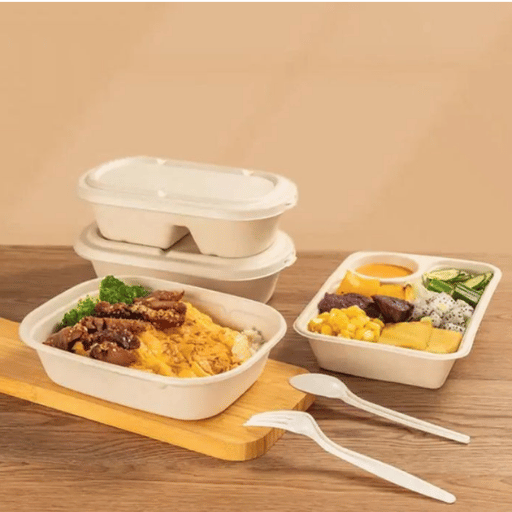
El terreno regulatorio en los envases para llevar está cambiando más rápido de lo que ha cambiado en al menos una década. Examinamos tres turnos que guiarán la estrategia de abastecimiento hasta 2026 y más allá.
Se está legislando la eliminación de la espuma. Los artículos de servicios alimentarios de poliestireno ampliado están prohibidos en una lista de jurisdicciones de rápido crecimiento. El estado de Washington Departamento de Ecología contenedores, platos, tazones, almejas, bandejas y tazas de espuma prohibidos a partir de junio de 2024; La prohibición de los contenedores de alimentos con espuma en Colorado entró en vigor el 1 de enero de 2024; y solo California tiene 131 ordenanzas locales sobre poliestireno, por Californianos contra el desperdicio. Si todavía hay espuma en su mezcla de envases para llevar, planifique su reemplazo ahora en lugar de revolverla cuando su estado actúe.
Cambios en la responsabilidad ampliada del productor (EPR) quién paga. A finales de 2025, siete estados de EE.UU. (Maine, Oregón, Colorado, California, Minnesota, Maryland y Washington) habían promulgado leyes EPR sobre envases que trasladan el coste de eliminación de envases a “productores”, término que ahora suele llegar al propietario de la marca. Como a Guía de cumplimiento de EPR 2025 según lo establecido, el programa de Oregón comenzó a aplicarse el 1 de julio de 2025 y la fecha límite de cumplimiento de California es el 1 de enero de 2027. El efecto práctico: los formatos difíciles de reciclar pueden conllevar tarifas más altas que los reciclables o compostables, por lo que la elección del material se está convirtiendo en una decisión de costo directo. no sólo ambiental.
La demanda se está moviendo hacia la fibra. A nivel mundial, se prevé que el mercado de envases para servicios alimentarios crezca de 110.290 millones de dólares en 2025 a 188.390 millones de dólares en 2035, y los formatos compostables y de fibra son la parte de más rápido crecimiento. La medida concreta para cualquier marca que realice un pedido de envases en 2026 es diseñar la línea para que el material pueda cambiar «favorecer las familias de envases que existen tanto en versión de plástico como de fibra, por lo que un cambio regulatorio no obliga a una reestructuración completa. El envases de alimentos biodegradables la categoría es un lugar útil para comparar en qué formatos de fibra ya se pueden ubicar.
Conclusión clave: Trate la espuma como material para dejar de usar, haga un presupuesto para las tarifas de EPR en los estados regulados y elija familias de contenedores que puedan cambiar entre plástico y fibra sin necesidad de volver a equiparlos.
Preguntas frecuentes
P: ¿Cuál es la cantidad mínima de pedido contenedores personalizados para llevar?
Ver respuesta
Esto depende de si desea imprimir a medida o molde personalizado. Para imprimir de forma personalizada una forma de contenedor que ya existe, el precio generalmente aumenta a un volumen de varios miles a decenas de miles de unidades por diseño. Cuando utilice un molde personalizado, generalmente requiere muchos volúmenes mayores, ya que distribuye el costo de las herramientas entre cada unidad producida. Confirme siempre por escrito el MOQ de su contenedor específico y su trabajo de impresión.
P: ¿Cuánto tiempo lleva producir contenedores para llevar personalizados?
Ver respuesta
Para impresiones personalizadas con la forma de un contenedor existente, los tiempos de producción serían de unas pocas semanas después de la instalación aprobada del arte y la impresión. Si necesita un molde personalizado completamente nuevo, su plazo de producción será mucho más largo ya que el molde debe mecanizarse y escurrirse. La aprobación del muestreo y del arte viene antes de eso, ¡así que tenga en cuenta también este tiempo!
P: ¿Cuál es la diferencia entre contenedores impresos y moldeados a medida?
Ver respuesta
Impreso personalizado significa un contenedor listo para usar y listo para usar con su logotipo aplicado ‘contra menos costoso, menor cantidad, más rápido. Moldeado personalizado significa una forma de contenedor completamente nueva hecha con una herramienta cortada solo para usted ‘significativamente más cara, mayor plazo de entrega y mayor cantidad de dinero; Por lo general, solo vale la pena cuando no puede encontrar ninguna forma original para funcionar. Muchas marcas de servicios de alimentos optarán por impresiones personalizadas.
P: ¿Valen la pena el costo adicional de los contenedores compostables para llevar?
Ver respuesta
Vale la pena si su mercado tiene prohibiciones de espuma o restricciones de embalaje de plástico, si su base de clientes tiene acceso a compostaje comercial o si demostrar sus credenciales ambientales en su marca es importante para el marketing de marca. Menos valioso si carece de una infraestructura de compostaje comercial local o si sus alimentos están lo suficientemente húmedos y aceitosos como para que el rendimiento de la fibra se deteriore. Y una vez que las tarifas de EPR se vuelvan comunes, la dificultad para reciclar plástico pronto podrá convertirlo en una opción más barata de todos modos.
P: ¿Pueden entrar contenedores de comida para llevar en el congelador?
Ver respuesta
Los contenedores de PP tienen una excelente tolerancia al congelador, lo que los hace populares para paquetes de preparación de comidas. Los recipientes hechos con fibra de bagazo también toleran la congelación en la mayoría de los tipos de alimentos. El PET puede volverse quebradizo en temperaturas bajo cero y podría agrietarse bajo estrés, especialmente si se manipula con brusquedad. Informe a su proveedor al principio del proceso de diseño si este será un uso principal.
P: ¿Necesito contenedores diferentes para alimentos fríos y calientes?
Ver respuesta
Normalmente sí. Los alimentos calientes generalmente necesitan material termoestable e idealmente apto para microondas, como el PP, a veces con ranuras de ventilación para evitar la acumulación de vapor que provoca alimentos empapados. Mientras tanto, los alimentos fríos se muestran mejor en PET transparente, que se mantiene firme a la temperatura del refrigerador, pero se vuelve algo quebradizo a medida que se enfrían. Para esos fines, una pequeña serie de dos o tres tipos de contenedores a menudo servirán mejor en lugar de intentar construir uno que lo haga todo.
P: ¿Qué información necesita un fabricante para cotizar mi pedido?
Ver respuesta
La información mínima esencial: su tipo de alimento y temperatura de servicio, el tamaño de la porción de servicio de trabajo, el recuento de unidades deseado, el material preferido (o la guía de solicitud), si necesita impresión personalizada y la cantidad de colores necesarios, su país de destino y las regulaciones/impuestos relevantes. y la fecha de entrega deseada. Un informe más claro produce estimaciones de precios más comparables y útiles.
¿listo para especificar sus contenedores personalizados para llevar?
Wanhui produce envases para llevar reutilizables, de fibra y PP de calidad alimentaria, que ofrecen desarrollo interno de moldes e impresión de logotipos personalizados para la industria de servicios alimentarios en todo el mundo.
Acerca de esta guía
Esta guía fue escrita para ayudar a los operadores de servicios de alimentos a elegir contenedores para llevar sin sobrevenderlos. Los puntos regulatorios “prohibiciones de espuma, leyes EPR, estándares de contacto con alimentos de EE. UU. y la UE « se extraen de las principales fuentes gubernamentales y de estándares que se citan a continuación, y los rangos de temperatura de los materiales se dan como valores típicos de la industria que varían con el diseño de las piezas. Lo publica Wanhui, un fabricante de contenedores para llevar de calidad alimentaria, y el equipo de embalaje de Wanhui lo revisa para determinar su precisión técnica.
Referencias y fuentes
- Plásticos: datos específicos del material «Agenția de Protecție Ambientală din Estados Unidos
- Prohibición ampliada del poliestireno «Departamentul de Ecologie al Statului Washington
- 21 CFR Parte 177 « Aditivos alimentarios indirectos: polímeros « Administración de Alimentos y Medicamentos de EE.UU. (eCFR)
- Reglamento (UE) no 10/2011 sobre materiales y objetos plásticos destinados a entrar en contacto con alimentos « EUR-Lex, Unión Europea
- ¿mis contenedores para llevar son todos basura? « RecycleSmart Massachusetts
- Ordenanzas locales de poliestireno de California «Californianos contra el desperdicio
- La Guía 2025 para el cumplimiento de envases EPR « Proskauer Rose LLP
- Tamaño del mercado de envases para servicios de alimentos « Hacia el embalaje
Artículos relacionados
- Contenedores personalizados para llevar « tamaños, materiales e impresión de logotipos directos de fábrica
- Envases de alimentos personalizados « toda la gama de envases personalizados
- Contenedores de alimentos desechables « bandejas, tazones y contenedores de compartimentos
- Envases de alimentos ecológicos « formatos compostables y biodegradables
- Póngase en contacto con el equipo de Wanhui « muestras, citas y consejos de especificaciones