Póngase en contacto con la empresa Wanhui


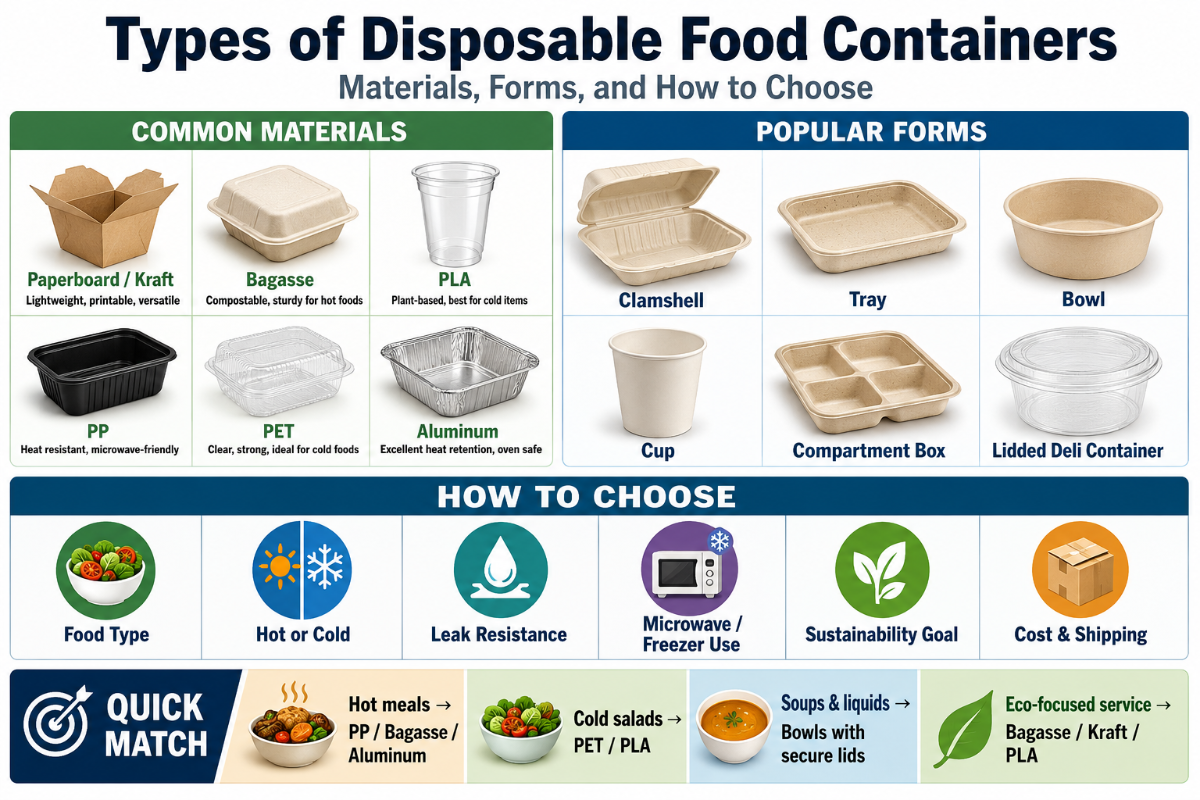
Si tiene un restaurante, una cocina de reparto o una línea de catering, el tipos de envases de alimentos desechables usted elige decidir si la sopa llega sellada o derramada, si un almuerzo recalentado es seguro o lixiviante y si su empaque pasa la siguiente ley del plástico de un solo uso en su estado. Esta guía desglosa cada material y factor de forma del contenedor principal, para qué es realmente seguro cada uno y cómo hacer coincidir un contenedor con los alimentos que contiene, sin el brillo del marketing.
Es un complemento educativo de nuestra gama comercial. Si está listo para buscar, consulte envases de alimentos desechables de Wonhi para opciones mayoristas y OEM.
Hoja de referencia de contenedor desechable
| Material | Mejor para | Microondas | Reciclable/compostable |
|---|---|---|---|
| PP (plástico #5) | Comidas calientes, picantes y recalentables | Sí | Reciclable donde se acepta #5 |
| APET (plástico #1) | Ensaladas frías, delicatessen, exhibición clara | No | Ampliamente reciclable (#1) |
| Lámina de aluminio | Calentar al horno, comida caliente y grasosa | No | Reciclable (limpio) |
| Cartón/kraft | Cajas para llevar secas a húmedas | Depende del forro | Reciclable si no está recubierto |
| Fibra moldeada/bagazo | Alimentos calientes, programas ecológicos | Sí | Compostable (consulte sin PFAS) |
| Espuma EPS (#6) | Aislamiento de bajo costo (prohibido en 12 estados) | No | Rara vez reciclable |
Trate esto como un punto de partida: las secciones siguientes agregan temperaturas, códigos de resina y un selector de alimento a contenedor.
¿qué son los envases desechables para alimentos?
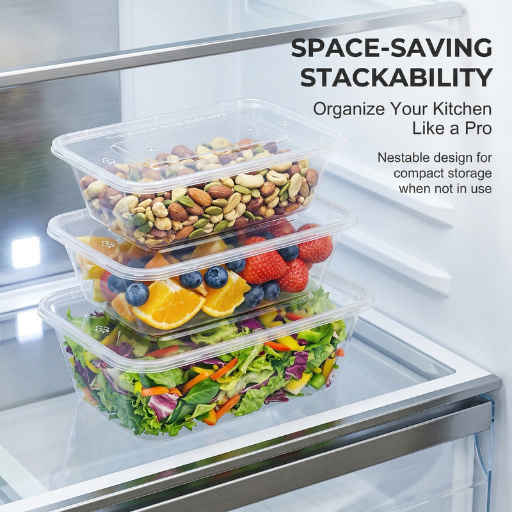
Los recipientes desechables para alimentos son recipientes de un solo uso «cajas, tazones, bandejas, bivalvas, tazas y recipientes para llevar «construidos para contener alimentos preparados para transporte, comida para llevar, entrega a domicilio o servicio a corto plazo, y luego reciclados, compostados, o desechado. No son los recipientes de almacenamiento reutilizables y aptos para lavavajillas que se guardan en casa (la categoría Tupperware y Pyrex). Esa distinción importa: los contenedores de almacenamiento domésticos están diseñados para cientos de ciclos de lavado, mientras que los desechables están optimizados para el costo por unidad, el apilamiento y un solo viaje desde la cocina al cliente.
Esta categoría es grande y está en crecimiento. A nivel mundial, el mercado de envases de alimentos desechables fue valorado cerca 49.200 millones de dólares en 2025 y se prevé que aumente a 88.700 millones de dólares para 2036, una tasa de crecimiento anual de alrededor de 5,5%, impulsada principalmente por la entrega de alimentos y el endurecimiento de la regulación del embalaje (FutureMarketInsights / IndexBox). Los compradores son restaurantes, cocinas fantasma, empresas de catering, tiendas de comestibles y comedores institucionales en hospitales y escuelas, cada uno con diferentes necesidades de temperatura, fugas y cumplimiento. Debido a que se trata de artículos de un solo uso, el manejo al final de su vida útil importa desde el principio: el EPA de EE.UU enmarca las opciones de alimentos en torno a reducir, reutilizar y reciclar antes de desecharlos, un hilo que recorre las secciones de materiales y sostenibilidad a continuación.
Debido a que “contenedor” cubre tanto terreno, la forma más inteligente de aprender el paisaje es a lo largo de dos ejes: el material está hecho de (que gobierna el calor, la seguridad y la eliminación) y el factor de forma (que rige el ajuste, la porción y el cierre). Las dos secciones siguientes toman cada una por turno.
Materiales de contenedores de alimentos desechables, comparados
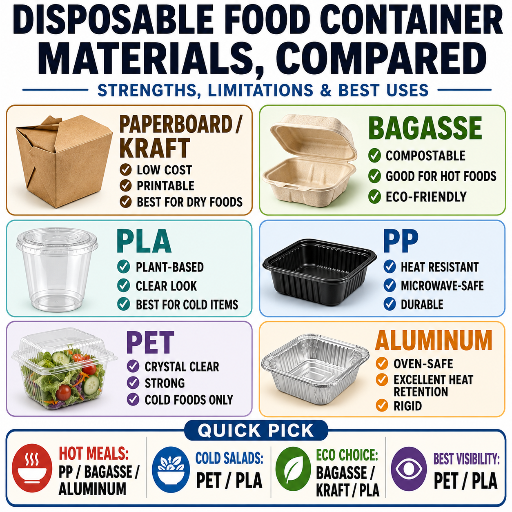
El material es la opción más importante, porque establece el techo de temperatura, el comportamiento del microondas y del congelador, la resistencia a la grasa y la humedad, y cómo se puede desechar el recipiente. A continuación se muestra una síntesis original que llamamos Tabla de compensación de 5 materiales « fusiona los límites térmicos publicados con las realidades de contacto y eliminación de alimentos para que puedas comparar familias una al lado de la otra en lugar de una página de producto a la vez.
| Material (resina) | Techo de uso caliente | Microondas | Congelador | Horno | Grasa/humedad | Fin de vida | Comida que mejor se adapta |
|---|---|---|---|---|---|---|---|
| PP « polipropileno (#5) | ~250-266°F | Sí | Sí | No | Alto | Reciclar (#5) | Caliente, picante, recalentable |
| APET “PET amorfo (#1) | ~120°F (frío/frío) | No | Sí | No | Alto (agua) | Reciclar (#1) | Ensaladas frías, delicatessen, exhibición clara |
| CPET « PET cristalizado (#1) | a ~400°F | Sí | Sí | Sí | Alto | Reciclar (#1) | Comidas preparadas congeladas para el horno |
| Espuma PS/EPS (#6) | ~175°F | No | Sí | No | Medio | Rara vez reciclado; prohibido en 12 estados | Bebidas/sopa calientes de bajo costo (cuando sea legal) |
| Lámina de aluminio | a ~400°F (horno) | No | Sí | Sí | Alto | Reciclable (limpio) | Calentar al horno, graso caliente, catering |
| Papel kraft (sin estucar) | Cálido, seco | Limitado | No | No | Bajo | Reciclable/compostable | Artículos secos, pasteles, sándwiches |
| Cartón recubierto (PE/PLA) | Caliente (dependiente del revestimiento) | Depende del forro | Sí | No | Alto | El recubrimiento limita el reciclaje | Cajas para llevar, fideos/arroz |
| Fibra moldeada/bagazo | Caliente; a ~400°F+ | Sí | Sí | Recalentamientos cortos | Alto (si se trata) | Compostable (verificar libre de PFAS) | Alimentos calientes, marcas eco-forward |
| bioplástico PLA (#7) | ~120°F | No | Sí | No | Medio | Sólo compost industrial | Bebidas frías, delicatessen frías (eco) |
| RPET « PET reciclado (#1) | ~120°F (frío/frío) | No | Sí | No | Alto | Reciclar (#1) | Ensaladas frías con contenido reciclado |
Las temperaturas son rangos típicos publicados y varían según el grado, el espesor de la pared, el tiempo de llenado y la grasa/acidez de los alimentos. Trátelos como guía y luego confírmelo con las especificaciones del proveedor para su artículo exacto.
Plástico: PP, PET (APET vs CPET) y PS
El plástico todavía representa aproximadamente 38% del consumo de contenedores desechables en 2026 y, por una buena razón: resiste la humedad y sobrevive al viaje. Polipropileno (PP, resina #5) es el caballo de batalla para la comida caliente: se mantiene estable a aproximadamente 250-266°F (aproximadamente 121-130°C) y es apto para microondas porque su estructura semicristalina mantiene su forma cerca de los rellenos del punto de ebullición, por lo que un recipiente de PP maneja un curry recalentado o una sopa caliente que deformaría un plástico más fino. Contenedores de preparación de comidas la mayoría de las veces son PP exactamente por esta razón. .
PET es donde la mayoría de los compradores simplifican demasiado. Estándar APET (amorfo, resina #1) es el plástico transparente detrás de los tazones para ensaladas y las tapas de delicatessen, cristalino y solo frío, no apto para microondas, y es mejor conservarlo a menos de ~120°F (49°C). Pero CPET (PET cristalizado) es un animal diferente: está diseñado para platos preparados congelados y en el horno y tolera el calor del horno a unos 204°C (400°F). Entonces “PET significa solo frío” está mal “depende de si la bandeja es amorfa o cristalizada. Poliestireno (PS, #6), incluida la espuma expandida, es barata y aislante, pero generalmente tiene una clasificación de menor calor (los datos de la industria sitúan el límite práctico en torno a 175°F / 79°C, dependiendo del grado). Los EE.UU. Programa Nacional de Toxicología el estireno es “razonablemente esperado como carcinógeno humano”, y los estudios informan que la migración del estireno a los alimentos aumenta con el contenido de calor y grasa, una de las razones por las que la espuma ahora está prohibida en muchos estados (que se tratan a continuación).
Lámina de aluminio
Las bandejas de aluminio son la opción cuando los alimentos necesitan calor real en el horno: con un calibre de aproximadamente 38-80 µm, soportan hasta aproximadamente 400°F (204°C), conducen el calor de manera uniforme para recalentar y eliminan la grasa. Su limitación es el microondas “el metal y los microondas no se mezclan « y la superficie se calienta rápidamente, por lo que el papel de aluminio se adapta al catering, los platos principales horneados y los artículos con acabado de horno en lugar de la entrega en mano.
Papel, Kraft y Cartón Revestido
Los recipientes a base de papel abarcan una amplia gama. El kraft sin recubrimiento (comúnmente 250-350 gsm para cajas rígidas) es fino para artículos secos o calientes (pasteles, sándwiches) y se recicla fácilmente, pero absorbe la humedad. Para transportar alimentos húmedos o grasosos, el cartón se recubre históricamente con polietileno (PE), cada vez más con PLA. Ese forro es lo que hace que una caja de papel contenga un plato de fideos picante, pero también es lo que complica el reciclaje, ya que el recubrimiento debe separarse. Bandejas de comida suelen ser cartón o fibra moldeada.
Fibra Moldeada y Bagazo (Caña de Azúcar)
Fibra moldeada « con mayor frecuencia bagazo, el residuo fibroso que queda después de prensar la caña de azúcar se ha convertido en el material “eco” predeterminado. Es resistente en un amplio rango de temperaturas (aproximadamente -13°F a 428°F / -25°C a 220°C), manipula alimentos calientes sin deformarse y es apto para microondas para recalentamientos cortos. Es realmente compostable en el sistema adecuado. Pero el bagazo lleva un asterisco importante en el tratamiento químico que cubrimos en la sección de seguridad “no asuma que ”fibra vegetal“ significa automáticamente ”limpio”
✔ Fortalezas plásticas
- La mejor resistencia a la humedad y las fugas
- microondas de PP; hornos CPET; APET muestra claramente los alimentos
- El costo más bajo por unidad a prueba de fugas
⚠¦ Límites de fibra/papel
- Necesita un recubrimiento o tratamiento para alimentos húmedos/grasos
- Compostable sólo cuando una instalación lo acepta
- Debe verificarse sin PFAS (ver más abajo)
Formas y formatos de contenedores: formas, tamaños y cierres
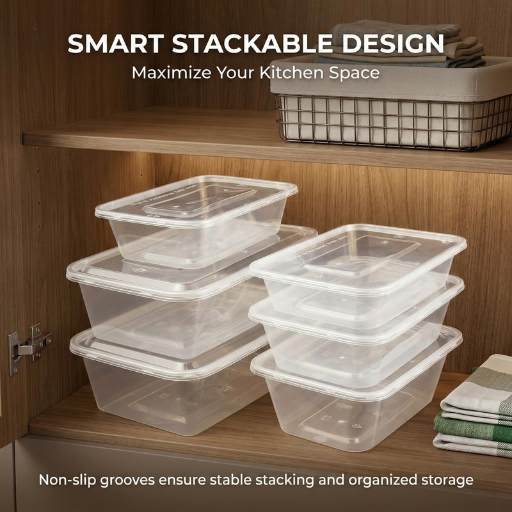
Una vez que se asienta el material, el factor de forma decide el ajuste y la función. La misma resina de PP se convierte en una delicate, una almeja con bisagras o una bandeja de tres secciones según el modelo de comida y servicio. Así es como se asignan las formas comunes de uso y tamaño.
| Forma | Tamaños típicos | Comida que mejor se adapta |
|---|---|---|
| Concha/con bisagras | 6®–9® simple y múltiple | Hamburguesas, ensaladas, comidas completas, panadería |
| Delicatessen/copa redonda | 8, 16, 32 oz | Sopas, acompañamientos, salsas, preparación |
| Caja para llevar/cartón | 26-64 oz | Fideos, arroz, comida china para llevar |
| Bandeja/plato | 1-5 compartimentos | Comidas chapadas, delicatessen, catering |
| Cuenco | 12-48 oz | Ensaladas, poke, cuencos de cereales, sopa |
| 3 compartimentos | 28-40 oz | Preparación de comidas, almuerzos en platos |
| Porción / taza soufflé | 0,75-5,5 oz | Apósitos, salsas, condimentos |
| Tapas (planas/cúpulas/ventiladas) | Coincidido con la base | Cierre, apilamiento, ventilación de vapor |
¿qué tamaño de contenedor de delicatessen necesito?
Los recipientes redondos y de delicatessen siguen una escalera de tamaño casi universal: 8, 16 y 32 oz (aproximadamente 240, 470 y 950 ml) son los caballos de batalla de volumen, con 12 y 24 oz llenando los huecos. Una taza de 8 oz se adapta a los costados, aderezos y sopas pequeñas; 16 oz maneja una sopa o ensalada de una sola porción; 32 oz cubre los costados familiares, la preparación a granel y las ensaladas grandes. Debido a que las tapas tienen un tamaño de diámetro base, adherirse a la familia de diámetro de un proveedor permite que una sola tapa se ajuste a varias alturas, un pequeño detalle que reduce el número de SKU. Wonhi’s envases de sopa desechables y Contenedores de 3 compartimentos por este motivo, siga familias de diámetro estándar.
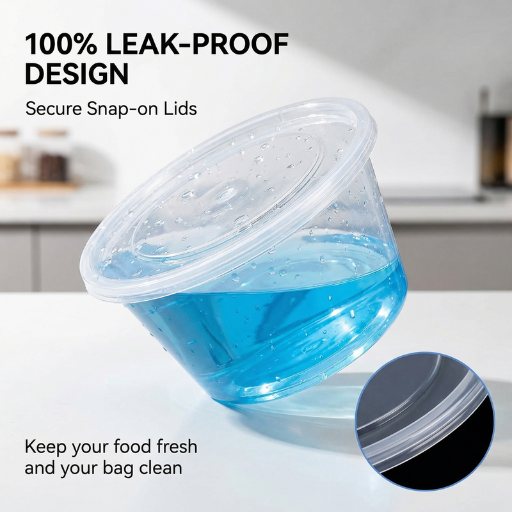
Los cierres son donde se ganan o pierden las entregas. La mayoría de los recipientes de comida desechables con tapa comparten una familia de diámetro base, por lo que el estilo de tapa de un recipiente cubre varias bases. Una tapa plana se apila herméticamente para el transporte; una tapa tipo cúpula limpia una ensalada alta o un sándwich; una tapa ventilada permite escapar el vapor para que las patatas fritas calientes no se empapen. Para cualquier cosa líquida, una tapa apretada y a prueba de manipulaciones es la característica decisiva, mucho más que el propio recipiente. Bandejas de compartimentos y cajas bento mantenga los componentes húmedos y secos separados para que el aderezo de una ensalada no marchite las verduras durante el transporte.
“El cuerpo del contenedor casi nunca falla ”el sello de la tapa sí. Para los menús de entrega, les decimos a los compradores que califiquen el par de tapa y base como un sistema bajo un batido de transporte real, no que especifiquen el recipiente y la tapa por separado”
¿son seguros los contenedores de alimentos desechables? Códigos de resina, BPA/BPS y PFAS
“¿Es esto seguro para los alimentos calientes?” es la pregunta que los compradores deberían hacer más y menos. La respuesta honesta tiene tres capas: la identidad de la resina, la autorización reglamentaria y las condiciones de uso. Si se aclara, la mayor confusión sobre seguridad desaparecerá.
¿Son seguros los recipientes de plástico desechables para alimentos?
Generalmente sí, cuando se utiliza la resina adecuada dentro de sus límites. En Estados Unidos, los plásticos en contacto con alimentos deben cumplir FDA 21 CFR Parte 177, que establece las especificaciones para los polímeros utilizados en superficies de contacto con alimentos de uso único y repetido. El riesgo aquí no es “plástico” en abstracto; no coincide con una resina para calentar. La espuma de poliestireno filtra estireno en alimentos grasos y calientes; El PET estándar puede liberar trazas de antimonio cuando se calienta, razón por la cual está diseñado para uso en frío. Haga coincidir la resina con la temperatura y el recipiente hará su trabajo de forma segura.
Mapa de seguridad del código de resina (#1-#7 para alimentos)
- La resina #1 (PET) es apta para alimentos para un solo uso; De limpieza en frío (APET) a menos que esté cristalizado (CPET). Evite el calor prolongado en el PET estándar.
- La resina #2 (HDPE) es segura para los alimentos y estable; común en jarras y tinas rígidas.
- La resina #4 (LDPE) es segura para los alimentos; Se utiliza para películas, tapas y revestimientos flexibles.
- La resina #5 (PP) es segura para los alimentos y la mejor opción convencional para microondas/calor.
- Resina #3 (PVC) «evitada para alimentos debido a problemas con los plastificantes.
- Resina #6 (PS) «evitar para alimentos calientes o grasos (migración de estireno).
- La resina #7 (Otro) es una bolsa mixta y puede incluir policarbonato o PLA; verificar antes de su uso.
📐 Nota de ingeniería
El número de resina es a identificador de material Para el reciclaje y el control de calidad, no es un sello de seguridad alimentaria o de seguridad térmica. ASTM, que administra el código de identificación de la resina, es explícito en que identifica el contenido de resina, no es adecuado para ningún uso determinado. La seguridad del contacto con los alimentos proviene del cumplimiento de la FDA 21 CFR 177 más las condiciones de uso previstas: tiempo, temperatura y qué tan graso o ácido es el alimento. Una taza #5 es de calidad para microondas sólo si fue fabricada y autorizada para ese uso. Lea siempre la declaración de temperatura y contacto con los alimentos del proveedor en lugar de inferir seguridad del triángulo.
La captura de PFAS en fibra “compostable”
Aquí está el hallazgo que la mayoría de las guías pasan por alto. Para hacer que los cuencos de fibra moldeada y papel resistan los alimentos calientes y grasosos, los fabricantes han utilizado PFA “para siempre productos químicos.” Pruebas independientes informadas por Informes de los consumidores y trabajo revisado por pares en Ciencia y tecnología ambientales se descubrió que los tazones de caña de azúcar y bagazo tenían algunos de los niveles totales de flúor orgánico más altos de todas las muestras, a pesar de comercializarse como biodegradables y compostables. Los PFAS no se descomponen y migran más hacia alimentos calientes. En febrero de 2024, el FDA anunció que los materiales a prueba de grasa que contienen PFAS ya no se utilizarían en los nuevos envases de alimentos de EE. UU., y el Instituto de Productos Biodegradables comenzó a rechazar la certificación de productos compostables que contienen flúor agregado intencionalmente. En la práctica, un recipiente de fibra “eco” es tan limpio como el suyo Sin PFAS certificación « verificarlo, no asumirlo.
La ley estatal avanza más rápido de lo que muchos compradores creen. Washington restringe los PFAS agregados intencionalmente en envases de alimentos de fibra vegetal y AB 1200 de California prohíbe los envases de alimentos de fibra vegetal que superen las 100 ppm de flúor orgánico total. Si realiza envíos a través de fronteras estatales, su línea “compostable” ahora tiene una dimensión de cumplimiento químico, no solo de marketing. Para grados que cumplen con los requisitos de contacto con alimentos, nuestro envases desechables de calidad alimentaria están elaborados con certificaciones nacionales de higiene y seguridad alimentaria internacional.
Cómo elegir el recipiente adecuado para su comida
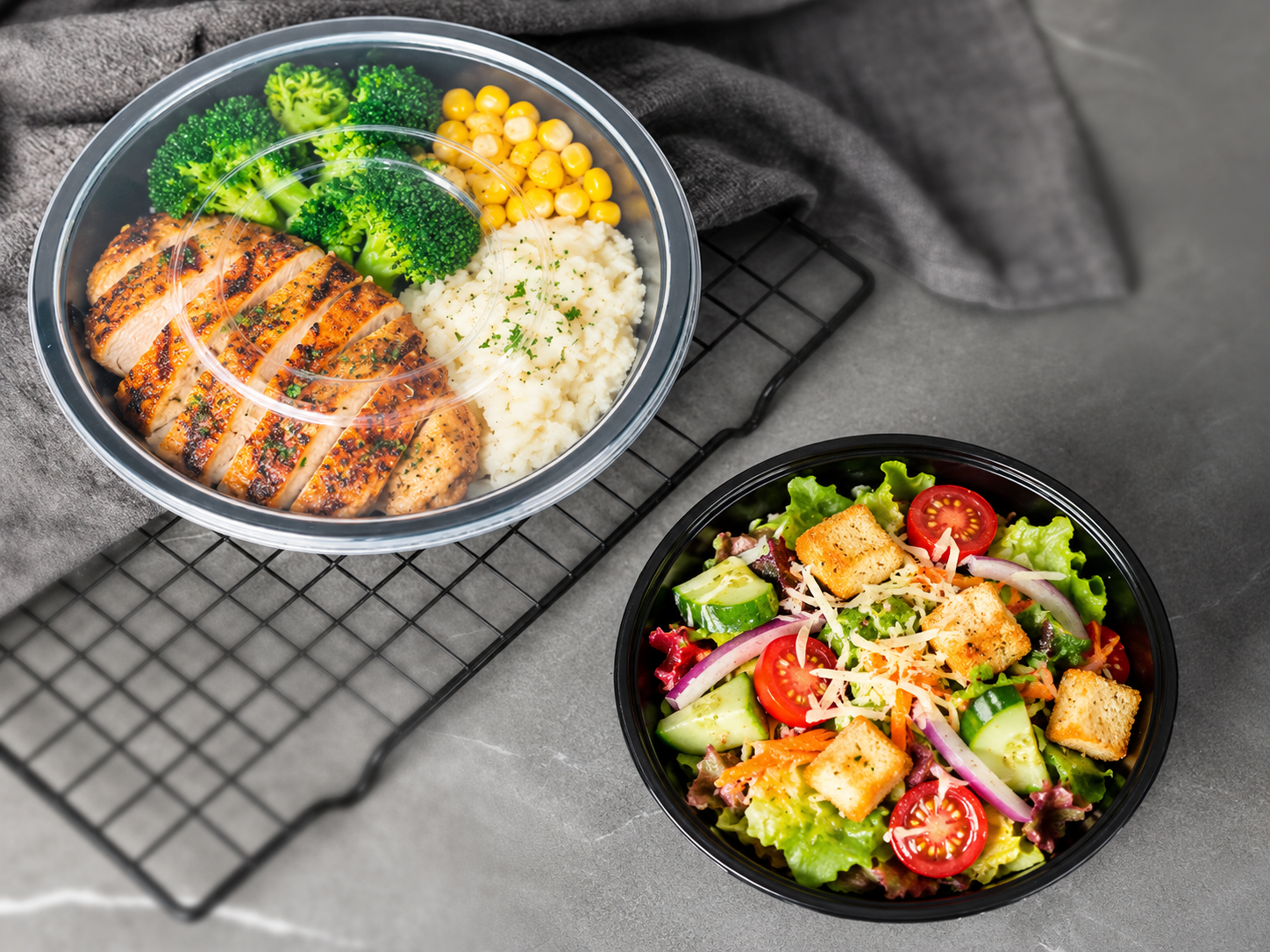
Una forma más rápida de elegir es comenzar con el estado de la comida, no con el catálogo. Un curry picante y picante, una ensalada fría y una entrada congelada para hornear quieren tres materiales diferentes. Usa esto Selector de contenedores caliente/húmedo/graso/frío como atajo de decisión.
El selector de contenedores caliente/húmedo/graso/frío
- Caliente y picante (curry, guiso) → Bol de PP (#5) con tapa hermética a prueba de fugas o fibra moldeada tratada. Recalentable por microondas.
- Graso/frito (alas, patatas fritas) → tapa ventilada + tabla resistente a la grasa o PP; la ventilación detiene la sensación de calma.
- Frío y crujiente (ensalada, empujón) → almeja o tazón transparente APET/RPET; sigue vistiéndote en una taza de porciones.
- Congelado a horno (comidas preparadas) → Bandeja CPET o aluminio; ambos toman calor real del horno.
- Sopa/líquido → contenedor redondo de delicatessen de PP, tapa a prueba de manipulaciones; suba un paso para dejar espacio para la cabeza.
La gama comercial de Wonhi se asigna a estos usos y, para moldes personalizados o de marca, necesita contenedores personalizados para llevar la guía cubre la impresión y las herramientas de logotipos. Antes de bloquear un pedido, evite los errores de campo que aparecen con mayor frecuencia en los foros de operadores.
⚠️ 5 errores comunes en la selección
- Poner en el microondas un APET o una caja de espuma con clasificación fría «se deforma o se lixivia. Primero combina la resina.
- Especificar el recipiente pero no probar el sello de la tapa durante el transporte « la fuente de fugas de entrega #1.
- De tamaño insuficiente para ahorrar unos centavos, luego llenando demasiado los contenedores llenos se derraman en la bolsa.
- Comprar espuma sin consultar la fecha límite de prohibición estatal « y luego luchar por volver a obtenerla.
- Suponiendo que “compostable” esté automáticamente libre de PFAS o localmente compostable, verifique ambos.
Compostable vs Biodegradable vs Reciclable
Estas tres palabras se usan indistintamente en marketing, pero significan cosas muy diferentes « y confundirlas invita a greenwashing afirma que Guías verdes de la FTC tratar como publicidad engañosa. Aquí está el Desenredante de 3 tiempos.
| Término | Lo que realmente significa | La captura |
|---|---|---|
| Compostable | Certificado para descomponer ≥90% en ~180 días bajo industrial compostaje (ASTM D6400 para plásticos; D6868 para fibra/papel) | Necesita una instalación industrial, no se estropeará en un vertedero o patio trasero |
| Biodegradable | Se descompondrá por acción microbiana; No existe una norma técnica única como la D6400 | Regulado por las Guías Verdes de la FTC, se debe fundamentar una afirmación “biodegradable” no calificada para que se desglose por completo dentro de ~1 año en la disposición habitual, o corre el riesgo de ser engañosa |
| Reciclable | Se puede reprocesar en material nuevo (PET #1, PP #5, aluminio limpio) | Sólo si tu corriente local acepta esa resina y está limpia de alimentos |
¿Cuál es una mejor alternativa a los envases desechables?
Para configuraciones de servicio repetido “cena, oficinas, escuelas con sistema de lavado y devolución «, la EPA de EE. UU. coloca artículos alimenticios reutilizables en la cima de la jerarquía, por delante de cualquier opción de un solo uso. Cuando la reutilización no es práctica, la guía de la EPA es directa sobre los desechables: compre alimentos compostables certificados sólo cuando un programa local realmente acepta esos tipos de productos, porque muchos compostadores comerciales rechazan los contenedores compostables y terminan en vertederos de todos modos. En otras palabras, a Compostable certificado por BPI box sólo ofrece su beneficio si hay una instalación para recibirlo. Haga coincidir su reclamo de sostenibilidad con su infraestructura local, certifique sin PFAS y evitará la brecha entre la etiqueta y el vertedero.
La industria de contenedores de alimentos desechables en 2026 y más allá
Dos fuerzas están remodelando la categoría y ambas tienen fechas firmes adjuntas. Primero, regulación: a partir de 2025, doce estados «Maryland, Maine, Vermont, Nueva York, Nueva Jersey, Colorado, Virginia, Washington, Oregón, Rhode Island, Delaware y California « han promulgado prohibiciones ampliadas de espuma de poliestireno (EPS), por Buceo de embalaje. La prohibición de la espuma en Nueva York se amplió a refrigeradores y hieleras el 1 de enero de 2026; La prohibición ampliada de EPS en Virginia llegará a todos los vendedores de alimentos antes del 1 de julio de 2026; y se ha propuesto una Ley federal de Despedida de la Espuma. La espuma está en un reloj claro de eliminación gradual.
Segundo, materiales: el impulso se dirige hacia el cartón, la fibra moldeada y el bagazo, junto con recubrimientos sin PFAS construidos a partir de nanomateriales de celulosa en lugar de fluoroquímica. El plástico no desaparece «tiene aproximadamente 38% de consumo porque nada supera la resistencia a la humedad y a las fugas «, pero la mezcla se está diversificando y el diseño del contenedor se está optimizando para la entrega: huellas apilables y cierres seguros y a prueba de fugas construidos para agitar una bolsa de mensajería.
💡 Qué hacer al respecto
Diversifique su mezcla de materiales hacia fibra y cartón para artículos y regiones donde se aplican prohibiciones, pero mantenga PP y PET para alimentos calientes y húmedos críticos para la humedad donde la fibra tiene un rendimiento inferior. Realice un seguimiento de la fecha límite de su estado, exija una certificación sin PFAS en cualquier línea de fibra y confirme un punto de venta de compostaje local antes de comercializar un contenedor como compostable.
Preguntas frecuentes
P: ¿Son seguros los recipientes de alimentos desechables?
Ver respuesta
Sí, cuando la resina coincide con el uso. Los plásticos en contacto con alimentos en los EE. UU. deben cumplir con FDA 21 CFR Parte 177, y las resinas comunes y seguras para alimentos son PET (#1), HDPE (#2), LDPE (#4) y PP (#5). El verdadero riesgo es la falta de coincidencia térmica « usando espuma de poliestireno (#6) para alimentos grasos y calientes o para calentar en el microondas una bandeja de PET con clasificación de frío. Elija PP para uso en caliente y en microondas, mantenga el PET estándar para frío y siga la declaración de temperatura y contacto con los alimentos del proveedor en lugar de adivinar el número de resina.
P: ¿De qué están hechos los envases de alimentos desechables?
Ver respuesta
Cinco familias de materiales lo cubren casi todo: plásticos (polipropileno #5 para alimentos calientes, PET #1 para frío, espuma de poliestireno #6 para aislamiento económico), papel de aluminio para uso en horno, papel y cartón estucado para cajas de comida para llevar y fibra moldeada como bagazo. para líneas compostables. Cada uno tiene una temperatura diferente en el techo, el comportamiento del microondas y del congelador y la ruta de eliminación, por lo que el material es lo primero que se debe asentar al elegir un recipiente.
P: ¿Qué recipientes de alimentos desechables son aptos para microondas y congeladores?
Ver respuesta
El polipropileno (#5) es la opción principal para microondas y congelador, estable a aproximadamente 250-266°F. La fibra moldeada/bagazo y el PET cristalizado (CPET) también manejan microondas y congelador, y el CPET más aluminio van al horno. El PET amorfo estándar (APET), la espuma de poliestireno y el PLA no son aptos para microondas “lo más tolera el congelador pero no el calor. Busque siempre una declaración explícita de ”seguridad para microondas”, ya que depende de la calidad y el espesor de la pared, no sólo del nombre del material.
P: ¿Cuál es la diferencia entre compostable y biodegradable?
Ver respuesta
Compostable es un estándar certificado (ASTM D6400/D6868) « aproximadamente 90% desglosado en 180 días bajo compostaje industrial. Biodegradable no tiene el plazo requerido y significa poco por sí solo.
P: ¿Son realmente mejores los envases de bagazo/caña de azúcar que los de plástico?
Ver respuesta
Pueden serlo, con dos condiciones. El bagazo es renovable, manipula alimentos calientes y es compostable, donde una instalación lo acepta: una verdadera ventaja sobre la espuma. Pero pruebas independientes han descubierto que algunos tazones de bagazo llevan altos niveles de PFAS (“para siempre químicos”) agregados para resistir la grasa y, a partir de 2024, la FDA y el BPI han actuado contra el flúor agregado intencionalmente, con estados como California (AB 1200) que limitan el flúor orgánico total a 100 ppm en envases de fibra vegetal. Por lo tanto, el bagazo es mejor que el plástico en cuanto a renovabilidad y final de vida útil solo cuando está certificado como libre de PFAS y hay compostaje local. Sin ellos, el plástico que se recicla puede ser la opción más honesta. Verifique la certificación, no el marketing.
P: ¿Son reciclables los envases de alimentos desechables?
Ver respuesta
Algunos lo son, si están limpios y se aceptan localmente. PET (#1), PP (#5) y aluminio limpio son reciclables en muchos programas; la espuma (#6) rara vez lo es; y el cartón estucado es difícil de reciclar porque el revestimiento debe estar separado. Los residuos de alimentos también descalifican los artículos que de otro modo serían reciclables, por lo que enjuagar y clasificar importa. Siempre verifique lo que realmente acepta su flujo local.
P: ¿Cómo elijo un recipiente para comida caliente, picante o grasosa?
Ver respuesta
Para productos calientes y salados, utilice un recipiente de polipropileno (#5) con tapa hermética y a prueba de fugas o un recipiente de fibra moldeada tratado. Para alimentos grasosos o fritos, agregue una tapa ventilada y una superficie resistente a la grasa para que el vapor se escape y los alimentos permanezcan crujientes. Suba un paso para que los líquidos dejen espacio para la cabeza y califique la tapa y la base como un sistema sellado antes de comprometerse con un menú de entrega.
¿abastecerse de envases de alimentos desechables al por mayor?
Wonhi (Shandong Wanhui) fabrica cajas, tazones, bandejas y almejas de comida de calidad alimentaria en líneas de PP y PET, con impresión de logotipos OEM y desarrollo de moldes personalizados para restaurantes, comedores institucionales y de entrega a domicilio.
Explore la gama de envases de alimentos desechables de Wonhi →
Acerca de esta guía
Esta guía fue escrita por el equipo de Wonhi (Shandong Wanhui Environmental Protection Technology Co., Ltd.), un fabricante de envases para envases de alimentos con 20 años en cajas, tazones y bandejas de comida desechables en todas las líneas de producción de PP y PET. Los puntos regulatorios, de resina y de temperatura provienen de la FDA, los NIH, la extensión universitaria, ASTM/BPI y los informes comerciales 2024-2026, citados en línea. Cuando un reclamo depende de la calificación o de las reglas locales, lo decimos en lugar de exagerarlo.
Referencias y fuentes
- 21 CFR Parte 177 « Aditivos alimentarios indirectos: polímeros « FDA de EE. UU. / eCFR
- Códigos de resina plástica « Institutos Nacionales de Salud (NIH), Oficina de Instalaciones de Investigación
- ¿qué plásticos son seguros para el almacenamiento de alimentos? « Extensión de la Universidad Estatal de Utah
- Acciones de la FDA para poner fin a las ventas de PFAS utilizados en envases de alimentos de EE. UU. (febrero de 2024) « FDA SUA
- PFAS en envases de alimentos: migración, toxicidad y gestión « Ciencia y Tecnología Ambientales (ACS)
- Gestión Sostenible de los Alimentos « EPA SUA
- Compostable certificado por BPI (ASTM D6400 / D6868) « Instituto de Productos Biodegradables
- Guías Verdes (reclamaciones de marketing ambiental) «Comisión Federal de Comercio de Estados Unidos
- Los químicos peligrosos de PFAS se encuentran en su empaque de alimentos « Consumer Reports
- Las leyes estatales de embalaje entrarán en vigor en 2026 « Bucea de empaquetare
Artículos relacionados
- Contenedores de alimentos desechables « Gama mayorista y OEM « líneas de materiales, tamaños y cómo realizar pedidos
- Guía personalizada de contenedores para llevar « impresión de logotipos y desarrollo de moldes personalizados
- Contenedores de sopa desechables « tazas redondas a prueba de fugas por tamaño
- Bandejas de comida «opciones de cartón y fibra
- Contenedores de 3 compartimentos « preparare de mâncare și prânzuri de plată