Nehmen Sie Kontakt mit Wanhui Company auf



Aktualisiert im Juni 2026. Bewertet vom Wanhui-Technikteam.
Maßgeschneiderte Take-out-Boxen sind Marken, lebensmittelechte To-Go-Behälter, die auf Ihre eigene Größe, Ihr eigenes Material und Ihre eigene Druckspezifikation zugeschnitten sind. Sie werden als Papier, Kunststoff oder geformte Fasern in Formaten verkauft, die vom klassischen chinesischen Eimer bis zur Klappmuschel reichen. Passend zum Essen bleibt eine Box während des Transports intakt und verwandelt eine Liefertasche in einen Markeneindruck; Die falsche Tasche leckt, durchnässt oder verschmiert Ihr Logo. Dieser Leitfaden führt ein Restaurant oder eine Lebensmittelmarke durch die Entscheidungen, die tatsächlich von Bedeutung sind: Format, Material, Lebensmittelsicherheit, Druck, Kosten und die Schaum- und PFAS-Regeln verändern jetzt das, was Sie kaufen dürfen.
Schnelle Spezifikationen: Benutzerdefinierte Takeout-Box-Grundlagen
| Übliche Materialien | Kraft/SBS-Pappkarton, PP, PET, Formfaser (Bagasse), PLA-ausgekleidete Faser |
| Wärmetoleranz (typisch) | PP ~120°C / 248°F · Bagasse ~100°C / 212°F · unbeschichtetes Kraft-Niederstwert |
| Druck-moq | Digital 25 – 100 Einheiten · Flexo/Offset 5.000+ Einheiten |
| Typische Stückkosten | ~$0.59 1$1.10 pro Karton mit 1.000 3.000 Einheiten (gedruckte Pappe) |
| Einhaltung zu überprüfen | FDA 21 CFR-Lebensmittelkontakt ·-Zustand EPS-Schaum verbietet ·-Zustand PFAS-Grenzwerte |
Was zählt als “Custom Takeout Box”?
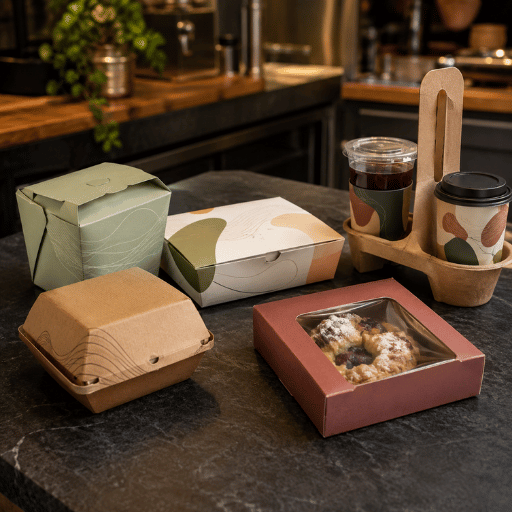
Eine benutzerdefinierte Take-out-Box (auch Take-out-Box geschrieben) ist jeder Behälter für den Lebensmittelkontakt, der nach den Spezifikationen Ihrer Marke hergestellt wird und nicht leer von einem Regal gekauft wird. “Benutzerdefiniert”kann ein gedrucktes Logo, eine bestimmte Größe, ein ausgewähltes Material oder ein maßgeschneiderter Chip bedeuten, und die meisten Restaurants kombinieren mehrere.
Bevor Sie sich für ein Material oder einen Drucker entscheiden, entscheiden Sie sich für eine Formatfamilie, denn das Format bestimmt, welche Materialien und Verschlüsse überhaupt verfügbar sind Die folgende Tabelle zeigt die sechs Formate, die die überwiegende Mehrheit der Takeout-Bestellungen abdecken Restaurants bestellen sie normalerweise zusammen mit dem Rest ihrer Lebensmittelverpackung, Feinkostbehältern, Suppenbehältern, Lebensmittelbechern, Kaffeetassen, Papiertüten und Muschelbehältern. Daher hilft es, maßgeschneiderte Takeout-Boxen als eine Verpackungslösung und nicht als Einzelstück zu planen.
| Format | Am besten für | Typische Größe | Standardmaterial |
|---|---|---|---|
| Chinesischer Eimer (Tuck-Top) | Nudeln, Reis, frech Betrüger | 16 64 oz | Poly-lined Kraft |
| Klappmuschel | Burger, Vollverpflegung, Salate | 6×6 bis 9×9 in | Bagasse oder PP |
| Verdeck-Versandkasten | Pizzastücke, Gebäck, Bäckerei | 7 –12 in | Wellpappe oder SBS-Kraft |
| Schaufel / offene Schachtel braten | Pommes, Flügel, Nuggets | 4 32 oz | Fettbeständige Pappe |
| Sushi / Bento-Tablett + Deckel | Kalte, plattierte Präsentation | 6×4 bis 9×6 in | PET oder geformte Faser + klarer Deckel |
| Schüssel + Deckel | Poke, Kornschalen, Suppe | 16 –48 oz | PP- oder PLA-beschichtete Fasern |
Welche Größe brauche ich zum Mitnehmen?
Größe nach der Portion, nicht nach dem Schalenamen. Eine gute Regel. „A nenne es die 80%-Füllregel.2 Es besteht darin, einen Behälter mit einer Kapazität von etwa 80% zu füllen: Durch Unterfüllung kann das Essen verrutschen und der Deckel platzen, durch Überfüllung werden Quetschungen garniert und Sauce an der Dichtung vorbeigedrückt.
In der Praxis bedeutet das, dass die Strumpfgrößen in etwa 8 oz / 12 oz / 26 oz / 38 oz Stufen liegen, sodass jede Portion in der Nähe dieser 801 TP3 T-Marke landet. Die meisten Betreiber führen zwei oder drei Größen pro Format vor. Zum Beispiel eine 26 oz und eine 38 oz Schüssel “Schüssel”anstatt einer „universellen” Schachtel, denn eine halbleere 48 oz-Schüssel kommt wie eine kleinere Portion als die andere an. Passen Sie zuerst die Kapazität auf Ihre drei mengenstärksten Menüpunkte und futterfertigen Sie die meisten Menüs ab und essen Sie Vorspeisen Sie Vorspeisen und von Catereien aus.
Auswahl des richtigen Materials: Papier, Kunststoff und geformte Fasern
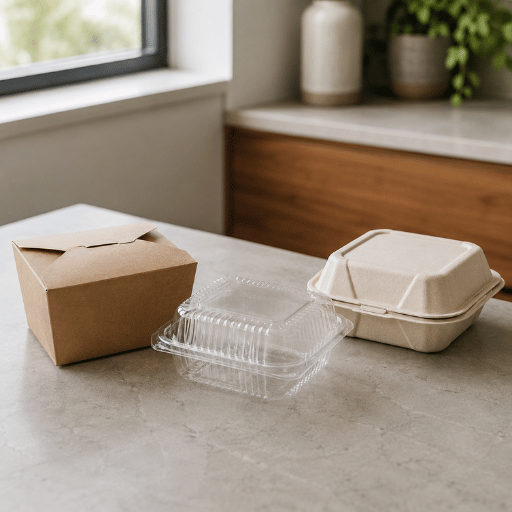
Material ist die Entscheidung, die am häufigsten schief geht, denn Käufer wählen Preis oder Aussehen aus, anstatt wie sich das Essen verhält Verwenden Sie eine einfache Regel, die wir Fett- und Wärmematerialtest nennen. „2. Achse. Materialregel: Bewerten Sie Ihr Gericht auf drei Achsen. Fettladung, Serviertemperatur und Verweilzeit (wie lange das Essen in der Box liegt, bevor es gegessen wird) und lassen Sie die Achse mit der höchsten Belastung das Material auswählen. Ein trockenes Gebäck, das in zehn Minuten gegessen wird, kann in gedrucktem Kraftmaterial verwendet werden; Ein 200-F-Curry, das 40 Minuten in einem Lieferbeutel fährt, benötigt geformte Fasern oder PP, kein Papier.
Deshalb kommt es auf jede Achse an Hitze setzt die Grenze: Polypropylen (PP) nimmt bis zu etwa 120°C (248°F) ein, Bagasse und geformte Fasern halten ihre Form nahe 100°C (212°F), am niedrigsten kommt unbehandeltes Kraftfett greift die Faser an: a Peer-Review-Studie zu geformtem Zellstoff Gefundenes Öl wird sowohl im gekühlten als auch im heißen Gebrauch fest gehalten, während unbeschichtetes Pappe Öl abstößt, es sei denn, es trägt eine Barriere Die Verweilzeit ist die hinterhältige: Was 10 Minuten hält, kann um 40 scheitern, und sobald eine Schachtel eine der ersten beiden Grenzen verliert, kann das Essen auf die Hände Ihres Kunden gelangen Bewerten Sie das Gericht, dann bearbeiten Sie die Matrix unten Auf der Papierseite läuft maßgeschneiderter Papiervorrat von braunem Kraft über weißen und Kraft und schwereren Wellpappe; Bagasse ist die gleiche Zuckerrohrfaser, die als Formfaser verkauft wird Kraftpapier-Ausziehboxen bleiben das Arbeitstier für trockene und warme Gegenstände.
| Materialklasse | Maximaler Temp | Fett / Leck | Mikrowelle | Lebensende |
|---|---|---|---|---|
| Kraft / SBS Pappe | Niedrig (~70°C) | Benötigt Beschichtung | Nein (ungeschichtet) | Recycelbar / kompostierbar |
| Fettdichtes / glasiniertes Papier | ~80°C | Gut (beschichtet) | Nein | Unbeschichtet recycelbar |
| Wellpappe | ~70°C | Braucht Liner | Nein | Recycelbar |
| Polypropylen (PP) | ~120°C / 248°F | Ausgezeichnet | Ja | Recycelbar #5 |
| PET | ~60°C (kalt) | Ausgezeichnet | Nein | Recycelbar #1 |
| EPS-Schaum (Polystyrol) | ~90°C | Gut | Nein | In 12+ Staaten verboten |
| Aluminiumfolie | >200°C (lösbar) | Ausgezeichnet | Nein | Recycelbar (falls sauber) |
| Formfaser / Bagasse | ~100°C / 212°F | Gut (ölbeständig) | Ja (kurz) | Kommerziell kompostierbar |
| PLA-ausgekleidete Faser | ~85°C | Gut | Nein | Kommerziell kompostierbar |
Zahlen stellen ungefähre Temperaturen dar; überprüfen Sie gegen Ihren Lieferanten Formfaser schneidet im Allgemeinen gut ab, benötigt aber dennoch geeignete Auskleidungen, um wirklich öl – und wasserdicht zu sein, insbesondere in längeren Anwendungsfällen.
Technische Anmerkung
Als Quellfabrik mit 20 Thermoformleitungen, 6 Blattextrusionslinien und 60 Injektionsleitungen (ca. 30 Tonnen Blech pro Tag) sehen wir immer wieder ein Muster: Die billige Box, die auf der Theke läuft, versagt im Beutel und kollabiert, sobald sie mit heißem Essen gefüllt ist. Bei heißen, frechen Gerichten legen wir eine schwerere Wand und eine auslaufsichere Versiegelung fest und nicht die dünnste Dichtung, die die Form leer hält. Wenn Ihr Gericht über 80°C läuft und mehr als 20 Minuten zurücklegt, testen Sie die Box 30 Minuten lang voll und geschlossen, bevor Sie sich auf einen Drucklauf festlegen.
Lebensmittelsicherheit und -leistung: Fett, Hitze, Lecks und PFAS

“Die Box, die auf der Theke fein leer aussieht, ist nicht die, die 40 Minuten in einem Lieferbeutel überlebt Wir spezifizieren die Wand und das Siegel für das schlechteste Gericht auf der Speisekarte, nicht das durchschnittliche, und wir testen es immer voll und geschlossen vor einer Auflage.”
Technisches Team von Foodservice, Verpackungsherstellung
Jede Take-out-Box, die Lebensmittel berührt, muss aus lebensmittelechten Materialien hergestellt werden. In den USA fallen Lebensmittelkontaktflächen aus Papier und Pappe darunter FDA 21 CFR 176,170, “, in dem aufgeführt ist, was wässrige und fetthaltige Lebensmittel berühren darf; andere Länder behalten ihre eigenen Äquivalente.”„Lebensmittelsicher” ist ein regulierter Standard, kein Slogan, und ein glaubwürdiger Lieferant kann die Spezifikationen benennen, die sein Lager erfüllt. Es ist auch umfassender als PFAS allein: Wie viel Chemie in Lebensmittel übergeht, hängt von Hitze, Fett, Säure, Kontaktzeit und den Beschichtungen, Klebstoffen, Tinten und recycelten Fasern ab in der Schachtel, weshalb eine heiße, fettige Schüssel mit einer Haltbarkeit von 40 Minuten eine viel härtere Prüfung ist als ein kaltes Sandwich.
⚠️ Der fettdichte Mythos
Unbeschichtetes Kraft ist nicht von alleine fettdicht – eine Beschichtung muss aufgetragen werden, wenn Öl darauf sitzen soll (und die günstigste Barriere war jahrelang eine PFAS-Behandlung Das verschwindet: Im Februar 2024 beendeten US-Hersteller den Verkauf von PFAS-Fettschutzmitteln für Lebensmittelverpackungen aus Papier. Stattdessen werden andere Chemikalien wie Silikon oder technische Folien verwendet, die unter Hitze aushärten. Eine “fettsichere” Garantie bedeutet also nur dann etwas, wenn sie benennt, wie die Beständigkeit erreicht wurde.
Past-Fett, drei weitere Schecks sind alle, die eine Kiste, die Ihre Marke schützt, von einer unterscheiden, die sie zerstört Leckfestigkeit: Zwei Drittel der Menschen wollen eine leckage- und verschüttungssichere Verpackung gegenüber allen anderen Ein sicherer Verschluss oder manipulationssicherer Verschluss verdient daher seinen Halt Erhitzen und Aufwärmen: Stellen Sie nur sicher, dass eine Kiste mikrowellengeeignet ist, wenn Ihr Verkäufer sagt, dass ein um 60 °C verformter Kunststoffdeckel es nach einer Aufwärmung nicht schafft. Entlüften: Frittiertes Essen, das in eine versiegelte Kiste gelegt wird, Schweißausscheidungen, das knusprige Produkt muss entlüftet werden.
Kundenspezifischer Druck und Branding, die die Küche überleben
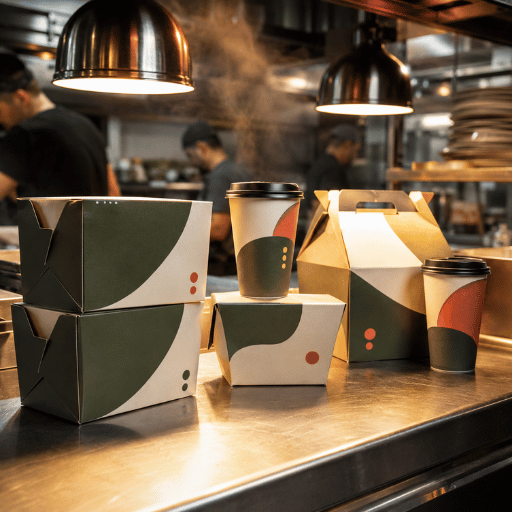
Beim Drucken wird aus einem anonymen Behälter eine maßgeschneiderte Box zum Mitnehmen, und die von Ihnen gewählte Methode richtet sich hauptsächlich nach dem Volumen. Egal, ob Sie individuell bedruckte Boxen zum Mitnehmen, Pizzakartons für eine Pizzeria oder Boxen für eine Catering-Linie brandmarken, drei Optionen decken das Feld ab: digital, Flexodruck (Flexo) und Offset. Alle bringen Ihre Marke auf die Box; Sie unterscheiden sich in den Einrichtungskosten, der Mindestlaufzeit und der Anzahl der Farben, die sie sauber handhaben.
| Methode | Beste Laufgröße | Aufbau / Platten | Farben |
|---|---|---|---|
| Digital | 25–5,000 | Keine Teller | Vollfarbig, Fotos |
| Flexo | 5,000+ | Platte pro Farbe (jeweils ~$50 –$200) | 1 – 6 Spotfarben |
| Versatz | 10,000+ | Platten + make-ready | Höchste Detail |
Zwei praktische Regeln verhindern, dass die Druckqualität vor Ort versagt. Zuerst verwenden Sie Lebensmittelsichere Tinten und Beschichtungen „Auch Wasser- oder Sojabasis 21 CFR und halten Sie starke Tintenabdeckung von innen in der Nähe des Lebensmittels fern, da die Oberfläche mit Lebensmittelkontakt gemäß FDA 21 CFR reguliert ist. Zweitens Design für Kontrast über Detail: Helle Kunst funktioniert nur, wenn sie nicht verschmiert, wenn sie auf Fett oder Kondenswasser trifft. Daher ist eine kräftige ein- oder zweifarbige Markierung auf braunem Kraft oder einer weißen Schachtel nach einer 30-minütigen Fahrt besser lesbar als ein fotorealer Druck, der abschneidet. Behalten Sie Ihr Logo auf dem Deckel oder einer flachen Seitenwand, die knarrt. Behandeln Sie die Schachtel als leckbare Verpackung für Lebensmittel individuell an, individuelle Verpackung.
Was treibt die Kosten für benutzerdefinierte Takeout-Boxen

Zitate für das, was wie die “gleiche” Box aussieht, variieren stark, weil vier Hebel den Preis unabhängig voneinander bewegen Wir nennen das die 4-Lever-Kostenrahmen – Die vier Kostenhebel einer benutzerdefinierten Box laufen – und sobald Sie sie kennen, können Sie ein Angebot vorhersagen, anstatt es zu erraten. Diese Zahlen gehen von einem 350-gsm-Board mit einer Wand von etwa 0,4-0,6 mm aus; Schwererer Lagerbestand verschiebt jede Zahl nach oben.
Die vier Kostenhebel eines Custom Box Run
- Werkzeug / Form (einmalig): Eine maßgeschneiderte Matrize läuft mit etwa $150-$300 für einen Faltkarton; Ein maßgeschneidertes Thermoformen oder eine Spritzgussform kostet vorne mehr, verteilt sich aber auf Millionen von Einheiten.
- MOQ und Lauflänge: Die Stückkosten sinken mit dem Volumen stark. Eine zweifarbige Pappschachtel mit 1.000 Einheiten landet jeweils in der Nähe von 1.TP4T0,82; Die gleiche Box mit 3.000 Einheiten fällt auf etwa $0,59.
- Material und Messgerät: Schwereres Brett, Harz in Lebensmittelqualität (reguliert gemäß FDA 21 CFR Part 177) und Barrierebeschichtungen erhöhen jeweils die Kosten pro Einheit.
- Druckfarben und Abdeckung: Jede Fleckenfarbe ist eine andere Platte, und bei der Vollblutabdeckung wird mehr Tinte verwendet als bei einer einfarbigen Markierung.
Diese Hebel kollidieren an der MOQ-Break-Point: flexo trägt Plattenkosten, aber den niedrigsten Preis pro Einheit über etwa 5.000-10.000 Boxen, während digital überspringt Platten und gewinnt unter dem. Ein gemeinsamer Break-Even liegt bei etwa 3.000-5.000 Einheiten pro Design. Die direkte Zusammenarbeit mit einer Quellfabrik und das Ausschneiden des Zwischenhändlers wirken sich auf zwei Hebel gleichzeitig aus. Die Kombination aus hauseigener Formentwicklung und mehr als einer Million Einheiten/Tageskapazität drückt den Werkzeugboden bei steigendem Volumen unter die Wiederverkäuferkosten, und gleichzeitig alle MOQ-Anforderungen. Wenn Sie mehrere SKUs verantwortungsvoll betreiben, kann ein gemeinsames Gesenk über Größen hinweg diesen Werkzeughebel so schnell verteilen.
Nachhaltigkeit und Einhaltung von Schaum- und PFAS-Verboten

Umweltfreundliche Verpackungen sind mittlerweile mehr als nur eine Wahl bei der Positionierung Ihrer Takeout-Boxen; In vielen Bundesstaaten ist das Material, das Sie verwenden, einfach keine Wahl, es ist Gesetz. Es gibt zwei “Wellen”von Vorschriften, die sich auf die Art und Weise auswirken, wie Sie Lebensmittel verpacken: Verbote von Lebensmitteln aus expandiertem Polystyrol (EPS) und Regulierung absichtlich zugesetzter PFAS-Stoffe in Lebensmittelverpackungen Wenn Ihr Produkt in einem der betroffenen Staaten verkauft wird, ist es eine Frage, wann – nicht, ob Sie Ihr Material ändern müssen.
| Staat | Regel | Status |
|---|---|---|
| Kalifornien | EPS-Lebensmittelverbot (SB 54) | In Kraft am 1. Januar 2025 |
| Washington | Verbot von Schaumlebensmitteln | In Kraft am 1. Juni 2024 |
| New York | PFAS in Lebensmittelverpackungen | In Kraft seit 31. Dezember 2022 |
| Maine | PFAS in Pflanzenfaserverpackungen | Verkaufs-/Angebotsdatum 25. Mai 2026 |
Zwölf oder mehr Staaten haben einige Formen der EPS-Lebensmittelverpackung verboten, während die PFAS-Anforderungen je nach Bundesstaat variieren. Stellen Sie daher sicher, dass Sie verstehen, was für die von Ihnen bedienten Märkte benötigt wird.
“Kompostierbar” und “recycelbar” sind geregelte Ansprüche Um einen ASTM D6400 (oder ASTM D6868 ) (für beschichtete Papierprodukte, der eine “total fluor” – Begrenzung beinhaltet, die darauf ausgelegt ist, den Zusatz von PFAS zu eliminieren) Anspruch geltend zu machen, muss ein kompostierbares Produkt unabhängig zertifiziert werden Per der FTC Green Guides, eine nicht belegte “kompostierbare” Forderung bedarf des Nachweises Eine echte kompostierbare Angabe bedeutet, dass das Produkt zertifiziert ist und die BPI Markieren, und dass es in einer industriellen Kompostanlage zerfällt, nicht in einem Hinterhofhaufen Aber selbst eine ASTM D6868-zertifizierte Box kann auf der Mülldeponie landen, wenn Ihre Gemeinde keine Anlage hat, die diese Behälter zur Kompostierung akzeptiert, und eine beschichtete Pappschachtel, die einen großen chinesischen Lebensmitteleimer herstellt, wird von Papierrecyclern, die einen Großteil des recycelten Materialstroms verarbeiten, als Kontamination behandelt Geben Sie sowohl an, ob der Artikel zertifiziert ist, als auch, ob das Material tatsächlich in Ihrer Gemeinde kompostiert wird Für einen tieferen Materialdurchgang sehen Sie sich unseren Leitfaden an Kompostierbare Muschelbehälter. Was auch immer Sie wählen, halten Sie es lebensmittelecht und, wo Sie können, nachhaltig und verantwortungsvoll hergestellt; recycelbare und umweltfreundliche Optionen passen Schaum jetzt auf die Leistung an.
So bestellen Sie benutzerdefinierte Takeout-Boxen: Ein Schritt-für-Schritt-Workflow

Die Bestellung von benutzerdefinierten Takeout-Boxen ist ein fünfstufiger Workflow, und die Ausführung in der Reihenfolge macht die beiden kostspieligen Fehler zunichte: das Drucken des falschen Materials oder das Finden eines Lecks erst, nachdem ein voller Durchlauf von 20.000 Boxen bereits in Ihrem Lager gestapelt ist. Legen Sie die Spezifikation fest, bevor Sie jemals einen Würfel schneiden, und jeder Schritt unten baut auf dem letzten auf.
- ✔1. Format und Lautstärke definieren. Wählen Sie aus Ihren Top-Menüpunkten eine Formatfamilie und die zwei oder drei Größen aus, die dazu passen, und schätzen Sie das monatliche Volumen pro Artikelnummer.
- ✔2. Wählen Sie das Material Verwendung des Fett- und Wärmematerialtests sowie aller staatlichen Schaum-/PFAS-Anforderungen für die von Ihnen bedienten Märkte.
- ✔3. Bereiten Sie Kunstwerke und die Tagebuchlinie vor. Senden Sie Vektorgrafiken und Ihre Pantone- oder Hex-Farben und bestätigen Sie die Druckmethode (digital vs. Flexo) anhand Ihrer Lautstärke.
- ✔4. Genehmigung eines Musters und eines Nachweises. Holen Sie sich eine physische Probe, testen Sie sie dann im Stress und schließen Sie sie mit Ihrem echten Essen, bevor Sie sich abmelden.
- ✔5. Die Produktion und die Qualitätssicherung bestätigen. Sperren Sie MOQ, Vorlaufzeit und eine Qualitätsprüfung der Siegelintegrität und Druckregistrierung vor den Volllaufschiffen.
Was Sie einer Fabrik im Voraus geben können, sparen Sie eine Runde hin und her: Ihre Tages- oder Lagergröße, Markenfarbe, Lebensmittelart und Serviertemperatur, Zielvolumen und Ihre Frist Je mehr Fett- und Wärmeeingaben Sie geben, desto schneller kann ein Lieferant das richtige Material zitieren. Sie können von unserem breiteren Material ausgehen Maßgeschneiderte Lebensmittelverpackungen Optionen, oder gehen Sie direkt zu einem Build für Maßgeschneiderte Takeout-Boxen.
Branchenausblick: Was sich für die Verpackung zum Mitnehmen im Jahr 2026 ändert

Was Takeout Boxen im Jahr 2026 meistens prägt, ist kein Trend Es ist eine regulatorische Frist Staatliche Schaum – und PFAS-Verbote landen nun zu festgelegten Terminen und so ist das Re-Speccing von Boxen im Handumdrehen zum Kalenderartikel geworden, nicht zu einem “irgendwann” Und diese Regelung landet auf einer Strukturverschiebung der Nationaler Restaurantverband Jahrelang verfolgt hat: Ein großer und wachsender Anteil der Mahlzeiten verlässt mittlerweile das GebäudeDie Box ist das RestaurantIn Branchenübergreifend behandeln Betreiber Verpackungen zunehmend als Markenwert und nicht als Spesenlinie, und viele sagen, sie würden mehr für Markenmaterial bezahlenBehandeln Sie diese Umfragewerte als richtungsweisend, nicht präzise & aber die Richtung ist kaum zu übersehen.
Auf der Angebotsseite setzt die PFAS-freie Barrieretechnologie ihre schnelle Reifung fort und die bis Ende 2025-2026 kommerzialisierten technischen biobasierten Beschichtungen und Trockenfaserschalen erreichen nun die Fett- und Feuchtigkeitsstandards, die zuvor ‘Für immer Chemikalien’ erforderten. Für Sie als Käufer bedeutet dies, dass Sie bestehende SKUs heute gegenüber den Staaten, in die Sie versenden, prüfen und alles, was entweder Normalpapier oder Schaumstoff ist, als kurzfristigen Ersatz angehen. Das Marktwachstum im Liefergeschäft hält die Nachfrage nach Markenboxen hoch. Die Regulierung bestimmt jedoch, was Sie mit Ihrem Logo verschönern dürfen.
Häufig gestellte Fragen
F: Aus welchen Materialien werden maßgeschneiderte To-Go-Boxen hergestellt?
Antwort anzeigen
Die meisten maßgeschneiderten Kartons zum Mitnehmen verwenden eines von fünf lebensmittelechten Materialien: Kraft- oder SBS-Papierkarton, PP, PET, geformte Fasern wie Bagasse oder PLA-gefütterte Fasern. Verwenden Sie Pappe für trockene oder warme Artikel, PP und geformte Fasern für warme und freches Geschirr und PET für die kalte Präsentation. Die richtige Wahl hängt von der Fettbelastung, der Serviertemperatur und der Dauer des Essens in der Schachtel ab, bevor es gegessen wird.
F: Können Sie chinesische Kartons zum Mitnehmen in die Mikrowelle stellen?
Antwort anzeigen
Sie können die Box nur in die Mikrowelle stellen, wenn sie als mikrowellengeeignet gekennzeichnet ist und keinen Metallgriff hat. Klassische chinesische Auszieheimer enthalten oft einen dünnen Draht-Tragegurt, der zuerst abgenommen werden muss. Viele polygefütterte Papierschachteln und Bagasseeimer vertragen eine kurze Aufwärmphase, obwohl sich ein PET-Deckel mit Hitze verzieht. Bewegen Sie das Essen im Zweifelsfall auf einen Teller und bestätigen Sie die Mikrowellenbewertung für die genaue Qualität, die Sie kaufen.
F: Sind maßgeschneiderte Take-out-Boxen zu Hause recycelbar oder kompostierbar?
Antwort anzeigen
Hängt vom Material und Ihren örtlichen Einrichtungen ab. PP- und PET-Boxen sind recycelbar, wenn Kunststoffe mit #1 und #5 akzeptiert werden, sofern sie fettfrei sind. Zertifizierte kompostierbare Faserkästen (ASTM D6400/D6868, BPI-Kennzeichnung) benötigen einen Industriekomposter, keinen Hausbehälter. Überprüfen Sie daher die Zertifizierung, bevor Sie sie beanspruchen.
F: Wie lange dauert eine individuelle Bestellung einer Takeout-Box?
Antwort anzeigen
Kommt auf den Druckprozess an und darauf, ob ein neuer Würfel benötigt wird Digitale Läufe können in 2 Tagen bis 2 Wochen versendet werden; Flexo – oder Custom-Die-Bestellungen dauern einige Wochen, sobald Artwork und ein Muster genehmigt sind Bauen Sie den Beispiel-und-Sicher-Schritt in Ihre Timeline ein.
F: Welche Tinten werden für den lebensmittelechtes Drucken verwendet?
Antwort anzeigen
Tinten auf Wasser- und Sojabasis sind die üblichen lebensmittelechtes Optionen. Sie sitzen auf der Außenfläche, berühren das Lebensmittel also nicht direkt und die Lebensmittelkontaktseite bleibt ungedruckt Bestätigen Sie bei jedem Direktkontakt das genaue Tintensystem mit Ihrem Drucker.
F: Gibt es eine Mindestbestellung (MOQ) für benutzerdefinierte Takeout-Boxen?
Antwort anzeigen
Ja, und es verfolgt die Druckmethode Digital kann bereits bei 25-100 Einheiten starten, während Flexo und Offset normalerweise 5.000+ benötigen, um die Platten- und Einrichtungskosten abzudecken. Eine kundenspezifische Form erhöht den Boden weiter, senkt jedoch den Preis pro Einheit im Maßstab, sodass MOQ und Stückkosten gegeneinander ablaufen (je mehr Sie kaufen, desto günstiger ist jede Box. Für eine erste Bestellung führen viele Fabriken einen kleineren Pilotfilm durch, bevor Sie sich auf die volle Lautstärke festlegen.
F: Warum in maßgeschneiderte Kisten zum Mitnehmen investieren, anstatt in einfache?
Antwort anzeigen
Denn die Box funktioniert jetzt im Speisesaal früher. Da die meisten Lebensmittel außerhalb von Räumlichkeiten gegessen werden, ist die Verpackung einer Ihrer letzten Marken-Touchpoints, und ein gutes Unboxing hilft den Kunden, wieder zu bestellen. Es passt auch das Material zum Essen, sodass es unversehrt ankommt.
Warum wir das geschrieben haben
Wanhui ist eine Quellenfabrik, die Einweg-Lebensmittelbehälter, Mehlboxen, Schalen und Muscheln für Kettenrestaurants und Liefermarken auf fünf Kontinenten thermoformt, extrudiert und spritzgussformt. Die Material- und Kostenzahlen stammen hier aus der täglichen Entwicklung kundenspezifischer Formen und der Produktion in großen Mengen, gepaart mit aktuellen Referenzen von FDA, CalRecycle und FTC. Vom technischen Team von Wanhui überprüft.
Spezifizieren Sie Ihre benutzerdefinierten Takeout-Boxen mit einer Quellfabrik
Senden Sie uns die Kartonabmessungen, die Art der Lebensmittel, die Sie verpacken, „warme oder kalte Lebensmittel, Essensreste, die Lebensmittel frisch halten müssen, Plastikbehälter oder Papierbehälter zum Mitnehmen und Ihr Volumen, und wir passen uns an die richtige Verpackung Bedürfnisse in Ihrem gesamten Food-Service und Ihren Take-out-Bestellungen, von chinesischen Take-out-Boxen bis hin zu Restaurantboxen.
Referenzen und Quellen
- 21 CFR 176.170, Bestandteile von Papier und Pappe in Kontakt mit wässrigen und fetthaltigen Lebensmitteln – US-amerikanische FDA / eCFR
- EPS Foam Food Service Ware Verbot (SB 54) / Büro des Generalstaatsanwalts in Kalifornien / CalRecycle
- Grüne Leitfäden: Umweltmarketingansprüche – US Federal Trade Commission
- Kommerzielle Kompostierbarkeitszertifizierung (ASTM D6400 / D6868) Institut für biologisch abbaubare Produkte
- CNF-beschichtete PFAS-freie, fettbeständige Formzellstoffbehälter für Lebensmittelverpackungen – ACS Angewandte Polymermaterialien
- Off-Premises-Speise – und Verpackungsforschung – Nationaler Restaurantverband
Verwandte Artikel
- Einweg-Lebensmittelbehälter: Ein Leitfaden für Käufer – Materialien und Formate im gesamten Sortiment
- Leitfaden für kompostierbare To-Go-Container – Zertifizierungen und Entsorgungsrealität
- Leitfaden für Lebensmittelbehälter im Großhandel MOQ und Beschaffung in voller Höhe
- Einweg-Lebensmittelbehälter Produktpalette der Quelle-Fabrik