Póngase en contacto con la empresa Wanhui



Actualizado en junio de 2026 · Revisado por el equipo técnico de Shandong Wanhui
Comprar contenedores de plástico al por mayor para una operación de servicio de alimentos es un ejercicio diferente a recoger una bañera de un estante minorista. Usted elige una resina, un tamaño, un sistema de tapa, un pedido mínimo, una ruta de carga y una posición de cumplimiento, todo a la vez, y el precio unitario más barato en una hoja de cotización suele ser la decisión más cara que puede tomar. Esta guía guía al comprador de adquisiciones a través de las opciones que realmente mueven costos y riesgos, luego le entrega un cuadro de mando de proveedor para probar a presión cualquier cotización.
La categoría es amplia: los contenedores de plástico al por mayor abarcan tinas, bandejas, tazas, frascos, botellas de plástico al por mayor y almejas de muchas formas y tamaños, y las mismas resinas de calidad alimentaria sirven alimentos y bebidas, servicios de alimentos y operaciones de delicatessen ñones y cosméticos y productos personales adyacentes. -líneas de cuidado. Esta guía reduce el campo a la solución de embalaje para servicios de alimentos que la mayoría de los compradores realmente necesitan, y a la necesidad de embalaje que activa los pedidos por primera vez.
Especificaciones rápidas: compra al por mayor de contenedores de plástico
| Resina de alimentos calientes | Polipropileno (PP, #5) « tolerante a microondas y relleno en caliente |
| Resina fría/transparente | PET (#1) « se deforma cerca de 70 °C, no para relleno en caliente |
| Moq bursátil | 1 caja ¦ 100-500 unidades; impresión personalizada 5.000-10.000 |
| Estado de la espuma (EPS) | Prohibido en 12 estados de EE. UU. (2026) |
| Piso de cumplimiento | FDA 21 CFR 177 contacto con alimentos + documentos de resina de calidad alimentaria |
Lo que realmente significa “mayorista” para los contenedores de plástico
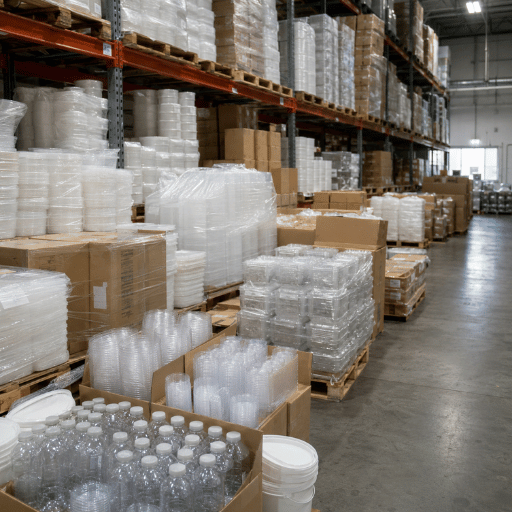
Los contenedores de plástico al por mayor son tinas, bandejas, vasos de delicatessen y cajas para llevar de plástico de calidad alimentaria que se venden al por mayor, normalmente por caja en una cantidad mínima de pedido (MOQ), y se cotizan en una curva por unidad que baja a medida que aumenta el volumen de su pedido. La unidad que pagas a 5.000 piezas no es la unidad que pagas a 50.000.
Si se equivoca en el nivel y el riesgo es real: solicite unos cientos de unidades cuando su tasa de combustión real sea de 50 000 al mes y pueda pagar un margen de beneficio de 20-40%, porque el costo de configuración fijo nunca se reduce.
Ese precio móvil es la parte más incomprendida de la compra al por mayor. Lo llamamos curva de ruptura de precios mayoristas: los costos fijos (herramientas, configuración, mínimos de flete, papeleo) se distribuyen en todo el pedido, por lo que el precio unitario cae abruptamente entre la primera y la quinta paleta, luego se aplana. Por debajo del MOQ de un fabricante, usted paga el margen de beneficio de un distribuidor para facilitar pequeñas cantidades o no obtiene ningún precio de fábrica.
| Nivel de pedido | Quien lo sirve | Precio unitario relativo |
|---|---|---|
| Caso menor de 1 | Venta al por menor/cash-and-carry | Cel mai mare (1,5-3×) |
| 1-20 casos | Distribuidor de servicios de alimentos (sin MOQ, agrega margen de beneficio) | Línea base |
| Carga de palés/contenedores | Directo de fábrica (se aplica MOQ) | Más bajo |
El Foodservice Packaging Institute enmarca las mismas tres puertas: fabricante, distribuidor o club/minorista de efectivo y transporte. La puerta correcta depende de su tasa de consumo mensual, no de qué cotización parece más barata de forma aislada. ¿Listo para comparar el precio de fábrica con el de su distribuidor actual? Ver nuestros envases de plástico al por mayor para opciones en stock y personalizadas.
Elegir la resina adecuada: PP vs PET vs HDPE vs PS/rPP
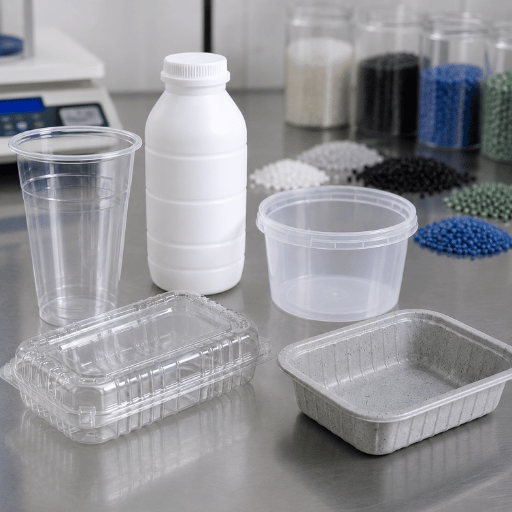
La resina que recojas se decide por una pregunta sobre todas las demás: ¿la comida va caliente? El polipropileno (PP) se encarga del relleno caliente y del microondas; El PET se mantiene cristalino pero se deforma cerca de 70°C y pertenece a los alimentos fríos y ambientales. Retroceda y encontrará quejas sobre tapas deformadas y fugas en el primer proceso de entrega. Los cuatro caballos de batalla de calidad alimentaria son el plástico PET (tereftalato de polietileno, #1), el HDPE (polietileno de alta densidad, #2), el PP (#5) y el LDPE para películas flexibles y revestimientos de bolsas.
| Resina | RIC | Calor/microondas | Claridad | Mejor para |
|---|---|---|---|---|
| PP (polipropileno) | 5 | Relleno en caliente y tolerante a microondas (¦100-120 °C continuo) | Translúcido | Entradas calientes, sopa, delicatessen, comidas recalentables |
| PET | 1 | Sólo frío « se deforma cerca de 70 °C | Cristal claro | Ensaladas, delicatessen frías, postres, recién cortados |
| HDPE | 2 | Estable al calor, no limpio para microondas | Opaco | Tinas rígidas, cubos, almacenamiento a granel |
| Espuma PS (EPS) | 6 | Aislante, bajo costo | Opaco | Legado « ahora prohibido en 12 estados |
| rPP (PP reciclado) | 5 | Como PP, si se aprueba el contacto con alimentos | Translúcido/gris | Objetivos de sostenibilidad (específicos de las condiciones de uso) |
Especificaciones de contacto con alimentos de resina: FDA 21 CFR Parte 177 (177.1520 polímeros de olefina; 177.1630 PET). Códigos de reciclaje: ASTM D7611. Las cifras de temperatura de servicio son límites direccionales exactos que varían según el espesor de la pared, el paquete de aditivos y el fabricante, así que confirme la clasificación de calor y microondas indicada por el proveedor en lugar de asumir un número.
¿cuál es la diferencia entre contenedores de PP y PET?
PP (#5) es su opción de comida caliente: resiste el microondas y el llenado en caliente, resiste la grasa y los productos químicos y mantiene su forma bajo una lámpara de calor. PET (#1) es la resina transparente, fría y similar al vidrio que vende ensaladas frescas y postres refrigerados, pero se deforma alrededor de 70 °C (158 °F), lo que lo convierte en el plástico incorrecto para aplicaciones de alimentos calientes.
Como regla general en la línea: si la comida puede empañar una tapa, use PP; Si el cliente compra con los ojos y come el contenido frío, elija PET.
⚠¦ Important
Conocer el número de resina es un requisito previo necesario, no una declaración de hecho terminada. EE.UU. Regulación de la FDA sobre el contacto con alimentos ^ en particular, el uso de plástico reciclado es específico de la condición de uso y depende del calor, del tipo de alimento, del tiempo de contacto y de si se trata de un artículo de un solo o de varios usos. “Es PP” responde a la pregunta sobre el calor, no a la pregunta sobre el cumplimiento.

La forma sigue a la función. Los lados húmedos y las sopas funcionan bien en tazas Deli, mientras que los recipientes tipo almeja y bento con bisagras ofrecen una buena exhibición de comida para los platos principales. Los tazones con tapas seguras son los mejores para la entrega de servicios de alimentos. Los frascos de plástico de boca grande funcionan para encurtidos, salsas y condimentos a granel, mientras que las botellas exprimibles de boca ancha entregan apósitos. Todos esos acabados de cuello específicos para uso requieren tapas y cierres proporcionales. La compatibilidad de la tapa importa tanto como la taza, así que confirme que la tapa y el cierre se ajusten al acabado del cuello y pregunte si hay una opción a prueba de manipulaciones disponible para la entrega; Las buenas opciones de contenedores vienen en una variedad de formatos para diferentes elementos del menú. -sin verificar el volumen de llenado de sus porciones y descubrir que sus contenedores se están llenando más allá de la superficie de sellado cuando están llenos. En la práctica, una línea de sopa que llena una taza de 32 oz (946 ml) hasta el borde puede perder 5-10% por derrames en tránsito, porque no hay espacio libre debajo del sello; el error es dimensionar la etiqueta en lugar de la porción.
| Tamaño nominal | Volumen | Uso típico |
|---|---|---|
| 8 oz | ¦ 237 ml | Salsas, aderezos, un solo lado |
| 16 oz | ¦ 473 ml | Sopas, ensaladas, platos principales |
| 32 oz | ¦ 946 ml | Sopas familiares, delicatessen a granel, tazones de comida |
Liberar ahorros operativos mediante la estandarización, particularmente para tapas y cierres. Si usa un diámetro de tapa para varias alturas de taza, por ejemplo, la misma tapa se adapta a todas las tazas de 8 oz, 16 oz y 32 oz, y los mismos cierres para todos sus frascos Deli, su recuento de SKU disminuye y la necesidad de buscar un top ajustado disminuye drásticamente. Esta silenciosa eficiencia a menudo se traduce en grandes ahorros a lo largo de los años. Para obtener más información sobre todas las opciones de materiales, dimensiones y capacidades correspondientes, consulte nuestro guía de materiales para envases de alimentos desechables.
El verdadero costo de compra al por mayor

Lejos de un precio FOB en el extranjero es lo que pagarás en tu puerta; el costo de aterrizaje, que es FOB por unidad más todo el flete marítimo, los derechos de importación, las tarifas de corretaje y la entrega local. Para los artículos de plástico que saldrán de China en 2025, el derecho será uno de los costos de compra a distancia más grandes, y más incomprendidos.
Como ejemplo práctico, puede volver a ejecutar con sus propios números: el transporte marítimo desde China es volátil, se ha movido a través de un rango aproximado de aproximadamente $2.000-$3.500 por contenedor de 40 pies en los últimos trimestres, así que trátelo como direccional y obtenga un cotización actual para su ruta. En un contenedor que contiene varios cientos de miles de tazas de delicatessen ligeras, el flete cuesta menos de $0,01 por taza, por lo que el flete por unidad es pequeño. Los derechos de importación son la variable que sorprende a los compradores. Los envíos de plástico al extranjero conllevan derechos de aduana y tarifas de procesamiento que cambian con el tiempo y dependen de la clasificación arancelaria del producto, por lo que la tarifa que debe hoy puede no ser la tarifa que debe el próximo trimestre. Antes de modelar el costo de aterrizaje, confirme el actual Clasificación HTS y la tasa de arancel para su producto exacto con su agente de aduanas: un cambio en la tasa aplicable puede remodelar todo el cálculo. Aun así, unos pocos centavos de derechos y fletes en una taza FOB de menos de 5 centavos generalmente todavía caen por debajo del precio de pedido pequeño de un distribuidor, siempre que su volumen absorba el costo fijo de despacho. La trampa a seguir en la práctica: una variación de derechos de 10-25% sobre el valor FOB puede mover el costo de aterrizaje en más de lo que lo hace el flete, porque el arancel aumenta con el valor del producto mientras que el flete del contenedor permanece fijo por caja.
📐 Nota de ingeniería
Costo de construcción por unidad como: (unidad FOB) + (transporte de contenedores ribe unidades por contenedor) + (FOB × duty% pila) + (MPF + HMF) + (unidades ribe interiores). El término de flete por unidad se reduce a medida que llena el contenedor, razón por la cual llenar insuficientemente una carga de 40 pies es la forma más común en que los compradores inflan silenciosamente su propio costo unitario. Ya sea que su cotización lo llame plástico a granel, embalaje a granel o precio mayorista, la economía a granel y mayorista es la misma: los precios a granel en contenedores de plástico a granel mejoran con el volumen, y un precio de contenedor mayorista directo a la fábrica es más rentable que el de un distribuidor una vez que su pedido supera el MOQ (la misma lógica va desde el servicio de alimentos hasta el embalaje industrial ligero).
Marca personalizada y marca privada al por mayor

Contenedores personalizados divididos en tres métodos, cada uno con su propio MOQ y herramientas matemáticas. La impresión de logotipos de superficie es la entrada más barata; el etiquetado en el molde (la película se funde en la pared durante el moldeo) brinda un acabado duradero y premium; un molde totalmente personalizado le brinda una forma patentada pero conlleva un cargo único por herramientas (NRE) que solo se amortiza en volumen.
| Método | Moq típico | Herramientas (NRE) | Mejor cuando |
|---|---|---|---|
| Impresión de logotipos | ~10,000 | Bajo (placa) | Marca un contenedor de stock rápidamente |
| Etiquetado en molde | Más alto | Medio | Durable, calidad fotográfica, sin pelar |
| Molde personalizado | Compromiso de volumen | Herramientas únicas | Forma/ajuste propietario |
Aquí es donde una fábrica de origen cambia las matemáticas. Las herramientas únicas de un molde personalizado pueden ascender a miles, por lo que solo vale la pena una vez que lo estás amortizando en más de 100.000 unidades; La impresión de logotipos, por el contrario, marca un cuerpo original y se envía en aproximadamente 15 a 25 días porque no hay nuevas herramientas para cortar. Wanhui ejecuta 60 líneas de moldeo por inyección más capacidad de termoformado y película en molde internamente, por lo que la impresión de logotipos y el desarrollo de moldes personalizados se realizan bajo un mismo techo en lugar de a través de un corredor de impresión, que comprime tanto el tiempo de entrega como las capas de marcado. Estas soluciones de embalaje personalizadas cubren todo, desde recipientes de almacenamiento de alimentos de marca hasta cajas impresas para llevar, y una fábrica de origen puede ofrecer entrega rápida en envases personalizados una vez que se apruebe la obra de arte. Explore las opciones en nuestro envases de alimentos personalizados página.
Seguridad alimentaria y cumplimiento antes de comprar

Antes de que cualquier recipiente llegue a su alimento, confirme que despeja el piso de cumplimiento. En los EE. UU., eso significa sustancias en contacto con alimentos autorizadas FDA 21 CFR Parte 177, hecho de resina documentada de calidad alimentaria, no un “es seguro para alimentos” verbal.” En la práctica, una aplicación de relleno en caliente a 70 °C descarta PET en el acto, así que confirme que la resina coincide con las condiciones de uso antes de que se envíe la paleta. Aquí se esconden dos riesgos que las páginas del catálogo nunca mencionan.
- Solicitar la declaración de resina de calidad alimentaria y la citación correspondiente 21 CFR 177 (por ejemplo, 177.1520 para PP).
- Haga coincidir el contenedor con la condición de uso: llenado en caliente, microondas, congelador, no solo con el código de resina.
- Para contenido reciclado, pregunte qué proceso de PCR reconocido por la FDA utiliza la resina y si su letra cubre su tipo de alimento y temperatura.
- Trate el etiquetado de reciclabilidad como una cuestión legal separada (ver más abajo).
¿Están disponibles opciones de plástico reciclado o sostenible?
Sí, pero tiene una captura no dicha. El marketing “reciclable” se está regulando, por lo que ahora la SB343 de California limita el símbolo de reciclaje de flechas perseguidas -ñan y la redacción “reciclable” -ñan a materiales aceptables a través de sistemas locales. Poner una marca de reciclaje en lo que sus flujos de desechos locales no aceptan agrega una capa de riesgo propia, independientemente de la resina que utilice. Su enfoque honesto es resaltar únicamente la PCR en lo que venga con la documentación del proveedor.
El mapa de exposición a la prohibición de espuma de EPS de 12 estados

¿alguien sigue usando espuma de poliestireno de expansión (EPS) en alguna de sus tiendas? El material prohibido en uno de cada cuatro estados de EE. UU. podría convertir sus contenedores de alimentos más baratos en parias; Los 12 estados que prohíben el uso de EPS para alimentos antes del 1 de enero de 2026 son una base. La siguiente tabla es una visión consolidada de aquellos estados que prohíben el EPS ahora y en el próximo año. ‘está destinado a ser su referencia rápida cuando aparezca el próximo reordenamiento de contenedores de alimentos. La prohibición de California se produjo el 1 de enero de 2025 porque los productores no alcanzaron el umbral de reciclaje de 25% y los objetivos de EPR siguen aumentando: 30% para 2028, 50% para 2030, 65% para 2032.
| Estado | Estado y fecha de vigencia | Clase de implementación |
|---|---|---|
| California | Prohibición de ventas de EPS a partir del 1 de enero de 2025 (umbral de reciclaje de 25% no cumplido, SB 54) | En todo el estado |
| Nueva York | Servicio de alimentación desde 2022; almacenamiento en frío agregado el 1 de enero de 2026 | Fase |
| Virginia | Todos los vendedores de alimentos 1 de julio de 2026 (más de 20 ubicaciones desde el 1 de julio de 2025) | Fase |
| Maryland | Promulgado (primera prohibición de espuma en todo el estado de EE. UU.) | En todo el estado |
| Maine | Promulgado | En todo el estado |
| Vermont | Promulgado | En todo el estado |
| Nueva Jersey | Promulgado | En todo el estado |
| Colorado | Promulgado | En todo el estado |
| Washington | Promulgado | En todo el estado |
| Oregón | Promulgado | En todo el estado |
| Rhode Island | Promulgado | En todo el estado |
| Delaware | Promulgado | En todo el estado |
Fuentes: Fiscal General de California · Buceo de embalaje (leyes de 2026).
En toda la cadena de suministro, el mosaico de responsabilidad extendida del productor y reglas de materiales, junto con el aumento de los costos, ahora se ubica como el principal desafío operativo para el empaquetado de servicios alimentarios.
Foodservice Packaging Institute, 17.o Informe Anual de Tendencias (2025)
La medida práctica es estandarizar una resina, PET, PP o fibra moldeada compatible en todo su espacio, en lugar de mantener un SKU de espuma que sea legal en un estado y contrabando en otro. Los compradores que cambian de espuma por comida caliente a menudo combinan PP con a alternativa compostable o de fibra para el lado ecológico del menú.
Cómo examinar a un proveedor mayorista de contenedores de plástico

El riesgo restante, una vez liquidados el material y el diseño, es el propio proveedor. Utilice el cuadro de mando de siete puntos a continuación para probar a presión cualquier cotización, porque un proveedor que no puede responder a estos puntos por escrito es aquel que lo sorprenderá en el segundo o tercer reorden. Cada punto a continuación se asigna a un documento o garantía que debería poder obtener antes de comprometer una paleta.
El cuadro de mando del proveedor de contenedores de plástico de 7 puntos
- Documentos de cumplimientoprueba del estado de contacto con alimentos de la FDA (el específico 21 CFR cita) con una declaración de resina de calidad alimentaria y, para contenido reciclado, la carta del proceso de PCR, no una afirmación genérica y no calificada de “segura para alimentos”.
- Directo de fábrica frente a comerciante¿está comprando en la moldeadora o en un intermediario revendiendo el embalaje de otra persona? Pregunte por la lista actual de líneas de producción.
- Muestras gratisnunca se comprometa con una paleta hasta que haya probado una muestra en resina real de calidad alimentaria en condiciones realistas, incluido un tramo de transporte.
- Transparencia MOQexistencias declaradas y cantidades mínimas de pedido personalizadas, por escrito.
- Garantía de plazo de entregael plazo combinado de producción y tránsito como fecha firme, no es un vago “muy pronto”
- Control de calidad/inspeccióncomprobaciones del espesor de la pared, la integridad del sello y la ausencia de olores desagradables en la resina de calidad alimentaria.
- Capacidad de altura¿puede el proveedor satisfacer su volumen futuro a medida que crece o el tercer reordenará romperá su cronograma?
Para contextualizar cómo es la capacidad directa de fábrica: Wanhui ha fabricado envases para servicios de alimentos durante 20 años en 86 líneas de producción (20 termoformado, 6 extrusión de láminas y 60 moldeo por inyección), produciendo más de 30 toneladas de láminas por día y más de 1 millón de unidades terminadas al día. Su equipo de más de 200 personas trabaja con materiales de calidad alimentaria diseñados para lograr un espesor reforzado, sellado a prueba de fugas y rendimiento sin olores, el tipo de espacio libre que separa a un proveedor que puede realizar su primer pedido de uno que aún puede realizar el décimo.
Perspectivas para 2026: Mandatos de reciclabilidad y el cambio de r-PP

La fuerza detrás de la compra mayorista de contenedores de plástico en 2026: política, no estética. Ya enfrentando un mar de prohibiciones específicas de espuma que se están expandiendo hasta 2027, los hábitos de los compradores están mejorando. Nuevo SB 54, el programa de responsabilidad ampliada del productor de California obliga a los productores a reciclar 65% de todos sus alimentos de plástico de un solo uso para 2032 ñan, incluidas las marcas intermedias 30% y 50% a lo largo del camino ñan mientras las prohibiciones de PFAS contra productos de fibra están en el horizonte en estados como Maine e Illinois. Tal impulso legislativo significa un mayor interés en dos materiales: PP reciclado y r-PP.
El polipropileno reciclado es el material que vale la pena observar e investigar a fondo. El r-PP de calidad alimentaria se está convirtiendo en una realidad con notificaciones de contacto con alimentos nuevas y crecientes de la FDA (en la base de datos de plástico reciclado posconsumo de EE. UU., hay una gran cantidad de solicitudes recientes de PP); sin embargo, cada aprobación refleja condiciones específicas, fuentes de materias primas, usos previstos y procesos de fabricación. Por lo tanto, la disponibilidad no siempre equivale a una sustitución directa: asegúrese de que el grado de r-PP que elija limpie sus alimentos y temperaturas específicos antes de especificarlos. Mientras tanto, recuerde: el hecho de que algo esté diseñado para ser reciclable e impreso con símbolos de reciclaje no significa que sea realmente reciclado (la EPA de EE. UU. estima que aproximadamente 13,6% de todos los contenedores y envases de plástico se reciclan realmente « 69% depositados en vertederos (según datos de 2018), por lo tanto, diseñe para una reciclabilidad efectiva y con la expectativa de contenido real cuando sea posible.
Conclusiones clave para los compradores de 2026
- Si la comida va a estar caliente, opte por PP, simple y llanamente. Para artículos fríos, y si la claridad es primordial, el PET será suficiente.
- Antes de reordenar contenedores de espuma para el servicio de alimentos, consulte la lista más reciente de estados con prohibiciones de contenedores de espuma plástica para ver si su suministro es legal.
- Exigir el documento de cumplimiento específico, no un reclamo de “grado alimentario”.
- Tratar una designación reciclable (SB343) para un producto plástico como un riesgo legal completamente separado de su composición.
Preguntas frecuentes
¿cuál es la diferencia entre los envases de alimentos de PP y PET?
Ver respuesta
El polipropileno (PP, resina #5) es el caballo de batalla de los alimentos calientes: tolera el llenado en caliente y el recalentamiento por microondas, resiste la grasa y mantiene su forma debajo de una lámpara de calor, lo que lo convierte en el estándar para platos principales, sopas y comidas recalentables en caliente. El PET (resina #1) es la resina fría y transparente, apreciada por su claridad similar al vidrio pero que se deforma a aproximadamente 70 °C.
Ese límite de calor restringe el PET a artículos fríos y ambientales, como preparaciones de delicatessen, ensaladas y postres. Sirva la temperatura primero, aparezca después «esa es la forma más sencilla de seleccionar su plástico principal.
¿Cuál es la cantidad mínima de pedido (MOQ) para envases de plástico al por mayor?
Ver respuesta
Las MOQ de los productos en stock varían según el formato. Para una caja para llevar en stock, la mayoría de las fábricas comienzan entre uno y varios estuches, generalmente entre 100 y 500 unidades por estuche, según el tamaño de la caja. Los pedidos totalmente personalizados (impresos y moldeados, o únicamente impresos en superficie) son más altos, generalmente en el rango de más de 5000 a 10 000 unidades, aunque los niveles mínimos varían según la fábrica.
Los distribuidores de servicios de alimentos no tienen MOQ, pero sus márgenes mayoristas son mayores porque atienden esos mínimos más bajos, así que base la decisión en su volumen mensual.
¿Cómo sé qué tamaño de envase de plástico comprar?
Ver respuesta
Calcule el volumen de llenado, no la etiqueta de la onza impresa. Tamañe el recipiente a su porción real y deje el espacio de cabeza debajo de la línea de sellado para cada llenado, de modo que un vertido completo no rompa la tapa. Como orientación general, 8 oz « 237 ml, 16 oz ¦ 473 ml y 32 oz ¦ 946 ml.
Para simplificar el pedido, verifique si el mismo diámetro de tapa se ajusta a una variedad de alturas de copa, lo que reduce la cantidad de SKU de tapa que lleva.
¿hay opciones recicladas o compostables disponibles?
Ver respuesta
Sí, las opciones de plástico reciclado de calidad alimentaria están disponibles y son el objetivo de compra de muchas maneras. Tanto el bagazo (un subproducto de la caña de azúcar) como otras alternativas de alimentos compostables de origen vegetal también están ampliamente disponibles -, aunque incluso en el caso del contenido reciclado de calidad alimentaria, existen advertencias relacionadas con restricciones específicas de uso relacionadas con los alimentos y la temperatura debido a el proceso de certificación de la FDA de EE. UU.
¿los envases de plástico para alimentos al por mayor son aptos para microondas?
Ver respuesta
Los contenedores de polipropileno (PP, #5) son los que generalmente se validan para uso en microondas porque resisten el calor, pero “PP” por sí solo no es una garantía. Sólo se han validado para ello los contenedores explícitamente marcados como aptos para microondas, ya que los aditivos y el espesor de las paredes varían según la empresa que los fabrica.
Nunca coloque recipientes de PET o espuma en un microondas, ya que el material puede deformarse o deformarse. Cuando vuelva a realizar el pedido, especifique la marca segura para microondas en la orden de compra y luego valídela en una muestra con su propio plato antes de extenderla por los lugares.
¿Las tapas vienen incluidas y son intercambiables?
Ver respuesta
Los contenedores a menudo tendrán un precio por separado, así que asegúrese de verificar si su cotización incluye solo el contenedor o un paquete de contenedor y tapa. Un gran beneficio que debe saber es que la mayoría de las gamas de delicatessen aceptarán una única dimensión de tapa en varias alturas de contenedor.
¿Cuánto tiempo lleva la producción y el envío al por mayor?
Ver respuesta
Los pedidos de acciones avanzan más rápido. Los tiradas impresas o moldeadas a medida agregan herramientas y tiempo de configuración de impresión, y el transporte marítimo desde Asia generalmente agrega varias semanas además de la producción. Presione para obtener una única fecha combinada de producción y envío en lugar de una estimación vaga, y confirme que el proveedor tiene espacio libre de capacidad para que un reorden no se quede atrás de la ejecución de un cliente más grande.
¿abastecerse de contenedores de plástico al por mayor?
Vea cómo un PP, PET y HDPE de calidad alimentaria directo de la cotización de fábrica, un logotipo personalizado y opciones de molde y un MOQ claro se comparan con lo que paga con sus proveedores actuales.
Acerca de esta guía del comprador
Lo que ve aquí es nuestra realidad diaria como fabricante original de contenedores de plástico desechables/de calidad alimentaria (un agregado de 86 líneas de producción y >1.000.000 de unidades por día). La mentalidad de MOQ, resina y costo de aterrizaje aquí son reflejos directos de las consultas reales que nuestro equipo de ventas recibe de sus homólogos a nivel mayorista. Por el equipo técnico de Shandong Wanhui Environmental Protection Technology Co., Ltd.
Referencias y fuentes
- 21 CFR Parte 177, Aditivos alimentarios indirectos: polímerosFda de EE. UU./ecFR
- Plásticos Reciclados en Envases de AlimentosAdministración de Alimentos y Medicamentos de EE. UU
- Contenedores y Embalajes: Datos Específicos del ProductoEPA de EE.UU
- Recordatorio de prohibición de artículos de servicio de alimentos de espuma EPSFiscal General de California
- Programa EPR de embalaje SB 54CalRecycle
- Certificación APR PCRAsociación de Recicladores de Plástico
- Guía de abastecimiento e informe de tendencias de 2025Instituto de Embalaje FoodService
Artículos relacionados
- Contenedores de Alimentos Desechables, guía de materiales (PP, PET, MFPP, bagazo)
- Envases de alimentos personalizados, impresión de logotipos, etiquetado en molde, moldes personalizados
- Alternativas ecológicas de envases de alimentos, compostables y fibra
- Contenedores tipo almeja compostables, opciones certificadas por BPI