Get in touch with Wanhui Company


How to Evaluate and Choose a Plastic Container Manufacturer in 2026
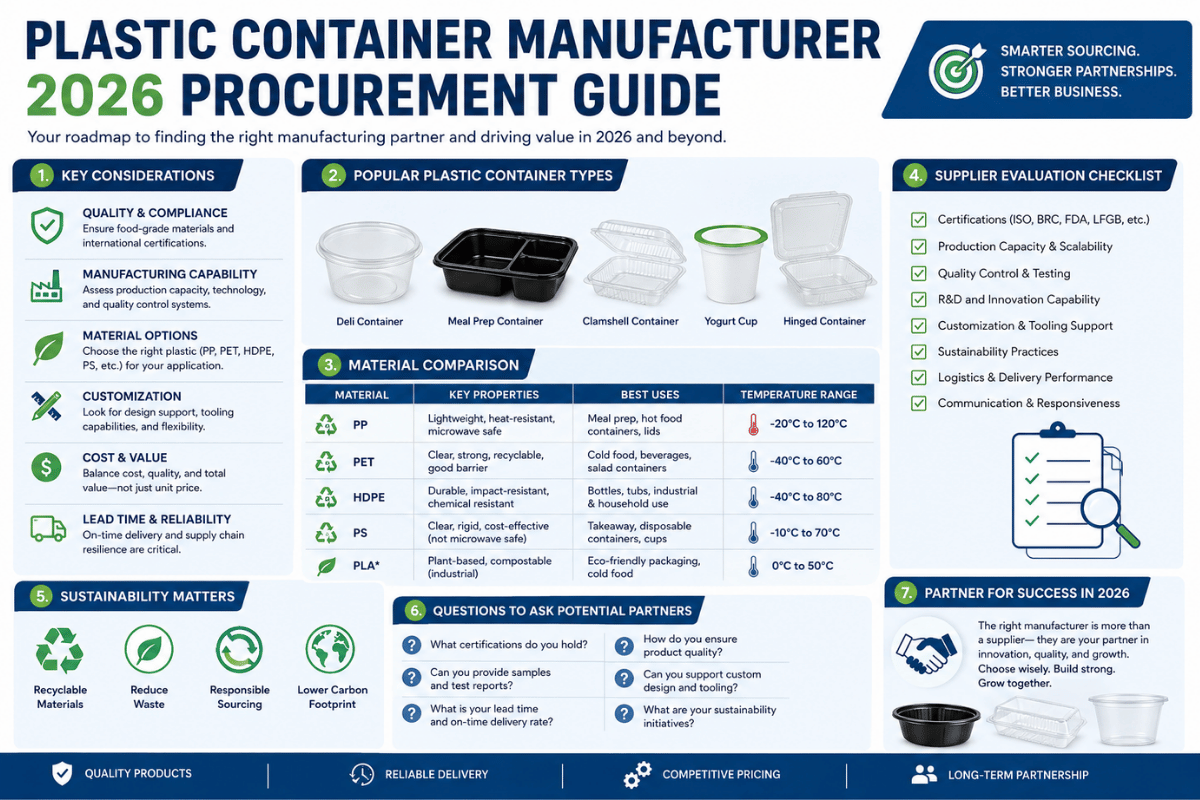
Plastic Packaging Vendor selection may be the biggest procurement purchase a food, beverage, personal care, or pharmaceutical buyer will ever make – yet many make it just like buying office supplies. This predictably leads to a breakdown in lot-to-lot consistency, certifications that fail an importer audit, and tooling investments lost to slick-talking trading house agents who claim to be factories. Learn buyer’s edge through this guide to four supply chain models, si× polymer chemistry options, the 2026 regulatory roadmap, and a 7-test sample audit protocol to ensure your next plastic packaging quote survives the real world.
Quick Specs — Verify in 60 Seconds Before Sending Your First RFQ
| Legal entity check | Business license name matches certificate holder name (exact characters) |
| Real custom MOQ | 50,000–100,000 pieces per SKU (anything <5,000 = trader aggregator) |
| Realistic lead time | 60–90 days for custom tooling + ocean freight to US/EU |
| Required food-contact docs | FDA 21 CFR 177 declaration + EU 10/2011 migration test report |
| 2026 cliffs | EU PPWR (Aug 12), UK tax £228.82/t (Apr 1), CA SB 682 PFAS (in progress) |
What “Plastic Container Manufacturer” Actually Means — 4 Supply Chain Models
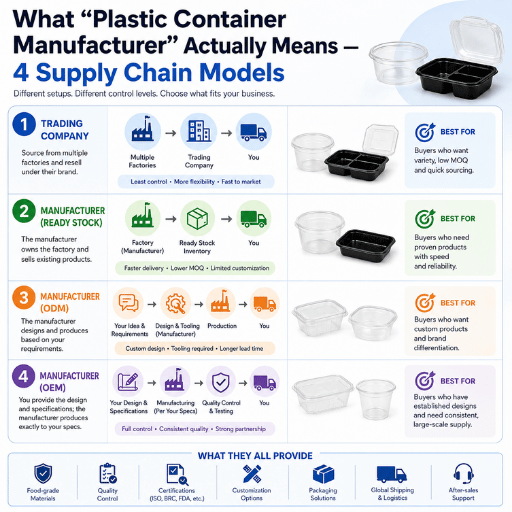
“Plastic Container Supplier” is not a single type of company. In fact, there are at least four kinds, and treating them as equivalent is the most costly single mistake a buyer will make. You absolutely MUST identify your supplier’s business model before you compare their prices and timelines.
| Supply Chain Model | Owns Production Equipment | Custom-Tooled MOQ | Identifying Signal |
|---|---|---|---|
| Integrated Factory | Yes — extrusion + thermoforming + injection in-house | 50,000–100,000 pcs | Can show resin lot traceability back to the production line |
| Converter / Specialist | Yes — single process (e.g., injection only) | 25,000–100,000 pcs | Buys sheet/preform externally; deep mold-design expertise |
| Trader / Trading House | No — places orders with multiple workshops | “5,000 pcs” custom (red flag) | Aggregates surplus stock; sub-contracts custom runs |
| Distributor | No — warehouses standard SKUs from multiple makers | Catalog only, no custom | Fast lead time on stock items; markup of 15–35% over factory price |
“Trading house sourcing” – that is, a broker passing on an order from a manufacturing client to you, is the most prevalent issue for plastic container purchasers. If an offer from a web posting or supplier representative promises the world of low costs and quick turnaround on custom-tooled packaging but you are unable to get a live video of the actual factory line floor from one of their own engineers (in progress, on the current day and shift) then walk away immediately. Many such traders appear at trade shows touting their ownership of the facilities. However, behind the shiny logos are simply agents receiving commission for your order. The right provider for custom food, beverage, personal care, and pharmaceutical needs includes the independent factory or the specialty convertor. An integrated factory or the specialized manufacturer are the two most appropriate sources if a manufacturer is required for a tool with its own custom design.
Polymer Chemistry Decoded — HDPE, PP, PET, PVC, PS, PLA Compared
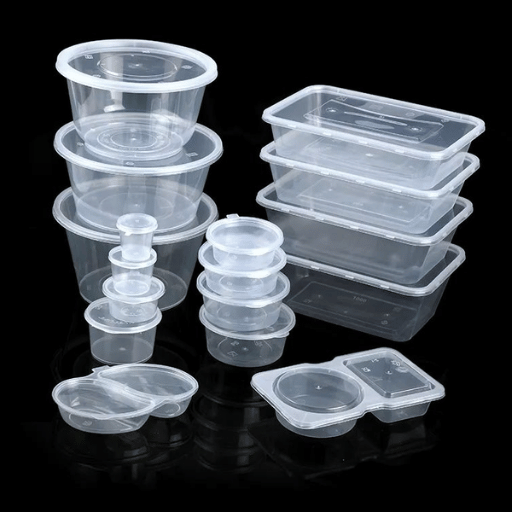
There are 6 base polymer resin types from which food grade plastics are derived, and the type selected is dependent on the performance requirements and physical demands of a specific packaged product, as well as post-use. U.S. Food and Drug Administration regulations list under 21 CFR, Part 177 (Indirect Food Additives: Polymers), allowable polymers intended to contact with food for specific conditions of use. All quotations and purchase orders should list “approved and documented for use per 21 CFR Part 177 (specify applicable regulation number),” on the documentation for the applicable commodity.
| Polymer | Working Temp | Transparency | Recycling Code | Best-Fit Application |
|---|---|---|---|---|
| HDPE | −40 °C to ~110 °C | Opaque | #2 | Plastic bottles, drums, jugs, dairy (cold), chemical packaging |
| PP (Polypropylene) | −20 °C to 120 °C | Translucent | #5 | Hot-food delivery, microwave reheat, hinged-lid containers |
| PET | −40 °C to ~70 °C | Crystal clear | #1 | Cold display, anti-fog clear lids, salad / fruit visibility |
| PVC | −20 °C to ~70 °C | Clear or rigid | #3 | Specialty pharma blister, industrial — rarely food (additive concerns) |
| PS (Polystyrene) | −20 °C to ~80 °C | Clear or opaque | #6 | Cold cups, deli containers (banned in CA / NY for some uses) |
| PLA (cornstarch) | −5 °C to ~50 °C | Translucent | #7 (industrial compost) | Eco-conscious brands, cold or ambient applications only |
What’s the difference between HDPE and PET?
High-density polyethylene (HDPE) and polyethylene terephthalate (PET) are the two highest-volume container resins in the world, and they solve different problems. HDPE is opaque, chemically resistant, and tolerates a wider temperature range — milk jugs, detergent bottles, and chemical drums are HDPE for this reason. PET is crystal clear with a stronger gas and vapor barrier across cold and ambient temperatures, recycles into the most established stream (#1 containers), and is the standard for carbonated beverage bottles — but it softens above ~70 °C and is unsuited to hot fill or microwave use. Practical buyer rule: if the customer needs to see the contents, specify PET with an anti-fog lid; if the contents are hot, oily, or chemically aggressive, specify HDPE or PP for the durability the application demands. FDA codifies food-contact polymer approvals under 21 CFR Part 177, “Indirect Food Additives: Polymers” — that is the chapter your supplier’s compliance declaration must reference for any food-contact container.
📐 Engineering Note — Migration LimitsThe maximum European migration under Regulation (EU) 10/2011 is 10 mg/dm² contact area, 60 mg/kg for packaging for young infants/young children. Any supplier exporting into the EU needs a Declaration of Compliance with their migration testing performed. Ensure you obtain the test methodology (max migration in simulant A/B/C/D, depending on the food category) and test report date – any test date more than 24 months old from the same mold should prompt a retest request.
Production Processes That Define Container Quality
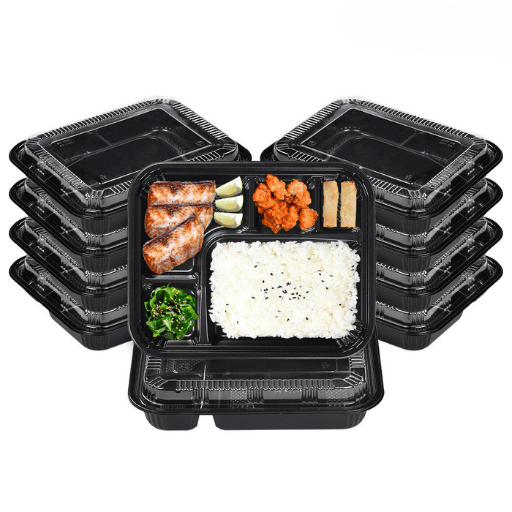
The specific plastics process the manufacturer utilizes impacts your cost per part, minimum order size, design latitude and Branding capabilities. Most B2B plastic containers can be manufactured using one of the four process technologies below:
- ✔
Thermoforming — sheet extrusion + vacuum forming. Low tooling cost ($4–15k for aluminum tools), high throughput on lid-and-tray geometry, ideal for clamshells, blister-pack, and meal-prep trays. Wall-thickness uniformity is the main quality variable. - ✔
Injection Molding — pressurized melt into closed mold. Higher tooling cost ($20–80k for steel tools) but tight tolerance control (±0.05 mm), supports complex geometry, hinges, and threaded closures. The right method for hinged-lid containers and structural sauce cups. - ✔
Blow Molding — parison inflated against mold wall. The dominant process for bottles, jugs, and hollow containers. Per-unit cost is low at volume; design flexibility is more limited than injection. - ✔
In-Mold Labeling (IML) — pre-printed film fused into the container wall during injection. The print is scratch-proof, peel-proof, and survives microwave + freezer cycling — the only labeling method that holds up across the full retail freeze-reheat cycle. Plate setup costs are fixed, which is why IML economics need high-volume runs to justify.
A manufacturer’s capabilities directly relate to the technologies they possess. A vertically integrated integrated plastic container manufacturing facility with sheet extrusion, thermoforming, injection molding, and IML capabilities in-house can hold lot-to-lot consistency (lid-fit tolerance among them) tighter than a network of traders using multiple subcontractors — an effect that surfaces by week 12 of a run when sample geometry has drifted off the original spec.
Where to Source — Global Manufacturer Geography in 2026
The China vs. Alternative “Sweet Spot” between Summer 2025 and Spring 2026: Trade events had the following significant impact: A US/Vietnam trade deal ( July, 2025) created a preferential tariff status for the latter country; the Mexican government announced its December 2025 anti-China tariff package, and the USTR’s Section 301 tariff continued to increase on Chinese plastic packaging imports.
| Origin | US Tariff Exposure (2026) | Typical Lead Time | Best-Fit Buyer Profile |
|---|---|---|---|
| China | Section 301 List 2: +25% | 60–90 d (custom) | Large-volume commodity, IML branded retail, integrated production capability |
| Vietnam | 20% direct; 40% if transshipped | 55–85 d | Mid-volume buyers wanting to diversify out of China at lower tariff |
| Mexico | USMCA-qualified: 0%; non-IMMEX Chinese-origin inputs: 35–50% | 15–30 d to US | Nearshoring + cold-chain food brands; IMMEX-registered operators |
| Domestic US | 0% | 10–25 d | Small custom runs, “Made in USA” retail positioning, regulated medical |
Manufacturer Selection Matrix — Match Sourcing Geography to Your Profile
- Low-volume, Custom Branded (~< 50,000 Units), Mold required – USA or Mexico -tariff impact generally exceeds any direct sourcing savings.
- High-volume Commodity (~>500,000 Units, Standard SKU), Mexico or USA- Mexico will likely achieve greater overall landed cost than IML; IML or complex mold parts may still see cost savings from China despite tariffs.
- Sustainability Driven Brand (~PCR-content tender) – USA or EU – For products where post-consumer material is key; PCR plastic available and USA-based test & trace for FDA NOL is more reliable.
- Strategic De-Risking mandate (moving beyond one country) Mexico – not Mexico to US to China for this article’s purpose; The current 20% Mexico import tariff vs the current 25% (US) Section 301 list 2 (of) tariffs often make this competitive.
Regulatory Landscape You Cannot Ignore — FDA, EU 10/2011, EPR, PFAS Bans
With respect to each import country, ensure the plastics supplier provides certification/documentation that complies with the relevant laws and regulations. There are currently six primary “buckets” procurement officers need to ensure have been addressed.
| Framework | What Supplier Must Provide | Effective |
|---|---|---|
| FDA 21 CFR 174-178 | Compliance declaration referencing the specific CFR section for the resin (e.g., 21 CFR 177.1520 for PP) | In force |
| EU Regulation 10/2011 | Declaration of Compliance + overall migration test report (10 mg/dm² limit) | In force |
| EU PPWR (Packaging & Packaging Waste Regulation) | Design-for-recyclability compliance, recycled-content reporting, EPR registration in each member state | 12 August 2026 |
| CA AB 1200 (PFAS in food packaging) | Affirmative declaration of no intentionally-added PFAS; certificate of analysis on request | 1 January 2023 |
| NY S8817 (PFAS in food packaging) | Same as CA — no-PFAS declaration; supplier statement of compliance | 31 December 2022 |
| UK Plastic Packaging Tax | ≥30% recycled-content evidence or pay £223.69/tonne (rising to £228.82/tonne April 2026) | In force |
⚠️ Important — The “PFAS Decoupling” Trap
Many exporters to the U.S. provide generic “PFAS-Free” documents from years 2020 or prior. This pre-dates enforcement around the specific California and New York legislation, (and the associated Section 301 designation). A certificate dated over 1 year ago, showing test data utilizing total organic fluorine (TOF) or LC-MS/MS testing to address California AB 1200 / New York S8817 is needed. Without specified testing methodology listed, the document lacks substance.
Buyer’s Audit Framework — 10-Point Supplier Verification + 7 Red Flags
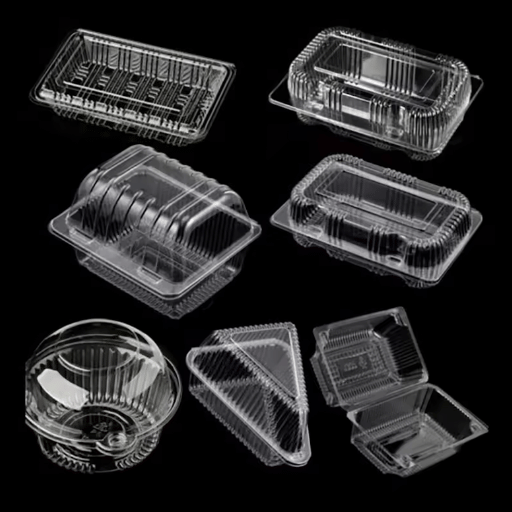
A thorough, structured supplier audit should be at the top of anyone’s to-do list before placing an order with a plastic container manufacturer for the first time. Compiled from food-contact packaging auditor consensus and organized for procurement teams, the checklist below runs in 60–90 minutes.
The 10-Point Verification:
- Verify legal entity – Ensure business license matches certificate of compliance.
- Check validity of certification with issuer’s portal (do not use printed QR codes)
- Live unannounced video tour of the production line
- Equipment ownership proof (depreciation schedule, asset list)
- Sub-contracting disclosure — written declaration of any out-sourced process
- Batch traceability proof – resin lot finished good chain of custody
- AQL pre-shipment inspection clause in the PO (specify acceptable AQL level)
- Third-party lab access – SGS, Intertek, TÜV Rheinland or V-Trust at buyer’s option
- Quality contract clauses – reject rate, return policy, retest right
- Payment terms – deposit at PO, balance after pre-shipment inspection PASS
| Red Flag | Why It Disqualifies |
|---|---|
| ISO certificate name does not match business license name | Cert was issued to a different legal entity; cannot be defended in importer audit |
| “5,000-piece MOQ” offered on custom-tooled SKUs | Real custom mold amortization requires 50,000+ pcs; this is trader stock aggregation |
| “We have stock, ship in 7 days” on custom items | Real custom production is 60–90 d; this is rejected inventory or a deposit-grab |
| Refuses to release original cert PDF citing “trade secret” | Genuine certificates have public report numbers verifiable on the issuing agency portal |
| Restricted factory access or only pre-recorded video | Real factories accommodate live tours; this signals sub-contracting |
| Unexplained price increases between sample and production | Bait-and-switch — sample was quoted at loss; real cost only revealed after tooling deposit |
| No willingness to permit SGS / Intertek / V-Trust pre-shipment | Quality cannot withstand third-party inspection at agreed AQL |
“We do not ask buyers to take quality on trust. Every shipment leaves with a batch traceability ID, a pre-shipment AQL inspection report, and the option for an independent third-party inspection by SGS, Intertek, or TÜV Rheinland. If a supplier is reluctant to allow that, then frankly the relationship is not worth the risk.”
— Senior Application Engineer, Wanhui R&D
The 7-Test Pre-Order Sample Audit Protocol
Samples are the most reliable quality gate before a production run, and a structured 7-test protocol turns sample evaluation from a gut check into a defensible procurement decision. Tests below cite the controlling ASTM or ISO standard so you can commission a third-party lab without leaving room for ambiguity on the report.
| # | Test | Standard | Pass Threshold |
|---|---|---|---|
| 1 | Drop Test (free fall) | ASTM D5276-19 | Loaded container survives drops from 0.76–1.22 m without seal failure |
| 2 | Top-Load Compression | ASTM D2659 | Withstands stacking force equal to 4–6× container weight × pallet height |
| 3 | Leak Test (sealed) | Internal pressure or vacuum decay | No visible leak after 60 s at 50 kPa differential |
| 4 | Microwave Cycling | 3 cycles at 1000 W, 2 min each | No deformation, lid still seats, no migration of color |
| 5 | Freezer–Thaw Cycling | −20 °C ↔ +25 °C, 5 cycles | No micro-cracking at the lid hinge or wall corners |
| 6 | Overall Migration | EU 10/2011 simulant A/B/C/D | ≤10 mg/dm² (60 mg/kg for child-targeted packaging) |
| 7 | Specific Migration of Additives | GC-MS or LC-MS/MS targeted | DEHP / BBP / DBP < SML limits where PVC is suspected |
Lab cost commonly runs $150–$800 per test depending on country, instrument, and turnaround – modest insurance against a five-figure quality recall. If a supplier refuses to submit production samples for all seven tests, you’ve found a trader posing as a manufacturer. Run the protocol on every new SKU and every new supplier; re-run tests 1-5 annually on existing suppliers as a quality drift check.
Cost Structure Decoded — Beyond Unit Price
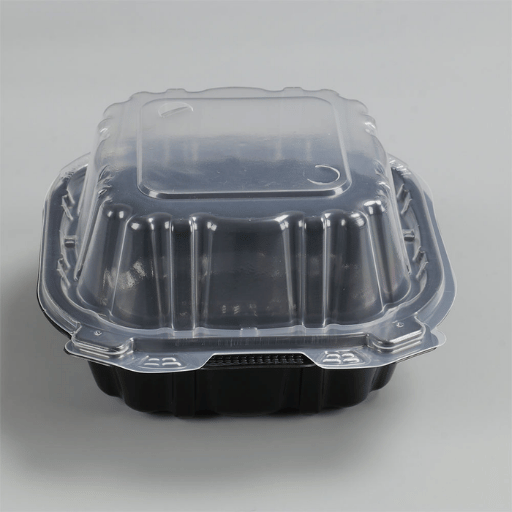
Unit price is the most visible number on a quote and rarely the largest one in your total landed cost. A defensible cost model for a custom plastic container program has six components, and the unit price drives only one of them.
- Unit price – resin cost plus processing margin, which runs 35-55% of finished landed cost for commodity SKUs and proportionally less for branded IML.
- Tooling amortization at $4,000-$15,000 for aluminum molds (good for 200k-500k cycles) and $20,000-$80,000 for steel (good for 1M+ cycles). Setup cost stays fixed whether you run 10,000 or 1,000,000 units, which is why volume disproportionately matters on branded orders.
- Ocean freight at 25-35 days from Shandong to a US East Coast port; rates have shifted by lane and season throughout 2024-2026.
- Tariffs and duties – Section 301 List 2 adds +25% on Chinese plastic containers (HTS 3923-class items); USMCA-qualified Mexico-origin imports sit at 0%; Vietnam direct at 20%.
- EPR and packaging tax fees – UK plastic packaging tax £223.69/tonne for under-30% recycled content; EU PPWR EPR fees and recycled-content rules apply from August 12, 2026; California, Oregon, and Colorado EPR programs rolling out 2025-2027.
- Quality reserve – return rate multiplied by replacement cost, plus inspection budget. A 1% reject rate on a 100,000-piece order is 1,000 units; price it into the model.
Use a rule of thumb: landed cost FOB China to a DDP warehouse often runs 1.4-1.8 x the per-unit price for a custom-molded and branded container after factoring in tariffs, freight, EPR, and inspections. Prices negotiated against full 40HC container loads are lower per unit than partial shipments-provided your forecasting and demand allow you to manage carrying costs on bulk inventory. Above two palletloads, the math typically favors cost per unit on our wholesale plastic containers; if your volume falls between 5,000 and 25,000 units, per unit freight can become over 20% of the total landed cost, and domestic production generally wins. While our MOQ & lead-time estimator can give you initial insights, always get an official quote and a line-item breakdown of unit, tooling, freight, and duty when commissioning any custom tool.
Sustainability Sourcing — PCR Resin, Mono-Material Design, EPR Compliance Reality Check
Much of the greenwashing is focused around sustainability claims for plastic containers, and you’ll need to determine which are verifiable and which are marketing hype.
Post-Consumer Recycled (PCR) resin for food-contact use is regulated by the FDA through a voluntary No Objection Letter (NOL / LNO) process — the FDA reviews the recycling process (not the resin itself) and issues a favorable letter if the process can be shown to produce food-safe output. As of mid-2025, a record number of NOLs have been issued covering rPET, rPP, and rLDPE; what looked like an rPET-only world three years ago is now a much more open market. If your supplier claims PCR content, ask which FDA NOL the recycling process operates under and request the letter number — anything else is a paper claim.
How can packaging balance high performance with sustainability?
Quite frankly, ‘balance’ only becomes the right answer when you concede that some features — barrier protection, low wall-thickness strength, color clarity — remain stronger in virgin materials. It is often possible to achieve between 25 and 50% recycled content in PCR blend containers while retaining sufficient functionality to protect food products in the way your customers expect. From a recyclability standpoint, designing as single polymer (mono-material, avoiding barrier layers of different materials) offers far and away the single greatest advantage; multilayer containers nearly always end up in the landfill of any curbside or drop-off program. If you face specific EPR reporting burdens such as in the UK or EU, or soon the EU with the PPWR, consider using mono-material PP or HDPE with a PCR content, which offers greater traceability than stating your container is ‘100% compostable PLA.’
You deserve a Compostable Materials honesty note as well. Researchers observed that a rigid PLA container (1mm thickness) still carried 97.2% of its initial mass in a genuine industrial composting facility after three weeks (68.9% under lab conditions!). “Compostable” is a label for that, it requires real high heat industrial thermophilic composting (>58 C)-not the backyard bin and certainly not the land fill. For Buyers that are supplying into EU markets and US municipality systems equipped with necessary composting infrastructure, biodegradable food containers are a sound option. If this is not the situation, a PCR-content PP container is most likely the more honest sustainability play — see compostable to-go containers for sourcing aligned to actual composting infrastructure.
Industry Outlook 2026 — Plastic Taxes, EPR Rollout, and PFAS Bans Reshape Global Sourcing
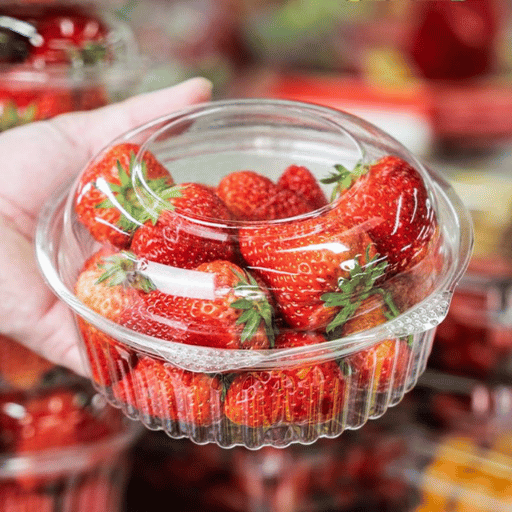
In 2025-26 three fundamental regulatory and trade changes will reorient buying approaches to plastics containers. Purchasing strategies that do not proactively address them will prove fragile within 18 months.
EU PPWR goes live: August 12, 2026. Replacing the older Packaging and Packaging Waste Directive, PPWR lays down consistent EU rules on design for recycling, minimum post-consumer recycled (PCR) material content, and product reuse targets, along with a streamlined EPR scheme registration requirement in all 27 Member States. Buyers shipping into the EU will now need their supplier to attest to PCR-content, provide a “design for recyclability” assessment and follow the uniform PPWR-based EU recycling label rather than the varied national options. Any supplier that cannot articulate their strategy to address this well in advance of H2 2026 is a supplier risk.
UK PPT climbs. On April 1, 2026, the UK’s plastic packaging tax hits £228.82 per tonne for any plastic packaging with less than 30% post-consumer content. Coupled with likely extensions of existing Spain (€0.45/kg) and a yet-to-launch Italian tax, this will create another cost increase on imports to European retailer shelves on a defined cadence — best hedged with post-consumer recycled (PCR) supply.
The tariff map got remixed. Mexico’s December 9, 2025 trade changes slap tariffs from 35–50% on goods originating from nations not present in their trade agreements (with exemptions for IMMEX-compliant Mexican manufacturers), forcing a re-evaluation of supply chains that recently relocated there to dodge China Section 301 List 2 and other duties with the aim of a smooth, tariff-lite entry. In July 2025, Vietnam direct shipped into the US became subject to 20% duty, and via third-country transshipment 40%. Direct from Vietnam is cheaper now for some SKUs than China List 2. Watch suspicious transit routes which now carry double the price.
Three key actions for any procurement professional planning for 2026–2027:
- Confirm your supplier’s PCR capabilities now. A supplier’s FDA Letter of No Objection (NOL) number(s) for a specific grade of PCR material, along with the minimum consistent PCR percentage, are key pieces of data — not just for US state-level EPRs but critically relevant for EU PPWR and UK PPT compliance.
- Budget for the impact of Extended Producer Responsibility. Estimate the new cost: for the UK, each tonne of below-30% PCR packaged content represents about £229 added to costs. For EU markets, pull country-specific EPR fee schedules for your top 3–5 most frequent destinations.
- Dual-source for tariff-exposed SKUs in case a tariff hike surprises you. Qualify a secondary supplier if one SKU makes up more than 15% of your annual volume from China. Qualification cost runs a few thousand dollars compared to scrambling to replace a sole supplier whose SKU was suddenly targeted by new tariffs — still cheap in comparison to the surprise hike.
Frequently Asked Questions
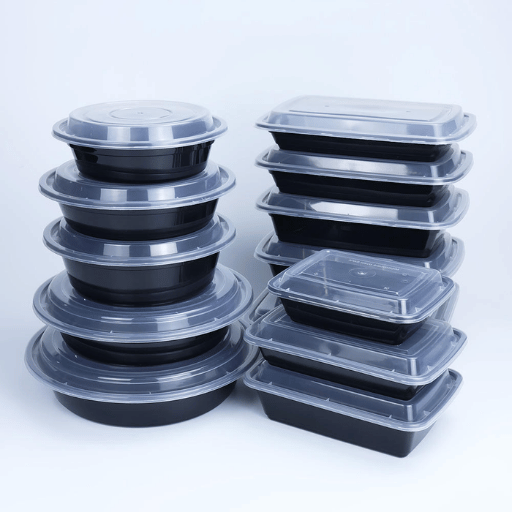
Q: What’s the minimum order quantity (MOQ) for custom-branded plastic containers?
View Answer
The actual factory minimum MOQs on custom tooled or printed plastic food containers are commonly in the 50K-100K unit / SKU range. This range increases when your product requires more colors or many mold compartments. Offers of 5K units on custom items from your suppliers are usually just remainder inventory they were left holding (after the larger order was shipped to other customers). Ask suppliers to break down the mold amortization costs as part of your quote.
Q: How long does custom mold development take?
View Answer
Aluminum tool molds take 10-15 business days once signed-off before they are available for first parts, with the mold steel a 3 to 6-week process. Samples then can go back for rework for the 7-10 days typical iteration time, with another 5-7 days for production raw material to arrive.
Q: What Makes Top Plastic Containers Manufacturers Hard to Replace?
View Answer
There are three fundamental manufacturing process benefits of an integrated operation (i.e., where the factory handles extruding and forming/molding and IML production of the part), that other supply chains simply cannot replicate: 1. Proprietary IML capabilities that provide cost effective proprietary brand printing for retail packaging units with high sales volume, with amortizing benefits that more spread out supply chains cannot achieve; 2. Total vertical control of production provides process consistency that others will not guarantee. 3. Legally defensible process documentation ( business registration matching official paper work / permits, etc.). replacing any of the three takes at minimum months of time; thus a proactive supplier audit for process capabilities should be done prior to the initial purchase order!
Q: Can a manufacturer work from my product drawings to design a tray that cradles my parts?
View Answer
Absolutely. Integrated factories can readily assist with packaging designs directly from CAD. Submit your part geometry files (STEP, IGES, etc) along with the final dimensions for the protective shipping carton or outer case to the suppliers tool department, who will then create an initial tray geometry using injection or thermoforming designs. Three to four rounds of initial first article production are usually the norm before final product can be reviewed, and tools to cut can begin around day 10 or later.
Q: Is thermoforming a good option for trays with many small detailed pockets?
View Answer
While injection is preferred for a deep, detailed form or when undercuts are present (typically in designs with <3:1 height:width), the low tooling costs of shallow (≤ 3:1 height:width on thin-walled sheet) pockets and gentle features common in thermoforming often make that process suitable. The only real drawbacks to this technique are the limitations for deep or small (under 5mm) features as well as the inability to perform intricate molded shapes, though if your budget does not allow for expensive tooling of plastic molds for the larger 20K-plus per SKU production runs – injection molds can actually be considerably expensive as they cost a bit of money at about twenty K for a steel mold or about forty K for aluminum molding.
Q: What’s the difference between clean and sterile packaging?
View Answer
A clean-manufactured product, or one prepared to a controlled environmental specification, will often be adequately clean for food or consumer applications and does not need to undergo special terminal sterilization protocols, unless specifically specified. Packaging prepared to meet a standard for sterile medical devices (such as SAL 10) would meet ISO 11607 standards. A sterile-ready product requires subsequent post-packaging sterilization, normally by way of sterilization processes such as gamma, electron beam, and steam. Food containers are rarely manufactured to sterile specifications required by this FDA regulation.
Q: Are plastic containers actually made in the USA?
View Answer
Indeed yes, the industry for making plastic containers here is predominantly US-manufacturing of injected molded plastics, blow molded, and vacuum-formed or thermoformed designs. “Domestic advantage” is really only evident with “Made in USA” labels in smaller volumes, less commodity driven or high end luxury packaging designs, as well as medical / regulated products. For larger runs (e.g. >>250k pieces per sku) and commodity product sourcing, however, there is rarely a way to compete on unit price with even an onshore competitor, if one can be secured (and the added costs of Chinese tariffs are also becoming competitive in some commodity applications as a function of “trade wars” and “China+1”, Mexico+1 supply initiatives).
Need a Plastic Container Manufacturer With Audit-Ready Documentation?
Wanhui’s vertical 86-line manufacturing of 20 thermoformers, 6 sheet extruders and 60 injection molding machines ship ISO 22000 + 9001 certified containers on five continents.
About This Guide
This buyer’s guide synthesizes regulation from: the U.S. FDA, European Union (EUR-Lex), Office of the U.S. Trade Representative (USTR), and the California Department of Toxic Substances Control (DTSC) with data on daily food container production (one-million-plus units from an 86-line vertically integrated facility), distribution across five continents, service of restaurant chains, food-delivery platforms, and meal-prep brand retail suppliers, and recent customs actions impacting plastics. The “7-Test Pre-Order Sample Audit Protocol” and “10-Point Supplier Verification” framework are geared toward procurement professionals evaluating custom-tooled plastic container quotations received in 2026.
References & Sources
- 21 CFR Part 177 — Indirect Food Additives: Polymers — U.S. Food and Drug Administration via eCFR
- Regulation (EU) No 10/2011 on plastic materials and articles intended to come into contact with food — EUR-Lex
- Food Packaging Containing PFAS (AB 1200) — California Department of Toxic Substances Control
- The New EU Packaging and Packaging Waste Regulation — Keller and Heckman LLP
- Section 301 Tariffs on China — Sandler, Travis & Rosenberg, P.A. (referencing USTR)
- ASTM D5276-19 — Drop Test of Loaded Containers by Free Fall — American National Standards Institute
- ISO 8317:2015 — Child-Resistant Packaging — International Organization for Standardization
- Submissions on Post-Consumer Recycled (PCR) Plastics for Food-Contact Articles — U.S. Food and Drug Administration
Related Articles
- Plastic Food Container Manufacturer — Wanhui’s Vertically Integrated 86-Line Production Base
- Custom Take-Out Container Manufacturing — Mold, IML, and Pricing
- Compostable To-Go Containers — Industrial Composting Reality
- 3-Compartment Containers — Material and Compartment Decisions
- Meal Prep Containers — Cost-Per-Meal Economics
Reviewed by Wanhui’s engineering team — 20 years of food-contact polymer manufacturing experience, ISO 22000:2018 and ISO 9001 certified operations.