
Get in touch with Wanhui Company

Hinged Lid Containers
Hinged Lid Containers: MFPP, Plastic & Foam Clamshell Packaging
Microwave-safe, leak-resistant takeout clamshells built to ship — compared by the numbers, manufactured direct.
A hinged lid container is a one-piece clamshell — lid and base joined by a living hinge — and it is the default takeout format for fast food, delivery, and catering. But they do not all perform alike. Expanded polystyrene (EPS) foam is now banned for foodservice in 12 U.S. states, softens near 90 °C, and dies in a microwave.
Clear PP and PET each hold a different temperature range. Mineral-filled polypropylene (MFPP) — PP compounded with up to roughly 40% mineral filler — reheats safely to about 230 °F (110 °C) and wears the #5 resin code. Wanhui makes all three in-house, so this page compares them honestly and shows where each earns its place.
// Spec_Matrix
MFPP / PP / Foam
Three hinge materials, one factory
~230 °F
MFPP/PP microwave-reheat
6″–9″
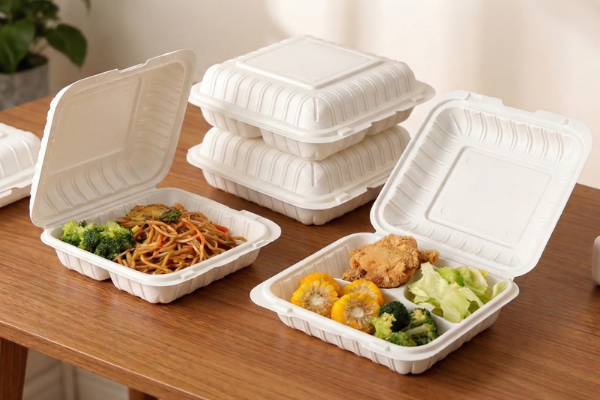
6×6 · 8×8 · 9×6 · 9×9, 1 & 3-comp
Black / White
Stock colors, custom on request
1M+ / day
Factory-direct output
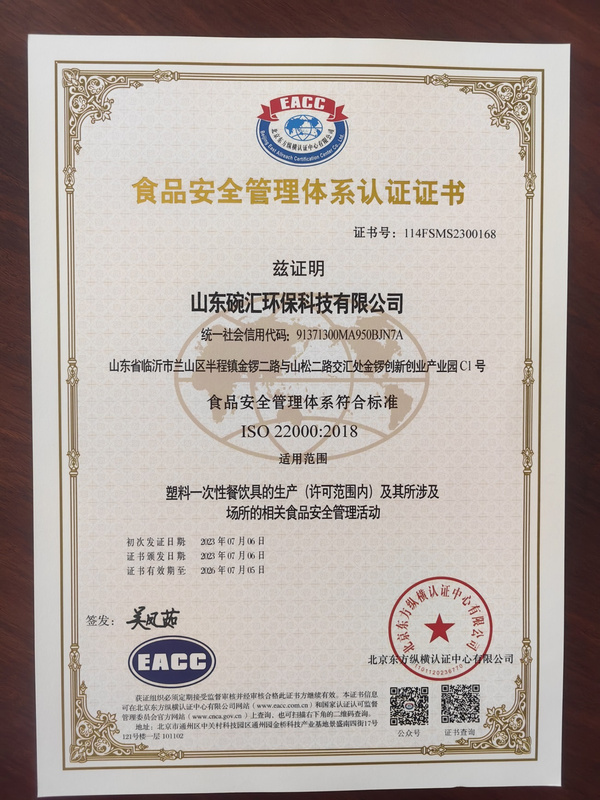
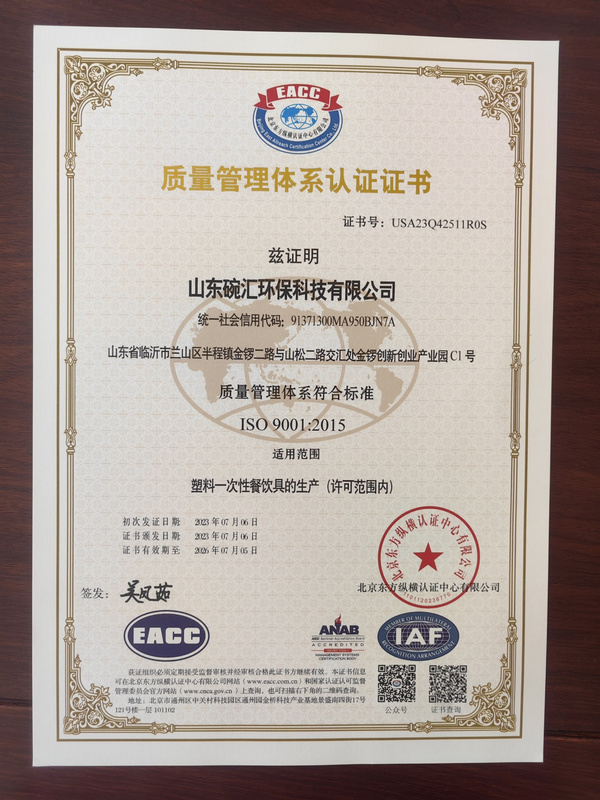
ISO 22000 + 9001
Food-safety & quality systems
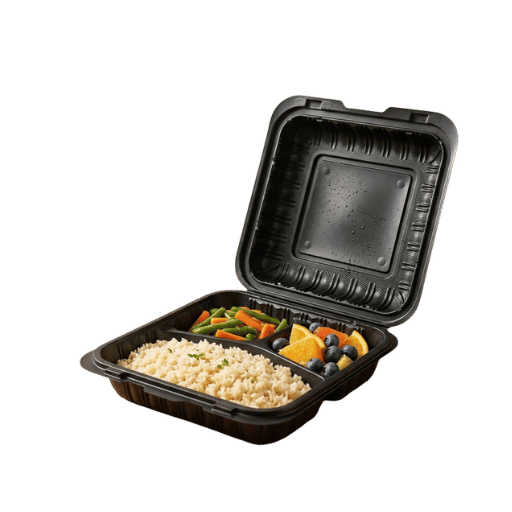
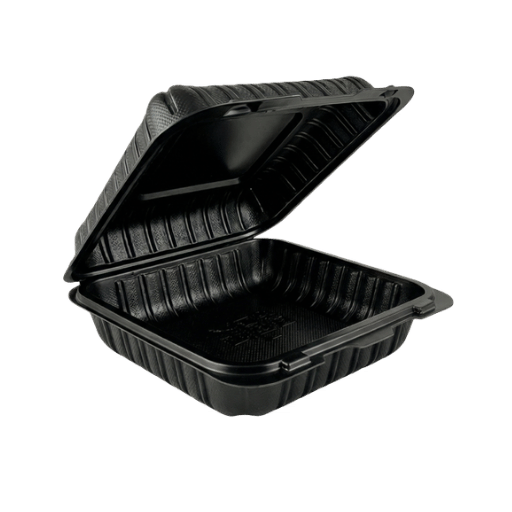
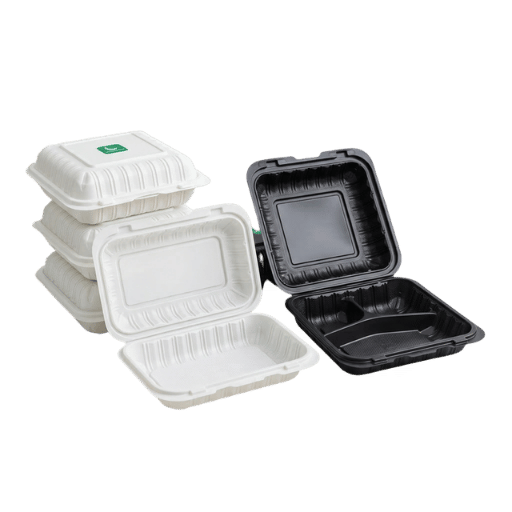
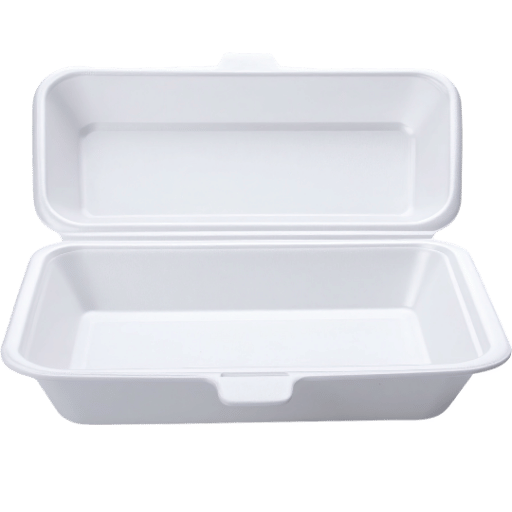
01 // Industry Shift
Why Foodservice Brands Are Switching from Foam to MFPP Hinged Containers
For decades the foam clamshell won on one number: price. That edge has turned into a liability — part compliance risk, part quality problem. As of 2025, EPS foam foodservice ware is banned in 12 states, and Washington alone fines operators $250 for a first offense and $1,000 after that. The upside points the other way, too: roughly 90% of off-premise customers say better packaging makes them order more.
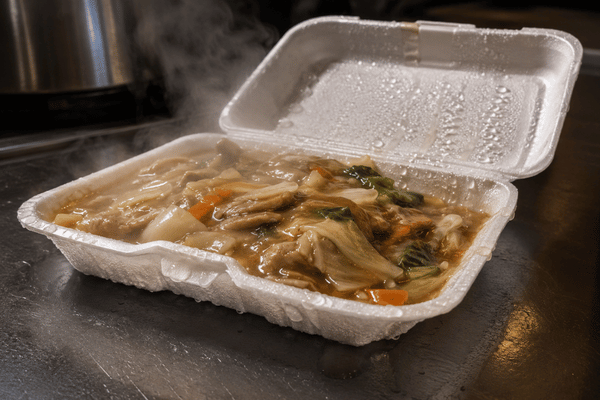
FIG. A - THERMAL FAILURE
02 // Functional Limits
The physical limit: why foam fails hot food
Functionally, the case against it is just as direct. Foam fails hot food for a physical reason: polystyrene softens at about 90 °C — near the temperature of boiling water — so a 95 °C soup or a microwave pushes it past its limit. Operators describe the result without hedging. A Buffalo restaurant owner told public-radio reporters the foam clamshell "sweats your food out a lot more… they get super soggy," while another said "food definitely tastes better and looks better" in the rigid plastic he switched to.
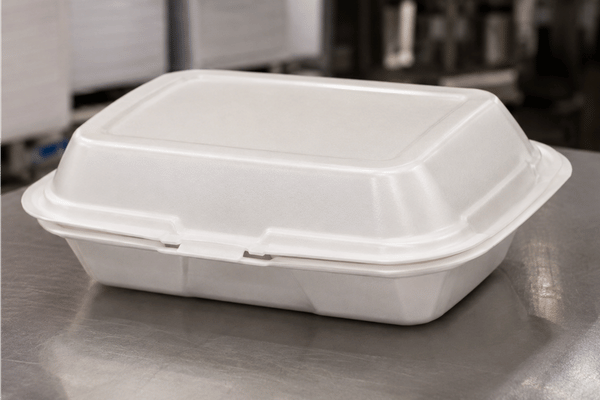
FIG. B - MFPP STRUCTURE
03 // Engineered Solution
The clamshell upgrade: one hinge, three jobs
A hinged lid container solves three problems a separate-lid tub cannot: the living hinge removes the lid-loss that slows a pack line, the one-piece body seals in a single motion, and a correctly specified material survives the trip. Wanhui engineered its MFPP clamshell containers around exactly that brief — mineral-filled polypropylene is more rigid and drop-resistant than unfilled PP, microwave-safe to about 230 °F (110 °C), and compliant under FDA food-contact rules for olefin polymers.
MANUFACTURER'S NOTE // SEC_04
Here is the honest version of the trade-off — the part most suppliers skip. Wanhui will not pretend foam is obsolete everywhere. Where it is still legal and short-haul insulation is the whole job, foam still has a role. What changed is the hot, microwave-ready end of the menu: there, foam hinged lid containers are simply the wrong tool, and a 20-year factory that runs the resin every day is better placed to say so than a reseller is.
[SPEC-MATRIX / 01]
MFPP vs PP vs Foam vs PET:
Hinged Container Material Comparison
Most supplier pages describe materials in a paragraph and cite nothing. That leaves the buyer guessing — which is exactly why this comparison exists. Every number below is sourced, so an engineer or buyer can match material to use case in a single read. Wanhui quantifies the trade-offs instead of marketing one house material.
| Property | MFPP (mineral-filled PP) | Clear PP | EPS Foam (PS) | Clear PET / RPET |
|---|---|---|---|---|
| Resin code | #5 PP | #5 PP | #6 PS | #1 PET |
| Microwave-safe | Yes, <2 min | Yes | No | No, cold only |
| Practical heat limit | ~185–220 °F service | ~230 °F (110 °C) reheat | Softens ~90 °C | Softens ~60–70 °C |
| Mineral / recycled content | Up to ~40% mineral filler | None | None | RPET = post-consumer |
| Rigidity / drop resistance | High; filler raises stiffness | Medium | Low, crushes | Brittle when dropped/frozen |
| Clarity | Opaque, black/white | Clear | Opaque | Crystal clear |
| Foodservice ban status | Allowed, rigid PP | Allowed | Banned in 12 states | Allowed |
| Curbside recyclability in practice | Low — PP ~3–5% | Low | ~10–12%, often rejected | Wider access; thermoform ~9% recovered |
| Relative unit cost | Mid | Mid | Lowest | Mid, clarity premium |
| Best for | Hot / microwave-reheated mains | Hot & cold, clear display | Budget short-haul where legal | Cold salads, deli, merchandising |
Sourcing note: figures are tiered by source authority (see References). The defensible microwave-reheat threshold for PP containers is ~230 °F per the resin maker's bulletin, not the rounder 250 °F that circulates unsourced. The "50% less plastic than PP" line some brands print is a competitor marketing claim, and Wanhui will not present it as an independent fact.
Read the table and one pattern jumps out that no foam page admits: the cheapest material is rarely the best total value once heat, transit, and bans enter the math. MFPP is Wanhui's hot-food pick for a structural reason — mineral filler lifts both stiffness and the heat-deflection ceiling, which is what lets a filled grade hold a 700 ml soup at 95 °C where unfilled foam slumps. And here is the part a salesperson skips: it does not win everywhere. For crystal-clear cold display, clear PET still beats an opaque MFPP shell.
The 5-Factor Takeout Container Material-Fit Test
Material choice is rarely best-versus-worst. It is fit. Run any clamshell through these five factors before you commit a pallet:
01
01
Heat path
If the customer will microwave it in the box, you need #5 PP or MFPP; PET, PS foam and aluminum are out.
02
02
Transit stress
For stacked, tipped or frozen loads, rigid MFPP resists drops where brittle PET cracks.
03
03
Moisture profile
Fried food needs venting against the sauna effect, while saucy food needs a secure seal, since overfilling is the number-one leak cause.
04
04
Compliance map
Confirm foam is legal where you operate; in 12 states it is not, and rigid PP is the named-compliant alternative.
05
05
End-of-life honesty
A #5 resin stamp is not a recycling guarantee, and the FTC calls implying otherwise deceptive.
[CONTRARIAN NOTE]
One contrarian note is worth keeping, because it overturns an assumption almost everyone makes: the chasing-arrows symbol on a clamshell is a resin identification code — not a promise the item is accepted curbside. The FTC and EPA treat that implication as misleading, and California's SB 343 banned the symbol on non-recyclable packaging. We would rather tell you that outright than print a green badge.
[SYS-INFO] FACTORY CAPABILITY
Wanhui Hinged Container Range — Sizes, Compartments & Colors
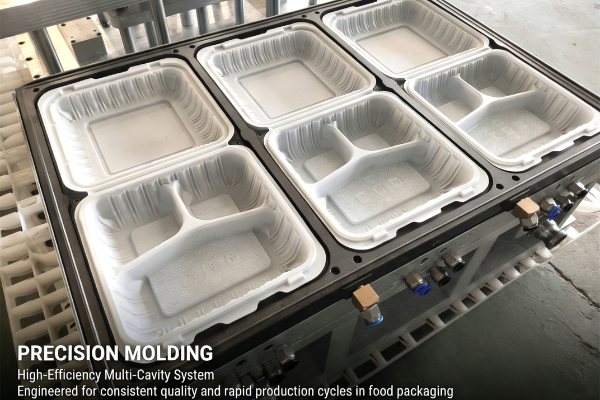
A split supplier base is a hidden cost — mismatched lids, drifting gauge, a different defect profile on every reorder. Wanhui runs four hinged formats across 20 thermoforming lines and 60 injection lines for exactly that reason: to close the gap. One factory, one QC standard, every material your menu needs. Each line is produced from food-grade resin that meets the FDA olefin-polymer rule for food contact.
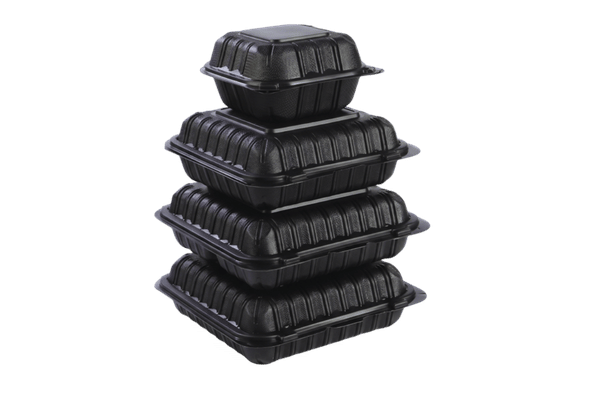
[SPEC-01] RECOMMENDED · HOT FOOD
MFPP Hinged Containers
One-piece mineral-filled polypropylene clamshells — rigid, drop-resistant, microwave-safe. Black & white; 6x6, 8x8, 9x6, 9x9 inch; 1- and 3-compartment, ~700 ml to ~1000 ml. Our MFPP containers are the pick for reheated mains.
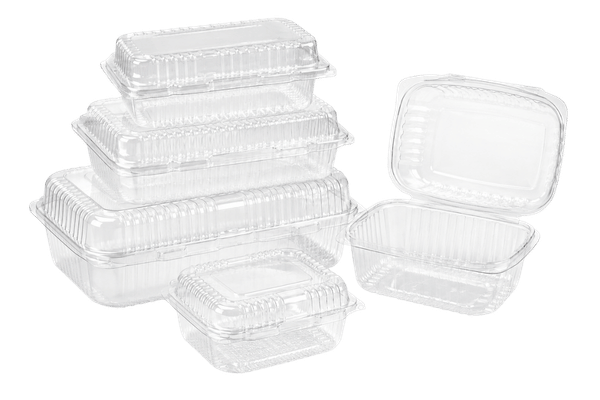
[SPEC-02] COLD · DISPLAY
Plastic Hinged Containers
Leak-resistant clear PP/PET for salads, fruit and deli merchandising, plus black PP meal-prep bases and 3 compartment container trays. Explore the clear and black plastic hinged containers for cold and display items.
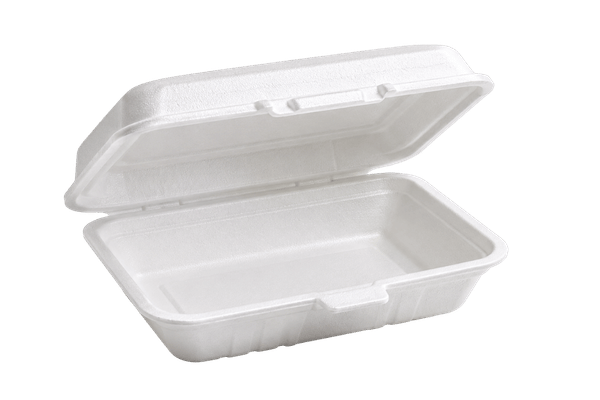
[SPEC-03] BUDGET · INSULATION
Foam Hinged Containers
EPS foam clamshells for markets where they remain legal and short-haul insulation matters. Check your state before ordering — see Wanhui's foam hinged lid containers.
| Footprint | Capacity | Compartments | Best-fit use |
|---|---|---|---|
| 6×6×3 in | ~700 ml | 1 | Burgers, sandwiches, single entrées |
| 8×8×3 in | ~900 ml | 1 / 3 | Rice bowls, combo plates, salads |
| 9×6×3 in | ~900 ml | 1 | Pasta, fish & chips, hot mains |
| 9×9×3 in | ~1000 ml | 1 / 3 | Full meals, catering plate-ups, bento |
CTRL_ANALYSIS
One feature buyers underrate is compartment integrity. Three-compartment versions keep portions apart for catering and delivery, where mixing wrecks the presentation; single-compartment 6x6 and 9x6 suit a QSR burger pack-line. And every footprint is engineered to nest, stack and store flat — because a case that wastes 90 cm of shelf depth is a storage cost nobody quotes for until the stock is sitting between services. That stack efficiency is the kind of consistency a 60-line factory can hold across a 20-year run.
Not sure which size fits your menu?
Get Instant Quote
Hinged Lid Containers Factory


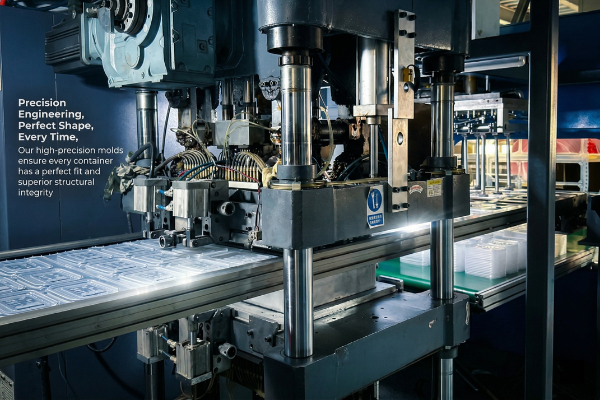
✕
❮
❯
Quality Control: Our 9-Point Inspection Process
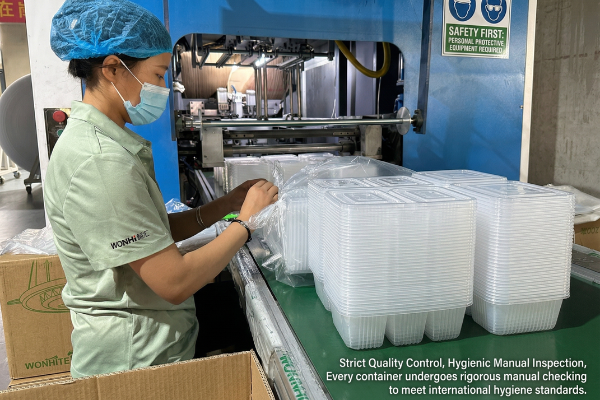
In overseas sourcing, one failure mode scares buyers more than any other: the sample passes, the bulk order does not, and the refunds land within days of a bad run. Wanhui controls for it with a documented 9-point inspection from incoming resin to packed carton — for one blunt reason. Lid-fit and leak failures are the defects that reach the diner. One operator publicly dropped a brand over "continual quality control problems" and lids that were "extremely difficult to fit". That is the outcome Wanhui certifies against.
The 9-Point Inspection
Food-grade resin verification
Incoming PP and mineral compound checked against food-contact spec.
Sheet thickness and weight
Gauge sampled per run, because thin walls are what warp in a microwave.
Thermoform and injection dimensional tolerance
Footprint and depth checked to drawing.
Living-hinge flex strength
Repeated open/close cycling confirms the hinge does not fracture.
Lid-to-base closure fit
The most-complained-about defect industry-wide, tested on sampled units.
Stacking and load resistance
Verified so cartons do not buckle and crush food in transit.
Surface and appearance
Flash, sink marks and contamination screened out.
Food-safety and odor
Contact compliance checked, since mineral-filled grades are formulated for low odor.
Carton count and transit protection
Pack quantity and protection confirmed before shipment.
"Lid fit is where cheap clamshells fail — a base that's a half-millimeter off looks fine on the line and pops open in the delivery bag. We sample-test closure on every run because that's the defect a diner actually sees."
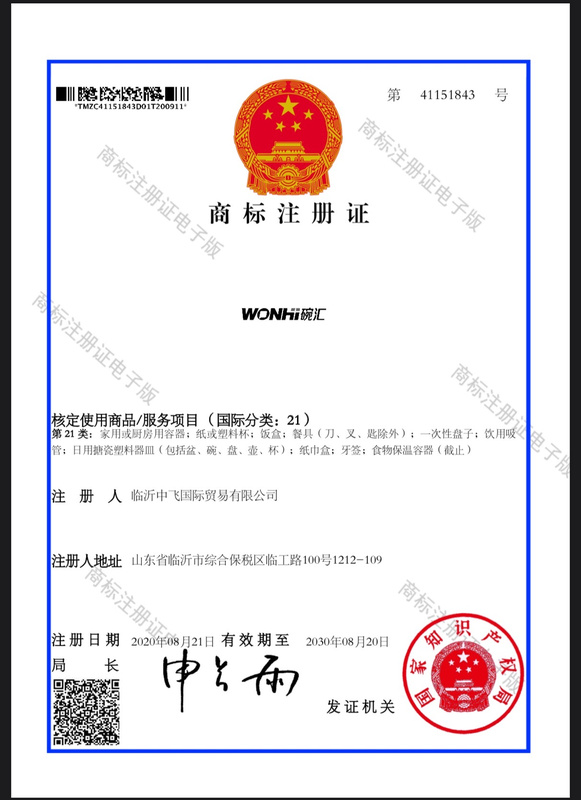
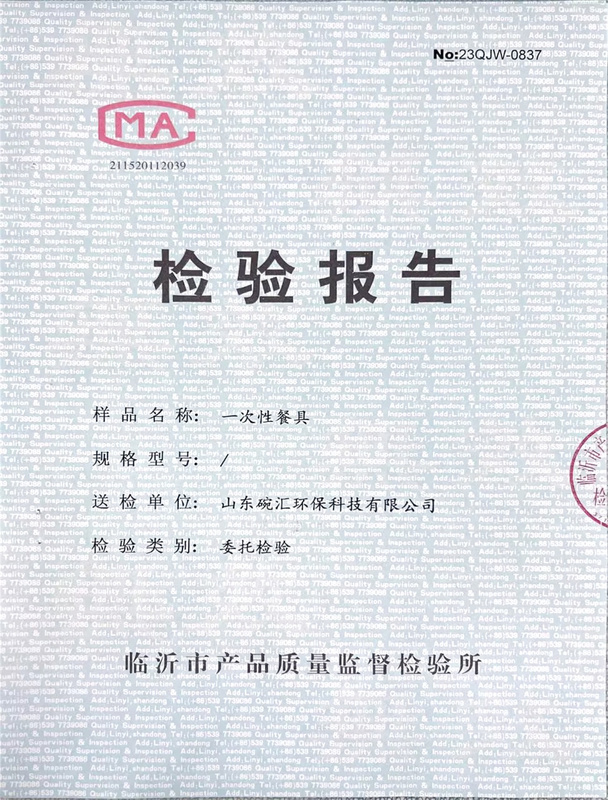
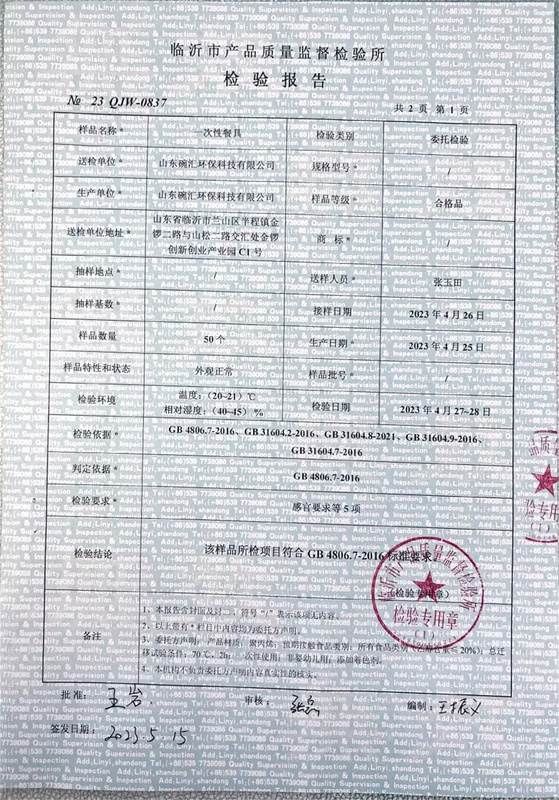
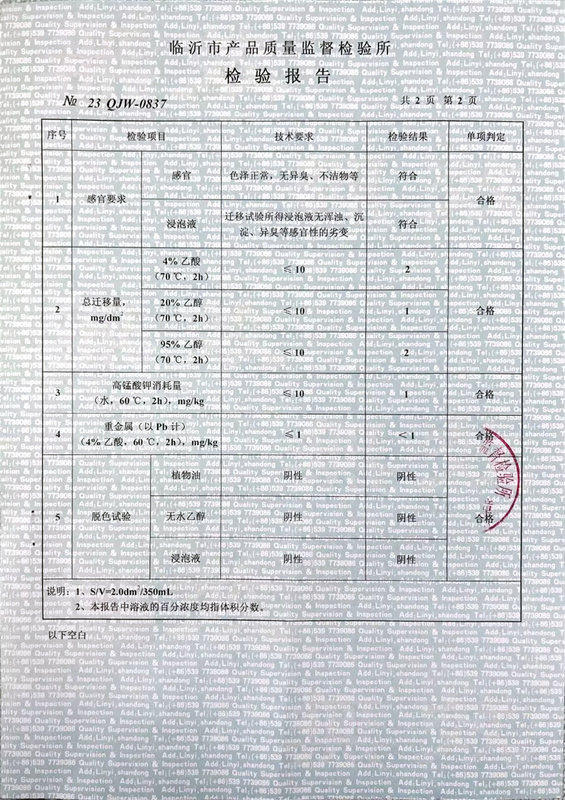
Documentation carries as much weight as the checks. A verbal "food safe" means nothing in regulatory terms, so the honest form of a trust claim is a certificate a buyer can actually verify. Wanhui runs recognized food-safety and quality-management systems and hands over the records your QA team asks for — defect-rate and before/after figures reported per production run, not a number invented for a brochure.
ISO 22000
Food safety management
ISO 9001
Quality management
Production License
Food-contact manufacture
Food-Grade Resin
FDA 21 CFR 177.1520
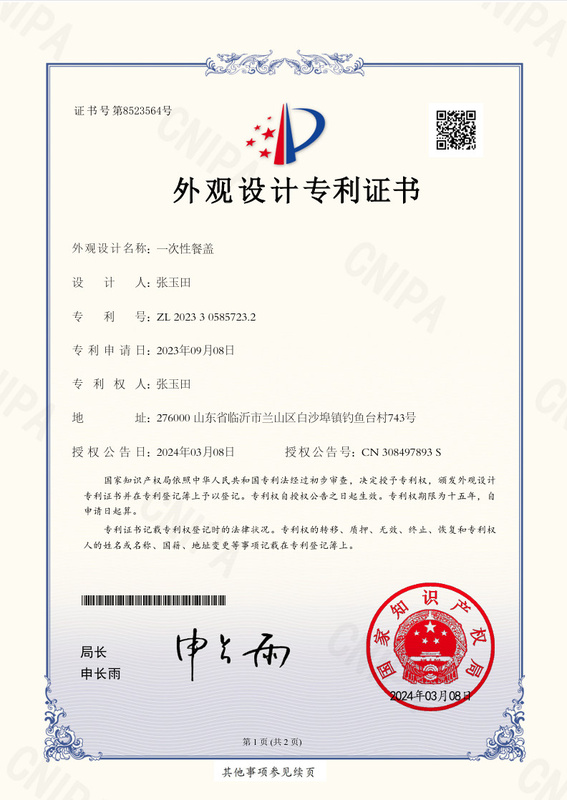
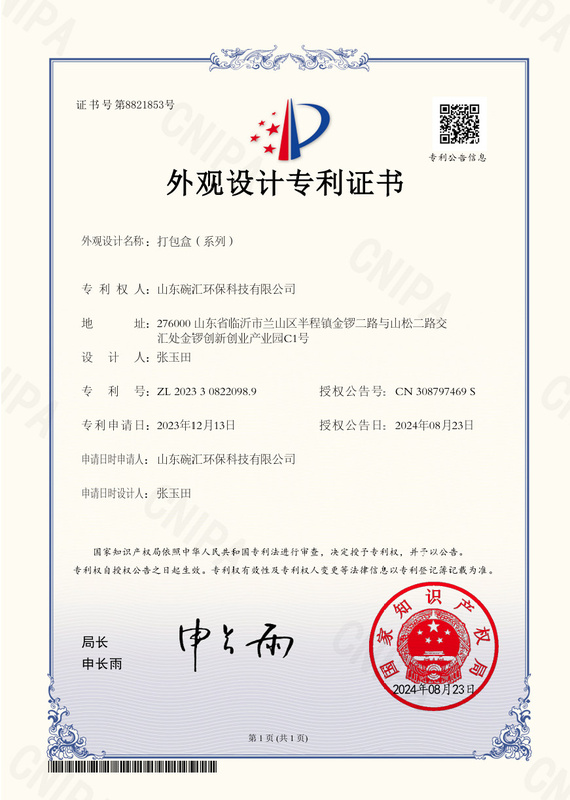
Patents
Container & lid designs
SYS.REF // Application Config
Applications: Fast Food, Delivery & Catering
The right clamshell is matched to the channel and the food — not one house SKU — and the cost of getting it wrong is measurable. Roughly 60% of delivery customers have taken delivery of a spilled, crushed or cold order, and plenty switch restaurants over it. That is why packaging is a revenue decision, not a commodity buy. So Wanhui supplies a material per channel instead of forcing one shell to do every job.
SEC. 01
FAST_FOOD
01
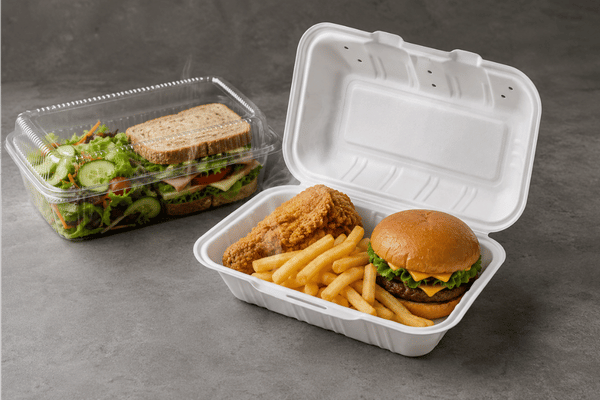
Fast food: burgers, sandwiches, fried
Hot and crispy items all fail the same way: trapped steam turns fries limp and buns soggy. A vented hinged container fixes that — it bleeds off moisture while a secure hinge keeps the build intact. For hot items rated to ~230 °F, Wanhui engineers MFPP and clear PP; for cold sandwiches and salads on the merchandising shelf, clear PET wins.
SEC. 02
DELIVERY
02
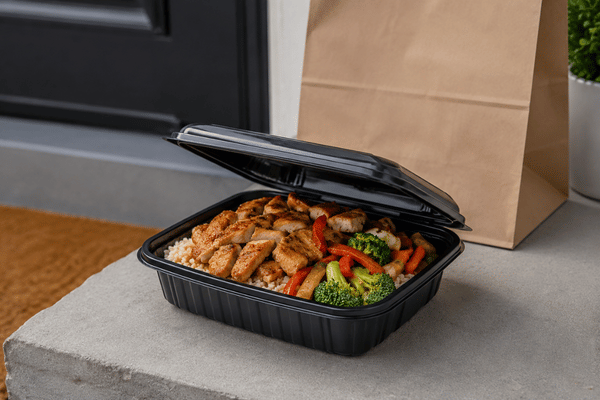
Food delivery
Delivery punishes weak packaging. Leaks and crushed orders are the top drivers of refunds, and the number-one leak cause is overfilling — steam expands and forces the lid open. Pick a leak-resistant closure in microwave-safe MFPP or PP, and the customer can reheat a 700 ml main right in the box at 110 °C. Foam cannot match that.
SEC. 03
CATERING
03
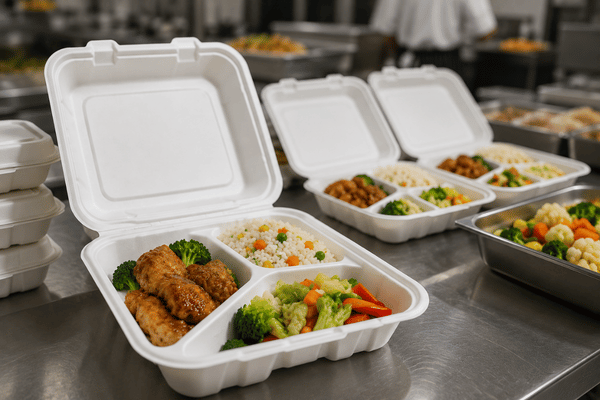
Catering & institutional
Bulk service needs portion control and rigidity, or plates arrive mixed and the tray sags. Three-compartment hinged trays keep food separated in transit, and rigid MFPP resists the slump that ruins a plate-up. One honest note on fiber alternatives: since the FDA's grease-proofing PFAS phase-out completed in February 2024, "compostable" fiber is not always as clean as it looks. Independent testing found molded-fiber bowls among the highest in PFAS. The genuinely sustainable option is the one matched honestly to your waste stream — and Wanhui will not sell a fiber tray as risk-free when the data says otherwise.
Procurement & Manufacturing Specs
Wholesale & Custom Manufacturing: MOQ, Lead Time & Private Label
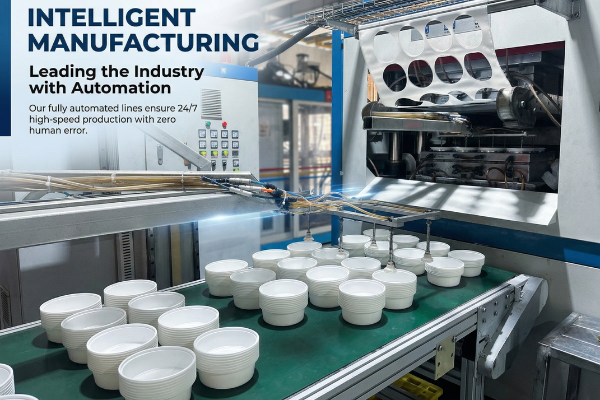
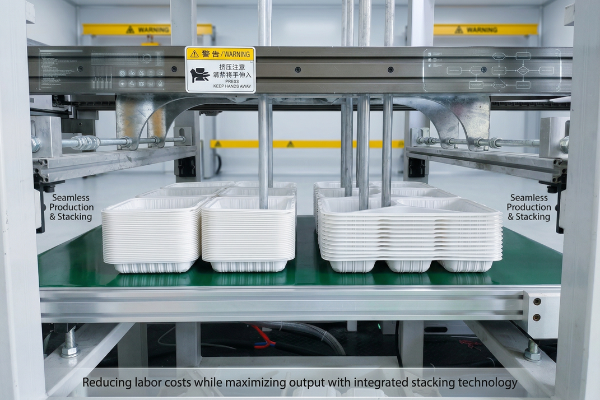
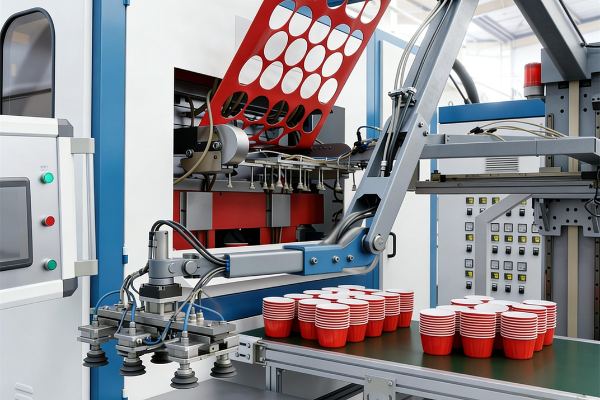
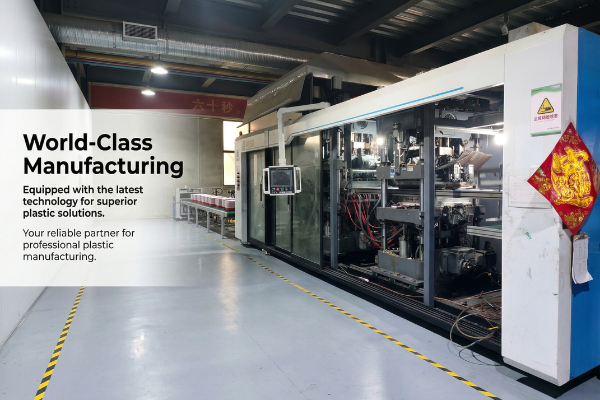
Buying direct from the factory strips out the distributor margin — but only if the factory is real. An over-promised lead time can slip 20–40% in peak season and leave a kitchen short. What lets Wanhui quote with confidence is capacity: 20 thermoforming lines, 6 sheet-extrusion lines and 60 injection-molding lines, processing 30+ tons of sheet a day and shipping over 1,000,000 units daily. That is what turns a quote into on-time pallets.
Total cost beats unit price. Foam's sticker price is lowest, but switching-cost studies put alternatives roughly 20–50% higher per unit — and that gap narrows fast once you count the refunds, one-star reviews and ban penalties cheap packaging triggers. MFPP and PP also avoid the reheat-warping waste that hits PET and foam, which is the honest version of "cheaper."
Cost figures are qualitative, industry-sourced total-cost factors (see References), not a guaranteed quotation.
What drives your price
Per-unit pricing on hinged containers moves with a handful of levers, so the honest answer to "what does it cost?" is "let's scope it." Here is what Wanhui prices into a quotation:
Material and gauge
MFPP versus clear PP versus PET, plus wall thickness for your transit profile.
Footprint, compartments & color
Stock black/white versus custom color.
Order volume
Case quantity drives the unit economics.
Customization
Custom mold tooling and logo printing raise both unit cost and minimum run.
Freight and Incoterms
Landed cost is where overseas pricing is won or lost, so plan to worst-case lead times.
Buyer Advisory — de-risk a first order
Three moves de-risk a first order. Buy paid samples and confirm they match the intended bulk run. Ask for the food-safety certificate instead of a verbal claim — then verify it. And start with a test quantity before you commit a full container. Together they close the sample-versus-bulk gap that worries every overseas buyer, and Wanhui backs each one.
Custom mold development and brand-logo printing are part of Wanhui's private-label and OEM programs — a path most distributors simply cannot offer. Request a custom quotation scoped to your material, volume and artwork, with a sample in hand before you commit.
Get Instant QuoteHinged Lid Containers Engineering & Compliance Tools
Material Fit Selector
Identify the optimal container material based on heat tolerance, oil resistance, and structural needs to ensure a cost-effective supply chain.
Foam Ban Compliance Checker
Evaluate regional regulations and environmental policies to safeguard your bulk packaging procurement from ban risks and compliance penalties.
Container Size Selector
Match internal capacities to your food portions. Streamline container utilization to reduce international freight and storage footprint costs.
Frequently Asked Questions
Is MFPP microwave-safe?
Yes — it carries the #5 resin code and is microwave-transparent. PP food containers reheat to roughly 230 °F (110 °C), and MFPP's practical service range runs about 185–220 °F. Reheat in short bursts under two minutes and avoid running the container empty.
What is an MFPP container, and is PP plastic okay for food?
MFPP is polypropylene blended with a mineral filler — talc or calcium carbonate, up to about 40% by weight — to add rigidity and heat resistance. Polypropylene is authorized for food contact under FDA 21 CFR 177.1520, which requires at least 85% propylene content.
What temperature can each material take?
Foam softens near 90 °C, PET around 60–70 °C and is cold-only, while PP and MFPP reheat to ~230 °F. Wall thickness is set per SKU, and Wanhui samples gauge on every run.
Can MFPP go in the oven?
No. Microwave-safe does not mean oven-safe — the two ratings are not interchangeable.
Are foam clamshells banned, and is rigid plastic banned too?
EPS foam foodservice containers are banned in 12 states, but those laws target foam — rigid #5 PP is explicitly named as an allowed alternative. Switching from foam to MFPP keeps you compliant where foam is now illegal, which is the simplest reason operators make the move.
Are clamshell containers recyclable?
"Recyclable" on a label rarely means accepted curbside, and this is where most eco-marketing overstates. PP is recycled at only ~3–5% in the U.S. and many programs reject tubs and trays; even PET thermoforms are recovered at ~9% versus ~27% for bottles. California's SB 54 pushes all foodservice ware toward recyclable-or-compostable by 2032, a real horizon Wanhui plans for rather than papering over with a green logo.
What are the 9 QC checkpoints, and what about defect data?
Nine checkpoints run from food-grade resin verification through sheet thickness, dimensional tolerance, hinge strength, closure fit, stacking, appearance, food-safety/odor and the final carton check. Defect-rate and before/after figures are recorded per production run in our QC records, so request the QC report for the SKUs you are sourcing rather than relying on a marketing number.
Do you support custom printing, and what is the MOQ?
Yes. Custom mold tooling and logo printing are available for OEM and private-label programs, and minimum order quantity depends on material, footprint and whether you need custom color or print — a stock black/white run carries a lower minimum than a custom-tooled SKU. Request a quote for the MOQ on your exact configuration.