
Get in touch with Wanhui Company


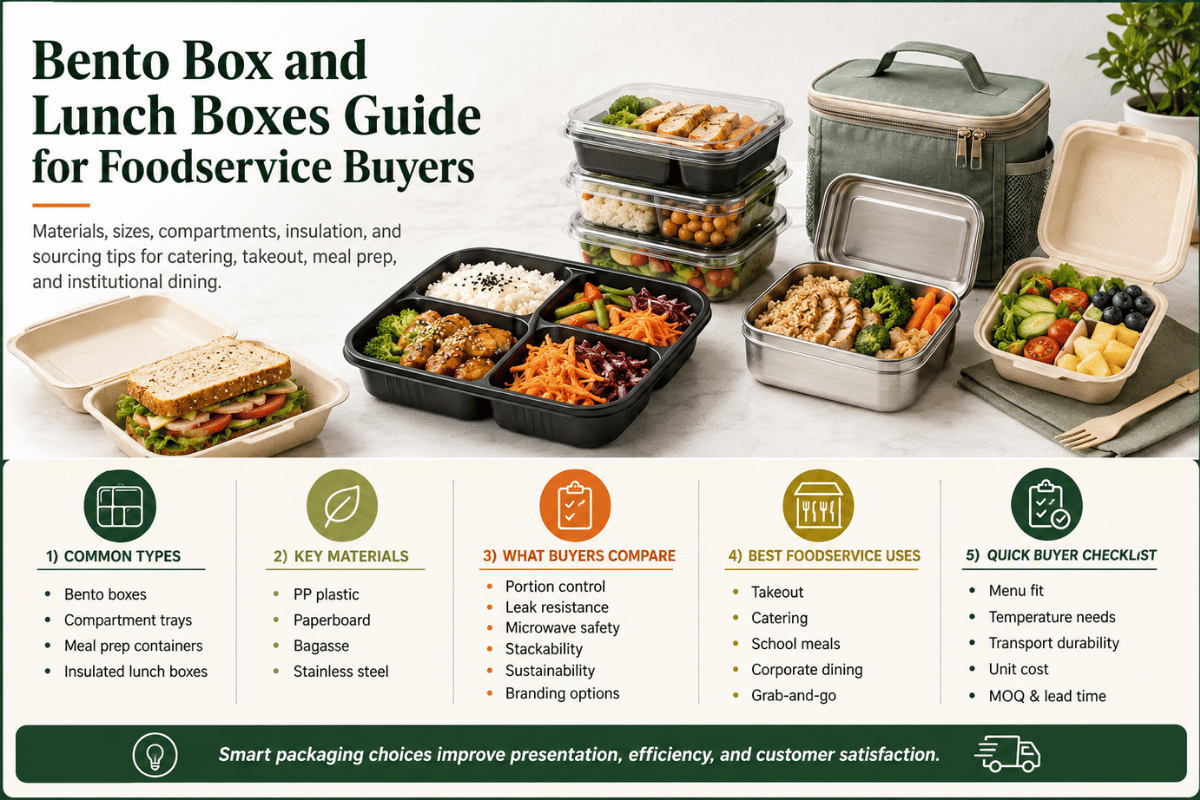
Bento Boxes refer to a consumer lunch box, a reusable stainless steel set, or a disposable compartment tray for prepared meals. This guide is for foodservice buyers-restaurants, delivery kitchens, canteens, distributors, and procurement teams-who are comparing bento box packaging before placing a wholesale order.
Quick Specs
| Best fit | Restaurant sets, food delivery, school and hospital canteens, events, and distributor stock. |
| Common disposable materials | PP for many hot-food uses; PET for cold meals and display clarity. Final approval still depends on the product’s stated food-contact and heat-use conditions. |
| Reference range | The Wanhui disposable bento box range lists 300 ml to 3500 ml options; verify cavity volume, tray depth, and lid match before ordering. |
| Regulatory checkpoints | Ask how the selected material maps to 21 CFR Part 177.1520 for PP, 21 CFR Part 177.1630 for PET, EU 1935/2004, EU 2023/2006, and any ISO or ASTM method named in supplier certificates. |
| Buyer check | Match material, cavity count, lid type, stack height, sealing feel, sample tests, labeling, and certificates before price comparison. |
| Wanhui capability | 20 lines for thermoforming, 6 lines for sheet extrusion, 60 lines for injection molding, 30 tons per day of sheet material, 1000000 units per day of processing capacity, and 200 employees. |
Reader outcome
By the time you’re done, you’ll be able to specify precisely which bento box material, compartment layout, lid performance and sample checks your meal program requires for your next supplier quote.
Why “Bento Boxes” Means Two Different Things in Search
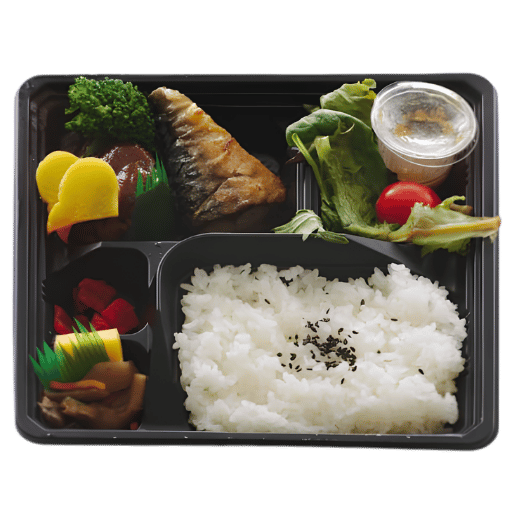
A search for “bento box” mixes two different buyer personas because bento boxes originated as sectioned meal containers. Consumers want bento lunch boxes, stainless steel lunch boxes, bentgo style meal sets, fun-themed dividers, reusable kids meal kits for schools and work lunches. A consumer may ask about a bento box for kids or a box for kids, but a foodservice buyer should translate that into portion, lid, and packing needs. Foodservice buyers using the same terms, however, are looking for bento box containers for takeout and delivery – disposable food packaging that keeps meal components separate.
This difference matters-reading the wrong article wastes the buyer’s time. Parents comparing lunch boxes are more concerned with dishwashers and backpack fit. Procurement managers are looking at food-contact compliance, choosing between PP and PET, selecting compartment quantities, lid sealing performance, compression strength, odor after hot-filling and whether the supplier will supply consistency over months of ordering.
What is a bento box?
What does a bento box mean in food service terms? It is a divided food tray that keeps meals’ components (rice, main course, sauce, sides) apart until they’re eaten. The containers may be reusable, insulated, stainless steel, paired with a thermos, fitted with silicone accessories, or made of plastic. This article focuses on disposable bento-type PP and PET food packaging that includes a lid for restaurants and catering operations.
Procurement note
If you’re sourcing packaging for a multi-location restaurant or a university cafeteria, assume “bento box” refers to a packaging style, rather than a specific item. Depending on the menu, you may need a 2 compartment tray to hold rice and chicken, a 3-compartment container for combination meals, or a clear plastic bento box with a PET lid to display cold food items.
When Disposable Bento Boxes Fit Restaurants, Delivery, and Canteens
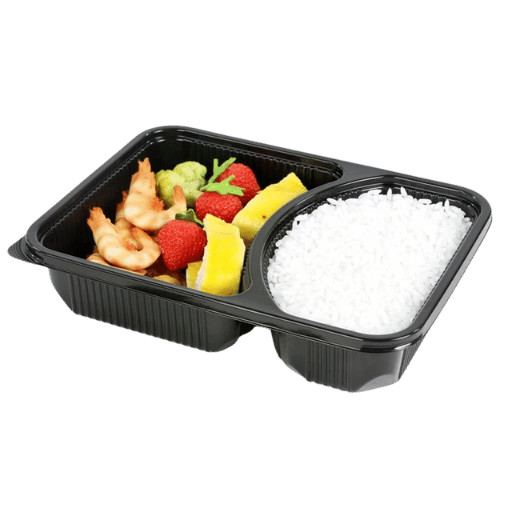
Disposable bento box food packaging is suitable for programs where the ability to portion food consistently, keep items separated during transport, and speed up kitchen operations are critical-not the labor involved in reusable washing programs. Think restaurants providing lunch options, cloud-based food delivery kitchens, airline meals, institutional food service, catering companies and food distribution.
If your team is already reviewing packaging options, start by browsing the disposable bento box product pages at Wanhui where you can see PP and PET choices, information on custom logo imprinting, and custom mold capabilities. Use that page as a shopping cart guide and this article as your purchasing checklist.
| Foodservice model | Why bento format helps | Buyer watchpoint |
|---|---|---|
| Restaurant lunch sets | Main dish, starch, and side stay separated. | Choose cavity depth around the menu, not only the total ml. |
| Food delivery | One lid controls several meal zones. | Test sauce movement after a stacked route. |
| School or hospital canteens | Portions are repeatable and easy to count. | Ask for food-grade raw material records and hygiene certificates. |
| Distributor stock | Standard sizes can serve several customer groups. | Confirm carton packing, lid pairing, and reorder lead time. |
Never make buying decisions based solely on product images. In actual restaurant prep, a poorly designed, shallow section may push your entree into the lid, a soft corner may collapse if packaged on top of heavy cases, and what seems like a firm fit at room temperature might loosen if the tray has been hot-filled and then cooled. Obtain a sample, fill each cavity with your heaviest-prepared dish, stack it, and open it after you replicate your customer’s wait time.
PP, PET, BPA-Free Claims, Stainless Steel, and Reusable Plastic Bento Box Lunch Boxes: Material Fit by Use Case
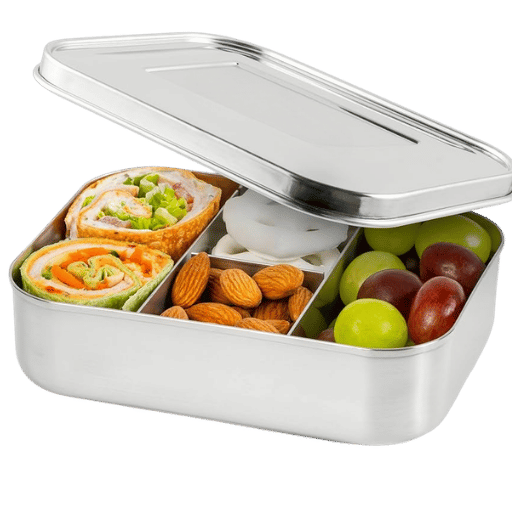
A consumer versus foodservice advice divide also opens during material selection. Stainless steel and insulated reusable bento lunch boxes may be fine for an individual lunch, but they don’t help with one-way delivery. For disposable food containers, PP and PET dominate most discussions, yet buyers still need to understand the stated conditions of use.
The FDA inventory of food contact substances listed in 21 CFR ties authorization to substance identity, intended use, and use conditions. The eCFR website also contains conditions for olefins like polypropylene and PET polymers. Simply put: do not approve a bento box based on the resin code alone; approve based on what your supplier can document in terms of material, additives, food, and heat conditions; then compare the documented item with Wanhui’s disposable bento box specifications before you request samples.
| Material | Foodservice fit | Procurement check |
|---|---|---|
| PP bento box | Often chosen for hot meals, reheat claims, and large bento box portions when the specific product is approved for that use. | Ask whether both tray and lid carry the claimed heat-use range. |
| PET bento box | Useful where display clarity and cold-food presentation matter. | Do not assume microwave and dishwasher use; check the stated condition. |
| Stainless steel bento box | Good for reusable personal lunch, staff meals, or closed-loop programs. | Not a one-way delivery pack; return, washing, and loss rate decide cost. |
| Paper or fiber alternatives | Can support some eco-friendly goals where local handling systems accept them. | Check coating, grease resistance, composting acceptance, and lid fit. |
For your export program, see the European Commission’s guidance on Food-Contact Materials: European Commission Food-Contact Materials Guidelines. The guidance covers packaging and containers that come into contact with food, focusing on avoiding unwanted migration of constituents and changes to the food itself.
Microwave and Dishwasher, Odor, Leak-Proof, and Safety Checks Before You Buy
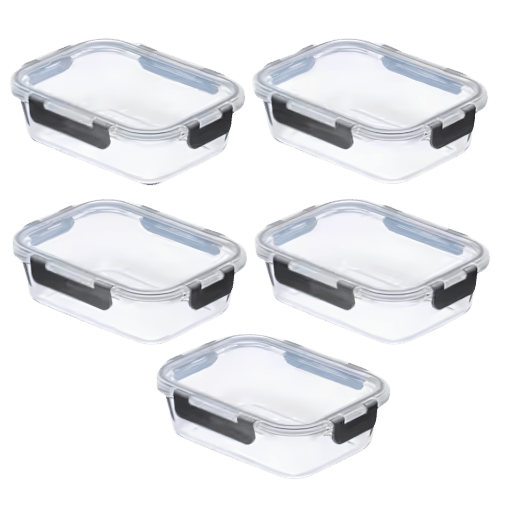
If you are going to do a sample approval check, test the bento box filled with food like an actual meal, not like an empty shell of a tray. If a potential customer says, “Can the bento boxes be microwaved?” the honest answer must be, “Only if that specific tray-lid set is designated for microwave use and in accordance with those specifications.”
According to Michigan State University Extension guidance on food-safe plastic containers, plastic should be used for microwave reheating only when it is made and labeled for that use, and single-use containers should not be reused beyond their intended purpose. For bulk bento boxes, that requires that the request for quote be explicit on whether the tray, tray-lid assembly, or the fully loaded, packed product will be reheated. If a supplier claims bpa-free material, easy to clean sampling, or leak-resistant performance, ask for the test basis instead of accepting the label alone. Use tested bento boxes that open and close cleanly and keep your food separated after transport.
Sample approval checklist
- Fill each compartment with the actual meal items; the rice, the fatty meal, the sauced meal, the cold salad, the rich dessert.
- Secure the lid with the food at the temperature at which the product will be delivered or held.
- Stack the trays loaded to the full height you and your staff would use them on the delivery or holding path.
- Turn one filled tray on its side for a short leak test.
- Smell the empty tray again after the hot fill and subsequent cooling period.
- Check if the lid remains secured on the tray after sitting.
- If it’s a hot-held product and reheating will occur, test only those that are specifically labeled or intended for reheating.
“For bento, we always suggest to customers to test with their loaded meals – not empty trays; we want to see how the lid responds with a tray fully loaded with hot food and then put into a stacking regime.”
Wanhui’s claims about food-grade materials include national hygiene standard conformity and international food safety certifications, leak-proof, strengthened structure for impact resistance, and odorless products. Treat claims from Wanhui (and any supplier) as marketing language that requires verification via sample tests, certificate validation, and a successful repeat order history.
The Compartment-Lid-Seal Matrix for Bento Box Selection

Compartment count is just a line item in your spec. More likely you should match the meal condition to the number of compartments, type of lid, saucing hazard and stacking pressure. This food storage container format is designed to hold ready to eat meals without letting sauce move between cavities. Use the matrix below as an initial tool before your designers request drawings and samples:
| Meal pattern | Likely layout | Lid and seal focus | Sample test |
|---|---|---|---|
| Rice plus sauced entree | 2 compartment | Tight border between sauce and rice | Side tilt after hot fill |
| Set meal with side dish | 3 compartment | Even lid pressure over each cavity | Stacked delivery bag test |
| Salad and protein | 2 or 3 compartment PET | Clear lid, no fogging concern for display | Cold display and lid clarity check |
| Snack sampler | 4 or 5 compartments | Small divider contact points | Shake test with dry snacks |
| Hospital meal set | 3 or 5 compartments | Repeatable portion zones | Tray counting and label placement |
| School lunch boxes | 3 compartments | Fast close by staff | Packing-line speed check |
| Airline or event set | Low-profile multi-cavity | Carton and cart stack fit | Carton drop and stack height check |
| Deli display | Clear PET tray | Shelf appearance and lid clarity | Refrigerated shelf trial |
| Distributor mixed orders | Standard 2 and 3 compartment SKUs | Lid compatibility across reorder batches | Batch-to-batch lid fit check |
This will help Purchasing avoid the quiet cost leak where two suppliers bid on a “3 compartment bento” while one tray includes a shallow sauce channel, one a lid that sags in the middle and one changes the transportation costs through Carton Count, without ever viewing the drawing or the sample before bidding against each other based on unit price.
Wholesale Bento Box RFQ Checklist
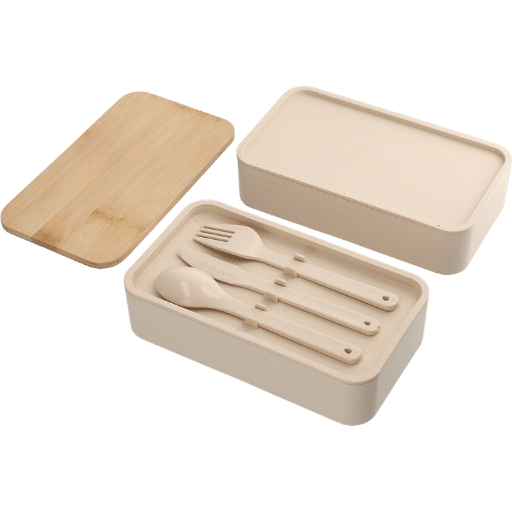
A clear RFQ ensures competitive bidding; without it a supplier might only quote the tray, another tray with lid, a third may quote a lighter weight option passing a Photo Quality Review, only to fail during transit, unboxing, or loading for delivery. This bento box RFQ Lock Sheet will guide your team toward a more fair comparison.
Bento Box RFQ Lock Sheet
- Material: PP, PET, or another material, plus food-contact condition.
- Capacity: total capacity and cavity-by-cavity volume.
- Cavity count: 2, 3, 4, 5, or custom layout.
- Lid type: clear, removable, matched material, hinged, separate, vented, or non-vented.
- Use conditioncold fill,hot fill,display, transport,or re-heating.
- Thickness target and sample weight range.
- Stackable tray height and carton packing.
- Logo print area, artwork file format and print color limits.
- Custom mold request, if a stock tray isn’t compatible with the current menu.
- Certificate needs for the destination market.
- Sample approval methods, including leakage tests, odor testing, compression tests, and lid-fitting tests.
Wanhui can accommodate brand logo printing, and offer custom mold development. Potential buyers may review the Wanhui disposable bento box options prior to sending their request for quotations. When purchasing containers serving multiple channels, send one request for quote to your chosen manufacturer for the base packaging product, but with separate notes for specific channels – restaurant, delivery, and canteen.
How do you pick a good bento box for foodservice procurement?
Find the meal first-the catalog last. Choose the most prone to leaks, heaviest most prone to deforming with hot fill, most apt to off-odor and customer complaints from a hot filled package, and design the tests around this. For an on-the-go meal program, do not treat every portable container as the best bento box; test the menu first. A durable bento box contains the actual menu through packing, storage, and customer unboxing without forcing the kitchen to adapt its procedures.
How to Judge a Bento Box Manufacturer Beyond Price
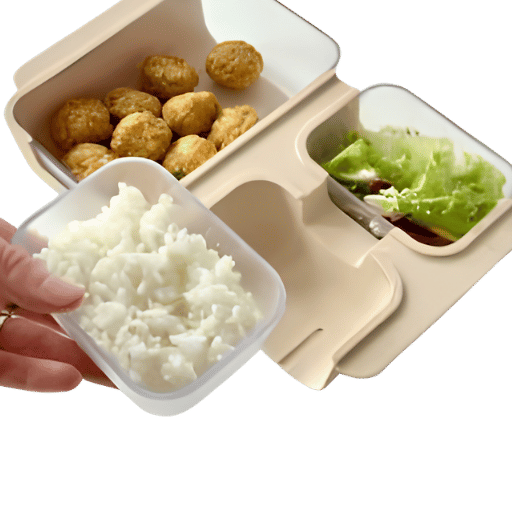
Although price will surely factor into the purchase equation, repeatability is the key element to maintaining a successful packaging program. Buyers should seek manufacturers with an understanding of sheet material options, forming or molding process, lid fitment, inspections, packing methods, certificate offerings, sample timing, and reorder management policies; in such cases, a manufacturer’s factory infrastructure will influence your ultimate selection.
| Supplier check | Why it matters | Wanhui data point |
|---|---|---|
| Process coverage | Thermoforming, sheet, and injection capacity reduce handoff risk. | 20 thermoforming, 6 sheet extrusion, 60 injection molding lines. |
| Daily throughput | Large repeat orders need stable capacity. | 30+ tons of sheet material daily; 1M+ units processing capacity. |
| Team structure | Sales, warehouse, production, and management teams should support follow-up. | 200+ employees, including sales, warehouse/distribution, workshop, and production management teams. |
| Customization | Brand printing and mold work reduce later supplier switching. | Logo printing and custom mold development. |
A straightforward question for the manufacturer’s factory audit; “Show me precisely the same tray and lid I’ll receive 3 months from now; don’t show me a launch sample.” Should the answers remain vague, request batch histories, carton markings and a lid fitting sample from a second batch before committing to mass quantities.
What Is Changing in Bento Box Demand for 2026?
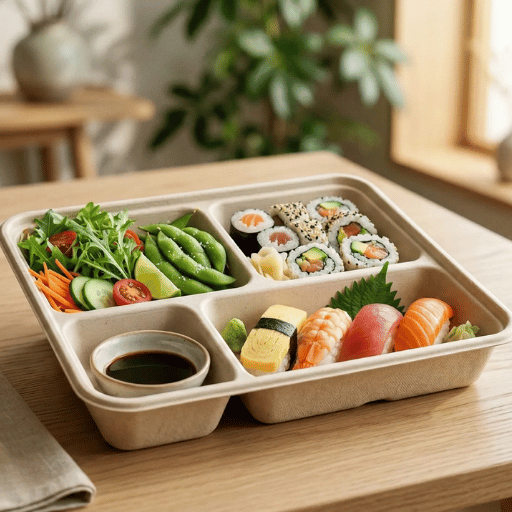
Demand signals are mixed. Buyer demand for “disposable bento boxes,” “bento boxes wholesale,” and “microwave safe containers” continues to be high. On the other hand, new food contact regulations and public procurement initiatives are driving concern about reusable systems, green claims and chemical safety compliance.
EPA’s guidance on food service ware prioritized reusable items as long as they can be collected, washed and returned to users. “If reusables aren’t viable,” then look for certified commercial compostable packaging only if the community will accept the materials for composting, followed by recyclable packaging if recycling programs are accepting those items, EPA guidance states. See the EPA food service ware guidance.
Chemical scrutiny of materials is shifting purchasing questions. Washington State Department of Ecology reports that food packaging producers have been moving toward PFAS-free alternatives as restrictions and supply-chain changes advance. See the PFAS in food packaging guidance. The European Commission also released a food packaging factsheet in February 2026 in its Food Contact Materials area. For programs being designed for 2026, the buying action is direct: ask suppliers to document material identity, food-contact approval, heat-use limits, and destination-market paperwork before discussing print design.
2026 buying advice
Don’t approach sustainability or safety as a single label. Align the claim with specific material and to the specific waste stream, meal and destination where the bento box will be employed.
FAQ
Q: What is the 4 3 2 1 rule for bento boxes?
View Answer
In consumer lunch planning, the 4 3 2 1 rule is often used as a rough food-balance idea. Foodservice buyers should not use it as a packaging rule. For disposable bento box procurement, cavity volume, lid fit, sauce risk, carton stack pressure, and packing speed matter more than a lunch-planning ratio. If a menu has heavy rice, curry sauce, and a cold side, the tray layout should follow that menu behavior first.
Q: Can bento boxes be microwaved?
View Answer
Only microwave bento boxes when the exact tray and lid are labeled or approved for microwave use. A resin name alone is not enough. Ask whether the full packed set, not just the empty tray, is approved for reheating.
Q: Are disposable bento boxes good for delivery meals?
View Answer
Yes, if the compartment layout and lid fit match the menu. Test with real food, stack it, tilt it, and open it after a delivery-style hold time.
Q: What is the difference between a bento lunch box and a disposable bento food container?
View Answer
Reusable bento lunch boxes are usually personal containers. Disposable bento food containers are made for one-way foodservice packing, often with PP or PET material, matched lids, carton packing, and wholesale supply requirements.
Q: How do buyers compare PP and PET bento boxes?
View Answer
Compare PP and PET by food temperature, display needs, lid type, destination-market rules, and the supplier’s stated food-contact conditions. PP is often discussed for hot meals; PET is often chosen for clarity and cold display. The final choice depends on the exact product, the lid material, and whether the container will be filled hot, displayed cold, transported stacked, or reheated by the end user. Buyers should ask for the tray-lid pair as one tested set.
Q: What should be included in a wholesale bento box RFQ?
View Answer
Include material, cavity capacity, lid type, use condition, carton packing, print needs, certificates, and sample tests.
Need Disposable Bento Boxes for a Foodservice Program?
Please share your meal with Wanhui to get started, with your material choice and compartment amount, lid needs and sample test plan prior to ordering custom wholesale orders.
How this guide was built
The text differentiates consumer advice on lunch boxes from commercial food packaging.
Whenever applicable, claims about materials are made with corresponding guidance on public food contact issues. Wanhui production, manufacturing capacity, export and customization facts are all sourced from the firm.
References & Sources
- Inventory of Food Contact Substances Listed in 21 CFR – U.S. Food and Drug Administration
- 21 CFR 177.1520: Olefin polymers – Electronic Code of Federal Regulations
- 21 CFR 177.1630: Polyethylene phthalate polymers – Electronic Code of Federal Regulations
- Food Contact Materials – European Commission
- Keeping Food Safe When Using Plastic Containers – Michigan State University Extension
- Identifying Sustainable Food Service and Food Service Ware – U.S. Environmental Protection Agency
- PFAS in Food Packaging – Washington State Department of Ecology