Get in touch with Wanhui Company


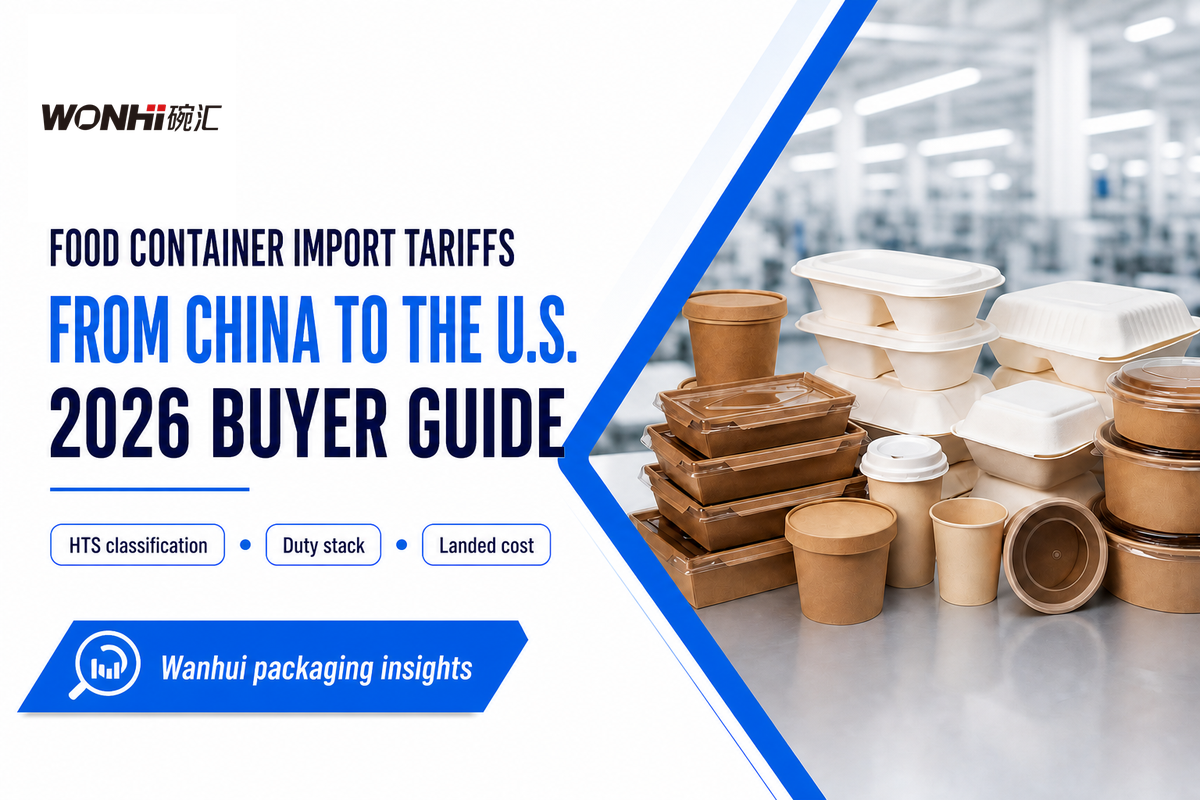
Food container import tariffs from China are the product- and date-specific customs charges assessed on a Chinese-origin food-container entry; this guide explains the HTS, duty-layer, and landed-cost checks a buyer should document.
Food-container imports from China don’t carry one universal duty percentage. A usable estimate begins with the specific item, its 10-digit HTS classification, country of origin, customs value, and entry date. Only then should the buyer’s customs team test applicable Chapter 99 measures and product-specific trade remedies. A supplier’s “25% duty” or “duties included” quote is a scenario assumption, not a customs determination.
Evidence reviewed July 23, 2026 · Prepared for U.S. foodservice distributors, restaurant-supply buyers, private-label brands, and procurement teams · General purchasing guidance, not legal advice
Bottom line
Duty percentages come from dated classification records. They are not permanent properties of the words “food container.”
Date-sensitive warning: the temporary 10% Section 122 surcharge reviewed for this guide was scheduled to continue only through 12:01 a.m. EDT on July 24, 2026, unless changed or extended. Recheck the legal status for the actual consumption-entry or warehouse-withdrawal date before approving a purchase order.
Quick Specs: Tariff Estimate Inputs
| Product proof | Material, construction, intended use, photos, and sample |
| Classification | Broker-supported 10-digit HTS plus applicable Chapter 99 lines |
| Controlling date | Consumption entry or warehouse withdrawal for consumption |
| Approval record | Customs value, rate basis, government fees, broker rationale, and unresolved contingencies |
Is There One U.S. Tariff Rate for Food Containers from China?
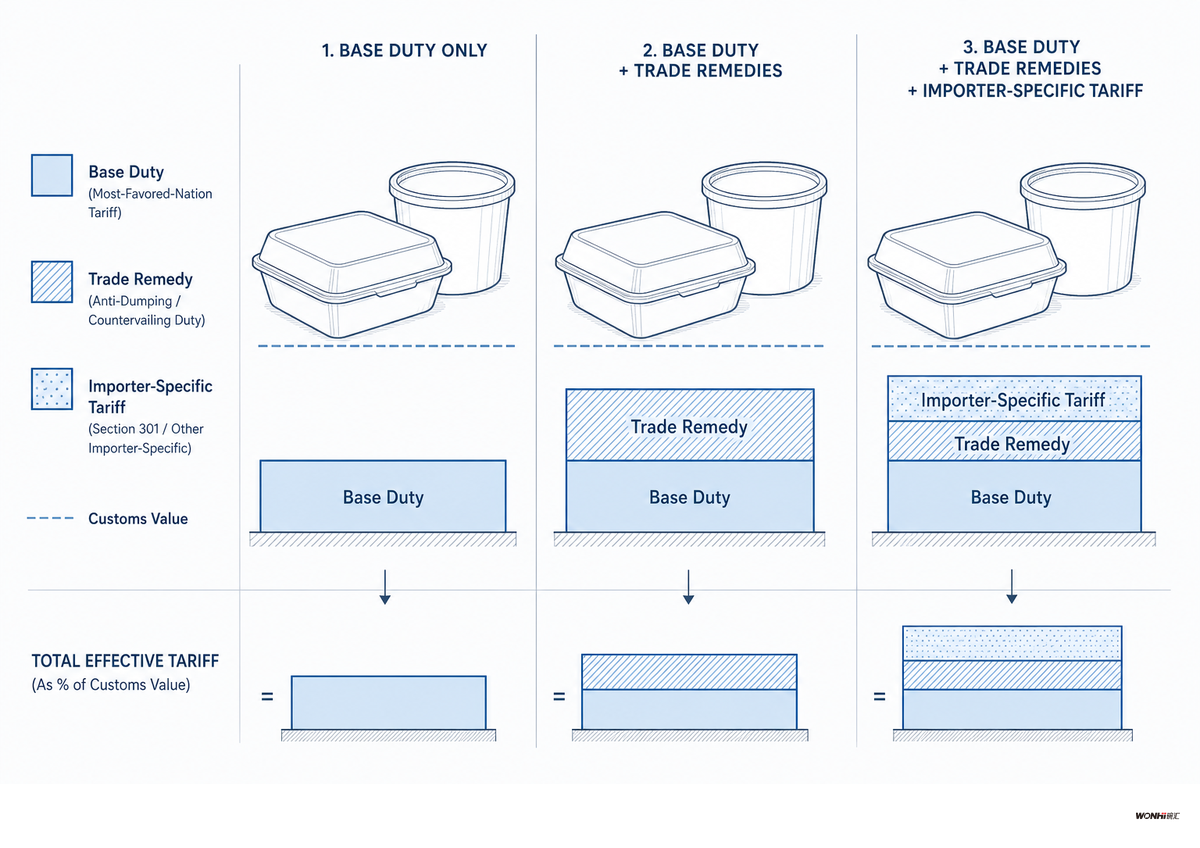
No. Plastic takeout boxes, paperboard cartons, molded-fiber clamshells, aluminum trays, and multi-material packs can take different HTS paths. Even two plastic containers may separate when their construction or stated use changes. The current U.S. tariff schedule makes Section 301 treatment code-specific, while USTR’s official Section 301 investigation process begins with the exact 8- or 10-digit subheading and then checks tariff exclusions.
Ask five questions before accepting any rate:
- What are the product’s material, construction, intended use, lid, and compartment design?
- Which 10-digit HTS subheading does the buyer’s broker support?
- Which Chapter 99 lines apply on the relevant entry date?
- Does an exclusion, Section 232 rule, or written AD/CVD scope change the calculation?
- Who’s the importer of record (IOR), and what customs value will be declared?
Why this matters: guessing 25% creates both overpayment risk and a landed-cost mismatch because the same product label can hide different construction and use.
Rates lifted from a 2025 article can be wrong in 2026. Executive Order 14389, dated February 20, 2026, directed collection of the listed IEEPA additional ad valorem duties to end as soon as practicable after that date. It expressly left Section 301 and Section 232 duties unaffected.
Base Duty, Section 301, and the 4-Layer Food Container Duty Stack
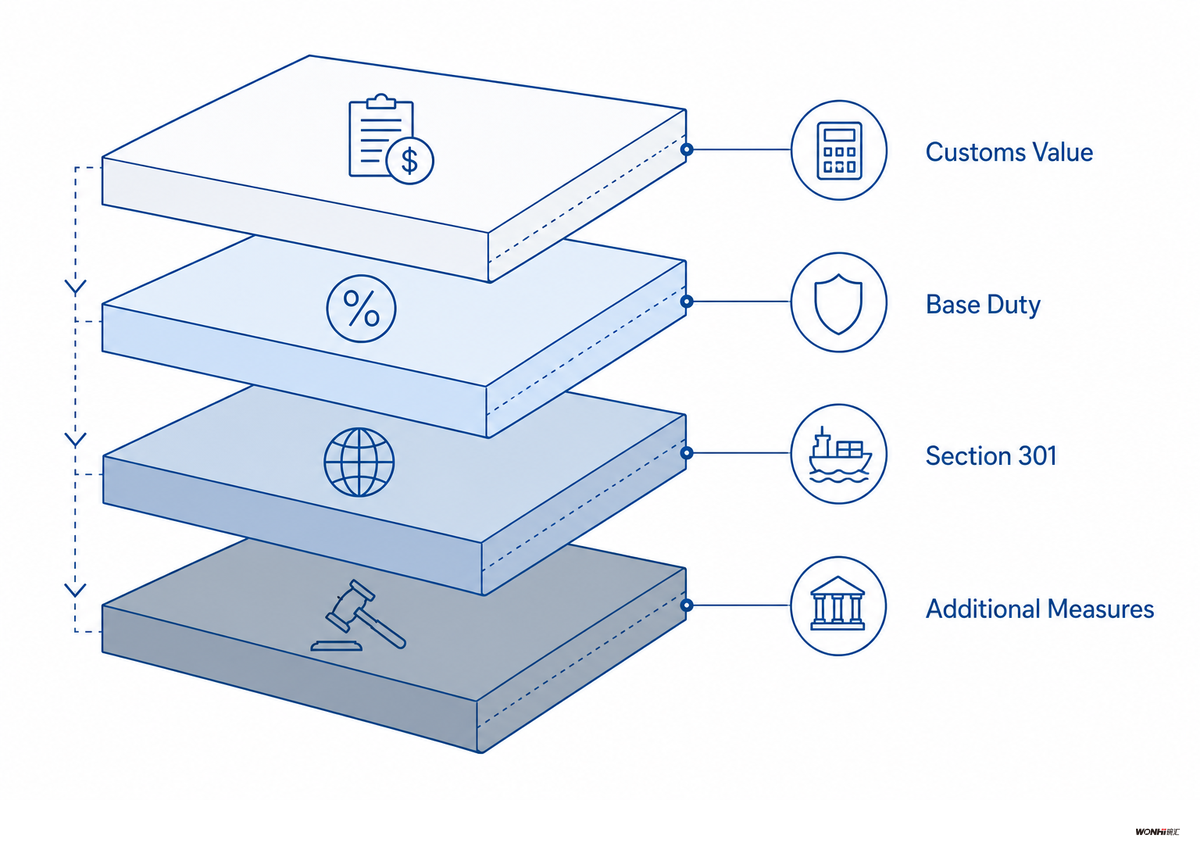
Treat the 4-Layer Food Container Duty Stack as a verification sequence, not an instruction to add four rates. Only confirmed layers enter the worksheet for the SKU and entry date.
| Check | Question | Evidence to retain | Stop condition |
|---|---|---|---|
| 1. Base HTS duty | What is the current general rate for the supported 10-digit code? | HTS line, product sheet, classification rationale | Code rests only on a product name |
| 2. Section 301 | Is that subheading listed, and is an exclusion active? | Chapter 99 line and current USTR/HTS check | Supplier gives a China-wide percentage |
| 3. Temporary surcharge | Was the measure in force for the controlling entry event? | Proclamation, effective window, entry date | PO or sailing date is used as the controlling date |
| 4. AD/CVD branch | Does the written scope cover this merchandise and producer/exporter? | Order scope, case number, party-specific deposit result | A convenient HTS list is treated as dispositive |
On February 20, the proclamation imposed a 10% Section 122 surcharge for 150 days beginning February 24, 2026. It generally adds the surcharge to other duties and fees, but prevents double treatment on the value already subject to Section 232. That distinction is why the entry worksheet needs separate applicability and value-base fields.
Because a stale Chapter 99 line is a classification risk, a $2,000 assumption in the worked case belongs in the review file, not permanent supplier master data.
Off-stack Section 232 branch: a steel or aluminum food-container article may need a separate check. BIS explains that covered articles and downstream products are HTS-specific, and the duty basis may be the full product value or only the metal-content value. Don’t multiply one assumed rate by the full customs value without a broker-supported Section 232 line analysis.
Which HTS and Customs Classification Family Fits Your Container?
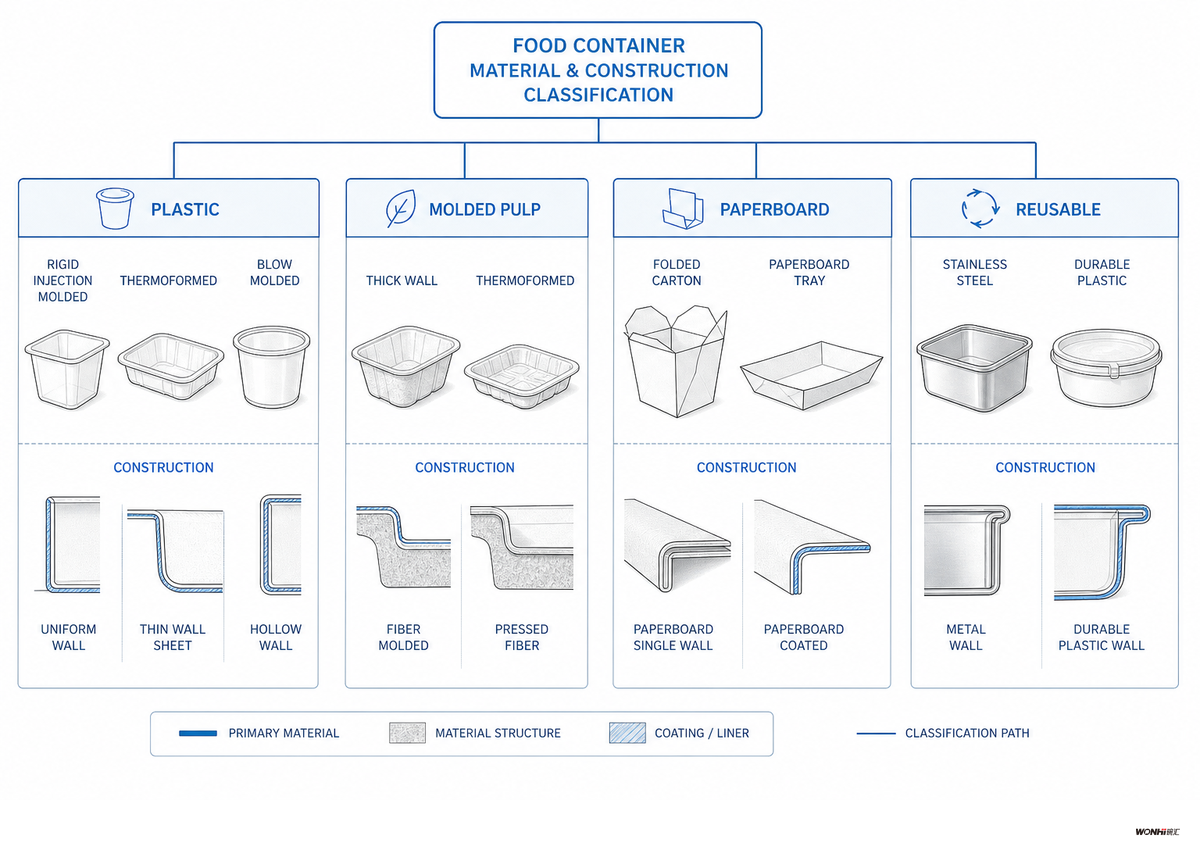
Classification begins with the product as imported. Record the resin or fiber, coating, wall and lid construction, whether pieces are separate or attached, printed condition, compartments, intended buyer, and stated use. Photos, drawings, and a sample matter because the label “meal box” doesn’t answer those questions.
In ruling N329292, CBP rejected a household-kitchenware route for restaurant takeout containers and analyzed them as articles used to pack and transport food. In N317261, CBP placed one-piece, flat-folded, non-corrugated paperboard food boxes under heading 4819 based on their construction and use. These rulings illustrate reasoning; they aren’t codes to paste onto a different SKU.
What HTS code applies to plastic food containers?
Questions such as “food container HS code,” “plastic food container HS code,” and “disposable food container HS code” are useful search starting points. U.S. entry filing still requires the 10-digit HTS classification for the specific imported article, supported by material, construction, intended use, and current ruling evidence.
The phrase “plastic food container” doesn’t produce a safe code. A restaurant takeout box, household storage container, shipping article, or composite presentation pack can raise different questions. Give the broker the resin, dimensions, wall thickness, lid design, compartments, intended use, photos, and a sample. Then test the rationale against current HTS text and relevant CBP rulings. Buyers can use the plastic container manufacturer guide, disposable food-container range, and hinged-lid container options to define the physical SKU before customs review.
Choosing the wrong 10-digit classification can push a buyer into an unexpected 25% duty line; ambiguity in the SKU description is therefore an approval risk.
A material change also requires a fresh classification and food-contact check. Paperboard cartons, molded-fiber clamshells, and PP boxes don’t inherit one another’s duty treatment. Use the eco packaging manufacturer guide to frame the material questions, but let the buyer’s broker resolve the entry classification.
When Can Anti-Dumping or Countervailing Duties Change the Answer?
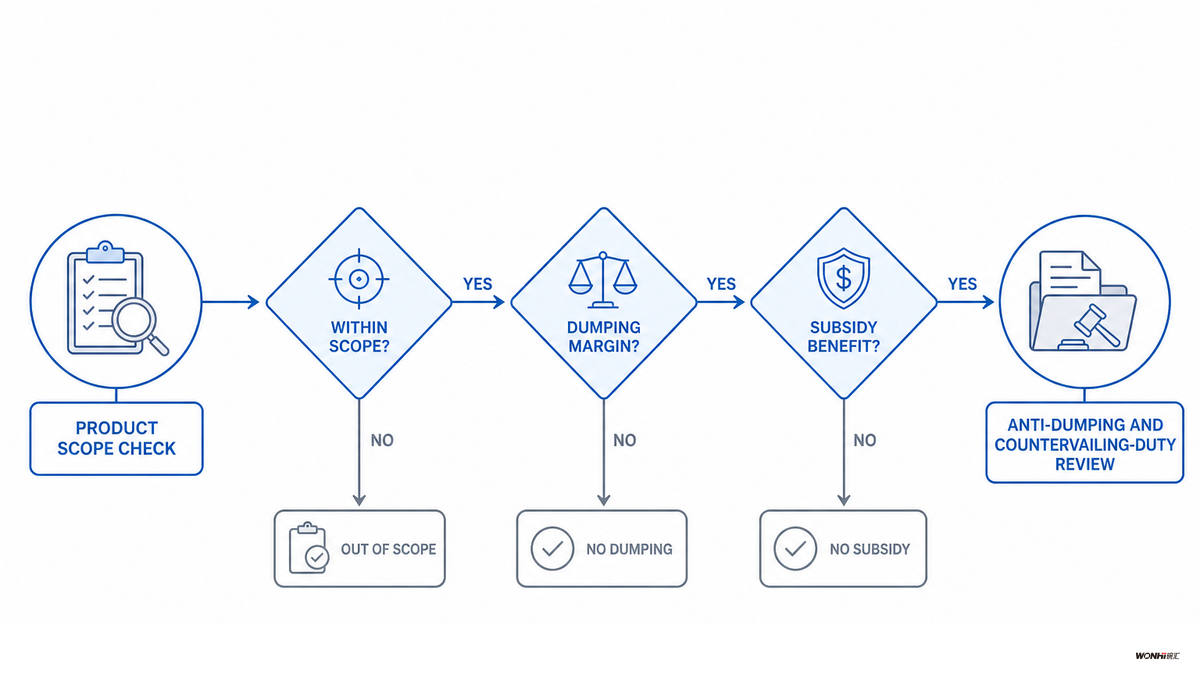
AD/CVD is a separate risk branch. Orders dated January 27, 2026 cover in-scope thermoformed molded-fiber products from China, including plates, bowls, clamshells, trays, lids, and food or foodservice contact packaging. The written scope controls; the listed HTS numbers are provided only for convenience.
A cash-deposit rate isn’t necessarily the final liability. Commerce explains that administrative reviews can determine duties assessed on earlier entries and set prospective estimated-deposit rates. For a potentially in-scope molded-fiber SKU, finance shouldn’t book the current deposit as a fixed final cost. Record the producer, exporter, case number, scope analysis, deposit assumption, liquidation status, and contingency owner.
Stop and escalate: if a molded-fiber clamshell may fit the written scope, do not transfer the ordinary plastic-container worksheet. Ask the customs broker or trade counsel for a documented scope and rate path before shipment.
How Do You Calculate Landed Cost Without Double Counting?
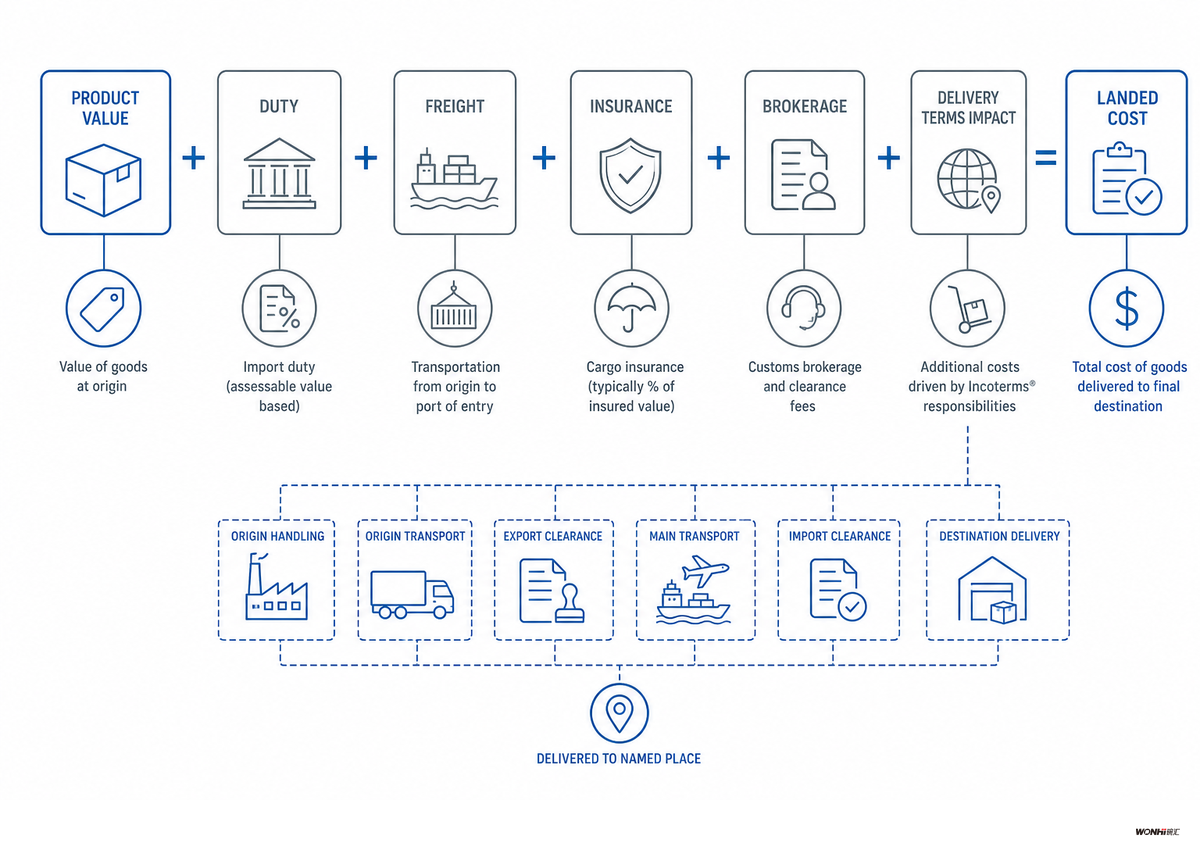
Build the calculation as a line-by-line record. Keep customs value, duty programs, government fees, transport, brokerage, and inland delivery separate. Reconcile each line to the entry worksheet and shipment quote before approval, with freight kept outside customs value unless the rule requires otherwise. Use this formula:
Landed cost per piece = (customs value + applicable duties + government fees + freight + insurance + brokerage + inland cost) ÷ accepted units.
📐 Engineering Note, customs math
CBP’s FY2026 fee table lists formal-entry merchandise processing fee (MPF) at 0.3464%, with a $33.58 minimum and $651.50 maximum. Harbor maintenance fee (HMF) on applicable imports is 0.125% ad valorem. HMF belongs in the ocean scenario, not every shipment.
Dated landed-cost scenario
Worked arithmetic example for a July 23, 2026 ocean entry: 100,000 pieces and a $20,000 customs value. The 3% base duty and 25% Section 301 rate below are explicit assumptions, not a classification opinion. The temporary 10% line is included only to illustrate the reviewed pre-expiry scenario. AD/CVD and Section 232 are excluded.
| Line | Basis | Amount | Status |
|---|---|---|---|
| Customs value | Given example | $20,000.00 | Hypothetical |
| Base duty | Assumed 3.0% × $20,000 | $600.00 | Replace with supported HTS rate |
| Section 301 | Assumed applicable 25% × $20,000 | $5,000.00 | Conditional assumption |
| Section 122 | Dated 10% × $20,000 | $2,000.00 | Recheck after July 24 |
| MPF | 0.3464% × $20,000 | $69.28 | Within FY2026 min/max |
| HMF | 0.125% × $20,000 | $25.00 | Ocean scenario |
| Ocean freight | Dated carrier quote | $4,200.00 | Hypothetical |
| Insurance | Policy quote | $120.00 | Hypothetical |
| Brokerage | Broker quote | $250.00 | Hypothetical |
| Inland delivery | Drayage/warehouse quote | $900.00 | Hypothetical |
| Total landed | Sum of stated lines | $33,164.28 | $0.3316 per piece |
| Without dated 10% line | Recheck-required comparison | $31,164.28 | $0.3116 per piece |
The arithmetic is simple; the evidence is the hard part. Save the worksheet date, HTS and Chapter 99 lines, customs-value support, and broker sign-off. Then transfer the confirmed inputs into the FOB-to-landed-cost calculator.
Who Controls Duty Under FOB, DDP, and IOR Terms?

Incoterms allocate commercial tasks and cost; they don’t classify merchandise. Under DDP, ICC assigns import clearance and related formalities to the seller, while warning that destination-country rules may make that difficult for a foreign supplier. Under FOB, the buyer usually manages the main carriage and import side. Either way, the entry still needs a legally valid IOR, declared value, classification, and broker filing.
| Quote label | What it can allocate | What the buyer still asks for |
|---|---|---|
| FOB | Export-side delivery point under the agreed term | Freight, insurance, IOR, HTS, Chapter 99, fees, inland cost |
| DDP | Seller’s delivered-price and import-clearance obligation | Named IOR, broker, declared value, code lines, entry evidence |
| Broker-managed entry | Preparation and filing support | Buyer approval and reasonable-care record |
CBP’s reasonable-care guidance places classification and valuation responsibility on the IOR even when a broker assists. A low DDP quote doesn’t prove the entry is correct. Ask for the named IOR, proposed HTS and Chapter 99 lines, declared value, and a copy of the final entry record available to the responsible party.
A broker can prepare an entry, but the responsible company still needs a defensible classification, valuation, and reasonable-care record.
The 5-Input Tariff Proof Pack for Your Supplier and Broker
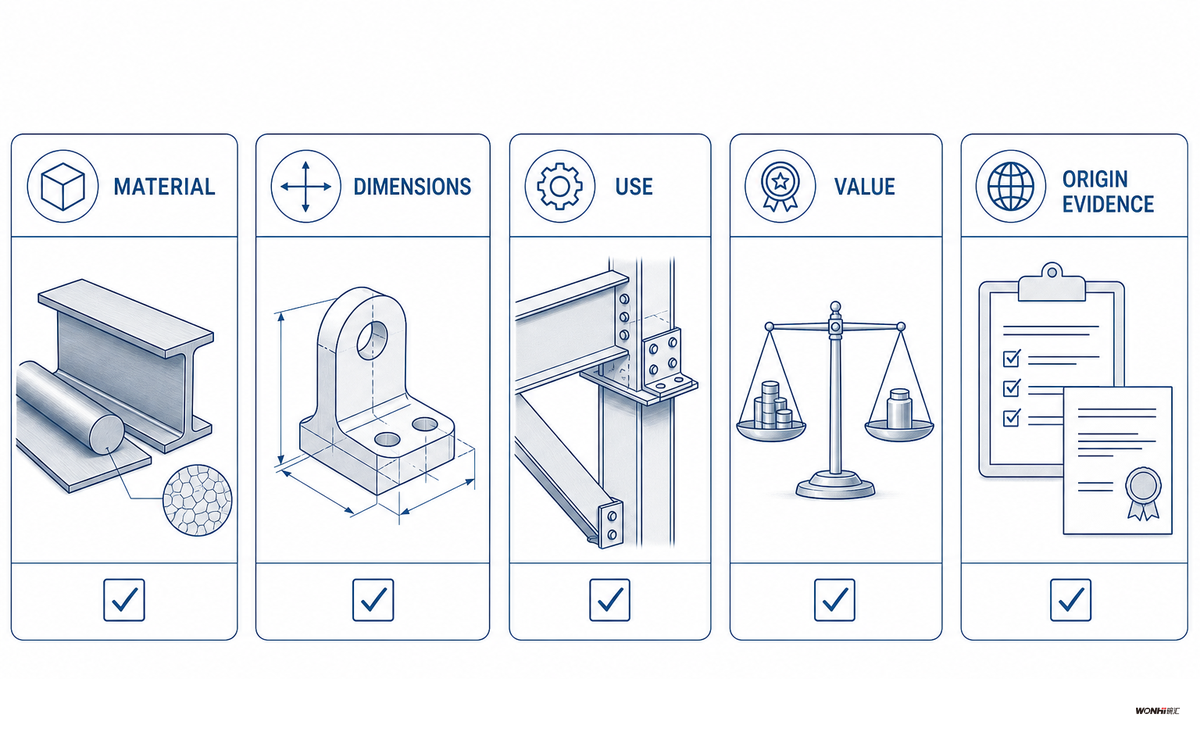
Use a single packet for the seller, buyer and broker to avoid three different sets of calculations for three different products.
5-Input Tariff Proof Pack — attach it to the RFQ and purchase approval:
| Input | Required fields | Owner | Approval evidence |
|---|---|---|---|
| 1. Product identity | Material, resin/fiber, coating, dimensions, wall, lid, compartments, use, photos | Supplier + QA | Signed specification and sample |
| 2. Origin and parties | Producer, exporter, country of origin, material origin where relevant | Supplier | Factory and origin declaration |
| 3. Transaction and value | Incoterm, invoice price, assists, tooling, packing, related-party facts, currency | Buyer + finance | Value worksheet |
| 4. Tariff path | 10-digit HTS, Chapter 99, exclusions, Section 232, AD/CVD scope | Licensed broker | Dated written rationale |
| 5. Entry control | IOR, broker, consumption-entry date, port/mode, deposit contingency | Entry owner | Entry plan and post-entry file |
Shandong Wanhui Environmental Protection Technology Co., Ltd. reports 20 years in food-packaging containers, 20 thermoforming lines, 6 sheet-extrusion lines, and 60 injection-molding lines. Those factory details help complete the material, process, sample, logo-printing, and dedicated-mold fields; they don’t replace the buyer’s customs analysis. Buyers planning artwork or mold changes can define the commercial package through the custom food packaging program.
Common Customs Mistakes and Legal Tariff-Risk Controls
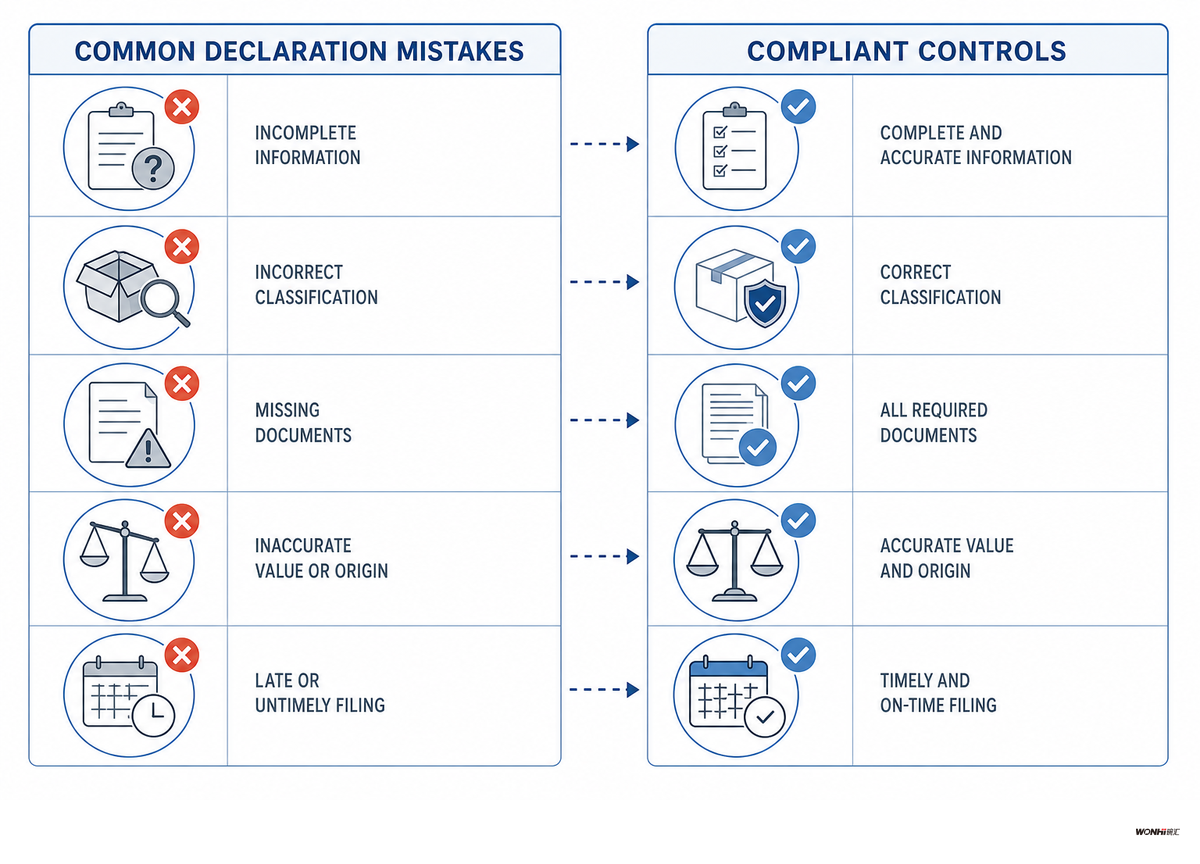
Use the 10-case classification risk matrix to transform common shortcuts into a next action. A Clarify status requires the initial quote and cost remain pending while a “Stop” status requires the submission of the applicable evidence prior to finalizing duty estimates.
| Case type | Shortcut risk | Decision | Evidence needed |
|---|---|---|---|
| PP takeout box | Copied household code | Clarify use | Foodservice packing statement and ruling comparison |
| Flat-folded paperboard carton | Material name only | Clarify construction | Folded/imported condition, board layers, printing |
| Molded-fiber clamshell | AD/CVD ignored | Stop | Written scope and producer/exporter result |
| Aluminum tray | One value base assumed | Clarify | HTS and Section 232 coverage/value basis |
| Container with separate lid | Set treatment assumed | Clarify pieces | Packing configuration and component values |
| Printed branded pack | Tooling/assist omitted | Clarify value | Artwork, mold, assist, and invoice records |
| DDP quote | IOR and value hidden | Stop | Named IOR, broker, HTS, value, entry record |
| Old 2025 duty sheet | Ended action stacked | Replace | Current HTS and presidential action |
| Warehouse withdrawal | PO date used | Re-date | Controlling withdrawal date under entry rules |
| Food-contact material change | Duty savings treated as approval | Stop | Applicable FDA authorization/exemption and migration-use evidence |
Do
- Freeze the physical SKU before code review.
- Date every duty and freight input.
- Separate duties, deposits, fees, and logistics.
- Keep the broker’s written rationale with the PO.
Don’t
- Copy a ruling code to a different design.
- Use a supplier’s DDP total as customs proof.
- Assume one rate covers plastic, paper, fiber, and metal.
- Treat an AD/CVD cash deposit as fixed final liability.
When Does Sourcing Food Containers from China Still Make Sense?

Duty burden is only one sourcing input. Packaging Dive reported in April 2026 that full reshoring may be impractical and that China’s manufacturing capability, comparable quantity, and quality can still support sourcing in some cases despite added duties. Low prices alone don’t establish a landed-cost advantage. The useful lesson is behavioral: test material changes, build supplier redundancy, and involve suppliers early. The report doesn’t establish a universal break-even rate.
| Factor | Keep China in the shortlist when | Dual-source or switch when |
|---|---|---|
| Verified landed cost | Dated per-piece total stays competitive | The result depends on an unverified code or expiring measure |
| Tooling | Existing mold and change control lower total project cost | Tool ownership or transfer terms are unclear |
| MOQ | Order cadence absorbs production and freight economics | Inventory exposure exceeds the unit-cost gain |
| Quality | Sample, seal, leak, compression, and odor checks pass | Evidence or lot traceability is weak |
| Customization | Printing and mold capability shorten launch work | Artwork or mold changes create uncontrolled delay |
| Lead time | Production, booking, transit, and buffer are visible | Stockout cost exceeds the saving |
| Food-contact status | Applicable authorization or exemption evidence is supplier- and use-matched | Material, coating, colorant, food type, or temperature use is unresolved |
| Duty volatility | Contract has a dated change mechanism | One party bears an undefined policy swing |
| Supplier continuity | Capacity, backup process, and shipping plan are evidenced | There is no recovery or second-source plan |
FDA says food-contact substances that are food additives need an applicable food-contact notification, food-additive regulation, or Threshold of Regulation exemption before marketing. A lower duty cannot cure a missing food-contact basis. Match the authorization to the formulation, coating, intended food, temperature, and conditions of use; a generic “food grade” statement is not enough.
Wanhui reports more than 30 tons of sheet output per day, daily processing capacity above 1 million units, and a team of more than 200 people. It also reports food-grade raw materials, logo printing, dedicated mold development, and exports across Europe, the Americas, the Middle East, Asia-Pacific, and South America. Those facts make capacity and customization testable RFQ items; they do not prove a U.S. duty rate or a product-specific FDA authorization. Review food container manufacturing in China and wholesale food-container options, then compare the same proof pack across shortlisted sources.
Which U.S. Tariff Updates Should Buyers Recheck in 2026?
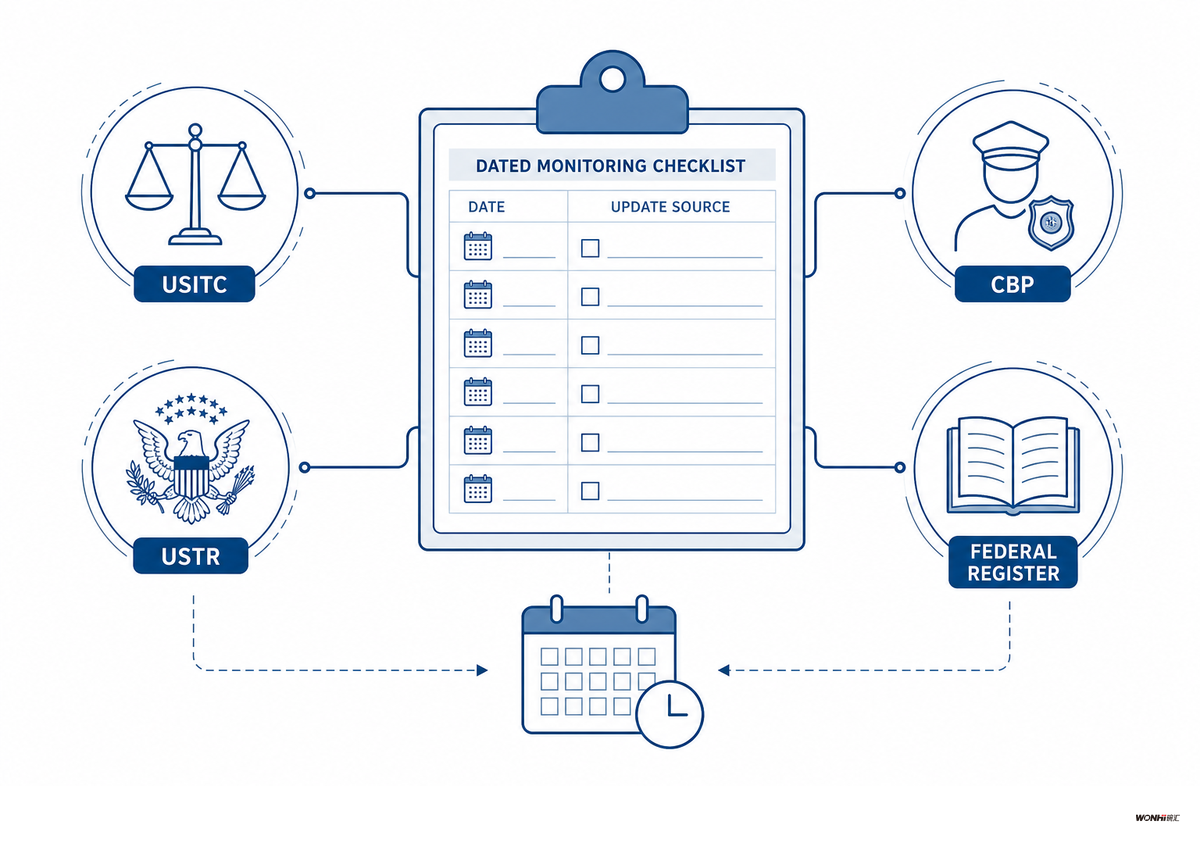
Use a date-controlled review instead of a permanent duty cell in the purchasing system. CBP identifies consumption entry or warehouse withdrawal for consumption as the determining event for rate timing and points filers to 19 CFR 141.68. The referenced page is archived, so current customs regulations and the controlling proclamation still prevail.
Why refresh? Stale lines create direct cost risk: on $20,000, a 10% change is $2,000. Because the controlling entry date can move after the PO, every reviewed rate needs a date stamp.
- Confirm the entry event. Record expected consumption-entry or warehouse-withdrawal date, port, mode, and any relevant in-transit rule.
- Pull the current HTS lines. Save the 10-digit product code, base rate, Chapter 99 lines, exclusions, and reporting order used by the broker.
- Recheck presidential actions. The February 20, 2026 Section 122 proclamation imposed 10% for 150 days; its stated end point makes July 24 a mandatory refresh.
- Review product branches. Section 232 value basis and the January 2026 molded-fiber AD/CVD orders can change the worksheet for covered products.
- Label proposals as proposals. USTR’s June 2, 2026 forced-labor action was proposed for public comment in the reviewed source; its proposed rates are not inserted as effective duties.
Trigger a fresh review whenever the material, construction, producer, exporter, country of origin, customs value, entry date, or Incoterm changes. In the worked example, one temporary 10% line on a $20,000 customs value moves the result by two cents per piece. That can alter a high-volume sourcing comparison, but it never justifies guessing tomorrow’s rate.
Conclusion
Start with a physical SKU and finish with a dated entry file. A defensible cross-border chain connects product proof, classification rationale, conditional duty checks, government fees, commercial costs, and a named owner for unresolved exposure. Keep food-contact authorization and supplier performance in the sourcing decision, but outside the duty arithmetic.
Buyer handoff
Send the 5-Input Tariff Proof Pack with the RFQ, let the supplier complete product and origin facts, and require the buyer’s broker to approve the dated duty path.
Request a Food Container Specification and Quote
Food Container Import Tariff FAQ
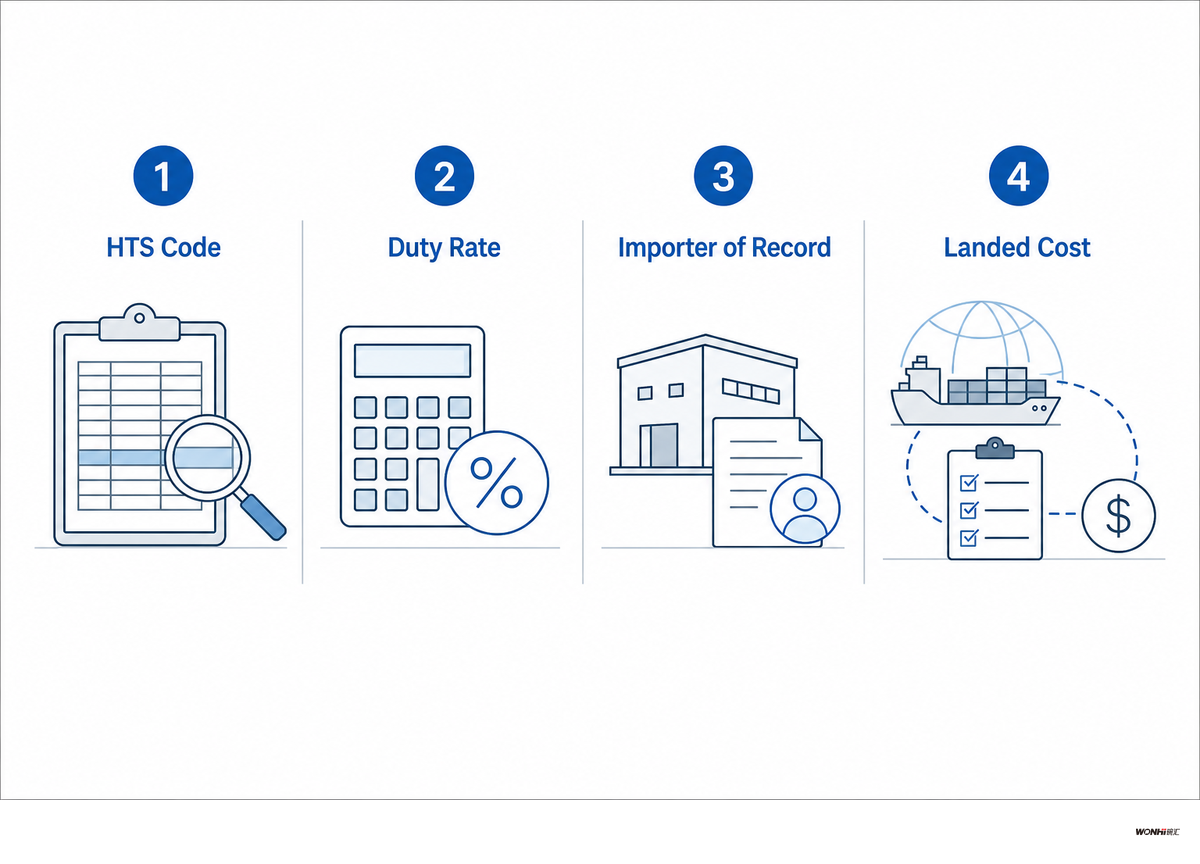
Is there a 30% tariff on Chinese imports?
No single 30% rate applies to all Chinese goods; a food container needs a product- and date-specific calculation based on its code, origin, value, and entry date.
No single 30% rate applies to all Chinese goods. The amount for a food container depends on HTS classification, origin, entry date, and any additional measure or trade-remedy order covering that exact product. Treat a headline percentage as a scenario input. Verify the HTS and current Chapter 99 instructions, then have the buyer’s licensed customs broker confirm the entry calculation.
What is the import tariff from China to the USA?
There is no one China-to-USA duty; begin with the exact product’s base HTS rate and then test every conditional program for that product and entry date.
There’s no single China-to-USA duty. Start with the product’s base U.S. HTS rate, then check current additional duties, exclusions, Section 232 treatment, and any AD/CVD order. Plastic, paperboard, aluminum, and molded-fiber food containers may follow different paths. Usable estimates need material, construction, use, producer/exporter, customs value, and expected entry date.
Will I have to pay tariffs on my package from China?
Possibly; liability and amount depend on the merchandise, entry arrangement, customs value, and rules in force for the controlling entry date, so confirm the entry record before shipping.
If you’re listed as the IOR, you must exercise reasonable care over classification, value, and duties even when a supplier quotes delivered pricing. Whether the shipment owes duty, and how much, depends on its facts and the measures in force for the entry. Ask for the proposed HTS code and duty assumptions in writing, then validate them with a licensed customs broker.
How much is a 20-foot container from China to the U.S.?
Ocean freight is not a customs duty, and a usable price needs a dated route-specific quote that names origin port, destination port, equipment, and service terms.
Freight changes with origin and destination ports, season, carrier, equipment, fuel and terminal charges, and service terms. Keep ocean freight as a separate landed-cost line and replace it with the current carrier or forwarder quote before approving the order.
Do Section 301 duties apply to every food container from China?
No. Section 301 coverage follows the exact HTS subheading and current exclusions rather than the broad product label, so the broker must verify the Chapter 99 path.
Plastic hinged boxes, paperboard cartons, aluminum trays, and molded-fiber clamshells shouldn’t receive one shared answer simply because each holds food. Check the exact subheading and current Chapter 99 instructions. Keep that step separate from the base duty, Section 232, temporary surcharges, and AD/CVD scope.
Should I accept a DDP quote without a duty worksheet?
No. Ask for the code, duty layers, declared-value basis, IOR arrangement, broker, and dated entry assumptions before the PO so the quote can be checked.
DDP allocates commercial tasks; it doesn’t prove that the classification, value, or entry party is correct. Written worksheets let buyers and brokers test quotes before goods move.
References and Sources
- The White House, Temporary Import Surcharge Proclamation, February 20, 2026
- The White House, Executive Order 14389, Ending Certain Tariff Actions
- U.S. International Trade Commission, Current HTS search for 9903.88.03
- USTR, Section 301 product-search process
- CBP CROSS ruling N329292, Plastic takeout containers
- CBP CROSS ruling N317261, Flat-folded paperboard food boxes
- CBP, Reasonable Care guide
- CBP, FY2026 User Fee Table
- BIS, Section 232 Steel and Aluminum guidance
- Federal Register, Thermoformed molded-fiber AD order
- Federal Register, Thermoformed molded-fiber CVD order
- International Trade Administration, AD/CVD final determination FAQ
- ICC Academy, DAP or DDP under Incoterms 2020
- FDA, How food-contact substances are regulated
- Packaging Dive, Adapting packaging supply chains, April 9, 2026
Related Articles and Tools
- Food container manufacturing
- Plastic container manufacturer guide
- Eco packaging manufacturer guide
- FOB-to-landed-cost calculator
- Disposable food containers
- Hinged-lid containers
- Custom food packaging
- Wholesale food containers