Get in touch with Wanhui Company


By CYH · Updated October 2026
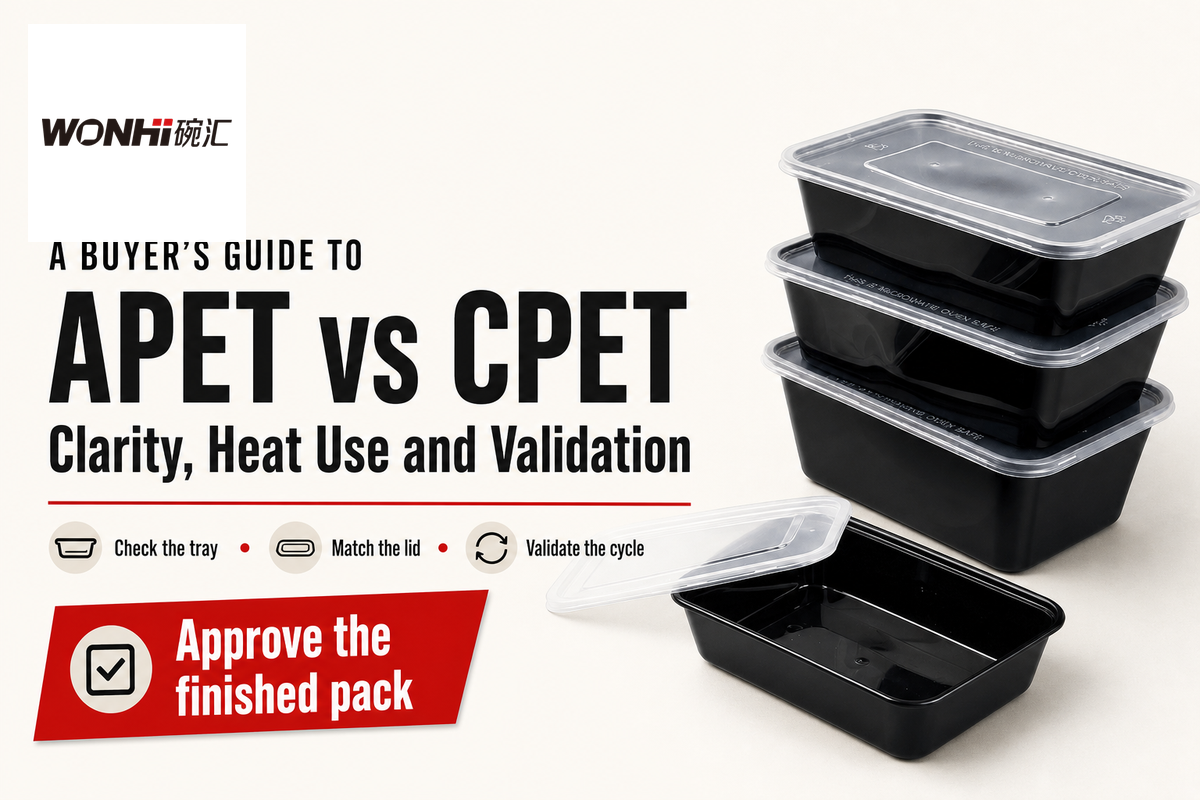
APET vs CPET: Typically, APET is used for clear, chilled food display; CPET is used for heat-use trays. Approve the exact tray, lid, food and heating cycle before ordering. Neither of the material names provides a universal oven or microwave rating.
A clear salad pack and a reheatable meal tray have different functions. Confusing the two as interchangeable PET containers is where a quotation may go wrong. The buyer needs the material identity, finished pack instructions, and a production trial that represents the meal being sold.
Quick buying points
- Choose the display requirement before choosing a clear or opaque tray.
- Qualify the lid and sealing film alongside the tray.
- Match food-contact documents to the supplied material and intended use.
- Compare cost per accepted meal after measuring losses on the line.
APET vs CPET at a glance
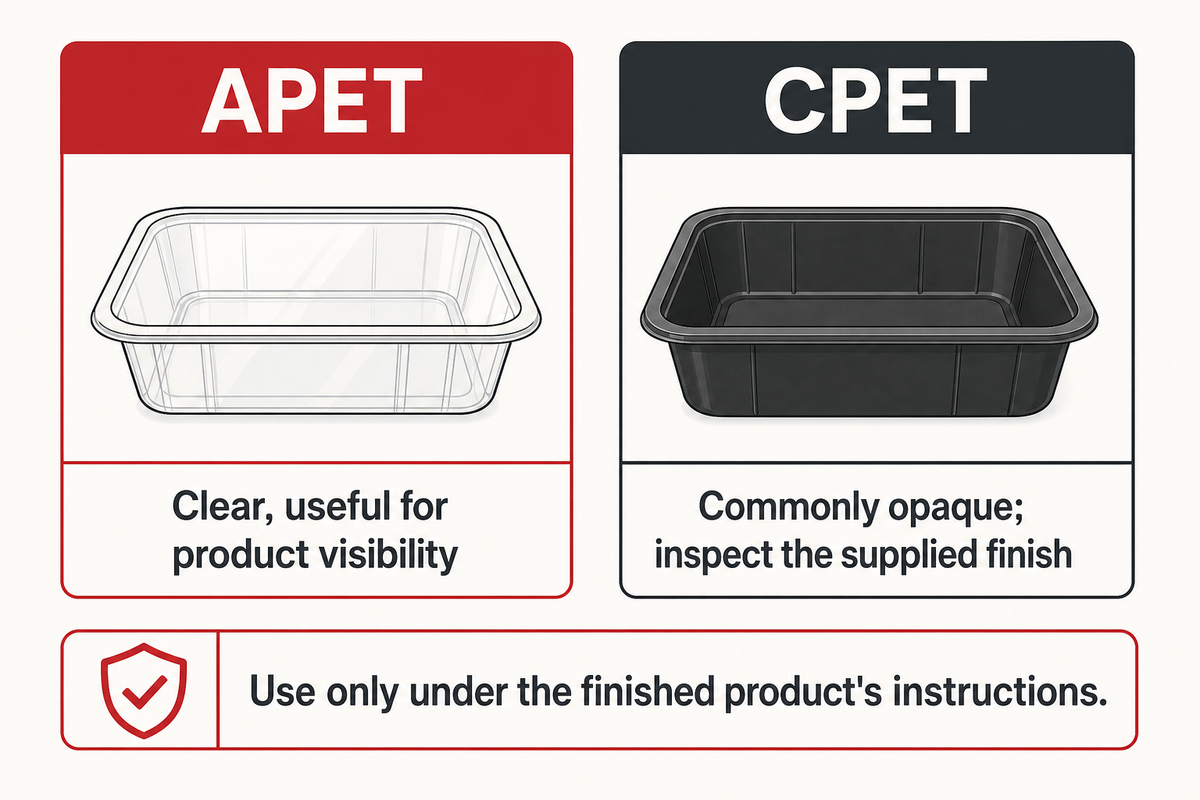
APET and CPET denote different PET types and priorities in packaging. Generally, ordinary APET is chosen for greater transparency, and crystallized PET offers a route to greater heat resistance. For food trays, the service conditions and appearance of the product should be the starting point. The buyer should qualify the entire package against the conditions.
| Decision point | APET starting point | CPET starting point |
|---|---|---|
| Material form | Amorphous polyethylene terephthalate | Crystallized polyethylene terephthalate |
| Typical appearance | Clear, useful for product visibility | Commonly opaque; inspect the supplied finish |
| Primary buying reason | Chilled display and visible contents | A tray designed for a documented heat-use application |
| Heating decision | Use only under the finished product’s instructions | Check the stated appliance, food and cycle |
| Closure choice | Confirm snap lid or matched sealing layer | Confirm lid removal, venting or heat-use permission |
| Recycled content | Ask for the grade and supported percentage | Ask separately; crystallization does not identify recycled content |
| Line trial | Check forming, rim, seal and handling | Check those factors plus post-heating condition |
| Recovery route | Check the whole pack and destination system | Include color, additives and closure in the assessment |
| Commercial comparison | Calculate cost per accepted filled pack | Use the same meal and acceptance criteria |
In the 2026 ACS review of PET heat-resistance strategies, one way to alter the thermal behavior of PET is via crystallization. The material-science principle explains the comparison. A product specification is, however, still required. For other container families, first consult our disposable food containers guide.
Clear-display advantages
- Show the food through the tray wall.
- Inspect portions before dispatch.
- Pair visibility with a matching lid.
Limits to resolve
- Keep display clarity separate from heating permission.
- Check the base and lid as individual components.
- Approve the assembled pack after its actual service cycle.
PET structure, crystallization and clarity
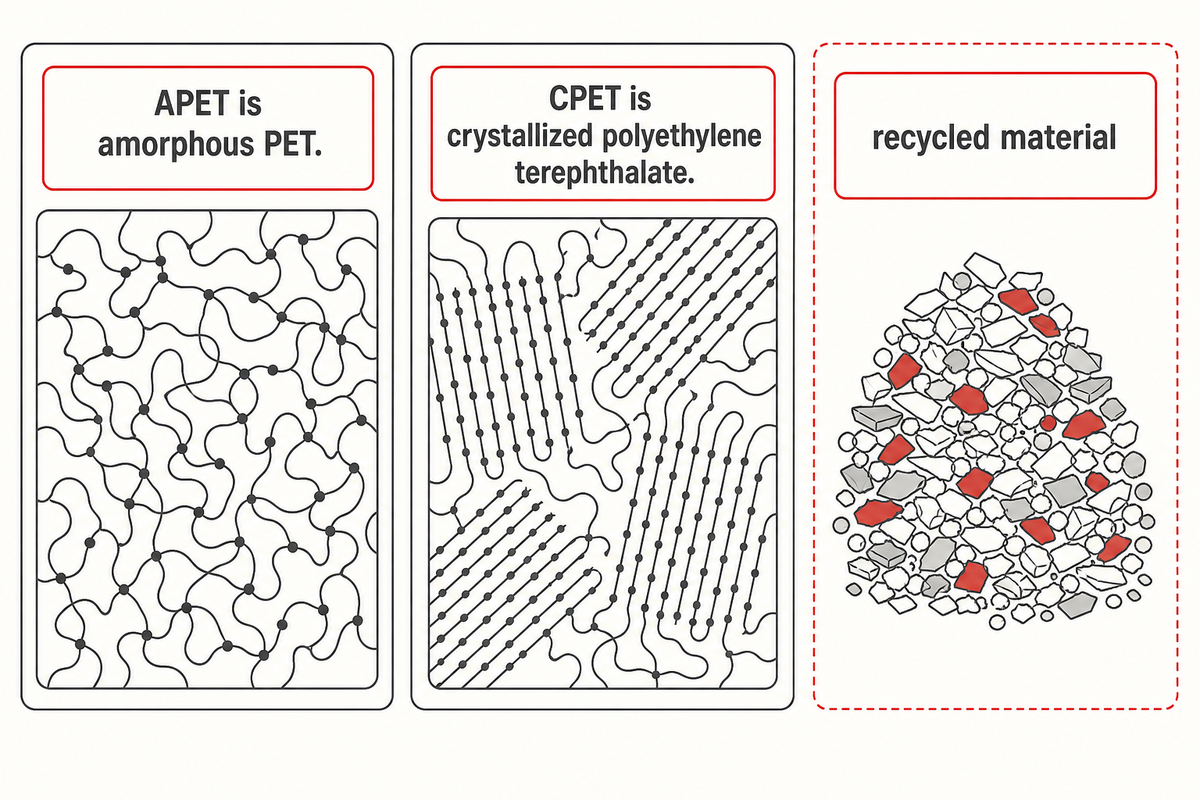
Amorphous and crystalline structures explain the difference between the two. Polymer structure is one property of the plastic material; grade, processing history, wall distribution and finished geometry also affect performance. A formed sample can’t be replaced with a resin name.
What is CPET plastic?
CPET is crystallized polyethylene terephthalate. In food packaging, the term mostly denotes PET trays made through a crystallization step for enhancement of heat resistance. It generally refers to a material approach as opposed to an entire use instruction. The specific design and construction of the tray, lid, food and heating conditions still remain in the product description.
During thermoforming, plastic sheet is shaped and formed against a mold. The production process, in addition to determining the outline, also controls material distribution in the base, sides and flange. APET is amorphous PET. Its transparent nature is a useful characteristic for food display as well as for clear blister packaging. Condensation, haze and surface condition affect a clear tray’s clarity.
The background of the PET-composition patent of Ester Industries’ application describes heat-setting and the role of crystallization. It isn’t a Wonhi patent or a tray-use approval. Special high-heat products marketed as APET-based should be treated as their own specification, rather than giving an ordinary APET tray a high-heat specification.
Separate three questions: What polymer is it? How was the article processed? Does it contain recycled material? The label rPET answers the last question, while APET and CPET describe material structure or processing. Ask for all three answers when a quotation simply says “PET plastic.”
Heat use: validate the finished pack
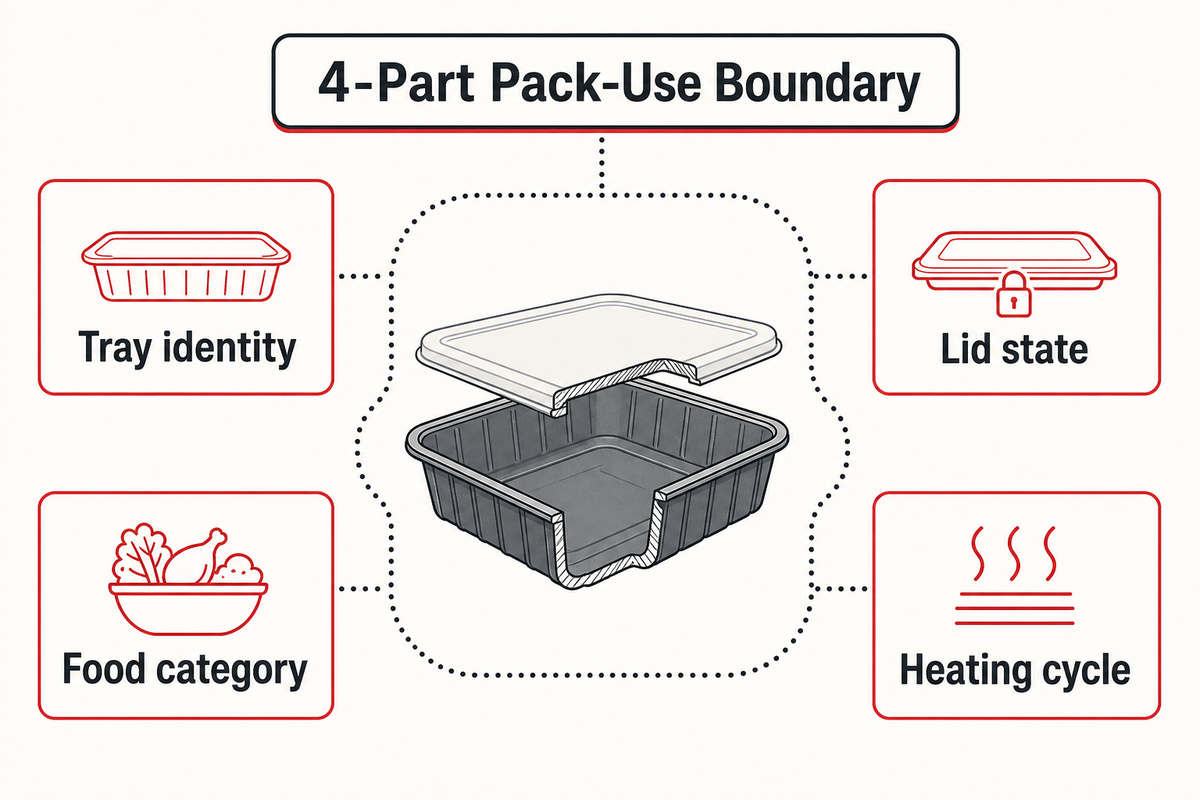
A heating decision requires the specific tray-and-lid combo, the food and the complete service cycle. CPET is a candidate for packs with documented heat-use instructions. Ordinary clear APET is a candidate for chilled display. Approval follows the finished article’s instructions and evidence and what occurs with the lid during heating.
4-Part Pack-Use Boundary
4-Part Pack-Use Boundary means recording tray identity, lid state, food/contact conditions, and the heating cycle, prior to approval of a food pack.
Keep this record with the sample approval. The U.S. Food and Drug Administration’s food types and conditions-of-use table provides guidance for reheating in the container and cooking. These categories of use, among others, don’t set a universal tray temperature limit.
A pragmatic approach comes from the packaging guidance of the U.S. Department of Agriculture for meat and poultry. The instruction for the use of microwave is useful, because it gives attention to the package being used. Read the actual instructions and determine whether the meal stays in the same container, or if it’s transferred to a different container.
“Microwave food in packaging materials only if the package directs, and then use only one time.”
For a frozen ready meal, identify whether the film is removed, left intact, or pierced. Identify the permitted appliance and starting state. Verify the condition for each intended route. An instruction for the base also needs a corresponding instruction for the closure.
| Record field | Evidence to capture | Approval decision |
|---|---|---|
| Tray identity | Product code, grade, layers and drawing revision | Match the tested tray to the supplied article |
| Lid state | Closure code and removal or venting instruction | Write the consumer action into the specification |
| Food category | Recipe, fat/acidity profile and intended contact | Confirm document scope covers the meal |
| Fill quantity | Actual mass in g and headspace in mm | Test the intended maximum fill |
| Storage sequence | Initial condition, storage time and temperature | Include the sequence before reheating |
| Heating cycle | Appliance, time in min, settings in °C/°F or W | Use the specified cycle and permitted loading |
| Shape and handling | Post-cycle dimensions in mm and loaded lifting check | Agree acceptable distortion and handling criteria |
| Seal and closure | Leak results and opening behavior after the cycle | Evaluate the complete package |
| Release record | Lot, sample count, method, result and named approver | Retain a signed reference sample |
Keep one approved combination intact: a new film, resin grade or heating instruction calls for review of the affected checks. The record above makes that change visible before purchasing treats it as an equivalent substitution.
Lidding and sealing on the production line
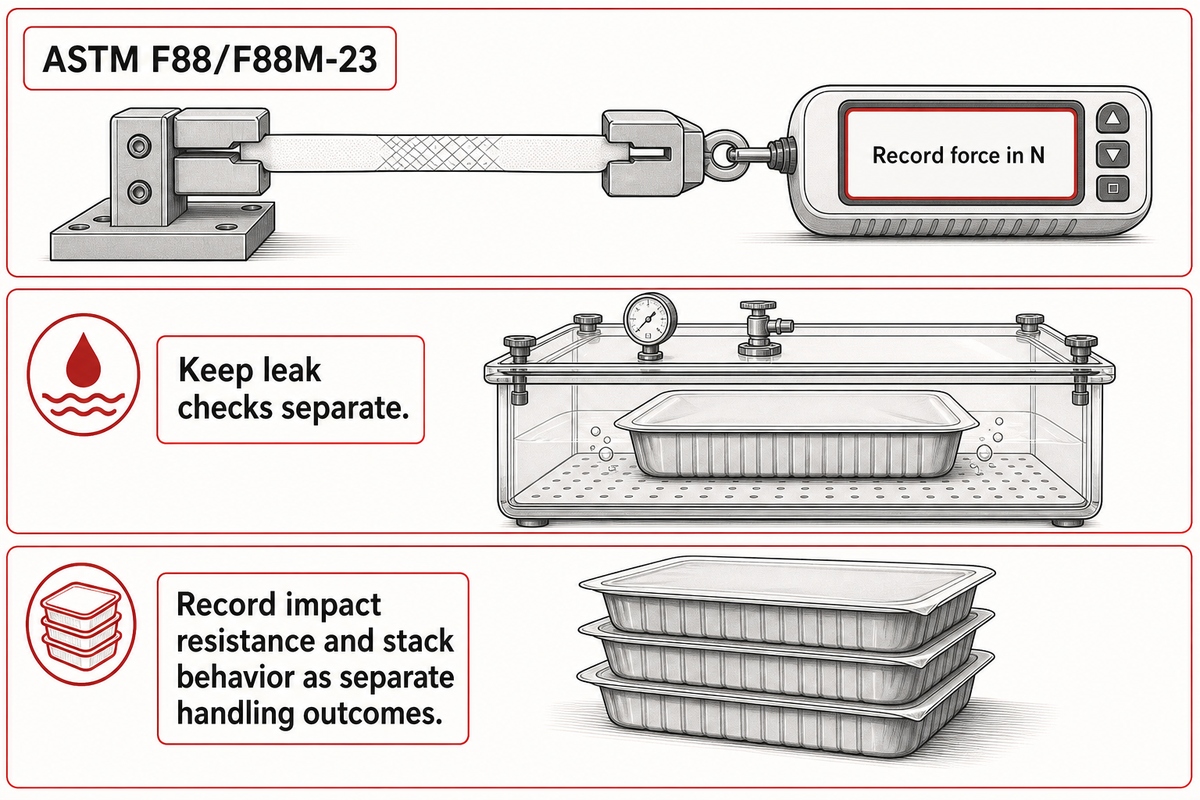
Sealing performance belongs to the tray, film and production line together. A matching external size doesn’t establish a matching sealing surface or processing window. Match the flange, sealant and equipment settings, and measure both closure integrity and the opening behavior the customer will experience.
With a clean, flat rim, start with the supplier’s recommended film. Record jaw temperature, pressure, dwell time and line speed. Inspect corners and edges. Changes in production that increase line speed may change how the flange and film meet. Our food trays guide covers the wider format decision.
Engineering note: define the measurement
Agree the flange drawing dimensions in mm and its tolerances with the supplier. For a suitable peel-strength method, ASTM F88/F88M-23 includes flexible-to-rigid and semi-rigid interfaces. Record force in N with the stated strip width and consistent fixture technique. The public scope supplies neither a universal pass force nor a simulation of opening an entire lid.
Keep leak checks separate. One 2017 study of liquid-contaminated LLDPE pouches showed different Phase-1 hermeticity test results without a corresponding difference between seal strength groups during the course of the study. The conditions of the pouches aren’t the recipe of a PET tray. The relevant check is to measure the characteristic the acceptance decision actually requires.
- Define an opening-force range with the customer and test method.
- Specify a leak test that reflects storage and transport.
- Repeat the relevant checks after the permitted heating cycle.
- Record impact resistance and stack behavior as separate handling outcomes.
A seal on a bench still requires a line trial. Use the tooling, film, and meal of choice. Record the reason for rejection and the final accepted-pack count.
Food-contact documents and acceptance evidence
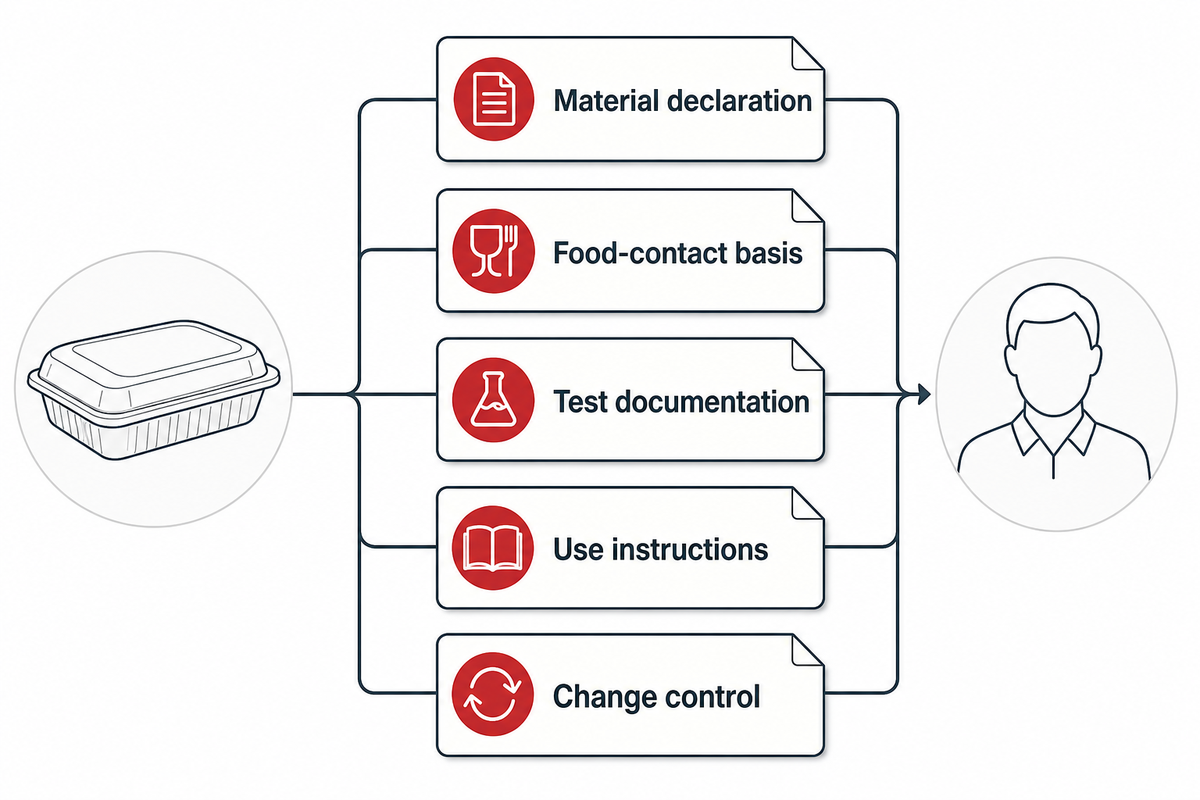
Documentation relating to food contact must demonstrate the article supplied is suitable for the intended food and conditions of use. General certificate headings are of less value than an identifiable product, formulation or component scope, with supporting restrictions. Ask the supplier to verify the basis for the applicable food contact and to trace it in the supply chain.
Is CPET plastic safe?
CPET is allowed in food packaging, if the particular article meets the food contact requirements for the intended use. The abbreviation alone, doesn’t demonstrate that a particular tray, lid, or formulation is suitable for every meal or heating cycle. See the product and test data pertaining to finished packs.
FDA’s explanation of regulatory status for food-contact components states several applicable bases. When a supplier relies on an effective food-contact notification, it covers the named manufacturer and substance and conditions. Trace the supplied component accordingly. Do not ask every supplier for the same notification as if it were a universal tray license.
| Document | Match to the order | Question to resolve |
|---|---|---|
| Material declaration | Tray/lid codes, grades, additives and layers | Which exact construction is supplied? |
| Food-contact basis | Destination, substance source and use restrictions | Does the cited basis apply to this supply? |
| Test documentation | Specimen identity, food/simulant, time and temperature | Does its scope cover the proposed contact? |
| Use instructions | Storage, appliance, cycle and lid handling | Can operations and consumers follow the same instructions? |
| Change control | Drawing, material and document revisions | Which changes require renewed approval? |
For products shipped to the EU, provide the applicable declaration of compliance and supporting scope for that destination. Commission Regulation (EU) 2025/351 addresses use instructions and supporting documentation. This regulation doesn’t alter the requirements for selling a product in the U.S. An accepted sample and test report should relate to the same construction.
Release the specification, not just the sample: retain agreed document revisions and product codes with the purchasing record. A visually similar replacement would require the same identity check.
Recycling, recycled content and current changes
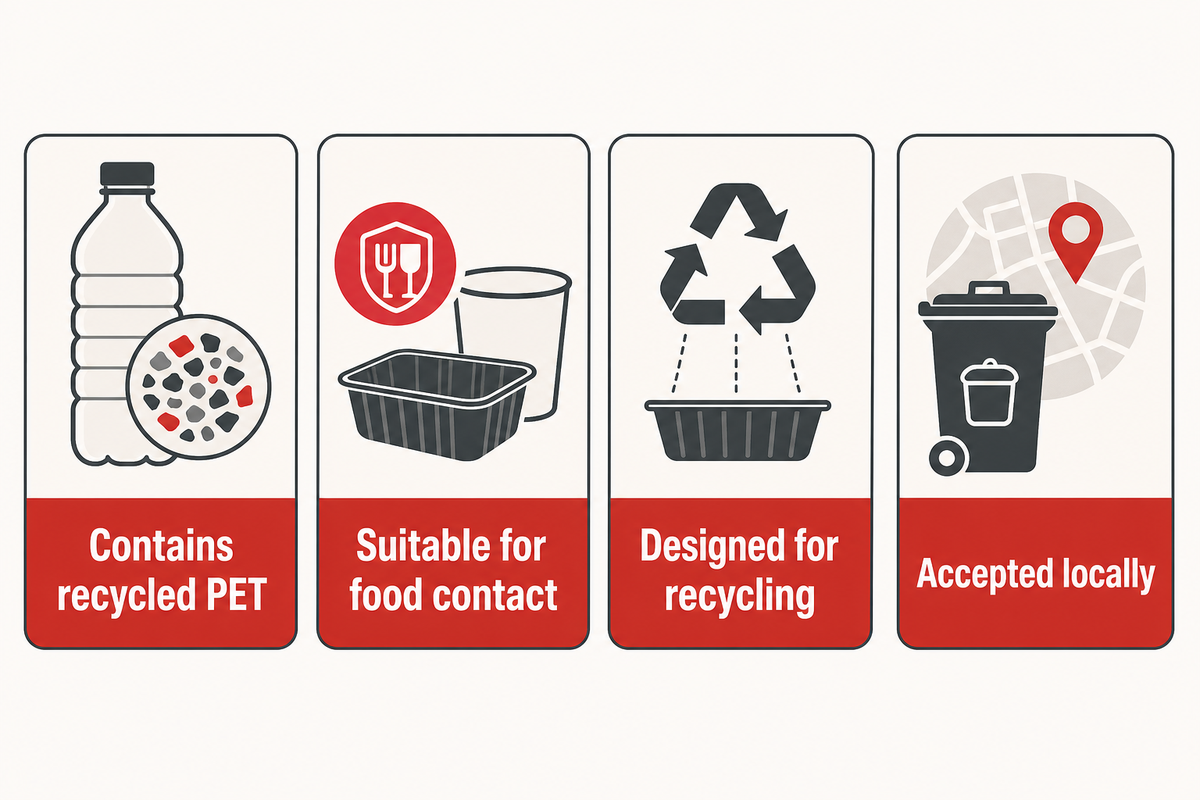
Recyclability and recycled content address different questions in a purchasing transaction. Recovery of a package depends on its design and the receiving system. Recycled content describes the feedstock of a given plastic. APET and CPET should be compared using the entire package, including additives, film and color and labels, rather than relying on a PET identification code.
The Association of Plastic Recyclers’ Design Guide addresses design, access, acceptance and the market for recycled materials. Verify the tray and lid with the destination’s collection program and recycler. Choices of barrier layers, adhesives and printing can be important, especially when the base polymer is unchanged.
| Statement | Evidence needed |
|---|---|
| Contains recycled PET | Supported percentage, material source and traceability |
| Suitable for food contact | Applicable process, material and intended-use basis |
| Designed for recycling | Complete-package design assessment |
| Accepted locally | Destination collection and processing instructions |
The FDA guidance on the use of recycled-plastics in food packaging addresses source controls, the recycling process and proposed use. The tertiary treatment of recycled-PET/PEN means a separate individual opinion letter is not always required. Ask for the basis relevant to the actual process, rather than accepting a given document.
CPET formulation also raises questions. The updated August 17, 2026 version of RecyClass’s roadmap mentions CPET nucleating agents and impact modifiers and places the work in the ongoing category with an indicative timeline of the fourth quarter. This research status in Europe is neither a completed outcome nor a U.S. collection ruling. For a more general perspective, see our compostable, biodegradable and recyclable packaging guide.
A sustainability specification mentions the claim, the market and the evidence. “Environmentally friendly” provides no measurable acceptance criteria to purchasers.
Cost comparison per accepted packed meal
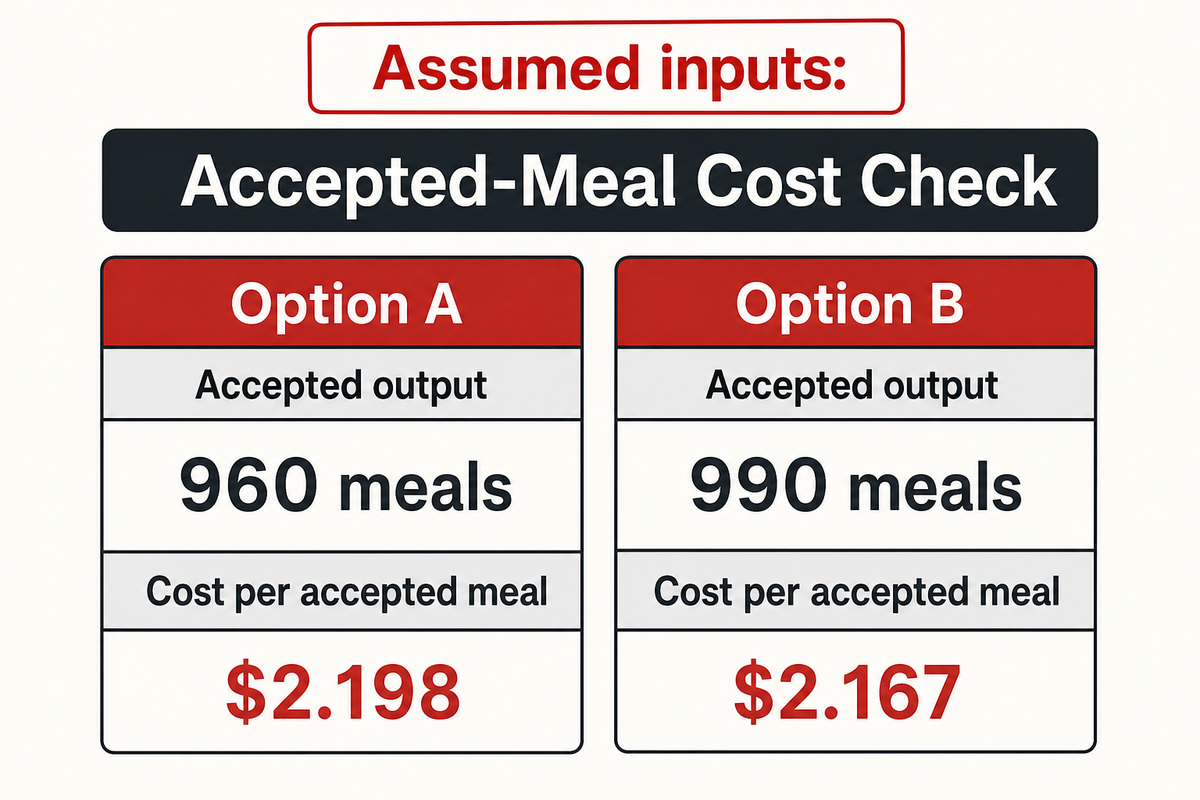
Cost per accepted packed meal is the measure after service requirements are satisfied. Price alone misses film, freight and set up costs, and losses suffered after meal filling. Record cost of defined trial and divide by quantity of acceptable meals.
ISO 14051:2011, confirmed in 2025, provides a framework for tracing material flows and associated costs. The model below is a purchasing model and not an ISO model. EPA’s food-service waste-reduction guide likewise recognizes costs beyond disposal, including purchasing, labor and energy.
Accepted-Meal Cost Check
Accepted-Meal Cost Check divides the defined production cost by the number of meals that pass the agreed packaging checks.
Assumed inputs: two already-qualified packaging options each attempt 1,000 meals. Food and filling cost $2.00 per attempted meal. Every rejected meal is discarded, with no salvage or rework. The following figures illustrate sensitivity to losses; they aren’t APET/CPET quotations or measured reject rates.
| Trial item | Option A | Option B |
|---|---|---|
| Tray unit cost | $0.08 per tray | $0.11 per tray |
| Tray cost for the trial | $80.00 | $110.00 |
| Film/lid cost | $20.00 | $25.00 |
| Allocated freight and setup | $10.00 | $10.00 |
| Food and filling | $2,000.00 | $2,000.00 |
| Total trial cost | $2,110.00 | $2,145.00 |
| Assumed rejected meals | 40 meals (4%) | 10 meals (1%) |
| Accepted output | 960 meals | 990 meals |
| Cost per accepted meal | $2.198 | $2.167 |
For Option A, ($80.00 + $20.00 + $10.00 + $2,000.00) ÷ 960 = $2.198 per accepted meal. For Option B, ($110.00 + $25.00 + $10.00 + $2,000.00) ÷ 990 = $2.167. The higher tray price wins in this assumed trial because fewer filled meals are lost. At 100 accepted meals, the corresponding costs are $219.79 and $216.67.
Change the loss assumptions, and the results will differ. Track empty tray rejects and losses after filling separately; salvage and rework costs should also be recorded. Even out delivery terms using our food-packaging freight and delivery terms guide before comparing landed costs. Use your results to determine which polymer is cheaper, rather than assuming that polymer 1 is always cheaper than polymer 2.
Which tray should you specify?
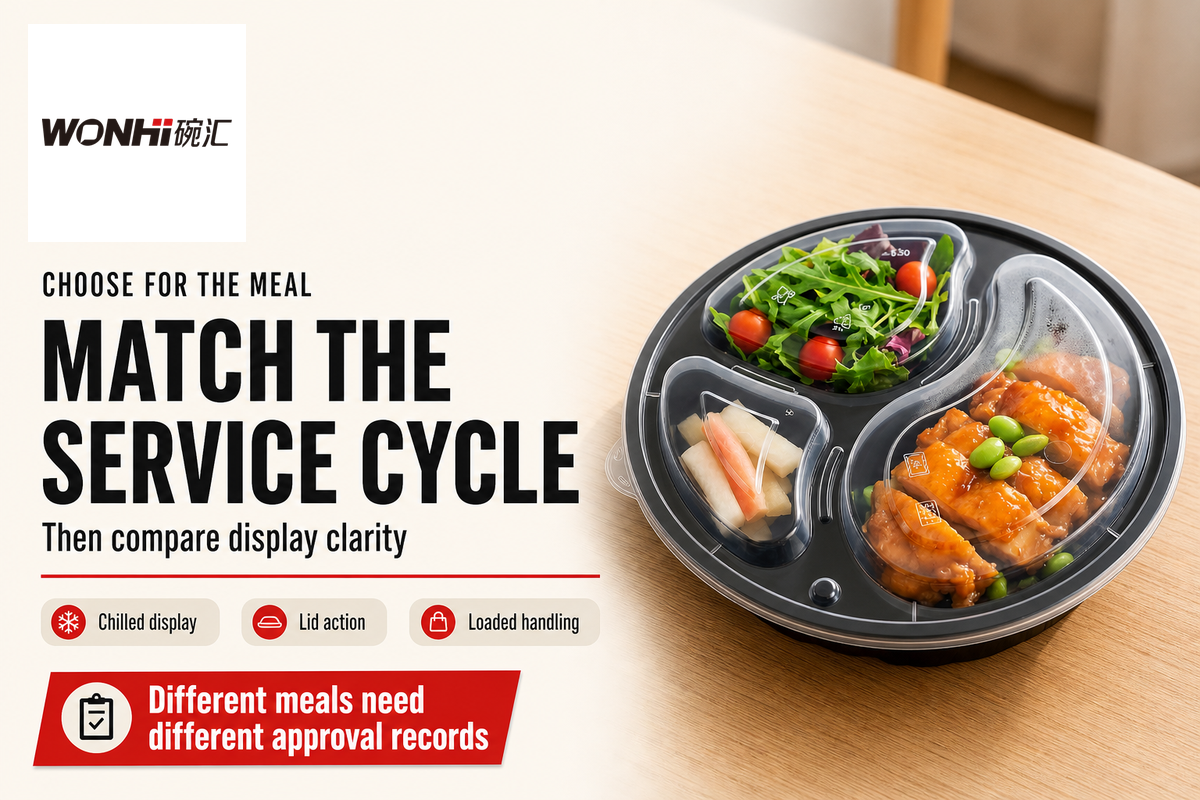
When chilled presentation is the main consideration, look to APET. See if a qualified CPET pack is available when the meal follows a documented heat-use route. When requirements conflict, prioritize the service cycle and, if the assembled design meets the requirements, use a clear, compatible lid for visibility.
Which one is better for clear food packaging?
In general, APET is the first choice for clear food packaging because its amorphous structure lends itself to clear presentation. Examine actual formed samples under display conditions including the lid and condensation. Solve the use requirement for heating in the tray, if any, before making a selection based solely on appearance of an empty tray.
Consider a deli selling chilled fruit next to a ready meal brand selling frozen entrees. The deli needs a closure fit, and transport checks. The ready meal buyer needs a defined lid action and loaded handling after heating. The same external footprint does not make their approval records interchangeable. FDA’s conditions of use categories can be used to distinguish them.
- Chilled salads and fruit: compare clear samples under the intended display and storage conditions.
- Meals reheated in the pack: obtain the exact tray/lid instruction and validate that route.
- Hot food transferred before eating: define filling and holding separately from later appliance use.
- Mixed cold and hot menu: use separate approved specifications when one pack can’t meet both jobs.
A tray presented as an alternative to traditional aluminum packaging still needs its own approval. Ask the manufacturer what the proposed construction can withstand under the intended cycle, and test the completed meal pack. Our meal prep containers guide can help with that.
RFQ and trial approval with Wonhi
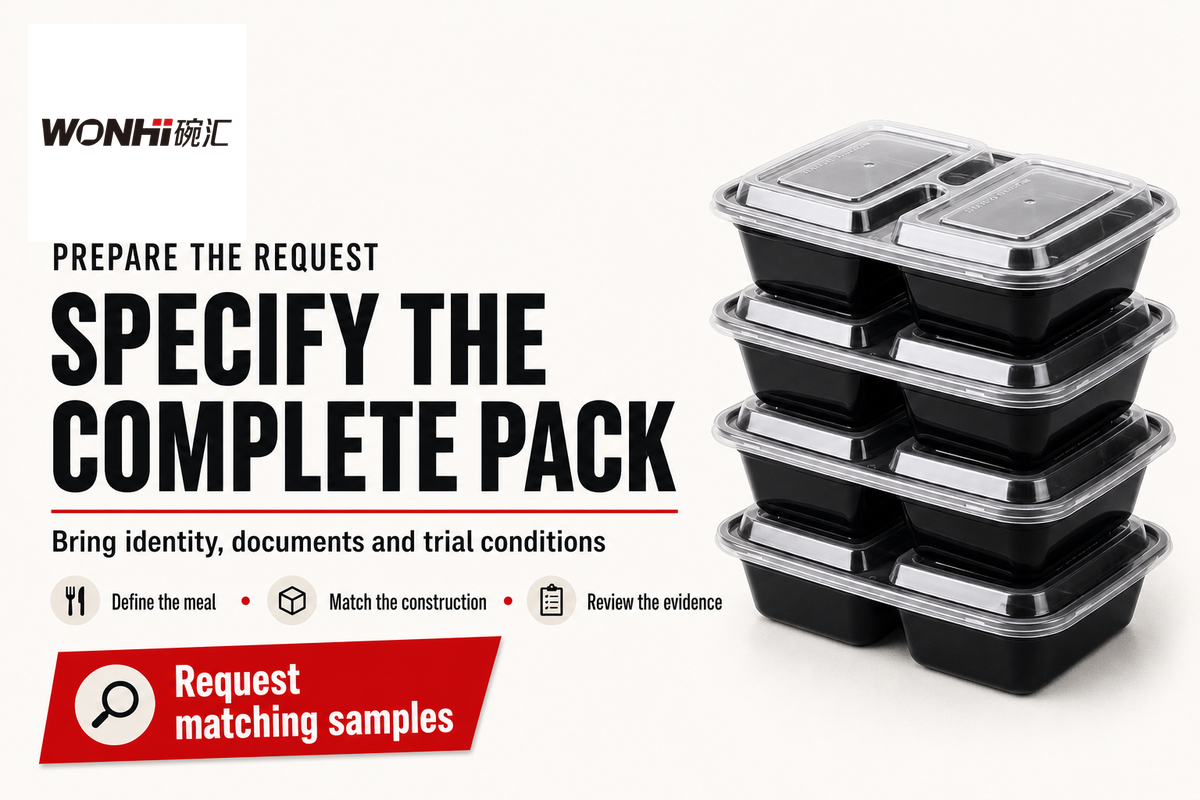
For packaging in 2026, provide enough information for the supplier and quality team to evaluate the article. Material labels or old document folders aren’t adequate when formulations or closures change. Send the use case for the meal and request a matched sample and doc set.
For EU-bound orders, make sure the applicable docs are in line with the latest food contact legislation of the European Commission. The index shows amendments after 2025/351 and links to the July 2026 plastics consolidated regulation. Use the applicable recent regulations for the destination; a past regulation number on a sales sheet isn’t a complete assessment.
For a product, look at Wonhi disposable food containers and state APET or CPET where specification needs that distinction. Contact the team to verify material and the supporting docs for the product before treating a quotation as approved substitution. Wonhi’s company info has the supplier info.
- Define the meal — send food category, fill quantity, storage, appliance and lid action.
- Match the construction — confirm tray, closure, grade, layers and drawing revision.
- Review the evidence — connect intended use and supply identity to the applicable documentation.
- Run and approve the trial — record line results, accepted output and signed samples before placing the production order.
Key takeaway
Choose clarity or heat-use capability for the meal’s actual job, then approve the exact tray, closure and instructions as one packaging specification.
APET vs CPET FAQs
Is PET plastic BPA-free?
A BPA statement does not establish the complete food-contact suitability of a finished PET pack.
Ask the supplier for the declaration covering the actual product and destination. A single-substance statement does not identify every layer, additive or closure, and it says nothing about the permitted heating cycle. Keep BPA-related claims separate from the material identity and use-instruction checks. FDA’s component-by-component approach is the relevant starting point for a U.S. order.
Can disposable CPET trays go in the dishwasher?
Follow the specific product’s instructions; disposable CPET does not automatically mean dishwasher suitable.
A reusable tableware specification and a disposable meal tray are different products. Washing adds another use cycle, with detergent, heat and mechanical handling that may sit outside the intended service conditions. If repeated use is a purchasing requirement, request a product designed and documented for it, including the closure. Don’t transfer a reusable dish manufacturer’s instructions to a disposable tray.
What should I check when deep drawing an APET tray?
Check the formed sample’s wall distribution, corners and flange rather than relying on the starting sheet alone.
A deeper shape changes where the material ends up during forming. Review the drawing with the converter, inspect thin areas and assess the flange against the intended closure. Record the actual sheet grade and production settings used for the approved sample. Where the package must support a loaded meal, include the filled handling check in the trial before accepting a change in geometry.
Is CPET the same as rPET?
No. CPET refers to crystallized PET; rPET identifies recycled PET feedstock.
Ask separately about morphology, recycled-content percentage and food-contact suitability. A recycled-content label supplies neither a heating instruction nor the complete package’s recycling assessment.
Can an APET food tray go in a microwave?
Use it in a microwave only when that finished product’s instructions permit the intended use.
Check the lid action, food, cycle and starting condition. If the instructions don’t cover the proposed meal, select another documented packaging option or transfer the food as directed. Clear appearance isn’t heating permission.
Which is more environmentally friendly, APET or CPET?
Compare the complete packaging job and recovery route before making an environmental claim.
Neither abbreviation supplies a universal environmental ranking. Compare pack mass, food protection, production losses, supported recycled content and the destination’s collection and processing system. Include the lid, labels, color and additives in the assessment. A lighter pack that loses filled meals can change the purchasing calculation, while a package designed for recycling still needs a receiving route. Request evidence for the particular claim being made and avoid treating recycled content, recyclability and food-contact suitability as interchangeable measures.
Send a tray specification for review
Share the meal, drawing, closure and intended service cycle with Wonhi. Request matching samples and product-specific documents so purchasing and quality can approve the same pack.
This comparison looks at public material science, packaging methodology and food contact. The cost model uses stated assumptions. Product approval is for the actual construction, intended use and destination requirements.
References & Sources
- Advancements in Enhancing the Heat Resistance of Poly(ethylene Terephthalate): Strategies and Applications ACS Applied Materials & Interfaces, 2026; public abstract.
- Heat-resistant PET resin composition, US20170335054A1 Ester Industries application, published 2017; technical disclosure, listed abandoned.
- Food Types and Conditions of Use for Food Contact Substances U.S. Food and Drug Administration.
- Meat and Poultry Packaging Materials U.S. Department of Agriculture, Food Safety and Inspection Service.
- ASTM F88/F88M-23: Seal Strength of Flexible Barrier Materials ASTM International; public scope and significance.
- Effect of Liquid Contamination on Hermeticity and Seal Strength of Flexible Pouches with LLDPE Delle Cese and colleagues, Journal of Applied Packaging Research, 2017.
- Determining the Regulatory Status of Components of a Food Contact Material U.S. Food and Drug Administration.
- Commission Regulation (EU) 2025/351 European Commission, original legal text.
- APR Design Guide Overview Association of Plastic Recyclers.
- Recycled Plastics in Food Packaging U.S. Food and Drug Administration.
- RecyClass Roadmap RecyClass, updated August 17, 2026.
- ISO 14051:2011: Material flow cost accounting International Organization for Standardization; confirmed 2025, public abstract.
- Reducing Wasted Food and Packaging: A Guide for Food Services and Restaurants U.S. Environmental Protection Agency, 2014; durable cost-boundary guidance.
- Food Contact Materials: Legislation European Commission; current index checked October 2026.